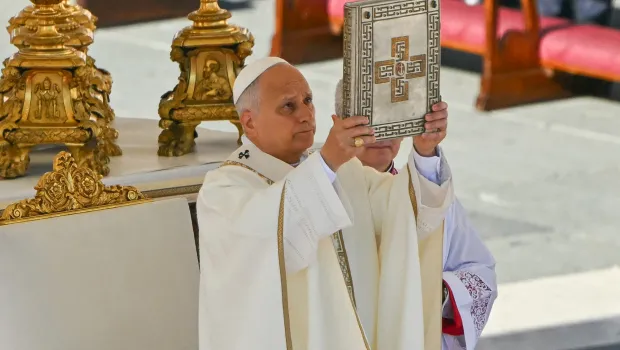
On December 2, 2025, at an altitude of 30,000 feet between Beirut and Rome, the Pope Leo XIV He uttered a phrase that will provoke a reaction: "We should be less afraid of Islam." Twenty-six minutes of press conference, eight questions, and a message that comes in the middle of a debate on Christian identity in the West.
To understand this statement, one must first grasp its origin. pope American had just spent three days at Lebanon, This small country where Muslims and Christians have coexisted for centuries. What he saw there clearly left its mark on him. And what he said on that plane deserves our attention, because it touches on something profound in our societies today.
This trip that changed everything: what Lebanon taught the Pope
A country that serves as a laboratory for living together
THE Lebanon, This is a unique case in the Middle East. Imagine: one-third Christians, two-thirds Muslims, and a political system where power is shared between religious communities. The president is a Maronite Christian, the prime minister a Sunni Muslim, and the speaker of parliament a Shiite Muslim. It may seem complicated, but it works.
When Leo XIV arrived at the airport Beirut On November 30, he was received by the highest authorities of the state. But what really touched him was something else. On the way to the presidential palace, al-Mahdi scouts, affiliated with the Shiite Hezbollah, sang welcoming songs for the pope Catholic. Can you picture the scene? Young Shiite Muslims singing to celebrate the arrival of the head of the Catholic Church. It's exactly this kind of moment that fueled his thinking.
Conversations that hit the mark
During these three days, the pope He held numerous meetings with Muslim leaders. Not superficial meetings for photos. Real discussions about peace, Mutual respect, coexistence. He visited the monastery of Saint Maroun in Annaya, prayed at the tomb of Saint Charbel, and also participated in a historic interfaith meeting in Martyrs' Square. Beirut.
This square is a powerful symbol. It was here that, in 1916, six Lebanese patriots were hanged by the Ottoman armies. A place of national remembrance where, on December 1, 2025, the pope met the Syriac Catholic patriarch, the Maronite patriarch, the Sunni Grand Imam and the Shiite representative under a huge "tent of peace » erected for the occasion.
What struck Leo XIV, This is the normality of these exchanges. Lebanon, THE interreligious dialogue It is not a theory or an abstract concept. It is everyday life. People live together, work together, and sometimes even marry across communities. Certainly, the country experiences tensions and went through a terrible civil war from 1975 to 1990. But this ability to coexist despite everything is what the pope wanted to bring back in his luggage.
The crowd gathering with 15,000 young people
The most electrifying moment of the trip happened at Bkerké, at the Maronite patriarchate perched above the Mediterranean. Fifteen thousand young people from all over the Lebanon, wearing yellow and white caps in the colors of the Vatican, They waited for hours in the rain. The atmosphere was like a rock concert.
When the papal convoy arrived, Leo XIV, Seated on an open golf cart, he drove through the sea of people. Young people chanted his name, smartphones filmed, and songs rang out. For a pope Although rather introverted, his emotion was palpable. A 24-year-old named Johnny, from Jounieh, summed up the feeling: "We want peace. Living together in Lebanon is essential.»
What affected the pope, This is the hope of these young people. Lebanon For the past six years, the country has been going through a terrible economic crisis. Young people are emigrating en masse. The currency has collapsed. The infrastructure is on its last legs. Despite everything, these 15,000 young people were there, vibrant with hope, refusing to give up.
Lessons from a country under tension
THE Lebanon It is not paradise on earth. The country is regularly bombed by Israel despite a ceasefire signed in November 2024 between the Jewish state and Hezbollah. On the very day that the pope celebrated a giant mass on the seafront of Beirut In front of 150,000 people, Israeli aircraft flew low over the south of the country. As they called for "an end to the attacks and hostilities," an Israeli drone could be heard buzzing in the sky above the capital.
This contradiction between the call to peace and the reality of the war, Leo XIV He experienced it firsthand. He also met with the families of the victims of the port explosion. Beirut On August 4, 2020, this disaster claimed more than 200 lives and devastated part of the city. He stood in silence at the site, reflecting on the pain of the families who continue to demand justice.
It is with all these experiences, all these images, all these conversations in mind that the pope He boarded the plane on the morning of December 2nd. And it was from there that he answered questions from journalists.
The controversial statement: "Less afraid of Islam"«
The awkward question
Mikael Corre, a journalist for the French daily newspaper La Croix, asked him the question directly: some Catholics in Europe consider Islam a threat to the Christian identity of the West. Are they right?
The question is not trivial. In Europe and North America, identity-based discourses are proliferating within the conservative fringes of Catholicism. The arrival of migrants Muslims are presented as a danger to the "Christian roots" of the West. In France, a few days before the trip of pope, A poll on Islam and a report from the right-wing senators proposing a ban on the veil and Ramadan fasting before the age of 16 had reignited the debate.
The straightforward answer
Leo XIV He didn't dodge the question. He began by acknowledging the reality: yes, there are fears in Europe. But he immediately pointed out where these fears come from. They are "often fueled by people opposed to immigration who seek to exclude those who come from another country, another religion, or another ethnic background."«
In other words, the pope He does not deny the existence of tensions or difficulties. But he refuses to give in to panic and rejects rhetoric that exploits fear to exclude. For him, these fears are partly constructed, amplified by those who have an interest in creating division.
Then he offered a clear alternative: «Perhaps we should be a little less fearful and look for ways to promote genuine dialogue and respect.» The tone is measured—"perhaps," "a little less"—but the message is clear. Fear is not inevitable. We can choose another path.
The Lebanese example as a model
THE pope drew on his recent experience: "One of the great lessons that the Lebanon what it can offer the world is to show a country where Islam and the Christianity are present and respected, and where it is possible to live together and be friends.»
What's interesting is that it doesn't present the Lebanon like a utopia. He knows the country's problems. But he presents them as an example of possibility. If it works there, why couldn't it work elsewhere? The Lebanon It thus becomes a laboratory from which the West could draw inspiration.
Leo XIV He goes even further: "One of the positive aspects of this trip is that it has drawn the world's attention to the possibility of dialogue and friendship between Muslims and Christians." He doesn't speak of tolerance, a word often associated with condescension. He speaks of friendship. A relationship of equals.
A pope consistent with his background
This position is not surprising when one knows the career path of Leo XIV. Born in the United States, he spent twenty years in Peru as a missionary with the Augustinian order. Twenty years in contact with the poor, the excluded, the marginalized. This experience shaped his worldview.
Since his election, he has regularly criticized the rise of nationalism in Europe and the United States. He has denounced the "inhumane treatment" reserved for migrants under the presidency of Donald Trump. For him, the Gospel commands the welcoming of the stranger. It is non-negotiable.
On the plane, he also called for "working together" to make possible "dialogue and friendship between Muslims and Christians." This emphasis on the work The shared effort required from both sides is important. He's not saying it's easy. He's saying it's possible if we put in the effort.
What does this statement really tell us about our time?
Catholicism facing its divisions
The statement from pope highlights a deep divide within Catholicism. On one side, a conservative and identitarian fringe that sees Muslim immigration as an existential threat to Christian civilization. On the other, a pope which calls for dialogue and openness.
This divide is not new, but it has intensified in recent years. In Europe, some traditionalist Catholic movements have become very active on issues of identity and immigration. They defend a closed, protective vision, sometimes tinged with nostalgia for a fantasized medieval Christendom.
Facing them, Leo XIV embodies another Catholic tradition, that of universality and openness. The word "Catholic" comes from Greek and means "universal." For the pope, Being Catholic cannot mean withdrawing into oneself or rejecting others. These are fundamentally incompatible.
Fear as a political lever
What the pope Another point to consider is the political exploitation of fear. In many Western countries, political parties have built their success on the rejection of Islam and Muslims. They raise the specter of the "great replacement," speak of "invasion," of "submersion.".
Leo XIV He rejects this logic. For him, these discourses are not a clear-sighted analysis of the situation but a deliberate strategy of exclusion. They do not seek to solve real problems but to create scapegoats.
This interpretation is disturbing for some, because it equates those who are afraid with those who fuel those fears. pope He's not saying that all the problems related to immigration or integration are imaginary. But he is saying that fear is not the right answer.
Living together as a project
What is striking about the message of pope, That's his pragmatism. He doesn't make grand theoretical pronouncements about multiculturalism or relativism. He simply says: look at the Lebanon. It works. Not perfectly, but it works.
This pragmatism is important. It shifts the debate from the ideological arena to the practical one. The question is no longer "Should Islam be accepted in the West?" but "How can we live together peacefully and respectfully?"«
Living together thus becomes a concrete project, not an empty slogan. It requires work, dialogue, and mutual effort. It also requires overcoming one's fears, making the effort to understand others, and not caricaturing them.
The real challenges are not denied.
It would be dishonest to present the message of the pope as if naive or disconnected from reality. Leo XIV He doesn't ignore the challenges. He saw at Lebanon the scars of the war civilian. He heard the testimonies of the families bereaved by the port explosion. He knows that Hezbollah, a Shiite armed organization, plays an ambivalent role in Lebanon.
But for him, these difficulties do not justify a blanket rejection. On the contrary, they demonstrate the importance of dialogue. It is when tensions are high that we must talk, not retreat.
This position is courageous in the current context. It goes against the grain of many dominant narratives. It exposes the pope to virulent criticism from those who will find him too "angelic" or "irresponsible".
A message also for Muslims
If the pope While primarily addressed to concerned Catholics, his message also concerns Muslims. By emphasizing dialogue and mutual respect, he sets a requirement for both sides. Living together cannot be a one-way street.
THE Lebanon It works because the different communities agree to coexist and respect each other. It's not always easy. There are tensions, frustrations, and imbalances. But there's a basic agreement: no one has a monopoly on the country. Everyone has their place.
This logic can inspire Western societies. It asks Muslim communities to integrate without denying their identity, and host societies to accept diversity without giving in to panic.
Saint Augustine, the bridge between two worlds
At the press conference, the pope he also mentioned his upcoming trip: Algeria, to visit places of life Saint Augustine. This is not a coincidence.
Saint Augustine (354-430) was born in Thagaste, in present-day Algeria. A philosopher and theologian, he is one of the greatest thinkers of the Christianity. But he is also considered in Algeria as a "son of the nation", respected beyond religious divisions.
For Leo XIV, Augustine is a "bridge" between Christians and Muslims. A symbol of the possibility of sharing a common heritage while holding different beliefs. This choice of Algeria as the next destination is therefore not insignificant. It is a way of extending the message of Lebanon Dialogue is possible, even in difficult contexts.
The reactions to come
This statement is expected to elicit mixed reactions. Progressive Catholics will see it as a breath of fresh air, a message that breaks with identity-based tensions. Conservative Catholics, on the other hand, will likely criticize it. pope to minimize the dangers or to fail to understand the legitimate concerns of Europeans.
Political leaders will also react. Some will see it as interference, others as support for their inclusive approach. In countries where debates on Islam are most heated – France, Germany, Italy – this statement will add fuel to the fire.
But perhaps that is precisely the role of the pope. Not to please everyone or to calm things down at all costs. Rather to recall principles, to challenge certainties, to force reflection.
Beyond religion: a societal issue
What makes this message important is that it goes beyond a strictly religious framework. Certainly, the pope It is primarily addressed to Catholics. But its reflection concerns the whole of society.
How do we manage cultural and religious diversity? How do we prevent fear from becoming the driving force behind our policies? How do we build common ground without denying differences? These are questions that permeate all our democracies.
The response from pope The answer is clear: through dialogue, mutual respect, and the rejection of exclusion. It's not a magic bullet that will solve all the problems. But it's a direction, a compass in a world where the landmarks often seem blurred.
Practical lessons for today
For individuals: overcoming prejudices
The message from pope It begins at the individual level. Everyone can ask themselves: what are my fears? Where do they come from? Are they based on real experiences or on stories I've heard?
The invitation is to step outside one's comfort zone. To reach out to others. To discover that behind the abstract and sometimes frightening "Muslim" lie individuals with their own stories, doubts, and aspirations. This is precisely what young Lebanese people demonstrated at the pope Coexistence requires mutual understanding.
In practical terms, this could mean accepting an invitation to a meal at a Muslim neighbor's house. Participating in an interfaith initiative in your neighborhood. Reading Muslim authors to understand their worldview. These gestures may seem modest, but they change perspectives.
For religious communities: multiply the initiatives
Churches and mosques can play a crucial role. Instead of ignoring each other, they can organize meetings, conferences, and joint projects.
The Lebanese model shows that living together is built in everyday life. It is not only during large official ceremonies that people learn to know each other, but also through small, concrete collaborations.
Examples already exist. Parishes that open their doors to welcome Muslims during Ramadan. Mosques that invite Christians to discover their faith. These initiatives remain in the minority, but they show the way forward.
For political leaders: to move beyond one-upmanship
Political leaders bear a particular responsibility. Too often, they succumb to the temptation of escalating security or identity politics. This may be electorally advantageous in the short term, but it is destructive to social cohesion in the long term.
The message from pope He urges them to show courage. To reject easy generalizations. To distinguish between Islam and Islamism, Muslims and terrorists. To avoid stigmatizing an entire community because of the actions of a radical minority.
This requires political courage, because those who choose this path expose themselves to criticism from both sides: accused of laxity by some, of naivety by others. But that is the price of responsibility.
For the media: change the narrative
The media also plays a crucial role in shaping fears. Too often, they highlight sensational stories involving Muslims, creating a bias in perception. Islam becomes synonymous with problems, rarely with solutions or positive contributions.
A more balanced journalism would also showcase successes, integration pathways, and initiatives for dialogue. It would give a voice to a diversity of Muslim perspectives, not just the most radical or victim-oriented ones.
THE pope, citing the example of Lebanon, It invites us to change the narrative. To show that living together is possible, that models exist, even imperfect ones. It's a long-term, but essential, undertaking.
For education systems: training for dialogue
Schools have a fundamental role to play. They are where the citizens of tomorrow are formed. Teaching the history of religions objectively, learning to engage in dialogue with those who think differently, developing critical thinking skills in the face of hate speech: these are all essential skills.
At Lebanon, Children grow up in a multicultural environment. From a very young age, they see that diversity is normal. It is this normalization of pluralism that we must aim for in our societies.
This does not mean denying differences or falling into a weak relativism. But rather recognizing that one can have profound disagreements on fundamental issues while still respecting one another.
For everyone: choose hope over fear
Ultimately, the message of pope It is a call to choose hope over fear. It is a choice that everyone must make, individually and collectively.
Fear confines, divides, and impoverishes. It makes us see the other as a threat before we see them as a human being. It leads to exclusionary policies that ultimately weaken everyone.
Hope, on the other hand, opens up possibilities. It allows us to imagine a shared future. It doesn't deny the difficulties, but refuses to resign ourselves to them. This is precisely what these 15,000 young Lebanese people embodied in the rain at Bkerké.
THE Pope Leo XIV It doesn't offer a turnkey solution. It offers a direction, a mindset. It's then up to each individual to see how to translate it into their own context.
One last word: consistency
This lends weight to the message of pope, That's his consistency. He doesn't just make fine words. He embodies them through his travel choices, his encounters, and his stances.
Going to Lebanon, In a country weakened and bombed, he showed that he would not remain in the comfort of Vatican. By meeting with the bereaved families of the port of Beirut, He shared their pain. By announcing a future trip to Algeria, he confirms his desire to build bridges.
This consistency is essential. Words, however fine, are not enough. Actions are needed. That is what the pope has been trying to do so, in his own way, since the beginning of his pontificate.
So, what can we take away from this moment at 30,000 feet between Beirut And Rome? Perhaps this: in a world where fear of the other becomes a reflex, where divisive rhetoric gains ground, a pope American who spent twenty years in Peru and three days in Lebanon reminds us that another way exists.
This path is not easy. It requires effort, dialogue, and patience. It involves stepping outside our comfort zones and questioning our certainties. But it is possible. Lebanon, despite all its difficulties, is proof of that.
«"We should be less afraid." Six words that say a lot. Not "don't be afraid," as he said. John Paul II. But "be less afraid." An invitation to take one step, then another. To choose dialogue over mistrust. To build bridges rather than walls.
On a plane that was taking him back to Rome, the capital of Catholicism, Leo XIV He delivered a message that resonates far beyond the boundaries of the Church. A message for our time. It is up to us to see what we do with it.