









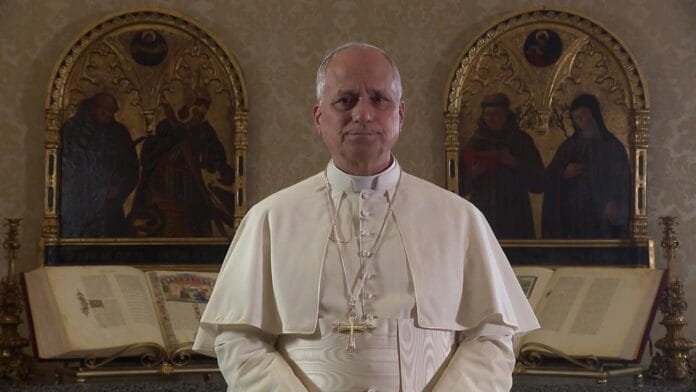
The message from pope Leo XIV The address delivered at the 7th National Conference on Addictions in Rome resonates as a straightforward diagnosis: our addictions betray more than individual distress; they reveal a profound social decline. In speaking to political leaders, educators, and those working on the ground, the Pope not only sought to denounce a scourge, but also to pose a crucial question: what is wrong with our societies?
THE Pope It evokes a world where young people, faced with uncertain economic and moral prospects, withdraw into themselves. Not out of selfishness, but out of fear. Fear of the future, fear of the void, fear of a world that seems to have lost all sense of direction. In this context, the temptation of addiction becomes a refuge, a social anesthetic, a way to fill the inner silence.
Contemporary addictions are no longer limited to alcohol or drugs: they reside in our pockets, on our screens, behind online games or endless streams of images. They reflect a desperate need to escape reality, to forget a present perceived as meaningless.
When social bonds collapse
The society of lack
Leo XIV He's not simply talking about morality; he's talking about relationships. Addiction, he reminds us, often stems from a lack of connection. Where families weaken, where school is reduced to performance, where faith and community disappear from their lives, young people find themselves alone in front of their screens. They replace real-life encounters with virtual connections, hope with distraction.
The Holy Father speaks of a world without hope—a powerful, almost prophetic statement. This lack of hope does not stem from poverty material, but of poverty Existential: that of a world saturated with offers but devoid of promises. We can buy everything, watch everything, consume everything… except the meaning of life.
Thus, addiction becomes one of the most visible symptoms of social imbalance: when society no longer offers guidance, the individual seeks chemical or digital compensations. It is an escape, but also a symptom of an unmet need for connection, listening, and genuine love.
The escape market
Economic players have clearly understood this need. The market for addictions—legal or illegal—thrives on human vulnerability. Social media algorithms capture our attention, online gambling exploits the lure of profit, and pornography transforms loneliness into a source of income. This system doesn't just create addictions; it makes addiction profitable.
In this context, the papal message sounds like a call to resistance: the resistance that consists of restoring primacy to the human person, to their dignity and their freedom. For addiction, before being a medical problem, is an anthropological question: what are we doing with our freedom?
Healing through solidarity and meaning
Rebuilding personal connections
Leo XIV He emphasizes that all is not lost. Everywhere, families, teachers, educators, and priests are working to rebuild young people's sense of direction. These efforts are invaluable: they restore to adolescents the capacity for moral discernment and the confidence necessary to confront doubt.
THE Pope It reminds us that freedom is not the absence of limits, but the capacity to choose what is good. This education in freedom is cultivated through inner life, prayer, intergenerational dialogue, and the discovery of the meaning of service. Therein lies the true challenge of preventing addictions: rebuilding moral conscience and the strength of will.
Addiction, from this perspective, is not inevitable. It becomes a possible place of redemption and rebirth, if society finds the courage to reach out, to support, and to still believe in recovery.
A collective responsibility
«Acting in a concerted manner,» said the Holy Father. This means that the fight against addictions does not belong only to doctors or psychologists, but to the whole of society: the State which guarantees education and jobs, the associations which offer spaces for listening, the Church which offers spiritual support, and the local communities which recreate connections.
THE pope Leo XIV He speaks of "intercepting the cry of the young." A cry often silent, masked by likes or cynical humor, but which comes from a wounded heart. Responding to this cry means offering a horizon: friendship, the work, Art, faith, the beauty of the world. It is a reminder to every human being that they can be a free architect of their own existence, not a slave to their desires.
To rekindle a thirst for life
The expression chosen by the Pope — «a profound thirst for life» — is overwhelming. It reverses our perspective: behind every addiction lies a genuine yearning for fulfillment, a yearning for joy. But this thirst, in order not to become poison, must encounter living sources: encounter, culture, nature, faith.
To rekindle a thirst for life is therefore to restore confidence: to make young people feel that they have a place, a role, a mission. Where society treats them as consumers, the Gospel calls them to become creators. Where fear paralyzes, brotherhood opens. Where despair imprisons, faith liberates.
A hope in progress
The culture of listening
Leo XIV It invites institutions to build a "culture of solidarity and listening." This implies learning to listen without judging, to understand without moralizing. Pope It doesn't condemn; it calls for support. Because you don't recover from an addiction through willpower alone: you recover through encounter, through the gaze of someone who still tells you: "You are worth more than your wound."«
This culture of listening also applies to the Church itself. It must be a place of welcome, not condemnation. Where some young people feel lost or excluded, the Christian community can become a space for rebuilding and restoring trust. The confessional, discussion groups, or simply shared prayer can open a path to inner freedom.
Reference points for tomorrow
Breaking free from the vicious cycle of addiction requires rebuilding a society of values. This involves revaluing the family, education in moral discernment, spirituality as a dimension of existence, but also courageous public policies: limiting advertising for gambling, regulating social networks, supporting support structures, and promoting youth employment.
THE Pope does not separate the spiritual from the social: he sees politics and economics as indispensable fields of charity. Charity As he already stated during his International Day Against Drug Abuse, social justice consists of "dismantling the systems that profit from human weakness." It is therefore a global ethical issue.
Start again from the person
The key, ultimately, lies here: starting with the person. The message of Leo XIV is an invitation to hand over the human dignity at the center. Addictions are not just pathologies, but calls for collective coherence. They brutally remind us that man does not feed only on comfort or technology, but on meaning, truth and love.
Rediscovering the true meaning of these words means giving a whole generation a new sense of purpose. Pope pushes us to turn this crisis into an opportunity: to rebuild a more humane society, where we truly listen to each other, where freedom is reborn, where inner life finds its place again.
In short, Addictions are indeed a symptom of social decline, but they can also become the starting point for renewal. Provided that we accept confronting our own emptiness, rebuilding our solidarity, and directing our freedom towards the common good. Leo XIV He does not accuse; he hopes. And this hope, in a world saturated with demands, is perhaps the first remedy for our addictions.