












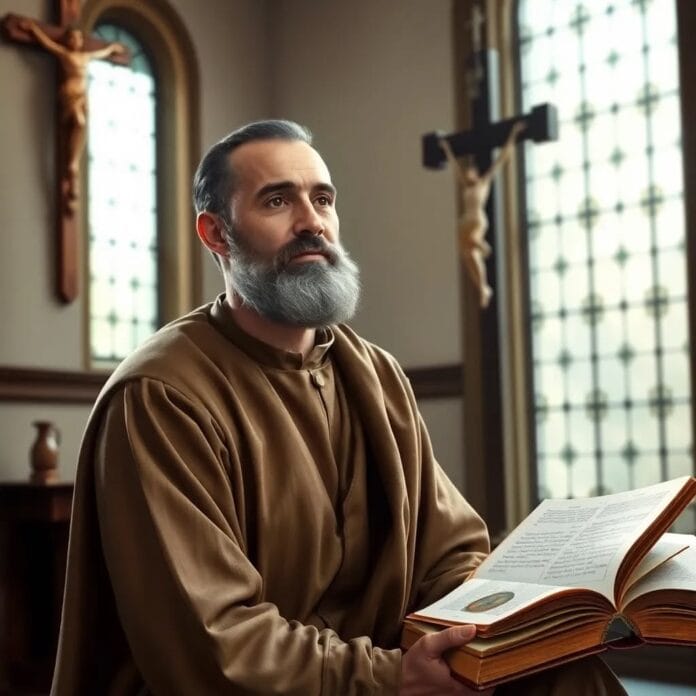
THE spiritual discernment This refers to the ability to recognize and understand the various influences that stir our inner life, in order to choose what truly draws us closer to God. It is an approach attentive to the movements of the soul, allowing us to distinguish between what comes from the Divine Spirit and what comes from other sources.
In the Christian life, spiritual discernment plays a crucial role. It guides believers in their daily choices, illuminates their path toward a deeper relationship with God, and protects them against illusions and false inspirations. This practice fosters attentive inner listening, essential for living an authentic and dynamic faith.
Ignatius of Loyola, founder of the Society of Jesus in the 16th century, made a major contribution to the art of spiritual discernment. His personal experience, marked by a profound conversion after his injury in Pamplona, led him to develop a rigorous method: the Spiritual Exercises. These exercises offer a methodological framework for learning to recognize inner "movements" and thus refining spiritual judgment.
The art of spiritual discernment according to Ignatius of Loyola remains today a valuable tool for anyone seeking to deepen their relationship with God in a complex world full of multiple influences.
The Christian roots of spiritual discernment
Spiritual discernment draws its biblical foundations deeply rooted in Christian tradition. From the Old Testament onward, we find calls to distinguish between what comes from God and what is contrary to his will. The prophet Elijah, for example, experiences the "still, small voice" (1 Kings 19:12), a subtle sign that invites attentive listening to inner promptings.
Saint Paul is a key figure for understanding the development of discernment in the Christian faith. In his epistles, he emphasizes the ability to "judge with wisdom what is good and what is evil" (Hebrews 5:14). He exhorts believers not to be swayed by passions or external influences, but to "test everything; hold fast to what is good" (1 Thessalonians 5:21). Paul thus establishes a true moral and spiritual framework in which discernment becomes an essential daily practice.
Christian tradition has perpetuated this teaching by integrating discernment as a path of inner growth. The Church Fathers valued this quest for spiritual understanding to avoid doctrinal errors and live in accordance with the Spirit. This concern for inner distinction is also expressed in monastic practice with the rule of Saint Benedict which recommends vigilance and caution in all choices.
Ignatius of Loyola follows in this tradition. His contribution lies in a methodical systematization of discernment through his Spiritual Exercises. He proposes not only to identify divine inspirations but also to recognize temptations and illusions. Discernment then becomes a precise art for navigating between different paths. «"motions"» internal, according to their origin and their impact on spiritual life.
This biblical and patristic lineage lends Ignatian discernment a rare doctrinal solidity. You thus rediscover a living heritage where faith and reason they engage in dialogue to inform every important decision on the path to holiness.
The conversion of Ignatius of Loyola: the starting point for discernment
The story of Ignatius of Loyola's spiritual conversion begins with a dramatic event in 1521 during the Battle of Pamplona. An officer in the service of King Charles V, Ignace was seriously wounded by a cannonball that fractured his leg and two other bones. This injury forced him into a long convalescence, during which he found himself cut off from the fighting and military ambitions that had until then shaped his life.
During this period of immobility, Ignatius sought to pass the time and asked to read the books available around him. He received mainly two types of books: chivalric romances and stories about the life of Jesus Christ and the saints. Reading these stories provokes a profound inner turmoil in him. He begins to question his priorities, his way of life, and the true meaning of his existence.
This experience marked a major turning point in his personal journey. The physical injury became the catalyst for a spiritual wound, paving the way for a radical inner conversion. Ignatius gradually abandoned the warrior ideal to embark on an intense spiritual quest, centered on seeking divine will in his life.
The development of spiritual discernment finds its concrete origin here. Ignatius learns to observe his thoughts, feelings, and desires attentively, distinguishing what draws him closer to God from what distances him. This ability to recognize inner "movements" becomes the very foundation of Spiritual Exercises which he will develop later.
The conversion of Ignatius thus illustrates how a personal trial can become the source of a profound spiritual transformation, laying the foundations for an art of discernment that still guides today those who seek to live according to their faith with authenticity and clarity.
The methodological framework of the Spiritual Exercises
THE Spiritual Exercises These practices form the cornerstone of the Ignatian method, a structured set of spiritual practices designed to deepen one's relationship with God. Developed by Ignatius of Loyola, this method is a rigorous yet flexible guide, enabling believers to discern the inner promptings that shape their spiritual lives.
General presentation of the Spiritual Exercises
- This is a spiritual journey of approximately forty days, which can be adapted according to the needs and pace of each individual.
- The exercises combine meditations, prayers, contemplations and introspections aimed at awakening a deep awareness of divine realities.
- The goal is to accompany the believer in a progressive inner conversion, by offering them tools to recognize the active presence of God in their daily life.
The central role of discernment
Discernment plays a crucial role in this method. Ignatius invites us to carefully observe the motions inner feelings—those sentiments, thoughts, or inclinations—to identify those that come from God and those that lead away from Him. This work of careful analysis is not merely intellectual: it requires attentive listening of the heart and sensitivity to the signs of the Holy Spirit.
«"The art of spiritual discernment according to Ignatius of Loyola" is learning to differentiate authentic inspirations from illusions or temptations that can trouble the soul.
Objectives pursued by Ignatius
- To help each person make choices that align with their deepest calling and divine will.
- Developing inner freedom from attachments and fears that often paralyze the spiritual path.
- To encourage concrete engagement in the mission that God entrusts to each person, with dynamism and confidence.
This method thus highlights the active and responsible role of the believer in their spiritual quest. The methodological framework of Spiritual Exercises offers a clear path to cultivate the inner wisdom necessary for discernment.
Understanding inner "motions" in Ignatian discernment
Ignatius of Loyola defines the inner motions as being the spiritual feelings, thoughts and inclinations that stir the soul. These movements are not simply passing emotions; they reveal deep impulses that influence the relationship with God and the spiritual path.
Distinction between divine and opposing movements
Ignatius invites us to distinguish between two main types of motions :
- Movements coming from God They bring peace, joy, confidence, and elevate the soul towards goodness. Their effect is lasting and increases love towards God and neighbor.
- Opposing influences These movements generate agitation, confusion, fear, or sadness that distance one from faith. They tend to disturb the mind without bringing true peace.
This differentiation is not always immediate. Inner attention proves essential to discerning the source of these movements.
The Importance of Inner Attention
Ignatius insists on constant vigilance in the face of motions. This involves carefully observing how each thought or feeling affects the heart and will. This attention allows you to:
- to recognize the telltale signs of good or evil,
- to avoid the pitfalls of spiritual illusions,
- to properly guide its decisions.
Inner attention is not a mere intellectual exercise; it is an active spiritual posture that engages the whole being in a sincere quest for truth.
«"We must learn to feel what these movements do to our soul, whether it rises or falls, whether it becomes troubled or calm," Ignatius wrote in his Spiritual Exercises.
Thus, to understand and accept with lucidity the inner motions This constitutes the key to Ignatian discernment. This inner work prepares one to respond freely and truthfully to the divine call.

The art of decision-making at the heart of Ignatian discernment
Ignatian discernment is concretely manifested in the spiritual decision-making. This is not simply an intellectual exercise, but a true inner listening oriented towards God. This process helps to clarify personal choices by taking into account the movements inner feelings — the attractions or resistances — that reveal the presence or absence of the Spirit.
Three essential aspects characterize this approach:
- The recognition of spiritual signs : you learn to identify what brings peace deep, joy lasting and growing confidence. These signs indicate alignment with divine will.
- Patience and the time given for reflection Ignatius urges us not to act rashly. Discernment requires a period of observation so that genuine inclinations can clearly emerge.
- The constant challenge of faith Each decision is examined through the lens of the Gospel and trust in God, ensuring that your choices do not stray from the path laid out by the Holy Spirit.
This method aims to transcend mere personal preferences or external influences. You are invited to engage in a genuine inner dialogue where your freedom is respected, but guided towards what builds your spiritual growth.
The ultimate goal: to act not according to your own desires, but in accordance with God's will for you. Discernment then becomes an art that aligns your will with that of the Creator, making your decisions a source of peace and fruitfulness in your Christian life.
The role of faith and’Holy Spirit in discernment
The art of spiritual discernment according to Ignatius of Loyola rests deeply on the Christian faith as an unshakeable foundation. This trust in God is not merely an intellectual belief, but a living conviction that guides the entire inner journey. Without this trust, discernment loses its essential compass, for it is a path that requires humbly surrendering to the divine will.
Ignatius emphasizes the active presence of the’Holy Spirit as an inner guide. He who sincerely seeks the truth never walks alone; ; the Holy Spirit It illuminates the darkness of doubt and uncertainty, revealing the inner movements that truly originate from God. This divine guidance allows the soul to distinguish more clearly between what elevates and what brings down, between what leads to peace deep and what causes agitation or confusion.
Several key points illustrate this dynamic:
- Trust in God Without it, the heart remains closed to authentic inspirations.
- Opening at the Holy Spirit It is a constant dialogue, an attentive inner listening.
- Sincere search Discernment requires an attitude of honesty and’humility before the divine mystery.
Ignatius thus presents discernment not only as a mental exercise, but as a living encounter with God through his Spirit. This intimate connection transforms each decision into an act of faith, ensuring that personal choice aligns with the divine will revealed in the depths of the heart.
Discernment in the face of contemporary challenges
The contemporary world presents modern challenges which make spiritual discernment more essential than ever. multiplicity of paths to interiority offers a wide range of practices and teachings, sometimes contradictory or unfounded, which can sow confusion among those seeking to advance in their faith.
You are faced with a profusion of spiritual influences—some genuine, others less so—that you must learn to analyze vigilantly. Discernment then becomes a crucial tool for:
- Distinguishing authentic inspirations illusions or manipulations; ;
- Avoid the’spiritual influence, often subtle, which can be exercised by charismatic leaders or groups with dubious intentions; ;
- Maintaining a firm grounding in the Christian faith while remaining open to the action of the Holy Spirit.
Current spiritual offerings can sometimes disguise themselves as quick fixes or easy paths to peace internal. You must be attentive to signs that reveal a negative influence: moral destabilization, isolation, loss of critical thinking or distancing from evangelical values.
Ignatius of Loyola invites you to cultivate a constant inner focus and deep listening, in order to recognize the inner movements that truly draw you closer to God. This work requires patience and humility, but it protects your inner freedom from the many temptations of today.
This discernment not only allows us to face modern challenges, but also to live an authentic spiritual experience deeply rooted in the Christian tradition.
Practical application of Ignatian discernment today
Ignatian discernment is fully integrated into the contemporary practice of everyday Christian life. This is not a method reserved for spiritual retreats, but an accessible tool to guide every decision, big or small.
How to integrate discernment?
- Careful observation of inner "motions" : you learn to recognize the movements of the soul – peace, agitation, clarity or confusion – which signal an orientation towards God or a distancing.
- Daily time for silence and prayer : a moment set aside for inner listening helps to clarify these movements and to discern their origin.
- Spiritual Journal : noting inner experiences allows us to track long-term trends and identify recurring calls from the Spirit.
- Dialogue with a spiritual guide : sharing one's questions with a person trained in discernment enriches understanding and avoids personal pitfalls.
Concrete examples of the application of Ignatian principles:
- A professional faced with an important choice takes the time to observe their emotions before deciding; they identify lasting inner peace as a favorable sign.
- A person searching for their vocation uses the modern spiritual exercises to structure his thoughts and listen more deeply to his aspirations.
- In a parish community, a group meets regularly to practice discernment together by applying the Ignatian steps, thereby strengthening cohesion and collective spiritual maturity.
These practices foster an active approach where faith becomes a guiding light on the path of daily decisions. Ignatian discernment invites each person to become attentive to their inner voices, so that their life may be animated by an enlightened and faithful will.
Conclusion
The art of spiritual discernment according to Ignatius of Loyola opens a valuable path for those who wish to advance on a illuminated spiritual path. This practice, rooted in a rich and profound Ignatian heritage, invites attentive listening to inner motions which guide each believer towards an authentic relationship with God.
To engage in this art of discernment is to accept being transformed by the encounter with oneself and with the divine. It is not merely a method, but an invitation to live a dynamic spiritual experience where faith and reason They are constantly in dialogue. This dialogue fosters trust in the Holy Spirit, which illuminates choices and guides steps.
You are encouraged to deepen this practice in order to cultivate a clearer perspective on your decisions, both in your personal and community life. Ignatian discernment offers you concrete tools to navigate the complexities of the contemporary world while remaining faithful to your spiritual vocation.
«True discernment consists in recognizing what brings us closer to God and what takes us further away from Him» – a fundamental principle that you can integrate today to enrich your faith journey.
Frequently Asked Questions
What is spiritual discernment according to Ignatius of Loyola?
Spiritual discernment, according to Ignatius of Loyola, is an art which consists of recognizing and differentiating inner movements, such as thoughts and feelings, in order to guide the person in their relationship with God and in their spiritual decision-making.
What is the importance of spiritual discernment in the Christian life?
Spiritual discernment is essential in the Christian life because it allows one to align personal choices with the divine will, thus promoting an enlightened spiritual path and an authentic relationship with God.
How do the Spiritual Exercises of Ignatius of Loyola incorporate discernment?
The Spiritual Exercises constitute an Ignatian method in which discernment plays a central role. They offer spiritual practices aimed at developing attention to inner promptings in order to better understand divine inspirations and make decisions aligned with faith.
What are "inner motions" in the context of Ignatian discernment?
Inner movements refer to the spiritual feelings, thoughts, and inclinations that arise within us. According to Ignatius, it is crucial to distinguish those that come from God from those that stem from opposing influences in order to properly guide one's spiritual path.
What role does the Holy Spirit play in discernment according to Ignatius of Loyola?
The Holy Spirit acts as a fundamental inner guide for those who sincerely seek the truth. Faith in God and trust in the Holy Spirit are indispensable foundations for effectively practicing the art of Ignatian spiritual discernment.
How can Ignatian discernment be applied in contemporary daily life?
Today, Ignatian discernment can be integrated into the daily lives of believers through adapted spiritual exercises, enabling them to face modern challenges and the multiplicity of spiritual paths while remaining vigilant against negative or manipulative influences.