













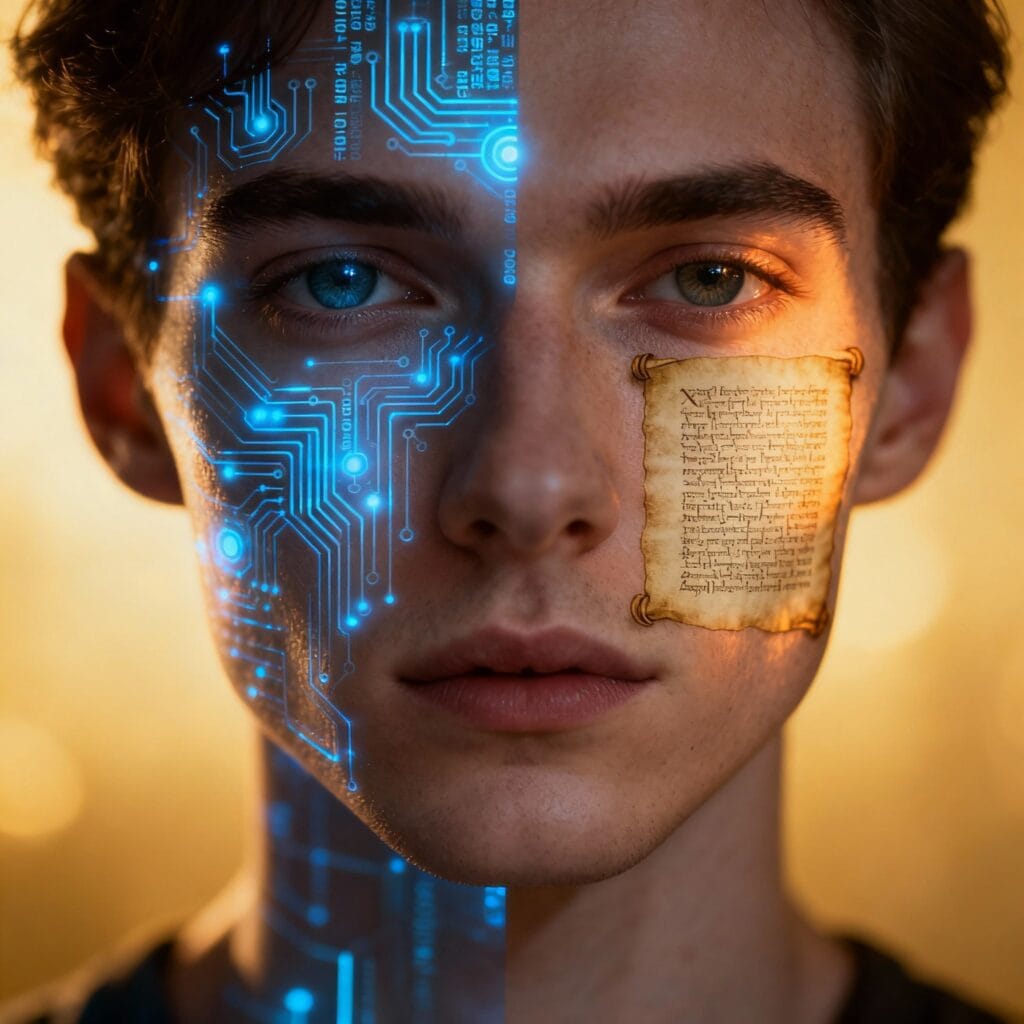
In our hyper-connected world where algorithms shape our decisions and artificial intelligence redefines the limits of human creation, a surprising question arises: could the millennia-old texts of the Bible shed light on our most pressing technological challenges? This unexpected intersection of ancient wisdom and modern innovation reveals fascinating parallels that challenge our understanding of knowledge, power, and responsibility.
The wonder at this discovery doesn't stem from coincidence, but from the universal depth of human questions. The same questions that tormented the sages of old resonate today in AI research labs and the boards of directors of tech giants. How do we use knowledge? What are our responsibilities in the face of the power of creation? And above all, how do we distinguish wisdom from the mere accumulation of information?
Knowledge without limits: an eternal challenge
Modern artificial intelligence confronts us with a paradox familiar in scripture: the more knowledge we accumulate, the more we realize the extent of our ignorance. This tension, already present in biblical texts, finds a particularly powerful echo in our digital age.
Machine learning algorithms can process phenomenal amounts of information, identify patterns invisible to the human eye, and predict behaviors with disturbing accuracy. However, this technical capability raises fundamental questions about the very nature of understanding. Can we truly speak of "knowledge" when it comes to statistical correlations devoid of emotional or spiritual context?
This question is reminiscent of the biblical reflections on the distinction Between information and wisdom. Ancient texts warn us against the illusion that the accumulation of facts equates to true understanding. Authentic wisdom involves a relational and contextual dimension that pure computational logic cannot fully grasp.
Imagine an AI system capable of diagnosing a disease with 99% accuracy, but unable to understand the patient's anguish upon hearing the diagnosis. This technical limitation perfectly illustrates the difference between knowledge and wisdom, a central theme in biblical literature that takes on new resonance in the age of... digital.
The pride of human creation
Biblical narratives are replete with warnings about the dangers of human pride in the face of our creative abilities. This theme finds a striking parallel in the development of artificial intelligence, where the temptation to play the omnipotent creator constantly threatens innovators.
The myth of the Tower of Babel, for example, offers a powerful metaphor for understanding certain excesses of the technology industry. The ambition to create ever more sophisticated systems, to push the boundaries of what is technically possible, can make us lose sight of the human and ethical consequences of our innovations.
This reflection is not intended to condemn technological progress, but to place it within a broader perspective of responsibility and’humility. Biblical teachings on divine creativity remind us that all authentic creation comes with a responsibility towards what is created and those who benefit from it.
The wisdom of Solomon in the digital age
When we explore the principles of wisdom attributed to King Solomon, we discover a surprisingly relevant framework for navigating the complexities of our technological world. This wisdom lies not in the accumulation of information, but in the ability to discern, assess consequences, and make balanced decisions.
The famous story of the judgment Solomon's dilemma perfectly illustrates this approach. Faced with a complex dilemma involving deep human emotions, the solution does not come from a calculation algorithm, but from an intuitive understanding of human nature and underlying motivations. This capacity for discernment represents precisely what is often lacking in our purely technical approaches to contemporary problems.
Transposed into the context of artificial intelligence, this Solomonic wisdom invites us to question not only what we can do technically, but what we must do ethically. She encourages us to develop systems that serve human flourishing rather than simply optimizing performance metrics.
Consider the recommendation algorithms that govern our news feeds or purchase suggestions. A system purely optimized for engagement would maximize time spent on the platform, even if it means exploiting our cognitive biases or creating harmful information bubbles. An approach inspired by biblical wisdom would instead seek to balance engagement with the overall well-being of the user.
The balance between innovation and caution
Biblical texts teach us the importance of prudence in the exercise of power, a principle particularly relevant for developers and decision-makers in the field of AI. This prudence does not mean inaction, but rather a thoughtful approach that considers the long-term implications of our innovations.
This perspective leads us to fundamentally rethink our relationship with the speed of innovation. In a sector where the race for technological development can sometimes overshadow ethical considerations, biblical wisdom reminds us of the value of reflection and consultation before action.
Picture this scenario: a development team is faced with the opportunity to launch a revolutionary new algorithm. The conventional approach would focus on competitive advantages and revenue potential. An approach inspired by biblical wisdom would also incorporate questions of social impact, justice, and unintended consequences.
Moral responsibility in innovation
One of the most striking aspects of this intersection between spirituality and technology lies in the question of moral responsibility. Biblical teachings place individual and collective responsibility at the heart of the human experience, a principle that takes on a new dimension in the context of technological development.
Unlike natural processes or spontaneous phenomena, artificial intelligence is the direct product of conscious human choices. Each algorithm reflects the values, biases, and priorities of its creators, creating a chain of responsibility that extends far beyond purely technical considerations.
This achievement radically transforms our understanding of technological development. It is no longer simply a matter of solving technical problems or optimizing performance, but of participating in an act of creation that will have lasting repercussions on human society.
The biblical principles of social justice and care for the most vulnerable offer valuable criteria for evaluating our innovations. Rather than simply asking ourselves, "Does it work?", we can ask ourselves: "Does it contribute to the common good? Does it protect the most vulnerable? Does it promote genuine human flourishing?"«
Technological stewardship
The biblical concept of stewardship—the idea that we are responsible for wisely managing the resources entrusted to us—finds a particularly rich application in the technological field. This perspective transforms our relationship to innovation, shifting from a logic of ownership to a logic of service.
This approach leads us to consider technology not as a territory to conquer, but as a domain of influence for which we are temporarily responsible. This nuance may seem subtle, but it has profound implications for how we develop, deploy, and regulate artificial intelligence.
A technology steward is concerned not only with the immediate effectiveness of their innovations, but also with their long-term impact on future generations. This broader time perspective, characteristic of biblical thinking, provides a valuable counterweight to the pressure for short-term results that often dominates the technology industry.
Rediscovering the Bible through a contemporary lens
This exploration of the parallels between artificial intelligence And biblical wisdom reveals a fascinating phenomenon: our technological age offers us new tools to understand and appreciate millennia-old texts. The questions raised by AI shed new light on humanity's eternal concerns about knowledge, power, and responsibility.
This approach contemporary biblical reading This in no way diminishes the spiritual depth of the texts. Yet, it reveals their continued relevance and their ability to illuminate our most current challenges. Technological metaphors can serve as conceptual bridges to make accessible a wisdom sometimes perceived as distant or obsolete.
Imagine if we approached biblical texts with the same curiosity and open-mindedness we apply to technological innovations. This approach could reveal a wealth of practical insights for navigating our complex world, while simultaneously enriching our spiritual understanding.
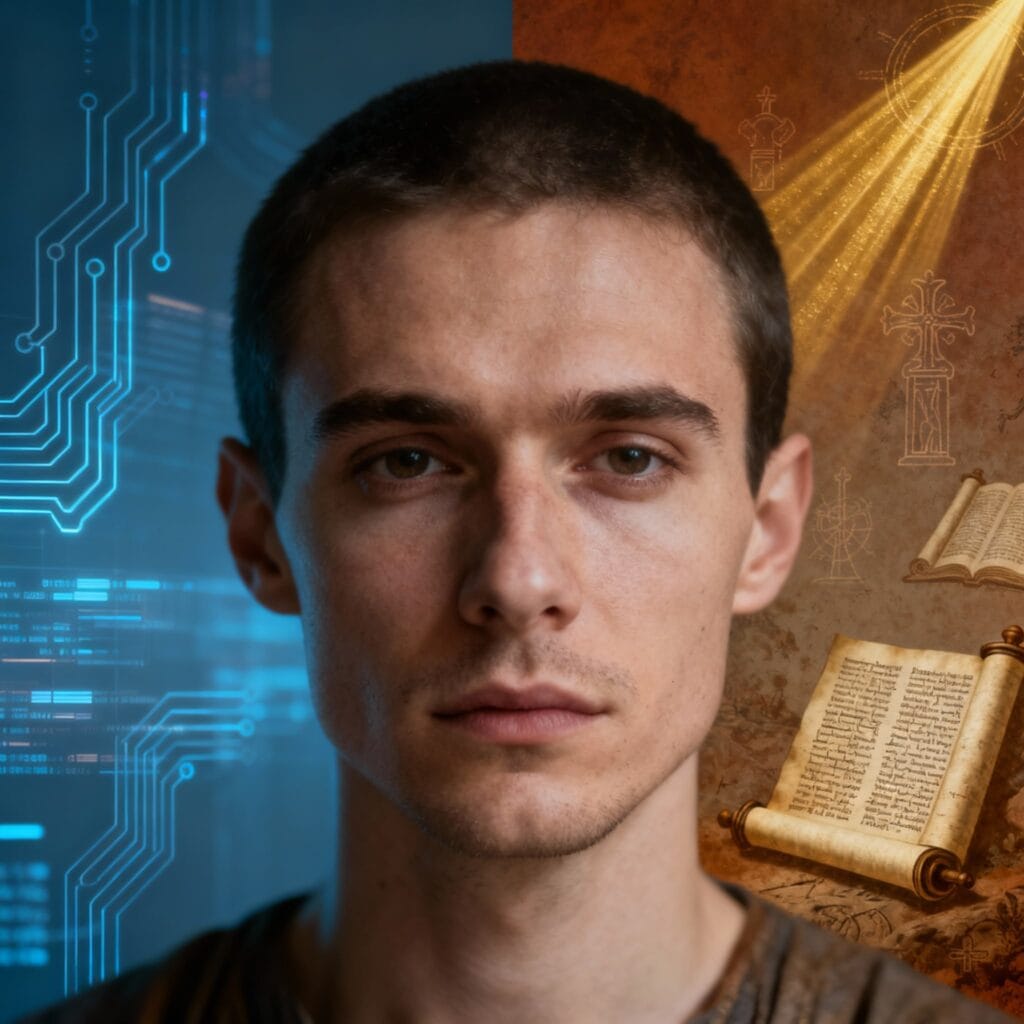
This two-way perspective – using technology to understand ancient texts and use ancient wisdom to guide technological development – opens up endless possibilities for discovery and personal growth.
A transformative reading method
The approach of engaging contemporary concerns with biblical teachings is more than just an intellectual exercise. It constitutes a transformative method of reading that can revolutionize our understanding of both fields.
This method invites us to move beyond the artificial divisions between faith and reason, between spirituality and technology, to discover unexpected synergies. It encourages us to see in current technological challenges as opportunities for spiritual growth and ethical discernment.
Readers who adopt this approach often report a feeling of intellectual and spiritual awakening. Familiar texts suddenly take on a new resonance, while complex technological questions find unexpected insights in ancient wisdom.
Towards a more humane technology
At the end of this exploration, we discover that the dialogue between artificial intelligence And biblical wisdom is not just an academic exercise, but a call to concrete action. It invites us to develop a more humane, more ethical, and more thoughtful approach to technological innovation.
This vision does not reject technological progress, but seeks to direct it towards genuinely human ends. She encourages us to create AI systems that not only solve technical problems, but also contribute to the flourishing of the human spirit and the strengthening of community ties.
This transformative approach leads us to ask new questions: How can our innovations serve love and compassion How can they promote justice and fairness? How can they contribute to the search for meaning and spiritual growth?
These questions are not obstacles to innovation, but catalysts for richer and deeper creativity. They push us to move beyond purely technical solutions to imagine holistic approaches that honor the complexity and dignity of the human experience.
The call to action
This unexpected convergence of ancient wisdom and contemporary challenges extends a personal invitation to you. Whether you are a developer, decision-maker, technology user, or simply a citizen of the digital world, This perspective offers concrete tools for navigating your own relationship to technology.
You can begin by applying biblical principles of discernment to your daily technology choices. What apps do you use and why? How do your digital tools influence your well-being and relationships? These simple questions can open up surprisingly rich avenues of reflection.
This approach also encourages you to explore biblical texts with fresh eyes, seeking connections to your current concerns. You might be surprised by the relevance and freshness of these age-old perspectives applied to the realities of your daily life.
A bridge to the future
The unexpected bridge between artificial intelligence And biblical wisdom reveals a profound truth: humanity's fundamental questions transcend eras and technologies. Our ability to create intelligent machines does not absolve us of the need for wisdom, discernment, and moral responsibility—on the contrary, it makes these qualities more necessary than ever.
This exploration took us from AI labs to ancient texts, revealing surprising connections and transformative insights. We discovered how timeless principles of wisdom can illuminate our most pressing technological challenges, while also finding new perspectives on our contemporary issues to appreciate the richness of biblical teachings.
The time has now come to move from reflection to action, to integrate these insights into your personal approach to technology and spirituality. This synthesis of old and new, of wisdom and innovation, offers you a unique framework to navigate the complexities of our time while nurturing your personal growth.
Are you ready to explore this revolutionary method of reading the Bible that transforms ancient texts into practical guides for our modern world? This invitation to discover the hidden treasures of age-old wisdom could very well revolutionize your understanding of faith, of technology and your place in this constantly evolving world.
The journey has only just begun. Each page turned, each connection discovered, each principle applied brings you closer to a more integrated and wiser vision of your existence in the’digital age. Wisdom awaits you – all that remains is to take the first step.