












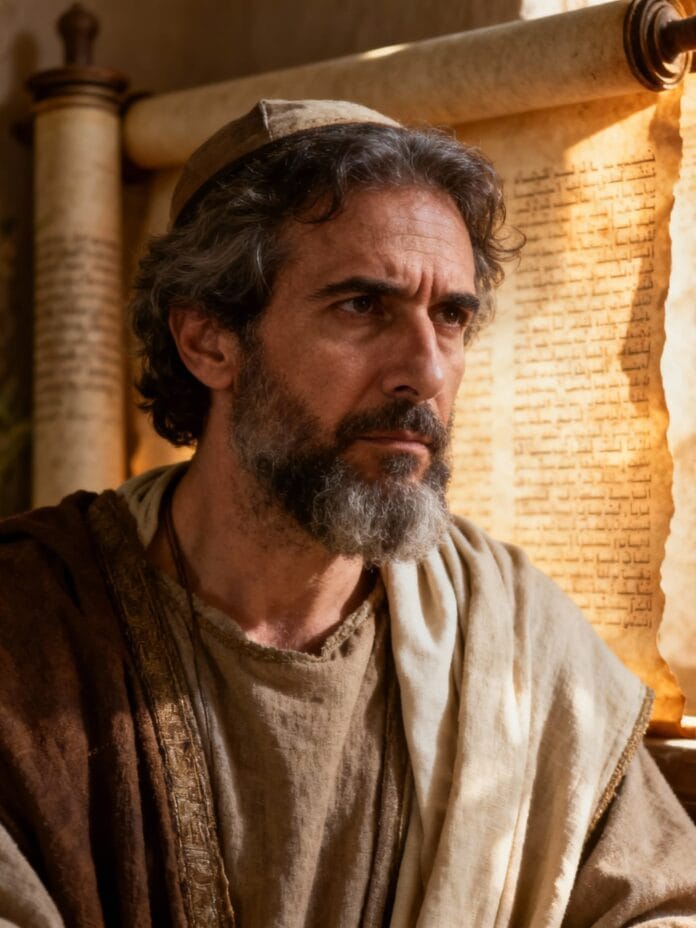
1° The person and era of the prophet. Since authentic information about the origin and life of Malachi is almost completely lacking, whether in his book, in other biblical writings, or in tradition, the opinion early on took hold that the Hebrew word Mal'âki, “my messenger” (the Latin form Malachias was formed from the Greek Septuagint translation, Mαλαχίας), was not his real name, but a designation of use, a kind of ideal appellation, attributed to some unknown prophet, or to the famous Ezra. This latter sentiment was once common among the Jews, as we learn from Saint Jerome, who had himself adopted it (see his Praef. In Mal. We read in the Targum of Jonathan: «Malachi, the name by which the scribe Ezra is called.» 1:1, the Septuagint translates as if there were mal'äko, and as if mal'àk was a common noun: άγγέλου αύτοΰ (the word of the Lord through his angel). Origen and other ancient authors even believed, no doubt relying on the Septuagint translation, that the last of the minor prophets was a true angel. But these are unfortunate subtleties concerning a name that happens to designate the occupation of the one who bore it.
We know more about the time of Malachi than about his origin and history. Like Haggai and Zechariah, he exercised his ministry after the exile; He was even the last of the Old Testament prophets, whose series he concludes (this is why the Jews called him the "Seal of the Prophets"). It has been said of him, in the same vein, that he is like a late evening, which ends a long day, but that he is also, at the same time, the twilight of morning, which heralds a magnificent day. This is proven not only by the place assigned to his book in the biblical canon, and by tradition, which is very clear on this point, but also by his own words. At the time of his prophetic activity, the Jews of Judah had at their head not an independent leader, but a governor, who was subject to a supreme authority (cf. 1:8b); now, this circumstance proves that it was still the era of Persian domination. Moreover, the rebuilding of the Temple was a fait accompli (it was completed in 516 BC, the sixth year of the reign of Darius, son of Hystaspes). (cf. Ezra 6:15), and the cult had been entirely reorganized (cf. 1:10 and 3:1, 10); this was not the case in the time of Haggai and Zechariah. Finally, there is such a striking resemblance between Malachi's description of the faults of his fellow believers and Nehemiah's account on the same subject (cf. Malachi 2:8 and Nehemiah 13:29; Malachi 2:10-16 and Nehemiah 13:23-27; Malachi 3:8-12 and Nehemiah 13:10-12) that these two holy figures were contemporaries. We can be even more precise: since Nehemiah dates this description to the last period of his ministry in Judea, that is, around 433 BC, it is likely that such is also the true date on which Malachi exercised his role and wrote his book (see Neh. 1, 1b; 2, 1; 13, 6).
The moral state of the Jews in Palestine was far from perfect at that time. A profound depression had set in in this respect since the better days when Haggai and Zechariah proclaimed their prophecies. Malachi shows us the theocratic nation dissatisfied with its God because it found the promises of prosperity announced by previous prophets too slow to materialize. It doubted kindness and even of God's justice. Hence a considerable laxity in the morals of the people. Malachi fought with all his might against the invasion of this evil spirit (the Talmud also places him, with Haggai and Zechariah, among the members of the great Synagogue).
2° The subject and division of the book. — The prophecy of Malachi (whose authenticity has not been seriously challenged, and could not have been) contains only one discourse, remarkable for its unity, and whose predominant characteristic is blame and reproach. Taking as its starting point love The prophet describes the Lord's paternal love for the Jews (cf. 1:2) and how this love was scorned and outraged, both by the priests, who behaved scandalously at the altar, and by the mass of the people, who openly transgressed the law. He also proclaims loudly that God will soon appear as a severe judge to punish all the guilty; indeed, in punishing, he will purify and thus prepare his ever-beloved people to receive the Messiah (the book of Malachi contains very important messianic prophecies. Cf. 1:10-11; 3:1; 4:5-6).
Scholars disagree on the division of the Book of Malachi. We have adopted the view of those who divide it into two sections, forming a kind of antithesis: 1. Everything degenerated in the Old Covenant (1:1–2:17); 2. The New Covenant, now quite near, will renew all things (3:1–4:6). Those who admit three parts divide the book thus: 1:1–2:9; 2:10–16; 2:17–4:6.
3° As a writerMalachi employs a fairly pure language for the period of literary decadence in which he lived (the almost complete absence of Aramaic words is easily explained, since Hebrew was then a dead language, no longer corrupted by use). He lacks neither strength, nor grandeur, nor originality. What characterizes him stylistically is that he does not adopt, like other prophets such as Isaiah, Ezekiel, Hosea, and Nahum, HabakkukSometimes the style of a poet, sometimes that of an orator; his style is to discuss calmly and to be a dialectician. He poses a question, listens to the objection, and answers it, always with great vivacity (cf. 1, 2-3, 6-9, 13; 2, 10, 14-15, 17; 3, 2, 7-8; 13-14, etc.). In short, as an exegete of the rationalist school once wrote, Malachi's book is "remarkable in both form and subject."
4° The best Catholic commentaries are: in antiquity, Theodoret of Cyr, Enarrationes in duodecim Prophetas and Saint Jerome, Commentaria in Prophetas minores. In modern times: F. Ribera, In librum duodecim Prophetarum commentarii, Antwerp, 1571; Sanchez, How. In Prophetas minores et Baruch, Lyon, 1621.
Malachi 1
1 Sentence. Word of the Lord to Israel through Malachi. 2 «I have loved you,» says the Lord, “and you ask, ‘How have you loved us?’ Is not Esau Jacob’s brother?” declares the Lord. “And I have loved Jacob.”, 3 But I hated Esau, I made his mountains a desolate wasteland, and I gave his inheritance to the jackals of the desert. 4 If Edom says, «We have been destroyed, but we will rebuild the ruins,» thus says the Lord of hosts: «They shall build, but I shall tear down, and it shall be said of them, »A land of iniquity, a people against whom the Lord is angry forever.’” 5 Your eyes will see it and you will say to yourselves, "May the Lord be glorified in the land of Israel."« 6 A son honors his father, and a servant his master. But if I am a father, where is the honor due me? And if I am a lord, where is the respect due me? says the Lord Almighty, to you priests, who despise my name. You say, «How have we despised your name?» 7 Because you bring defiled bread to my altar. And you say, «How have we defiled you?» Because you say, «The Lord’s table is despicable.» 8 When you present a blind animal for sacrifice, there is no harm, and when you bring one that is lame or sick, there is no harm. Now go and offer it to your governor? Will he be pleased with you? Will he be favorable to you? says the Lord of hosts. 9 And now, beg God to have mercy on you. This has been done by your own hand; will He be moved to show mercy by you? says the Lord of hosts. 10 Why don't one of you shut the doors instead, so that you don't set my altar ablaze in vain? I have no pleasure in you, says the Lord Almighty, and I will not accept an offering from your hand. 11 For from the rising of the sun to its setting, my name is great among the nations, and in every place incense and a pure offering are offered to my name, for my name is great among the nations, says the Lord of hosts. 12 And you profane it when you say, «The Lord’s table is defiled, and what it yields is nothing but contemptible food.» 13 And you say, «This is a trouble,» and you scorn it, says the Lord of hosts. And you bring what is stolen, what is lame, and what is sick, and you present this offering. Can I accept it from your hand? says the Lord. 14 Cursed be the fraudster, who, having a male in his flock, makes a vow and sacrifices to the Lord a blemished animal, for I am a great king, says the Lord of hosts, and my name is feared among the nations.
Malachi 2
1 Now therefore, this decree is for you, O priests. 2 If you do not listen and do not take to heart to give glory to my name, says the Lord of hosts, I will send a curse upon you and I will curse your blessings and already I have cursed them, because you have not taken to heart. 3 Behold, I will cause your seeds to fail, I will spread manure on your faces, the manure of your feasts, and you will be carried away with it. 4 Then you will know that I have sent you this decree, so that my covenant with Levi may remain, says the Lord of hosts. 5 My covenant with Levi was a covenant of life and peace, and I gave him these possessions; a covenant of fear, and he feared me and trembled before my name. 6 The law of truth was in his mouth, and no iniquity was found on his lips; he walked with me in peace and righteousness, and he turned away a great number of men from evil. 7 For the lips of the priest preserve knowledge, and from his mouth people seek instruction, because he is the angel of the Lord of hosts. 8 But you have turned aside from the way, you have caused many to stumble in the law, you have perverted the covenant of Levi, says the Lord of hosts. 9 And I, in turn, have made you despised and vile before all the people, because you do not keep my ways and you show partiality in applying the law. 10 Is there not one Father for us all? Did not one God create us all? Why are we unfaithful to one another, profaning the covenant of our fathers? 11 Judah is unfaithful and an abomination is committed in Israel and in Jerusalem because Judah profanes what is consecrated to the Lord, what the Lord loves, he marries the daughter of a foreign god. 12 For the man who does this, may the Lord cut off from the tents of Jacob the watchman, the answerer, and the one who offers the offering to the Lord of hosts. 13 Here is a second thing that you do: you cover the altar of the Lord with tears, you cover it with weeping and wailing, so that the Lord no longer regards the offering and no longer receives a pleasing offering from your hand. 14 And you say, «Why?» Because the Lord was a witness between you and the wife of your youth, to whom you were unfaithful, she who was your companion and your wife by covenant. 15 None of them did that, having the rest of the divine Spirit. And what did the One do? He sought a divine offspring. Therefore, take heed to your life and let no one be unfaithful to the wife of his youth. 16 For I hate divorce, says the Lord, the God of Israel, for it is a violent covering of one's garment, says the Lord of hosts. Therefore, be careful of your lives and do not be faithless. 17 You have wearied the Lord with your words. And you say, «How have we wearied him?» By saying, «Everyone who does evil is good in the sight of the Lord, and he delights in such people,» or, «Where is the God of justice?»
Malachi 3
1 “Behold, I send my messenger, and he will prepare the way before me, and suddenly the Lord whom you seek, the angel of the covenant in whom you delight, will come to his temple. Behold, he is coming,” says the Lord of hosts. 2 And who will endure the day of his coming, and who will stand when he appears? For he will be like a refiner's fire, like a fuller's soap. 3 He will sit as a refiner and purifier of silver; he will purify the sons of Levi and refine them like gold and silver, and they will be ministers to the Lord, presenting offerings to him in righteousness. 4 and the offering of Judah and Jerusalem will be pleasing to the Lord as in days of old, as in the years of long ago. 5 I will come near to you for judgment and I will be a swift witness against sorcerers, against adulterers, against those who swear falsely, against those who extort wages from the employed, who oppress the widow and the orphan, who reject the foreigner and do not fear me, says the Lord of hosts. 6 It is because I, the Lord, do not change, that you, the children of Jacob, have not been consumed. 7 Since the days of your fathers, you have turned away from my ordinances and have not kept them. Return to me, and I will return to you, says the Lord of hosts. But you say, «How shall we return?» 8 Would a man dare to defraud God, that you should defraud me? And you say, "How have we defrauded you?" In the tithe and the portion to be deducted. 9 You are cursed, and you, the whole nation, are deceiving me. 10 Bring the whole tithe into the treasury, and let there be food in my house. Test me in this, says the Lord Almighty: if I will not throw open the floodgates of heaven and pour out so much blessing that there will not be room enough to store it. 11 For you, I will drive away the devouring insect; it will no longer destroy the fruits of your soil, and the vine will no longer be barren for you in the countryside, says the Lord of hosts. 12 All nations will call you blessed, for you will be a land of delight, says the Lord of hosts. 13 Your words are harsh against me, says the Lord. And you say, «What have we said about you among ourselves?» 14 You said, "What good has it done to serve God? What have we gained by observing his precepts and walking mournfully before the Lord of hosts?"« 15 And now we call the wicked blessed, for they prosper; those who do evil, who test God and yet escape.» 16 So those who feared the Lord conversed with one another. And the Lord listened, he heard, and a book of remembrance was written before him for those who feared the Lord and respected his name. 17 On the day that I am preparing, says the Lord of hosts, they shall be a special possession to me, and I shall be full of tenderness for them, as a man is full of tenderness for his son who serves him. 18 And you will again see the difference between the righteous and the wicked, between those who serve God and those who do not. 19 For behold, the day is coming, burning like a furnace. All the proud, all those who do evil will be stubble, and the day that is coming will set them ablaze, says the Lord of hosts, so that it will leave them neither root nor branch. 20 But for you who fear my name, a sun of righteousness will rise with healing in its rays, and you will go out and leap like calves released from the stall. 21 You will trample the wicked, for they will be like ashes under the soles of your feet on the day I am preparing, says the Lord of hosts. 22 Remember the law of Moses my servant, to whom I gave precepts and ordinances for all Israel at Horeb. 23 Behold, I am sending you Elijah the prophet before the coming of the great and dreadful day of the Lord. 24 He will turn the hearts of the fathers to the children and the hearts of the children to the fathers, lest I come and strike the earth with anathema.
Notes on the Book of Malachi
1.2-3 I loved Jacob, I hated Esau. Saint Paul (Romans 9 v.11-13), and after him Saint Augustine And most ecclesiastical writers taught that these two brothers were figures of the elect and the damned. Cf. predestination to heaven or to punishment, but not predestination to sin. See the Catholic Theological Dictionary and the Theological Dogma Summary.
1.2 See Romans 9:13.
1.3 A loneliness. Besides the fact that Idumea was barren of its own accord, it had been ravaged by Nebuchadnezzar's army, five years after the capture of Jerusalem (Isaiah, chapter 21 and following; ; Jeremiah, 49, v.7 and following; Ezekiel 25, 13; 35, 3; Amos 1, 11-12).― At the time when Malachi prophesied, the Nabataeans had taken possession of Idumea and had driven out its ancient inhabitants forever.
1.8 God wanted all the victims offered to him to be without blemish (Lv. 22, 21-22; Deut. 15, 21).
1.10-11 These verses express 1) the abolition of the sacrifices and ceremonies of the Old Law, 2) the advent of a completely pure sacrifice, offered to the Lord everywhere, and in the midst of the nations. Saint Jerome, along with the other Church Fathers, saw in this passage a true prophecy, announcing future events. Regarding matters of conjugation, prophets often represent as already accomplished events that will only occur in the future.
1.11 See Psalms, 112, 3.
1.14 A male without blemish was the victim designated by law for vows made to the Lord (Leviticus, 22, v.18 and following).
2.2 Leviticus 26:14-16; Deut. 28:15.
2.3 The shoulder of the victims was the portion intended for the priests (Deuteronomy, 18, 3).
2.4 With Levi, that is to say, with Aaron and his children, referred to here as Levi, because they were of the tribe and race of that patriarch, and it was to this tribe that God had attached his priesthood. Some think that Malachi is speaking of the renewal of this covenant after the return from captivity (Nehemiah 9, 38; 10, 1).
2.10 Matthew 23:9; Ephesians 4:6.
2.11 He marry the daughter of a foreign god, an idolatrous woman.
3.1 Luke 1:17. The evangelists and Jesus Christ himself explained this about the coming of Saint John the Baptist, the forerunner of the Messiah (Matthew, 11, 10; Marc, 1, 2; Luke, 7, 27).
3.3 In the East, goldsmiths who refine gold and silver work sitting down, their crucible in the middle of their shop, on the ground and without a chimney.
3.7 Zechariah, 1, 3.
3.14 Job 2:15.
3.16 Scripture often portrays God as a monarch who keeps records of his troops and officers, and as a judge who dispenses justice according to what is written in his records.
3.19 day is coming ; According to exegetes, this is the last day, when Jesus Christ will descend from heaven, preceded by avenging fire. 2 Thessalonians 1, 8.
3.20 Luke 1:78. Sun of Justice ; It is Jesus Christ, who is the light of the world through his teaching, and the author of its righteousness through his grace.
3.22 Exodus, chapter 20; Deuteronomy, 4, 5-6.
3.23 Matthew 17:10; Mark 9:10; Luke 1:17. It is the constant and universal tradition of the synagogue and the Christian Church that the prophet Elijah will come in person at the end of the world to oppose the Antichrist and to convert the Jews to Jesus Christ. The Savior himself confirms this promise of Elijah's coming (Matthew, 17, 11; Marc, 9, 11). Elijah is also one of the two prophets whose future coming is announced by Saint John (Apocalypse, 11, 3).