








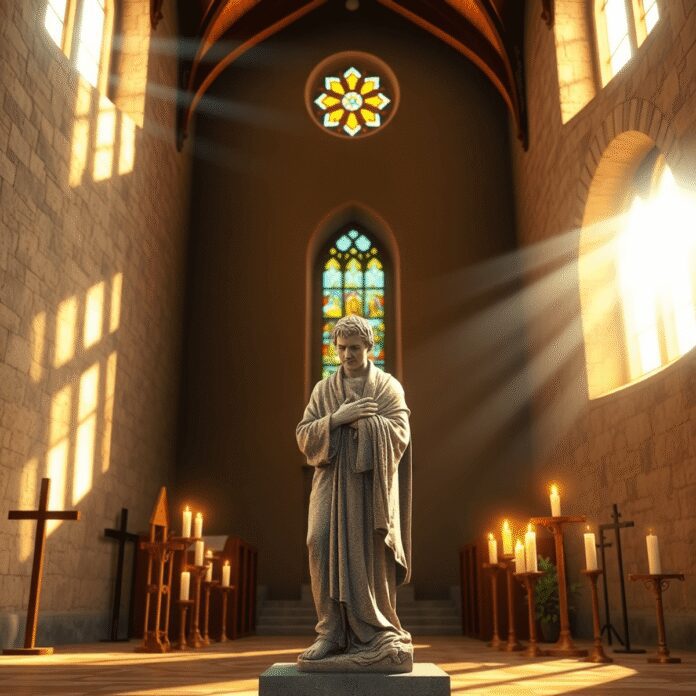
Christian martyrs in France represent an essential part of the Christian memory national. Their history, rooted in the early centuries of the ChristianityThis testifies to an unwavering faith in the face of persecution and hardship. These emblematic figures embody a lasting example of courage and sacrifice, which continues to influence French spirituality and culture.
This article aims to introduce you to the historical role of Christian martyrs in France: their struggle, their witness, and how this memory is passed on today. You will find striking examples that illustrate this fidelity to the faith, as well as a reflection on the contemporary inspiration these martyrs offer not only to believers, but also to anyone facing life's challenges.
Through this exploration, you will understand how the Christian martyrs of France remain a source of inspiration and living faith, capable of illuminating contemporary personal and collective commitments. Christian memory This reveals itself as a powerful lever, nourishing both the spiritual dimension and universal human values.
The first Christian martyrs in France: between persecution and unwavering faith
THE Christianity The ancient history of martyrdom in France is rooted in a difficult context where the first martyrs of France left a profound mark. Under the Roman Empire, Gaul experienced several waves of Roman persecution aiming to suppress this new religion deemed subversive. Christians They refuse to participate in the imperial cult and are accused of atheism, which leads to severe sanctions.
The living conditions of the first believers in Gaul were marked by social isolation and constant threat. They met in secret, often in catacombs or private homes, to celebrate their faith. Refusing to renounce Christ, many suffered torture, imprisonment, or even death. This extreme fidelity forged a strong collective memory that endures through the centuries.
A few striking examples illustrate this era:
- Saint BlandineShe, who died around 177 in Lyon during a violent persecution, is an emblematic figure. A Gallic slave, she bravely faced the tortures inflicted on the Christians of Lyon; her composure in the face of death still inspires today.
- Saint PothinThe first bishop of Lyon also died a martyr under the same persecution. His spiritual guidance during these troubled times gives him a central place in French Christian history.
- Saint Irenaeus of Lyon, a direct disciple of the apostle John, testifies through his writings and his theology to the spiritual battle against the heresies and martyrdom as the ultimate testimony of faith.
These martyrs embody resistance against Roman oppression and symbolize the passage of the Christianity from a persecuted sect to a recognized religion. Their sacrifice creates a solid foundation for the Christian memory In France.
The enduring memory of the first Christian martyrs in France helps us understand how their example nurtured a tradition of commitment and inspiration that persists in subsequent centuries. Their unwavering courage remains a crucial reference point for grasping the historical and spiritual significance of martyrdom. Christianity French.
The memory of martyrs in the French Catholic tradition
There collective memory in France The commemoration of Christian martyrs draws heavily on the practices and institutions of the Catholic Church. This memory is not simply a historical recollection; it is living, ritualistic, and contributes to the spiritual and cultural identity of the country.
Preservation of memory in the Catholic Church
The Catholic Church plays a central role in transmitting the memory of the martyrs. Several means are employed:
- THE liturgical feasts Each martyr recognized by the Church is assigned a date of commemoration in the liturgical calendar. These dedicated days allow the faithful to remember their sacrifice, often during specific masses or processions.
- Places of worship Many churches, chapels and shrines in France bear the names of martyrs or house their relics. These spaces become privileged places for prayer and remembrance.
- THE hagiographic texts : life stories of the holy martyrs that have been circulating since the early centuries of the Christianity To this day, they nourish faith and inspire believers through their concrete examples.
The Role of Saints and Emblematic Figures
The holy martyrs are much more than historical figures; they embody a permanent moral and spiritual reference. In France, several figures occupy a special place in this collective memory:
- Saint Blandine, a martyr from Lyon in the 2nd century, is often cited as a symbol of unwavering faith in the face of persecution.
- Saint Denis, the first bishop of Paris, martyred in the 3rd century, is a strong example whose tomb the basilica still preserves today.
- Saint GenevieveAlthough not a martyr in the strict sense, she remains an emblematic figure associated with spiritual protection and Christian heritage in France.
These figures are honored not only for their death but also for their enduring legacy in popular and ecclesiastical traditions. They contribute to a shared memory that transcends the strictly religious sphere to encompass all of French society.
"The memory of the martyrs is a source of inspiration that transcends centuries," the Catholic Church in France often reminds us.
This memorial heritage acts as a link between past and present. It allows Christian communities to recognize themselves in a shared history made up of strong commitments in the face of the challenges of the time.
The French Catholic tradition has successfully integrated this collective memory of the martyrs into its moral teaching, public celebrations, and daily spirituality. It thus provides a solid framework for perpetuating these examples of courage and fidelity, which continue to enlighten contemporary consciences.
Major figures associated with Christian memory in France: Augustine of Hippo and its spiritual heritage
Augustine of Hippo, although born in Africa From the North in the 4th century, he exerted a profound influence on Western Christian theology and on spirituality in France. His work constitutes a major reference for understanding Christian martyrs in France: memory, examples, and contemporary inspiration. His thought permeates not only religious dogma but also the way faith is lived inwardly by believers.
Augustine of Hippo: a pillar of Western Christianity
- Philosopher and theologian, Augustine shaped the foundations of Christian doctrine through his writings, such as The Confessions And The City of God.
- His ideas have transcended centuries to nourish French and European spirituality.
- He helped to formalize the relationship between faith and reason, providing a solid intellectual framework for believers facing the challenges of the world.
His influence is particularly felt in the way the Catholic Church in France values the memory of martyrs. The latter are seen not only as external witnesses of the faith, but also as figures who invite everyone to a profound inner experience.
There internal memory According to Augustine: an intimate link with faith
Augustine insists on the importance of the internal memoryunderstood as a human capacity to retain and relive profound spiritual experiences. This memory is not limited to historical recollection; it is a driving force for personal commitment to faith.
"Memory helps us to retain what is true and good for our soul" (free paraphrase of his thought).
For him, martyrdom is not limited to visible sacrifice: it also embodies a constant inner fidelity, a perpetual spiritual battle against doubt and forgetfulness. Faith then becomes a light carefully guarded deep within.
- This concept fuels the current inspiration of Christian martyrs in France, where their example goes beyond the simple heroic act.
- He invites every believer to cultivate this living memory in order to bravely face contemporary challenges.
- The memory of the martyrs thus becomes a source of spiritual energy, renewed in the private sphere rather than only in ritual.
Augustine of Hippo's legacy transcends the strictly religious sphere to encompass a universal dimension: the human quest for meaning through faithful and active remembrance. This approach still illuminates today the importance of keeping alive the memory of Christian martyrs in France—not as a fixed past, but as a light that guides each step of the individual and collective spiritual journey.
Martyrdom in the Middle Ages: Medieval Sainthood and Moral Models
THE Christian Middle Ages in France This profoundly influenced the representation of the martyr, who occupies a central place in the construction of medieval sainthood. This period saw the development of a spirituality in which personal sacrifice became an ideal to emulate in order to achieve Christian perfection. The martyr, often associated with suffering endured for the faith, is presented as an exemplary moral model and a source of inspiration for the faithful.
The central role of martyrdom in the development of sainthood in the Middle Ages
The concept of martyrdom is part of a broader vision of sainthood, where loyalty Devotion to God to the very end is valued as the supreme proof of divine love. In the medieval Church, there was a rigorous veneration of martyrs, with liturgical feasts and pilgrimages dedicated to these figures. Their memory served to strengthen Christian identity in the face of the political and social challenges of the time.
The emphasis placed on bearing witness through blood also reflects an era in which religious conflicts, invasions, and internal tensions reinforced the need for spiritual heroes capable of leading by example. The martyr then became a living symbol of resistance against adversity, but also a moral compass for Christians who seek to live their faith in sometimes difficult conditions.
Historical examples of medieval French saint-kings and martyrs
Several emblematic figures illustrate this link between royalty, sacrifice, and sainthood:
- Saint Louis (Louis IX) A very pious king, he embodies the ideal of the "knight king," ready to defend the Christian faith, particularly during the Crusades. His death in captivity in the Holy Land gives him an almost martyrological dimension, even if it does not correspond to direct persecution.
- Saint Denis The first bishop of Paris and a legendary martyr, he represents the prototype of the faithful witness who suffered martyrdom for his evangelical preaching. His beheading on Montmartre hill remains a powerful symbol of courage and faith.
- Saint Genevieve Although not a martyr in the classical sense, she is venerated as the spiritual protector of Paris against barbarian invasions; her commitment illustrates medieval sanctity focused on community service and the defense of Christian values.
- Saint Thomas BecketAlthough British, he exerted a notable influence in France thanks to strong ecclesiastical ties with England; he was seen as a model of resistance against political oppression in the name of faith.
These figures embody different facets of medieval martyrdom: both those who die directly for their faith and those who live a form of sacrificial commitment in service to the Christian people.
The Middle Ages thus offers a rich array of examples that nourish French spirituality through their moral and heroic dimension. These martyrs and saintly kings become essential points of reference for understanding how a Christian identity was forged, blending temporal power and spiritual vocation.
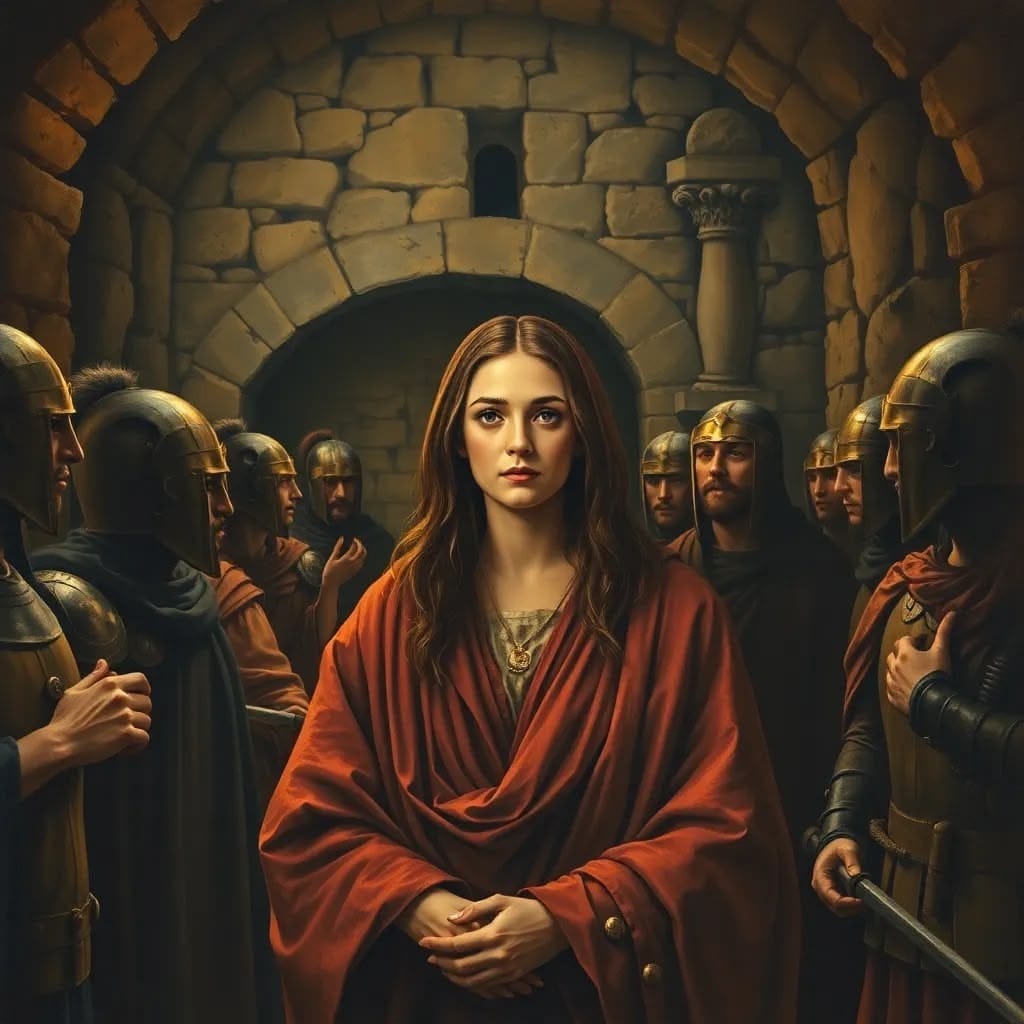
Collective memory as a lever for moral and spiritual engagement today
The memory of Christian martyrs in France transcends mere historical remembrance: it acts as a powerful driving force.contemporary Christian commitmentYou are invited to draw upon these examples of unwavering faith to nourish your own spiritual journey and that of your community.
Encourage personal and community engagement
- The stories of the martyrs remind us of the need for unwavering fidelity to one's convictions, even in the face of adversity. This encourages each of us to reflect on our own ability to bear witness to our values in everyday life.
- In parishes, schools, and Christian movements, the memory of the martyrs serves as a foundation for concrete actions: service to the most destitute, defense of the social justice, or even promotion of peace.
- THE Christian testimony is not limited to a private dimension; it is expressed in the collective commitment that forges a united and resilient community.
Courage in the face of adversity as an inspiring model
The martyrs embody an extreme form of courage, that which refuses to renounce one's faith even at the cost of one's life. Their example becomes a guiding principle.
- In a world where moral challenges abound, their perseverance reminds us that true courage often consists of remaining true to one's principles despite external pressures.
- This courage also inspires a renewed perspective on personal trials: they can be experienced as opportunities for inner growth and authentic witness.
- You can see in this collective memory a call to overcome fear and indifference to embrace a life marked by selflessness.
A living memory that transmits moral values
Passing on the memory of the martyrs helps to firmly establish values such as:
- Justice
- The truth
- Solidarity
- Hope
These principles remain essential for building a more humane society. They are not fixed in the past but continually reinterpreted in light of current challenges.
"The memory of the martyrs is an inexhaustible source of moral inspiration," the French Catholic Church often affirms. It invites you to transform this legacy into concrete actions, bearing witness to a living faith in the heart of the contemporary world.
By incorporating this memory into your reflections and commitments, you actively participate in keeping alive a Christian testimony bearing hope and authenticity. This collective memory can also serve as a lever to promote essential social values such as those described in the Compendium of the Social Doctrine of the Church.
The contemporary inspiration of Christian martyrs beyond religion: courage, sacrifice, and witness for all
The figure of the martyr extends far beyond the strictly religious sphere to establish itself as a source ofcontemporary cultural inspiration in FranceIt is no longer just an example of faith, but a universal symbol that challenges everyone in the face of personal and collective challenges.
An influence beyond the religious sphere
In contemporary French society, the Christian martyrs in France: memory, examples, current inspiration These often translate into models of contemporary courage. They represent people willing to defend their convictions or sacrifice themselves for a cause greater than themselves. This image fuels discussions about civic engagement, the defense of human rights, and the fight against injustice.
For example :
- Community activists cite these historical figures to illustrate the peaceful struggle against oppression.
- Contemporary artists are taking up these themes in their works to convey a message of hope and resistance.
- Educators encourage young people to draw on this memory to develop their own moral strength.
The universal values embodied by the martyr
Courage, sacrifice, and bearing witness are at the heart of what martyrs represent. These values continue to illuminate our era by offering solid points of reference in the face of modern challenges.
- Courage : facing adversity without abandoning one's principles. This can concern both a political commitment and a personal struggle against illness or injustice.
- Sacrifice : to voluntarily renounce a personal interest in order to defend a just cause or protect others.
- Testimony : to embody through one's actions a profound truth that inspires and guides others.
These elements are not reserved for believers alone. Their scope transcends spiritual boundaries to touch anyone sensitive to issues of ethics and solidarity.
«Martyrdom is a beacon that illuminates our own struggles,» say some contemporary thinkers involved in the interreligious dialogue and humanitarian.
An inspiration tailored to current challenges
The social, environmental, and health crises we are witnessing require an inner mobilization comparable to that of the martyrs of the past. Their example encourages us not to succumb to fatalism or individualism. It reminds us that every act of personal bravery contributes to building a more just society.
The memory of Christian martyrs in France is thus relevant today not only as a historical legacy but also as a driving force for an ethic of shared courage, thoughtful sacrifice and authentic witness in the face of contemporary challenges.
Conclusion
The Christian martyrs in France embody a living spiritual heritage which spans centuries. Their memory is not limited to a simple historical recollection; it is a profound source of inspiration for our personal and collective commitment.
"Remembering the martyrs means continuing to keep their witness of faith and courage alive in our daily actions."
To perpetuate this memory is to:
- To affirm the strength of the courage in the face of adversity,
- Feeding a willingness to commit in our communities,
- Cultivating a spirit of solidarity and sacrifice in service of the common good.
You are invited to draw upon this Christian heritage as a driving force to confront contemporary challenges, whether spiritual, social, or cultural. The Christian martyrs in France—their memory, examples, and enduring inspiration—remind us that every act of fidelity and witness matters.
Keep this tradition alive; it remains a light for those seeking to live authentically and with integrity in a constantly changing world.
Frequently Asked Questions
Who were the first Christian martyrs in France and in what context did they live?
The first Christian martyrs in France lived under the Roman Empire, in a context of persecution against the early Christians in Gaul. Their unwavering faith in the face of these trials has left its mark on history. Christianity former in France.
How is the memory of Christian martyrs preserved in the French Catholic tradition?
The memory of the martyrs is preserved within the Catholic Church in France through the veneration holy martyrs and emblematic figures, who play an essential role in the transmission of this collective Christian memory.
What is the spiritual legacy of Augustine of Hippo in French Christian memory?
Augustine of Hippo, a major figure in Christian theology, profoundly influenced the Christianity Western and French. His conception of inner memory reinforces the link between remembering martyrs and personal faith.
What role did martyrs play in medieval sanctity in France?
In the Middle Ages, martyrdom was central to the development of sainthood in France. Figures such as the saintly kings illustrate how the sacrifice and witness of martyrs served as moral models for medieval Christian society.
How does the memory of Christian martyrs encourage moral and spiritual commitment today?
Today, the memory of the martyrs inspires personal and communal commitment by promoting values such as courage in the face of adversity. This historical testimony serves as a catalyst for strengthening contemporary Christian commitment.
In what ways are Christian martyrs in France a source of inspiration beyond the religious sphere?
Christian martyrs embody universal values such as courage, sacrifice, and bearing witness in the face of current challenges. Their influence thus extends to a broader cultural perspective, inspiring not only believers but also anyone with a moral compass.