












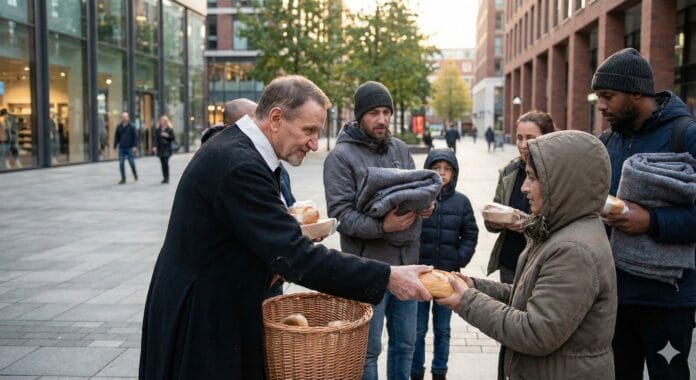
There Christian vocation Serving the poor: Saint Vincent de Paul revisited today invites us to reflect on a fundamental commitment of Christianity. Serving the poorest is not just a one-off act of charity, but a true vocation that engages the whole meaning of faith and Christian life.
Saint Vincent de Paul occupies a major place in Catholic history, embodying this vocation through his concrete and structured actions. Born into humble circumstances, he was able to mobilize spiritual and human resources to respond to the needs of the poor with efficiency and compassion. His legacy transcends his time: he revolutionized the way the Church organizes its service to the destitute, giving rise to institutions that are still active today.
Revisiting this heritage today allows us to draw on a rich tradition of lessons to address contemporary challenges related to poverty. The aim is to examine how the Christian vocation This translates today into a world marked by new forms of exclusion, drawing inspiration from the Christian charity vibrant and committed, inspired by Saint Vincent de Paul.
Historical and biographical context of Saint Vincent de Paul
The life of Saint Vincent de Paul unfolds within a historical context marked by profound social inequalities and widespread poverty among the rural and urban populations of 17th-century France. Born in 1581 into a modest peasant family in Pouy, in southwestern France, Vincent benefited from an education made possible thanks to charity from a local priest who recognized his potential. This help enabled him to enter the seminary, thus laying the foundations for his future Christian commitment.
The defining experience of his youth remains his captivity in Africa of the North. In 1605, while serving as a priest, he was captured by Barbary pirates and enslaved for nearly two years. This period of hardship led to a profound spiritual transformation. Faith became an essential refuge for him in the face of physical and emotional suffering, as well as a source of a new understanding of service to others. He experienced vulnerability firsthand, which sharpened his sensitivity towards the poor and the oppressed.
Upon returning to France after his release, Saint Vincent became aware of the extent of the spiritual and material needs of impoverished populations, particularly in the countryside where the clergy is often absent or ineffective. He then decided to dedicate his life to meeting these needs through intense Christian commitment, combining prayer, social action, and charitable organization. His journey testifies to a constant desire to embody the Gospel in service to the most vulnerable, going beyond simple, one-off gestures to establish a genuine collective dynamic around charity.
Humble origins: peasant birth and education through charity
Vincent was born into a modest peasant family in Pouy, which allowed him access to an education thanks to charity from a local priest.
Captivity in North Africa: a foundational spiritual ordeal
As a priest, he was captured by Barbary pirates and enslaved for nearly two years, a pivotal experience in his spiritual transformation.
Returning to France: becoming aware of the realities of rural and urban poverty
After his release, Saint Vincent became aware of the spiritual and material needs of the impoverished populations in France, particularly in the countryside where the clergy is often absent or ineffective.
This historical basis illuminates the human and spiritual depth that underlies all of Vincent's work.

The charitable foundations of Saint Vincent de Paul: a revolution in organized charity
Saint Vincent de Paul profoundly transformed the way in which charity is practiced by structuring innovative and effective social initiatives. Three major initiatives mark this revolution:
Creation of Confraternities of Charity
As early as 1617, Vincent mobilized women pious groups centered around a concrete project to help the poor and the sick. These Confraternities of Charity They bring together lay people committed to regular service, organizing home visits and spiritual assistance. This network fosters collective involvement instead of isolated actions, giving structural coherence to charity local.
Foundation of the Congregation of the Mission
In 1625, he founded the Congregation of the Mission, also known as the Lazarists, to address the spiritual needs of rural areas neglected by the Church. This congregation trained priests capable of evangelizing and supporting rural populations, often overlooked by the Church's structures. The mission was not limited to religious proclamation but also included attention to the material conditions of the poorest.
Emergence of Daughters of Charity
Together with Saint Louise de Marillac, Vincent created the Daughters of Charity. This non-cloistered community is distinguished by its direct service to the sick and the poorest members of society in hospitals and disadvantaged neighborhoods. Their active presence in the field embodies a new model of female engagement in the Church, combining profound spirituality with concrete social action.
These foundations are based on a common principle: uniting faith and action in an organization capable of fostering lasting service. Saint Vincent de Paul did not simply provide occasional assistance; he structured social works that endure, promoting human solidarity rooted in Christian spirituality. This model continues to inspire numerous charitable initiatives around the world today.
Spirituality at the heart of service to the poor according to Saint Vincent de Paul
Saint Vincent de Paul inscribed the Christian spirituality at the very heart of service to the poor by insisting on a active love and concrete. This love is not limited to an inner emotion; it manifests itself through tangible acts, where every gesture towards the poor becomes a living expression of Christianity. Love is thus the fundamental driving force behind all action.
Vincentian theology is based on a profound identification: Christ is present in the poor. This conviction transforms the way we approach service; serving the poor is to encounter Christ himself. This spiritual reality gives a sacred meaning to every social commitment, going beyond mere material aid to reach a dimension that is both divine and human.
There prayer Prayer plays a vital role in this dynamic. It supports social engagement by nourishing the soul and strengthening perseverance in the face of difficulties. For Saint Vincent, prayer is not an activity separate from service, but its very lifeblood. Without prayer, action would lose its depth and authenticity.
Two fundamental values guide behavior in this exercise:
- L'’humility : to recognize one's own weakness and to approach the poor without pride or pretension.
- Obedience : to conform to the divine will expressed through the needs of the most vulnerable, often accepting to step out of one's comfort zone.
These virtues shape a Christian vocation embodied, where charity It becomes a demanding spiritual path, but one that brings personal and communal transformation. Christian vocation Serving the poor: Saint Vincent de Paul revisited today This invites us to engage wholeheartedly and with faith in a living alliance between prayer and action, love and humility.
The Christian vocation today: drawing inspiration from Saint Vincent to serve the poor
There contemporary Christian vocation finds in the Vincentian model a powerful source of inspiration in the face of the new challenges posed by poverty. Social situations change, but the essential remains: responding to the needs of the most disadvantaged with a concrete commitment, rooted in lived faith.
A contemporary reinterpretation of the Vincentian model
- Poverty Today, this manifests itself in various forms: economic insecurity, social exclusion, emotional isolation. The Vincentian model encourages us to move beyond one-off assistance to aim for comprehensive and respectful support. human dignity.
- L'’Christian social commitment must adapt by integrating new dimensions such as professional integration, access to housing, or the fight against loneliness.
- A fresh reading emphasizes the community dimension service: it is not just an individual action, but a commitment carried by living communities, bearing witness to an active faith.
Integration between lived faith and social action
Spiritual experience is inseparable from social action. In contemporary Christian communities, the vocation to serve the poor is expressed through:
- A coherence between prayer and concrete action, where one supports the other.
- Training in a spirituality of encounter that makes the poor not an object of aid, but a brother to be listened to and accompanied.
- A call to live an active solidarity, rooted in the conviction that serving the poor is to serve Christ himself.
Examples of initiatives inspired by Saint Vincent
Several contemporary organizations extend this Vincentian legacy:
- There Society of Saint Vincent de Paul, present in many countries, brings together volunteers committed to providing direct assistance to people in difficulty (home visits, food distribution, moral support).
- Local movements are creating innovative welcoming spaces that combine social support and spiritual development.
- Collaborations between churches and associations seek to respond to emergencies while promoting lasting change in living conditions.
This return to Saint Vincent in the current context is not limited to reproducing past actions. It invites each Christian to embody a living vocation—made of attentive listening, humble presence, and concrete love—capable of transforming today's social realities.
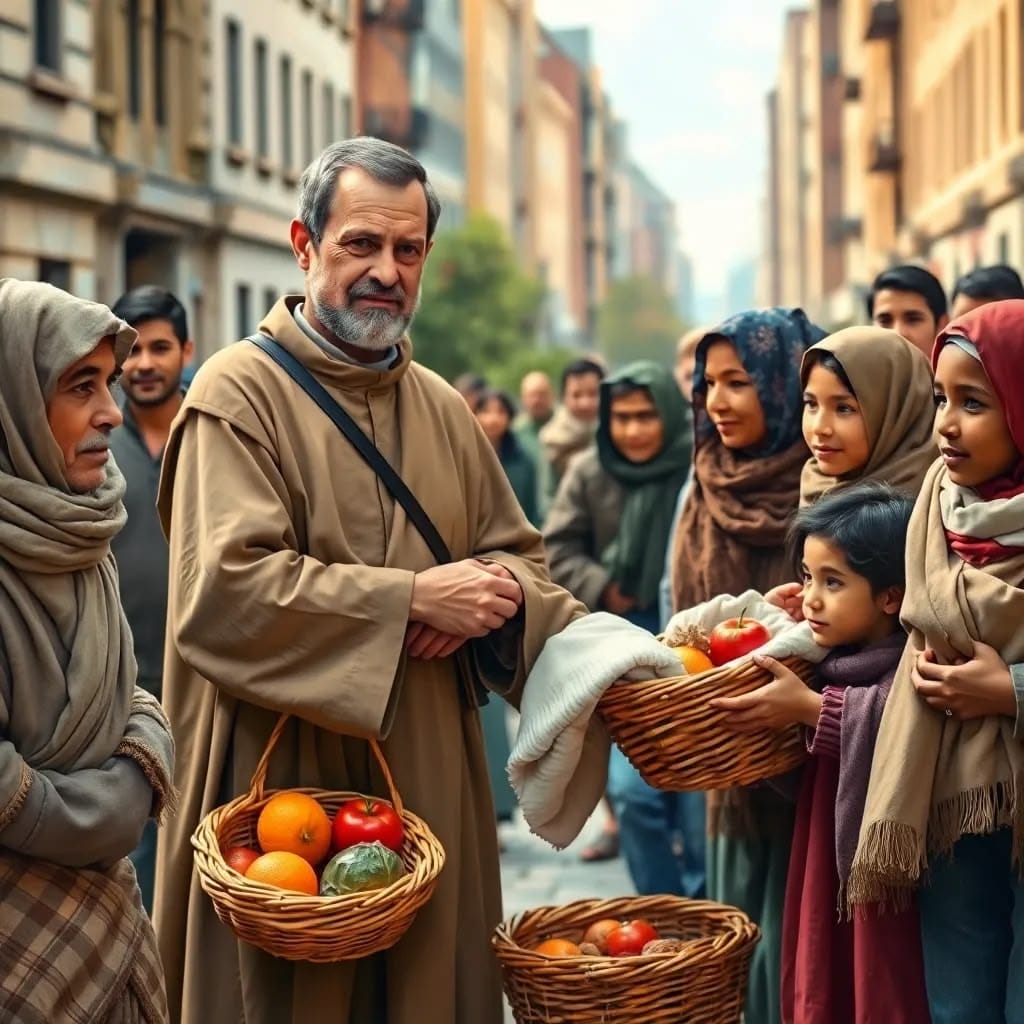
The enduring message of Saint Vincent: social justice and encounter with God in the poor
Saint Vincent de Paul's service to the poor goes beyond occasional assistance: it is part of a dynamic of Christian social justice. This justice is not limited to laws or policies; it is above all a concrete and humane response to the inequalities that dehumanize. By serving the most vulnerable, you participate in restoring their dignity and transforming the structures that perpetuate them. poverty.
Saint Vincent invites you to to understand the poor as the face of Christ. This theological perspective revolutionizes the way you approach poverty. The poor are not simply recipients of aid; they are sacred persons, bearers of a divine encounter. Every act of charity thus becomes an authentic encounter with God, who manifests himself in the vulnerability of the excluded. This perspective demands respect and love, far removed from any form of condescending pity.
The commitment to the poor calls for a humble but determined involvement. Saint Vincent does not advocate spectacular or recognition-driven actions, but rather discreet and constant service, rooted in the’humility and evangelical obedience. This personal and communal commitment aims to profoundly change social realities, prioritizing justice and respect for the human dignity.
Some key points to embody this lasting message:
- See in every poor person a call to personal and collective conversion.
- Implementing actions that aim not only at immediate aid, but also at transforming the root causes of poverty.
- Cultivating a living faith where prayer supports social action without ever replacing it.
This message remains a powerful call to anyone who wishes to live their life to the fullest. Christian vocation serving the most vulnerable, by combining concrete love and a sincere quest for justice.
Conclusion
Saint Vincent de Paul left us a rich and profoundly relevant Vincentian spiritual legacy. His Christian commitment to serving the poor was based on an incarnate faith that never separated prayer, humility and concrete action. It teaches us that a vocation to serve the poor is a path of personal and social transformation, where the encounter with the face of Christ in each person in a precarious situation becomes a source of hope and justice.
You are invited to renew your own commitment, whether personal or communal, drawing inspiration from this living spirituality. This means acting with consistency and dedication, without becoming discouraged in the face of difficulties, but always with concrete love and profound respect.
An active faith can truly transform the world. It is not limited to words or intentions; it manifests itself through concrete actions that restore dignity to the most vulnerable. Revisiting today the Christian vocation Serving the poor through the example of Saint Vincent de Paul means accepting to enter into this movement of love that changes lives, including your own.
«"You have to love" the poor "Not for who they are, but because they are poor." — Saint Vincent de Paul
The path is laid out. The challenge is set. Today's Christian commitment awaits your faithful and passionate response.
Frequently Asked Questions
What is the importance of Saint Vincent de Paul in the Christian vocation of serving the poor?
Saint Vincent de Paul is a major figure in Catholic history, recognized for having revolutionized charity organized by founding institutions such as the Confraternities of Charity, the Congregation of the Mission and the Daughters of Charity. His spiritual and social commitment embodies the Christian vocation serving the poor, offering an inspiring model that remains relevant today.
How did Saint Vincent de Paul integrate Christian spirituality into his service to the poor?
For Saint Vincent de Paul, service to the poor is a concrete expression of active love. Christianity. He identifies Christ with the poor, making service a fundamental theological act. Prayer supports this social commitment, while the values of’humility and obedience guide the exercise of service in a profound spiritual approach.
What charitable foundations were created by Saint Vincent de Paul and what was their impact?
Saint Vincent de Paul created several key institutions: the Confraternities of Charity to mobilize women pious, the Congregation of the Mission dedicated to rural missions and the formation of priests, as well as the Daughters of Charity which provide direct service to the sick and the poor. These foundations have structured and revitalized charity organized within the Catholic Church.
How do we draw inspiration from the Vincentian model today to address contemporary challenges of poverty?
There Christian vocation Contemporary Vincentianism draws inspiration from the Vincentian model by integrating lived faith and social action within current communities. Modern initiatives like the Society of Saint Vincent de Paul take up this legacy to combat poverty with a concrete social commitment, thus renewing the call to serve the most destitute according to the Vincentian spirit.
What is Saint Vincent's enduring message regarding social justice and the encounter with God?
Saint Vincent conveys a message where service to the poor is a path towards a social justice concrete and human. It invites us to see the poor as the face of Christ to be encountered with respect and love, encouraging a humble but committed involvement to transform social realities through an active faith embodied by concrete love.
Why is it important today to revisit the Vincentian spiritual heritage in Christian commitment?
Revisiting the Vincentian legacy allows us to renew our personal or community commitment to the poor Drawing on key teachings that remain relevant today, this reinterpretation encourages an active faith capable of transforming the world through concrete love, thus effectively addressing contemporary social challenges while remaining faithful to a profound spiritual tradition.