












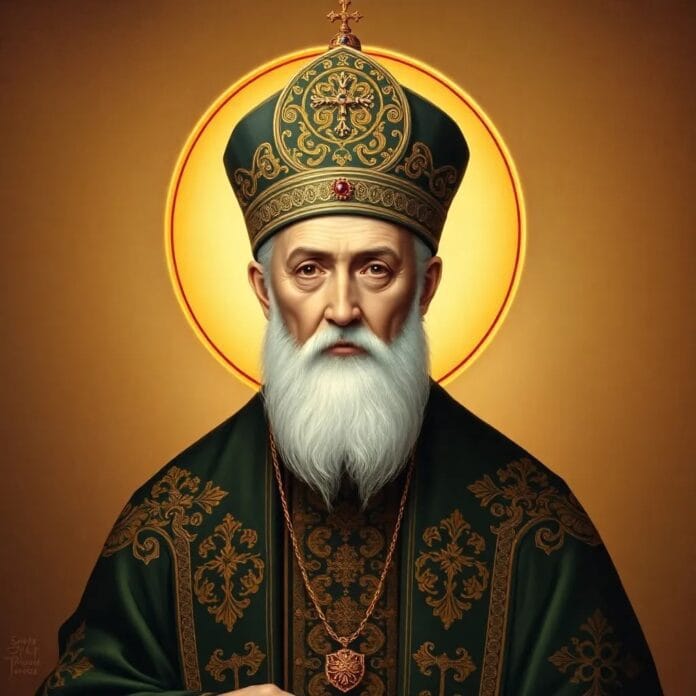
Saint Innocent of Irkutsk, an 18th-century missionary and the first bishop of Siberia, at the crossroads between Russia, the China and Mongolia.
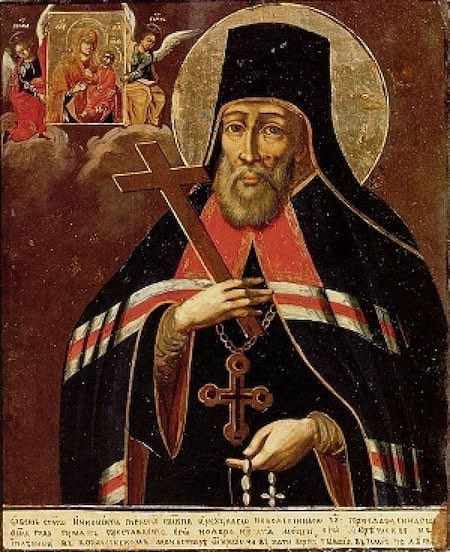
Explore the inspiring life of Saint Innocent, born around 1680, who dreamed of evangelizing the China at the time when the emperor was opening his empire to the Gospel. After the prohibition of Christianity in China, He forged a different path by becoming an apostle of Southern Siberia, particularly around Irkutsk, on the shores of Lake Baikal. His courageous mission resonates today as a call to loyalty in the face of adversity and with trust in the divine will.
A missionary driven by faith and patience
Ivan Kulchinski, later known as Saint Innocent, was born around 1680 in the Chernihiv Governorate (present-day UkraineA brilliant student at the Mohyla Academy in kyiv, he embraced the monastic life then a theological career. In 1710, he was ordained a priest, then taught theology and worked at the Alexander Nevsky Monastery in Saint Petersburg. At the turn of the 18th century, he was chosen by the Holy Synod to evangelize the China, then briefly open to the Gospel.
However, under the influence of the controversies between Jesuits and Dominicans, the Christianity is prohibited in China In 1717, Innocent was forced to abandon his mission in China and returned to Siberia, where he became Bishop of Irkutsk in 1727. There, he assimilated the local language and cultures to preach, evangelize, and instruct the indigenous population in the Orthodox faith. Despite the difficulties, including loneliness, setbacks, and isolation, he carried out an exemplary ministry, founded schools, and reformed the clergy and profoundly transforms the spiritual landscape of Siberia.
He died in 1731, leaving a legacy of holiness recognized by miracles and the incorruptibility of his body. His relics, long dispersed, were restored in the 20th century, celebrated as living witnesses to his mission and unwavering faith.
Incorruptibility as a celestial sign
The life of Saint Innocent is marked by one well-established fact: his body miraculously remained incorrupt after his death, despite a fire that destroyed the church where he lay buried. This incorruptibility is seen as a powerful sign of holiness and divine approval. Legend has it that his patience in the face of the failure of his mission to China and the prohibition of the Christianity was a lesson in’humility and trust in God, transforming silence into prayer and a new mission.
This legend inspires us to see in apparent renunciations divine calls to follow other paths according to God's higher will, offering a powerful symbol of endurance and renewal.
Persevere with confidence
Saint Innocent teaches the virtue of perseverance intertwined with trust in God. His path reveals how faith calls us to accept human limitations and remain open to the new mission the Lord offers, even when a project seems to fail. Just as the Gospel invites us to walk humbly with God, his life invites us to transform discouragement into a renewed calling, offering a concrete example for Christians facing the challenges.
Prayer
Lord, give me the strength to persevere in the mission you have entrusted to me. Grant me patience and the’humility of Saint Innocent, and loyalty In adversity. Keep my heart open to your will, even when I don't understand the path you are laying out. Amen.
To live
- Take a moment to meditate on a difficult situation as an opportunity for spiritual growth.
- To offer a concrete service to someone who is isolated or in difficulty, embodying charity of Innocent.
- Read an excerpt from the Gospel about trusting in God, such as Matthew 6:25-34, while doing a 10-minute lectio.
Memory and places
The main shrine dedicated to Saint Innocent is in Irkutsk, Siberia, near Lake Baikal. His relics are kept there in the rebuilt Znamensky Cathedral. His influence extends throughout southern Siberia, where his schools and missionary centers bear witness to his work. There is also a chapel with his icon in the Spaso-Vlakhernskogo Monastery in the Dmitrovsky region. His feast day is celebrated locally on November 27, and his miracles continue to be invoked.
Liturgy
- Readings: Isaiah 40, 1-11; Matthew 11:28-30
- Psalm: Psalm 23 (Trust in God)
- Hymn: "Receive, O Lord, this sacrifice"«
- Antiphon: "Arise, come into the light"«
- Glory: "Praise be to our God"«
- Communion: "The Body and Blood of Christ strengthen us"«