











For the past few decades, the ecological question has moved beyond the purely scientific or political sphere to become a spiritual and ethical inquiry. The Catholic Church, through its tradition and biblical wisdom, responds with a distinctive voice: that of a integral ecology which links the protection of the planet, the dignity of the human person and communion with God.
THE pope Francis, in his encyclical Laudato Si'’ Published on June 18, 2015, it gave this reflection an unprecedented theological depth. In it, he affirms that the environmental crisis is not primarily an external crisis, but the symptom of an internal rupture: that of the human heart, which has separated itself from the Creator and the rest of creation. This encyclical redefines the links between ecology, economics, and spirituality, advocating for a ecological conversion capable of reconciling humanity with itself, with nature, and with God.
In 2025, the tenth anniversary of Laudato Si'’ were celebrated worldwide. pope Francis reiterated that "everything is connected," stressing that the fight against climate change is inseparable from the fight against poverty and injustice. Alongside him, the pope Leo XIV, In a powerful speech in Rome, he emphasized "the return to the heart": it is there that true freedom takes place and where every authentic decision is born. He invited everyone to become a peacemaker by experiencing ecology not as a moral duty, but as a joyful communion with life.
This biblical reading plan is therefore designed around this objective: to discover how the Word of God speaks of creation, human responsibility, and the hope for a restored world. Each section offers passages to read, suggestions for meditation, and a perspective on the teachings of the current Magisterium.
Part I – God, Creator and Source of all life
The Bible begins with the most radically ecological proclamation: everything comes from God. Before any human action, there is an act of creative love.
Genesis, the poem of creation (Genesis 1–2)
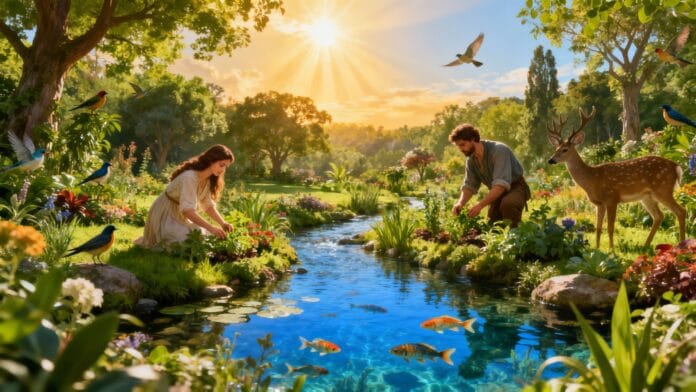
Reading the first chapter of Genesis presents a worldview built on order, beauty and kindness. Each day of creation concludes with this phrase: "God saw that it was good." Everything is gift and harmony.
The second account (Genesis 2) introduces the man and woman placed in the Garden of Eden to "cultivate it and keep it." These two Hebrew verbs— abad (serve) and shamar (to keep) — reveal the human vocation: masters, but not dominators; stewards, but not possessors.
Spiritual application: Reread these verses while contemplating creation as a temple. The world is not a resource, but a liturgy: every creature within it sings the glory of God.
Praise and wonder (Psalms 8 and 104)
Psalm 8 asks, «What is mankind that you are mindful of them?» The psalmist reflects on the immensity of the cosmos and acknowledges the astonishing dignity bestowed upon humanity. To be «crowned with glory» is also to recognize that this glory can only be understood in relation to all of creation.
Psalm 104 unfolds an ecological panorama: springs, mountains, beasts of the field, winds and seas, all depend on the divine Spirit. It shows a dynamic balance where God nourishes and sustains all life.
Link with the’integral ecology: Laudato Si'’ draws much of its inspiration from this contemplative attitude. Before any ecological reform, we must rediscover the capacity for admiration.
Wisdom, the artist of the world (Proverbs 8:22-31)
Wisdom is presented as the one who was "with God" at creation, the "master builder" who rejoiced in the universe. Biblical ecology is not only material; it is also sapiential: everything is ordered by a loving intelligence.
Christians are invited to collaborate in this Wisdom. Working for the planet becomes an act of participation in ongoing creation.
Part II – Wounded Harmony: The Ecological Sin
Genesis 3: The breaking of the bond
The story of original sin describes the moment when humanity chose absolute independence. The consequences are universal: the relationship with God is broken, the relationship between man and woman becomes conflictual, and the relationship with nature is transformed into domination and suffering: "The ground is cursed because of you."«
This realistic image announces what Laudato Si'’ call the human heart crisis. Spiritual disobedience leads to ecological violence: the earth suffers because it reflects our inner disorder.
Romans 8:18-22: Creation in groaning
Saint Paul speaks of a creation "subject to futility" that "groans in the pains of childbirth." The entire universe awaits liberation. This cosmic perspective reflects the spiritual dimension of ecological damage: creation is not condemned, it hopes.
Theological meaning: Every act of ecological healing is part of this messianic expectation. Protecting the earth means collaborating in redemption.
Spiritual reading of Laudato Si'’
THE pope Francis describes the planet as our "common home." Sin is expressed today in the logic of exploitation, waste, and indifference. He calls for a transformation of our economic models and personal habits so that creation ceases to groan.
Practical invitation: to be silent, to listen to the cry of the earth and of the poor, to pray before each act of purchase or consumption.

Part III – The renewed alliance with creation
Genesis 9: The rainbow, a sign of peace
After the flood, God made a covenant not only with Noah but "with all flesh." The rainbow is the visible symbol of this universal reconciliation.
Spiritual key: God promises never to destroy the earth again. He calls us to join in this pact of mercy: every ecological initiative becomes a sign of the covenant.
Deuteronomy 11: The blessing and the land
The people of Israel discover that loyalty The fertility of the earth depends on God. Biblical ecology is inseparable from justice: the earth responds to the moral quality of those who inhabit it.
Update: Climate imbalances often reflect our unjust choices. Ecological transition is therefore also a social one.
Psalm 148: The Cosmic Symphony
The psalmist invites the sun, moon, mountains, animals, and humans to praise God together. It is a Eucharistic vision of the universe: all of creation becomes liturgy.
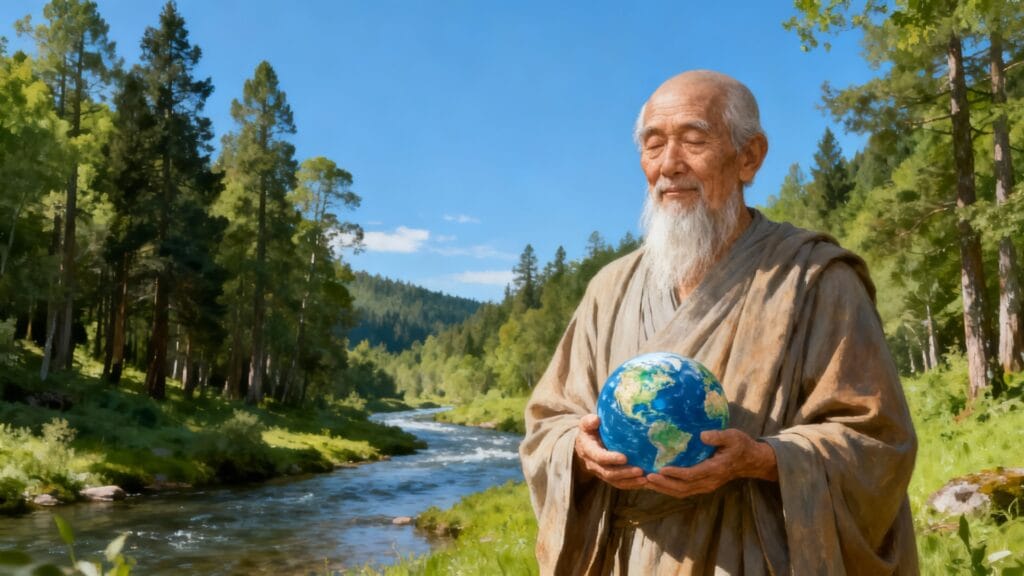
In Laudato Si'’, Francis draws inspiration from Francis of Assisi and this psalm to remind us that all creatures are brothers and sisters.
Part IV – Jesus, sign of restored creation
Nature's parables
Jesus teaches from the living world: sowers, vines, mustard, harvests. He sees in each seed a parable of the Kingdom.
Christian reading: Nature is not neutral; it is divine language. Cultivating the land becomes a participation in God's pedagogy.
Miracles in Nature
The stories of the calming of the storm or the multiplication of the loaves reveal a Christ who brings peace and nourishment. He does not dominate nature to enslave it, but to restore it to the order of the Father.
Eco-friendly lighting: Following Jesus means restoring peace between humanity and the cosmos.
The Cosmic Christ (Colossians 1:15-20; John 1:1-14)
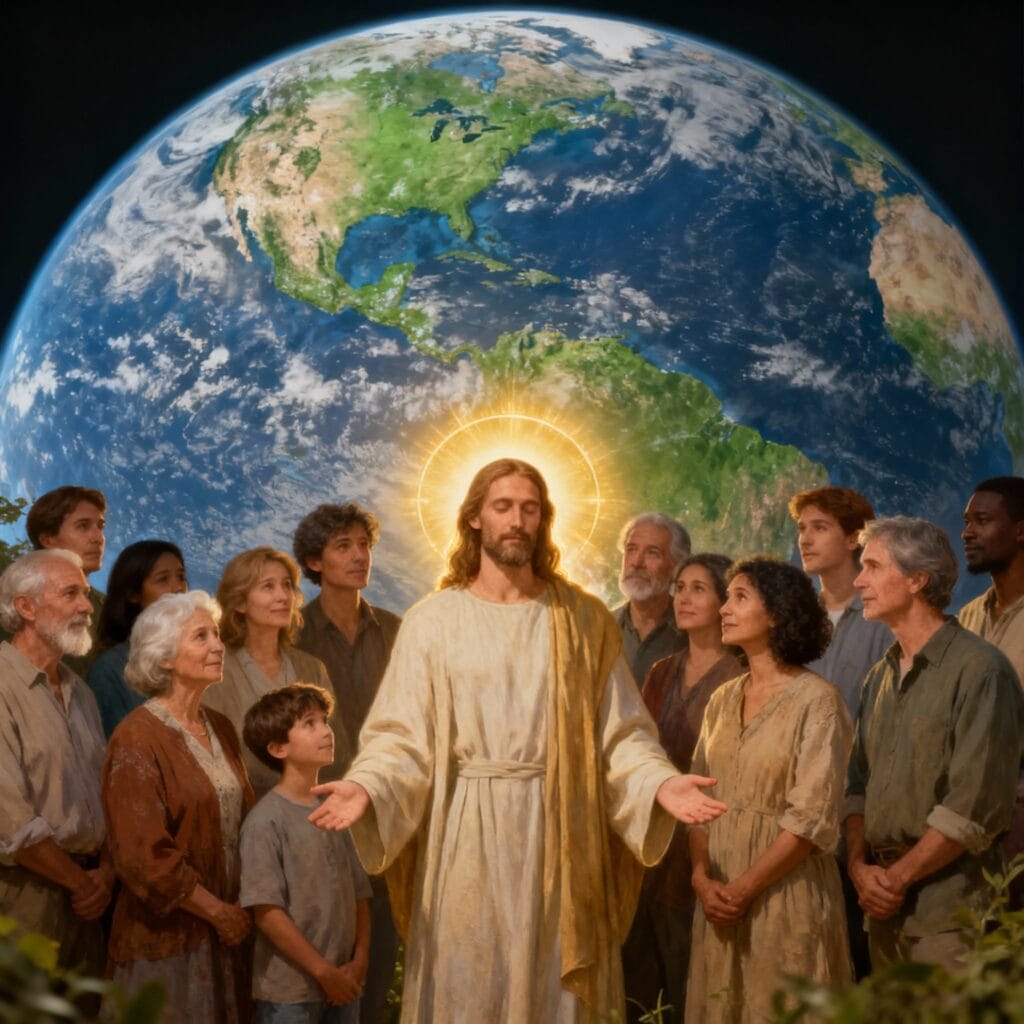
Saint Paul affirms: «All things were created through him and for him.» In the Prologue of John, the Word is «the light of men.» Christ is not external to the world; he is its heart.
This perspective grounds the Christian hope of a cosmic transfigurationMatter itself participates in salvation.
The hope of Laudato Si'’
Francis speaks of a "great divine harmony" where every being has its value. The risen Christ illuminates creation and guides it toward its fullness. Thus, the believer works for the planet not out of obligation, but out of Eucharistic love.

Part V – The Holy Spirit, a force of life and renewal
Psalm 104:30: the creative breath
«"You send forth your breath, they are created, and you renew the face of the earth."» The Holy Spirit, invigorating, permeates all of creation.
Application : All living things are animated by the Divine Breath. To destroy nature is to despise the Spirit that sustains it.
Acts 2: Pentecost and the Reconciliation of the World
Pentecost is the opposite of Babel: instead of division, a diverse unity emerges. It demonstrates that the Spirit can also reconcile humanity with the earth.
Contemporary perspective: Community-based ecological commitments are becoming a modern-day Pentecost.
Romans 5–8: The Spirit of Newness
Paul contrasts "the flesh" (selfishness) and "the Spirit" (love creator). The’integral ecology It is therefore a life according to the Spirit, which orders desire to serve the common good.
Leo XIV: the ecology of the heart
In 2025, the pope Leo XIV He said, "Ecological conversion begins when we allow the Spirit to be silent in the turmoil of the heart." He connects external ecology to peace inner. This path reminds us that nature will be respected when man sees in it a mirror of God.
Part VI – The Call for Ecological Conversion
Matthew 6:19-34: Happy Sobriety
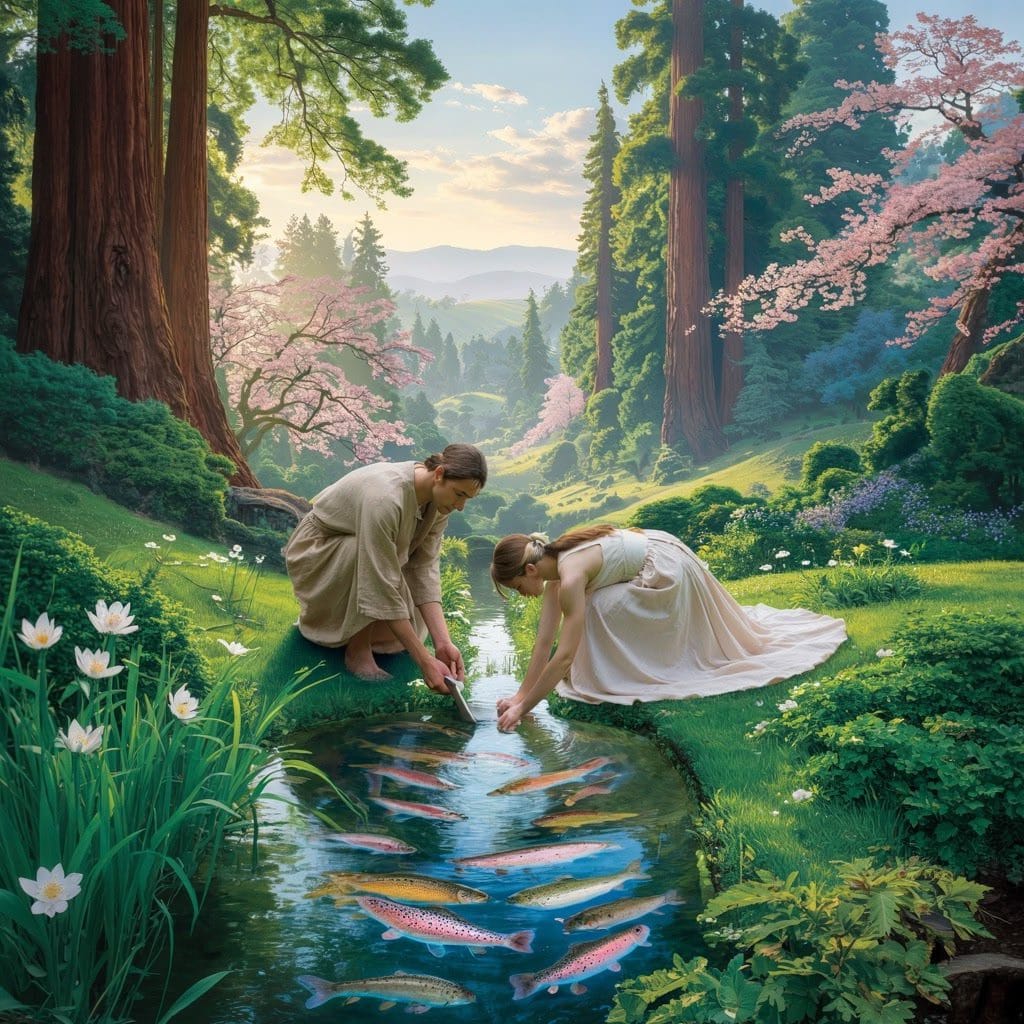
«Look at the birds of the air…» Jesus invites us to trust. Anxiety about tomorrow breeds consumerism. Faith teaches simplicity.
Practical tip: practice fasting from consumption, bless the table, give thanks at the end of the day for a good received without excess.
James 2: Faith and Ecological Works
Faith without works is dead: Christian ecology cannot be limited to rhetoric. The criterion of love Fraternal extends to all forms of life.
Possible commitments: reduce waste, preserve local biodiversity, support fair trade farmers.
Act 4: The Pooling
The first Christians shared everything. This economy of communion anticipates a sustainable and solidarity-based model.
Link with Laudato Si': François speaks of a "social ecology". Caring for the planet means caring for human relationships.
Francis and Leo XIV: global brotherhood
Both popes call for a civilization of sobriety. Francis denounces the "throwaway culture"; Leo XIV The response is the "culture of giving."«integral ecology It then becomes a spirituality of sharing.
Part VII – Living Integral Ecology Today
The conversion of the gaze
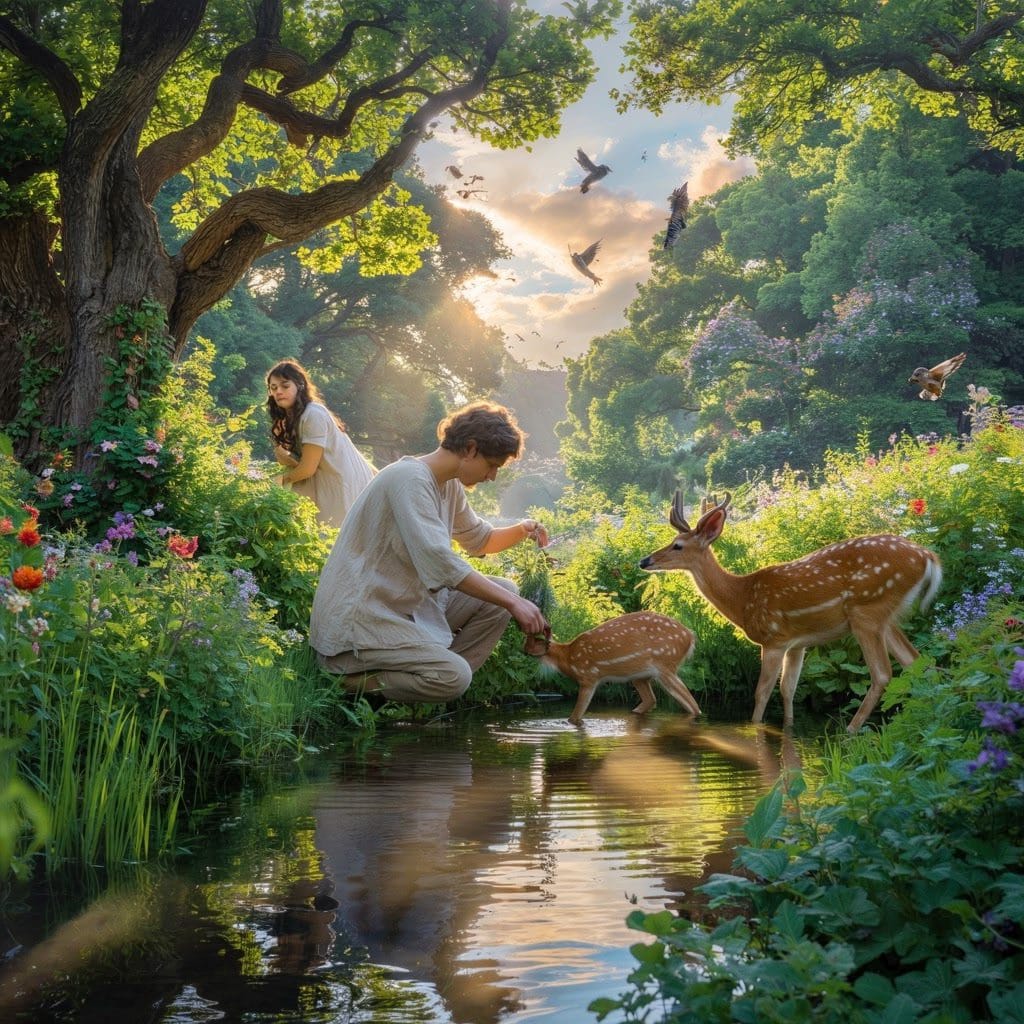
To view the world as a sacrament. Every flower, every forest, every face becomes a sign of divine tenderness. This contemplative gaze precedes all action.
Lifestyle conversion
Reforming one's way of living: energy efficiency, sustainable agriculture, voluntary simplicity. The Christian seeks to reflect the face of God through their humble relationship with the world.
Community conversion
Parishes, schools, families and monasteries can become eco-communities. The liturgy itself can incorporate symbolic gestures: blessing of the earth, time of prayer for creation, celebration of the Time for Creation every September.
The universal mission
L'’integral ecology It aims not only at ecological survival, but at the glory of God. In every ecological action, the salvation of the world is already at stake.
Conclusion – «Everything is connected»
At the end of this journey, the Bible reveals that creation is a language of love. From the Garden of Eden to the garden of the empty tomb, God guides his creation towards fullness.
Laudato Si'’ has reinvigorated this conviction: without inner transformation, no policy will suffice. pope Leo XIV extended this appeal: ecological conversion requires a peaceful heart.
Today, the Church invites everyone to participate in this work of reconciliation. Saving the planet means participating in the history of salvation.
Final Prayer for Creation
«"Lord, God of life,
You entrusted the earth to our hands, not to possess it, but to serve it.
Forgive our indifference and our violence.
Inspire us with the wisdom of the humble, the generosity of sharing,
And the courage to love to the point of transforming our habits.
May your Spirit renew the face of the earth
And let every creature sing your glory
In joy of the restored creation.
Amen.»