












1° The City and Church of Thessaloniki— The city, originally called Therme, had been enlarged by King Cassander, who named it after his wife Thessalonica, sister of Alexander the Great. In the time of Saint Paul, it was the capital of one of the four districts that together formed the Roman province of Macedonia. It owed its importance and wealth to its very favorable location, situated on the Thermaic Gulf on one side, and on the famous Via Egnatia on the other, which connected East and West, as well as to the numerous other roads that linked the city to neighboring districts. Its considerable population (a few years before our era, Strabo said that Thessalonica was the most populous city in Macedonia. It is believed to have contained at least 100,000 inhabitants) was predominantly Greek; but a number of Roman colonists had settled within its walls. Jews were abundant in Thessalonica, as in all the commercial cities of these regions; they possessed there, not a simple "proseuque" (open-air oratory), as in Philippi (cf. Acts of the Apostles 16, 14), but a synagogue properly speaking (Acts of the Apostles 17, 1).
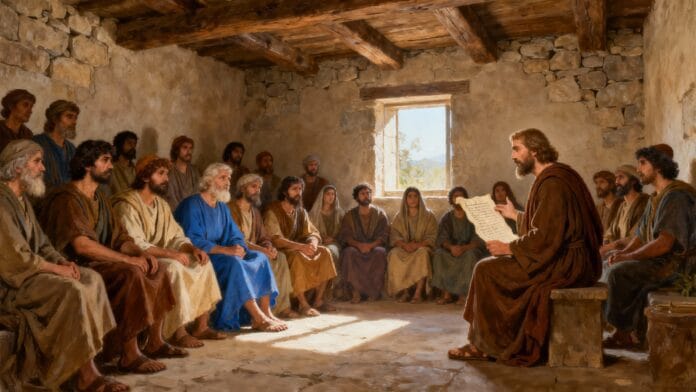
Paul first came to Thessalonica during his second missionary journey, accompanied by his disciples Silas and Timothy, probably in the year 52 (see the General Introduction). He had only recently begun, under the direct inspiration of the Holy Spirit, to preach the gospel in Europe (cf. Acts of the Apostles 16, 8 and following), and Philippi had been his first conquest (Acts of the Apostles 16, 11 and following); Thessalonica was the second. The foundation of this new European Christendom, no less flourishing than the first, is briefly recounted in the Book of Acts, 17, 1-10, and the account of Saint Luke is completed by the Apostle to the Gentiles himself in his first letter to the Thessalonians. Paul, according to his custom at the time (cf. Acts of the Apostles 13, 14; 14, 1, etc.) first set about demonstrating the Christian faith to the Jews in their synagogue. He had little success with them; but many proselytes, then pagans and women belonging to the upper classes of Greek society, believed in the Gospel message and formed the nucleus of a fervent and generous community (see Acts of the Apostles 17, 2-4. We also learn from 1 Thessalonians 1, 9 and 2, 14, that most of the new converts were of Gentile origin). A terrible riot soon broke out, stirred up by the jealousy of the Jews who remained unbelieving, and Paul had to leave the city in haste (cf. Acts of the Apostles 17, 5-10), after a stay that had lasted only a few weeks (Acts of the Apostles 17, 7, it speaks of three Sabbaths for the first part of the apostle's stay, when he preached in the synagogue; the duration of the second part is unknown).
2° The occasion and purpose of the first letter to the Thessalonians. The persecution that had necessitated the apostle's departure soon also affected the new converts with great violence (cf. 1 Thessalonians 1:6; 3:3). From this arose in Paul a very strong desire to return to them, to comfort and encourage them in their suffering. But he was twice prevented from fulfilling this plan (1 Thessalonians 2:17-18). Therefore, he sent his beloved disciple Timothy from Athens to Thessalonica, entrusting him with the task of comforting the young church in his name (cf. 1 Thessalonians 2:14ff.; 3:1-2). The return of this faithful messenger and the news he brought back to his master provided the occasion for this letter.
This news was sure to gladden Paul's heart, because Christians The people of Thessalonica had remained steadfast in the Lord, despite the attacks they faced. They shone with their generous faith, their mutual charity (1 Thessalonians 1:9-10; 2:14), and the marvelous gifts bestowed upon them by the Holy Spirit (1 Thessalonians 5:19-20); they set magnificent examples to the other churches of Macedonia and Achaia (1 Thessalonians 1:7-8); they maintained the most tender affection for their father in the faith (1 Thessalonians 3:6).
The apostle's primary aim in writing this first letter was therefore to congratulate and affectionately encourage them. However, the tares that the enemy sows everywhere had sprouted here and there among the good grain. The Thessalonians had not succeeded in completely freeing themselves from the two principal vices of paganism: lust and attachment to worldly goods (cf. 1 Thessalonians 4:3ff.). Nor did they always sufficiently honor the priests placed at their head (1 Thessalonians 5:11). In addition, incomplete and inaccurate ideas about the second coming of Jesus Christ and about the afterlife had caused confusion among them, so that they neglected their ordinary occupations and gave themselves up to idleness (1 Thessalonians 4:11 ff.). Hence two other purposes which prompted Paul to write to them: he wanted to exhort them to correct their faults, and then to instruct and reassure them regarding the events of the end of this world.
Regarding the authenticity of this letter, see the introduction to the Letters of St. Paul. Its authenticity was generally accepted even by the rationalist school at the end of the 19th century.
3° The subject and outline of the letter. — The first letter to the Thessalonians is more practical than doctrinal. It was prompted much more by personal feeling than by any urgent external necessity, which could have provided a unifying element and better grouped the various details. It does, however, present a fairly distinct plan.
After the usual preamble, 1, 1-10, we find two parts, the first of which, 2, 1-3, 13, can be called historical or personal, while the second, 4, 1-5, 22, is both practical and doctrinal. A very short conclusion, 4, 23-28, corresponds to the preamble.
Two subdivisions in the first part: 1. Description of Saint Paul's ministry in Thessalonica, 2:1-16; 2. Description of what had happened since the apostle had to leave the newly founded Christendom, 2:17-3:13. Three subdivisions in the second part: 1. Some moral exhortations relating to virtues to practice and vices to avoid, 4:1-14; 2. Instruction concerning the second coming of Christ, 4:12-5:11; 3. Some other moral recommendations, 5:12-22.
4° The time and place where the letter was written are easy to determine. It was in 52 AD that the apostle to the Gentiles came to preach the gospel to the Thessalonians. Now, when he wrote to them for the first time, he had only left them a short time, a few months at most. Indeed, he was still clearly under the influence of his time among them; the smallest details were present in his mind, and he mentions them with the freshness and vividness that recent events leave in us. Chapters 1-3 are filled with details of this kind. The second part of the letter also proves that at the time it was composed, the believers in Thessalonica, despite their many qualities, were still only neophytes: their Christian instruction was still incomplete (1 Thessalonians 3:10); they were easily troubled (1 Thessalonians 4:12 ff.; 5:14), etc. It was therefore towards the end of the year 52, or at the beginning of 53, that this letter was written, which is thus, according to the most probable and common opinion, the first of all the letters of Saint Paul that have come down to us. Regarding the reason why this title should be reserved for the letter to the Galatians, see the introduction to that letter. As for the place of composition, it was not Athens, as some ancient and modern exegetes have thought (several Greek manuscripts add at the end of the letter: ἔγράφη ἀπὸ Άθήνων, it was written from Athens), but Corinth, during the long stay that the apostle to the Gentiles made there. Undoubtedly, the author mentions Athens (3:1), but only to say that he sent Timothy from there to Thessalonica. A few lines below, 3, 6, he states that he composed his letter when he was joined by his disciple; however, it appears from the account in Acts, 18, 5, that Timothy and Silas met their master in Corinth 7.
1 Thessalonians 1
1 Paul, Silas and Timothy to the church of the Thessalonians, united in God the Father and in Jesus Christ the Lord: Grace and peace to you. 2 We give God continual thanks for all of you, remembering you in our prayers, 3 constantly reminding our God and Father of your works of faith, your sacrifices of love, and your steadfast hope in Jesus Christ, 4 knowing, brothers beloved of God, how you were chosen 5 For our gospel did not come to you in word only, but also with miracles, with the outpouring of the Holy Spirit and with deep conviction. You also know how we lived among you for your salvation. 6 And you became imitators of us and of the Lord, receiving the word in the midst of many tribulations with joy of the Holy Spirit, 7 to the point of becoming a model for all who believe, in Macedonia and in Achaia. 8 Indeed, from you the word of the Lord has sounded not only in Macedonia and Achaia, but everywhere your faith in God has become so well known that we do not need to say anything. 9 For they all, when speaking about us, tell of the kind of reception we had among you and how you turned from idols to the living and true God, to serve him, 10 and to await from heaven his Son, whom he raised from the dead, Jesus, who saves us from the wrath to come.
1 Thessalonians 2
1 You yourselves know, brothers, that our coming among you has not been without fruit. 2 But after we had suffered and endured insults in Philippi, as you know, God gave us the courage to preach his gospel to you in the midst of many struggles, 3 for our preaching did not proceed from error, nor from a vicious intention, nor from any fraud 4 But as God has judged us worthy to entrust to us the gospel, so we teach, not to please men, but God, who searches our hearts. 5 Indeed, our speeches were never inspired by flattery, as you know, nor by a motive of greed, God is witness. 6 We have sought no human glory from you or anyone else. 7 Although we, as apostles of Christ, could have claimed some authority, we were instead full of condescension among you. Like a nurse tenderly cares for her children, 8 Thus, in our affection for you, we would have liked to give you not only the Gospel of God, but our very lives, so dear had you become to us. 9 You remember, brothers, our labor and toil: we worked night and day, so that we would not be a burden to any of you, while we preached to you the gospel of God. 10 You are witnesses, and so is God, how holy, just, and blameless was our conduct toward you who believe. 11 As you know, we have been to each of you as a father is to his children, 12 praying, exhorting, and urging you to walk in a manner worthy of God, who calls you into his kingdom and glory. 13 Therefore, we also give thanks to God continually, because when you received the divine message, which we proclaimed to you, you accepted it not as a human word, but as it truly is, the word of God, which is also at work in you who believe. 14 For you, brothers, became imitators of God’s churches in Judea, which are gathered in Christ Jesus, since you also suffered at the hands of your fellow Jews as they did at the hands of the Jews, 15 of those Jews who put the Lord Jesus and the prophets to death, persecuted us, displease God, and are enemies of humankind, 16 hindering us from preaching salvation to the nations, so that they continually fill up the measure of their sins. But God's wrath has fallen upon them to remain with them until the end. 17 For us, brothers, sadly separated from you for a moment, in body, not in heart, we had a great eagerness and a keen desire to see you again. 18 We also wanted to come to you, especially I, Paul, a first and a second time, but Satan prevented us. 19 What, indeed, is our hope, our joy, our crown of glory? Is it not you who are in the presence of our Lord Jesus, on the day of his coming? 20 Yes, you are our glory and our joy.
1 Thessalonians 3
1 So, unable to bear it any longer, we preferred to stay alone in Athens., 2 And we have sent Timothy, our brother and God’s fellow servant in the gospel of Christ, to strengthen and encourage you in your faith, 3 so that no one would be weakened in the midst of these trials which, as you yourselves know, are our lot. 4 Even when we were with you, we predicted that we would face trials, which has indeed happened, as you know. 5 That is why, I too, unable to bear it any longer, sent to inquire about your faith, fearing that the tempter had tempted you and that our labor might be in vain. 6 But now that Timothy has just arrived here from you, he has told us of your faith and love and the fond memories you always have of us, and which make you long to see us again, just as we long to see you again, 7 So, brothers and sisters, in all our distress and affliction, we were comforted in you through your faith, 8 for now we live because you remain steadfast in the Lord. 9 So, what thanksgiving can we offer to God for you, in joy perfect that we experience before our God because of you. 10 Night and day we pray to Him with extreme fervor to grant us to see You and to complete what is still lacking in your faith. 11 May God himself, our Father and our Lord Jesus Christ, make our way to you straight. 12 And may the Lord increase and abound your charity towards one another and towards all people, as ours is towards you. 13 May he strengthen your hearts, making them blameless and holy before our God and Father, on the day when our Lord Jesus comes with all his saints, amen.
1 Thessalonians 4
1 Finally, brothers, we ask and implore you in the Lord Jesus, since you have learned from us how to live in order to please God and in doing so, go on growing higher. 2 You are indeed familiar with the precepts that we gave you on behalf of the Lord Jesus, 3 For this is God’s will, your sanctification: that you avoid sexual immorality, 4 and that each of you knows how to keep your body in holiness and honor, 5 without abandoning it to the excesses of passion, as the pagans do who do not know God, 6 This is because no one in this matter uses violence or fraud against his brother, because the Lord brings justice to all these disorders, as we have already told you and attested to you. 7 For God did not call us to impurity, but to holiness. 8 Therefore, whoever despises these precepts does not despise a man, but God, who also gave his Holy Spirit to dwell in you. 9 Regarding the fraternal charityThere is no need to write to you, for you yourselves have learned from God to love one another. 10 You should practice it well toward all the brothers throughout Macedonia. But we urge you, brothers, to practice it always better. 11 Strive to live peacefully, mind your own business, and work with your hands, as we have recommended., 12 so that you might conduct yourself honestly in the eyes of outsiders, without needing anyone. 13But we do not want you to be uninformed, brothers, about those who have fallen asleep, so that you do not grieve like the rest of mankind, who have no hope. 14 For if we believe that Jesus died and rose again, let us also believe that God will bring with Jesus those who have fallen asleep in him. 15 For this is what we declare to you according to the word of the Lord: We who are alive, left until the coming of the Lord, will not precede those who have fallen asleep, 16 For at the given signal, at the voice of the archangel, at the sound of the divine trumpet, the Lord himself will descend from heaven, and those who have died in Christ will rise first. 17 Then we who live, who are left, will be caught up with them in the clouds to meet the Lord in the air, and so we will be with the Lord forever. 18 Therefore, comfort one another with these words.
1 Thessalonians 5
1 As for the times and the moments, there is no need, brothers, to write to you about them. 2 For you yourselves know very well that the day of the Lord will come like a thief in the night. 3 When men say, "Peace and security," then sudden destruction will come upon them like pain upon a woman in labor, and they will not escape it. 4 But you, brothers, are not in darkness, so that this day should surprise you like a thief. 5 Yes, you are all children of light and children of the day. We are not of the night, nor of the darkness. 6 Let us not sleep like the rest of men, but let us stay awake and be sober. 7 For those who sleep, sleep at night, and those who get drunk, get drunk at night. 8 For us who belong to the day, let us be sober, putting on faith as a breastplate and charity and for a helmet, the hope of salvation. 9 For God did not appoint us to wrath, but to obtain salvation through our Lord Jesus Christ, 10who died for us, so that whether we are awake or asleep, we may live with him. 11 Therefore, comfort one another and build one another up, just as you are already doing. 12 We also ask you, brothers, to respect those who work hard among you, who govern you in the Lord, and who give you advice. 13 Show them greater charity because of their work. Live in peace with one another. 14 We beg you, brothers, rebuke those who disturb the peace, comfort those who are disheartened, support the weak, be patient with everyone. 15 Beware that no one should repay evil for evil, but always seek what is good for one another and for all. 16 Always be joyful. 17 Pray without ceasing. 18 In all circumstances give thanks, for this is God’s will in Christ Jesus for all of you. 19 Do not quench the Spirit. 20 Do not despise prophecies 21 But test everything and hold fast to what is good. 22 refrain from any appearance of evil. 23 May the God of peace himself sanctify you wholly, and may your whole spirit, soul and body be kept blameless until the coming of our Lord Jesus Christ. 24 The one who calls you is faithful, and he will do it again. 25 Brothers, pray for us. 26 Greet all the brothers with a holy kiss. 27 I adjure you by the Lord, that this letter be read to all the brothers. The grace of our Lord Jesus Christ be with you.
Notes on the First Letter to the Thessalonians
1.1 Silvain. See Acts of the Apostles, 15, 22. ― Paul He does not add "apostle," as in the previous letters; at that time, this title had not yet been contested by Christians Judaizers. ― Silvain and Timothée were then with Paul in Corinth, and had been his assistants in Thessalonica.
1.2 Remembering you in our prayers. See Romans, 1, 9.
1.5 Accompanied by miracles, miracles are proof given by God of the truth of the preaching (cf. St. Thomas Aquinas, Summa Theologica, 2a2ae, question 178: The gift of Miracles.
1.7 In Macedonia and Achaea. See Acts of the Apostles, 16, 9 and 18, 12.
2.2 See Acts of the Apostles, 16, 19-40. ― In Philippi. See Acts of the Apostles, 16, 12.
2.9 See Acts of the Apostles20, 34; 1 Corinthians, 4, 12; 2 Thessalonians, 3, 8.
3.1 In Athens. See Acts of the Apostles, 17, 15.
3.2 See Acts of the Apostles, 16, 1.
3.12 by increasing your numbers through the conversion of the unbelievers.
3.13 strengthen in holiness your hearts which are already blameless.
4.3 See Romans 12:2; Ephesians 5:17.
4.4 to keep one's body in holiness and honesty, cf. 2 Corinthians, Romans 12:1, 4:7; 1 Corinthians, 6, 19. According to some, keep his wife's body, would refer to the body of the husband or wife, because Jewish writers give this meaning to the Hebrew word keli. See. 1 Peter, 3, 7.
4.6 In this matter, that is to say adultery, or other kinds of even more horrible immodesty.
4.9 See John 13:34; 15:12, 17; 1 John 2:10; 4:12.
4.10 all of Macedonia. See Acts of the Apostles, 16, 9.
4.12 Those outside. See 1 Corinthians, 5, 12.
4.13 Those who fell asleep, who are dead. See 1 Corinthians, 7, 39.
4.15 The Apostle here offers himself as an example of what will happen to those who will exist at the general judgment. It is as if he were saying to the Thessalonians: Suppose the judgment comes in our time, neither you nor I will precede those who have long since died; all men will rise together, and we who are alive and who suppose we have remained in a state of grace until this day will be changed in a moment, and we will become like those who have long since died (see 1 Corinthians 15:12ff.).
4.17 We, who live, Saint Paul does not speak of death, but nevertheless, those who will be alive at the time when Jesus Christ comes to make the general judgment will die only to rise again immediately afterwards.
5.2 See 2 Peter 3:10; Revelation 3:3; 16:15.
5.4 The darkness they refer to the unfortunate state of guilty humanity, outside of grace and evangelical truth.
5.5 We, Christians, we do not belong to the night, etc.
5.8 See Isaiah 59:17; Ephesians 6:14, 17.
5.15 See Proverbs 17:13; 20:22; Romans 12:17; 1 Peter 3:9.
5.17 See Ecclesiasticus 18:22; Luke 18:1; Colossians 4:2.
5.19 Do not quench the Spirit, by hindering its operation in you, and preventing those whom he has enriched with his gifts from using them for the benefit of the Church.
5.20-21 The prophet receives from God knowledge of the future and sometimes also knowledge of the state of souls; he can read the human heart as if it were a book. Apparitions and particular revelations should not be rejected on principle. Two extremes must be avoided: believing all apparitions without caution or verification, or systematically rejecting them all as impossible, false, or deceitful.
5.22 Abstain, Reject everything that is evil. From all appearances of evil : of the very appearance of evil, for fear of scandalizing the weak.
5.23 the mind, the soul and the body, L’'spirit And blade, In Saint Paul, they do not refer to two distinct substances. The mind, This is the higher part of the soul, the seat of reason, freedom, and the divine life of grace. The spirit is the part of the soul that possesses immaterial intellectual power. The soul gives life to the body; animals also have a soul. Humans are composed of a soul and a body, not of three elements: soul, spirit, and body. The soul is not in man like a hand in a glove; we are a body unified by an immortal soul. Once the soul departs, the body decomposes.
5.24 See 1 Corinthians 1:9. He's the one who will do it. that you may be kept blameless.