











Reading from the letter of Saint Paul the Apostle to the Colossians
Brothers,
Express your gratitude to God the Father, who has qualified you to receive the inheritance of the saints in the light. Freeing us from the power of darkness, he has transferred us into the kingdom of his beloved Son: in him we obtain redemption, forgiveness of our mistakes.
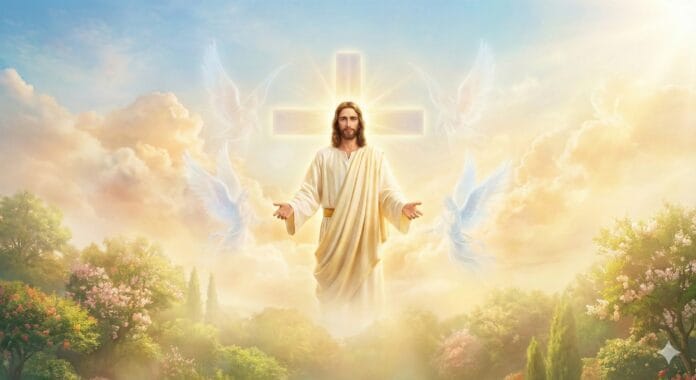
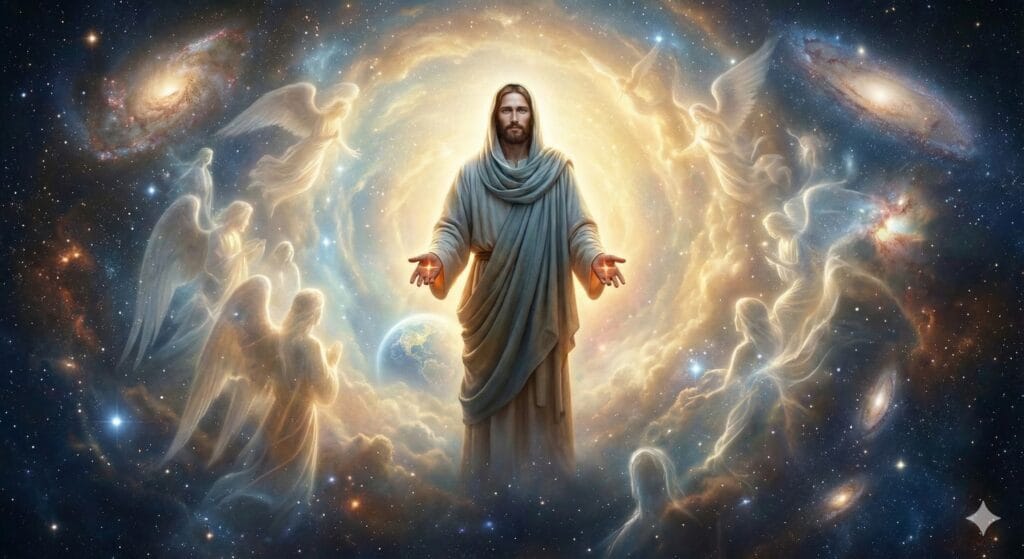
He is the image of the invisible God, the firstborn of all creation: in him all things were made, in heaven and on earth. All things, visible and invisible, whether thrones or dominions or rulers or authorities, were made through him and for him. He is before all things, and in him all things hold together.
He is also the head of the body, the head of the Church: he is the origin, the firstfruits raised from the dead, so that in everything he might have the supremacy. For God was pleased to have all his fullness dwell in him, and through him to reconcile to himself all things, establishing peace through the blood shed on his Cross, peace for all beings on earth and in heaven.
Discover peace and fullness in the Kingdom of the Beloved Son
A thorough reading of Colossians 1:12-20 to experience redemption and reconciliation in Christ.
In this letter to the Colossians, Saint Paul reveals a profound mystery: God has rescued us from darkness and placed us in the Kingdom of his beloved Son. This text, rich in Christological imagery and promises of redemption, speaks to all who seek to understand their deepest identity and spiritual vocation. By immersing ourselves in this Word, we discover how sovereignty and kindness Christ's teachings transform our inner and relational life, opening a path to peace, forgiveness, and fulfillment.
- Context and source text: origin, place and function of the Letter to the Colossians, key extract
- Central analysis: Christ, master of the cosmos and redeemer, sovereignty and primacy
- Thematic development: legacy of the saints, redemption and forgiveness, universal reconciliation
- Tradition and spirituality: patristic and liturgical foundations
- Meditation prompts: experiencing concretely the call to light and the Kingdom
- Conclusion: an invitation to a profound and social conversion
- Practical advice: spiritual recommendations
Context
There Letter to the ColossiansThe Epistle to the Holy Spirit, attributed to the Apostle Paul, is addressed to a Christian community established in the city of Colossae, in Asia Minor, in the mid-1st century. This community appears to be confronted with erroneous teachings that minimize the central role of Christ, mixing local philosophies, Judaizing practices, and pagan cults. Paul writes to affirm the absolute sovereignty of Jesus Christ, the true invisible head of the Church and of all creation.
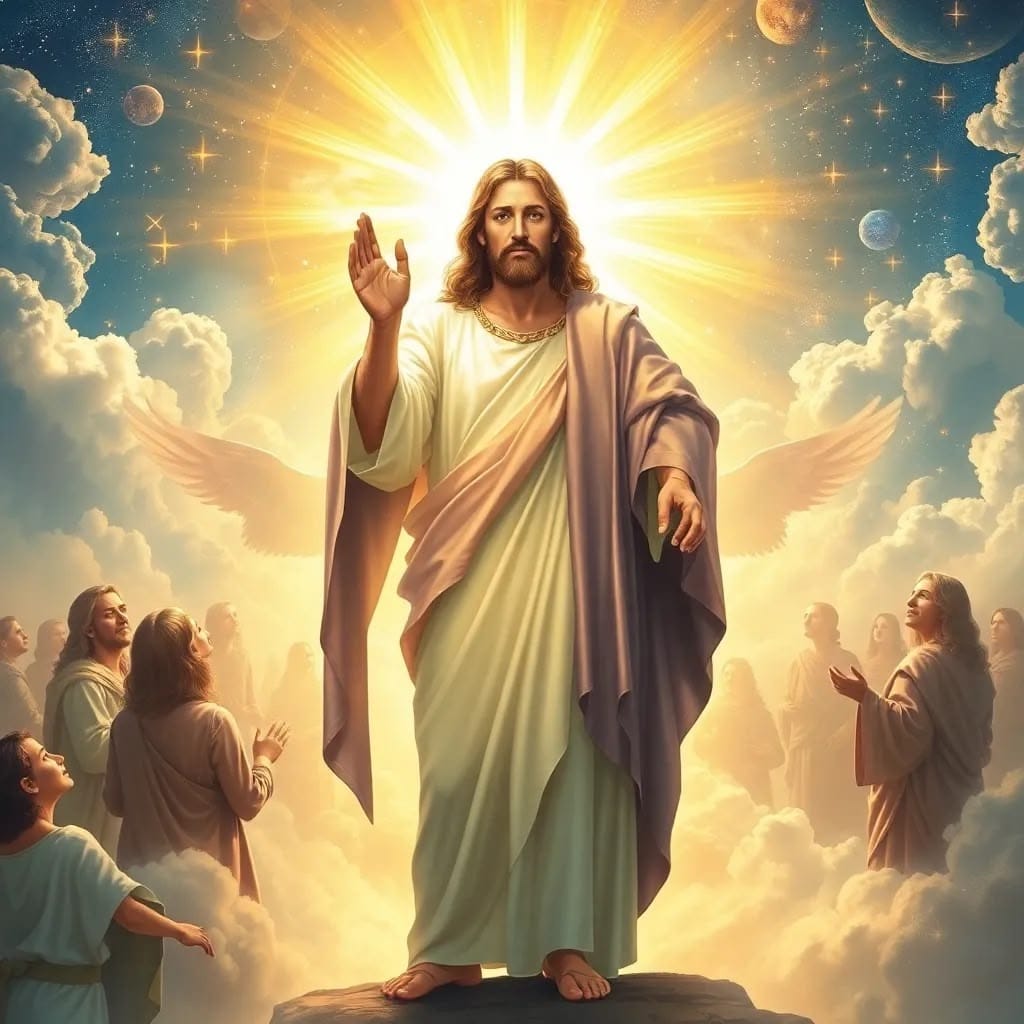
The passage from Colossians 1:12-20 lies at the heart of this Christological argument. It opens with an invitation to give thanks to God the Father, who has led believers to share in a heavenly inheritance. Then, Paul emphasizes that God has "rescued us from the dominion of darkness" to place us in the Kingdom of his beloved Son. This statement contains a dramatic vision of salvation: we were prisoners of the darkness of sin and death, but God transfers us into the light, into a Kingdom where the Son reigns.
The text then describes the person of Christ with rich imagery: he is "the image of the invisible God," "the firstborn of all creation," the one in whom "all things were created," who sustains all things, and who is the head of the body, the Church. This passage concludes with the revelation of the ultimate divine plan: the fullness of God dwells in Christ, and all things are reconciled in him through his Cross, the establishment of universal peace.
The main function of this text is therefore to refocus the faith of the Colossians on the majesty and saving work of Christ, so that they may live in gratitude and peace which come from their belonging to this heavenly Kingdom.
Analysis
The central idea that emerges from this fundamental passage is the figure of Christ as sovereign Lord of the universe and the sole mediator of redemption. The text reveals a striking paradox: the Son of God, invisible and eternal, became incarnate to reconcile all of creation to God, through the Cross, the paradoxical instrument of divine victory. This Christic primacy transcends the simple messianic function to encompass the entirety of the cosmos.
Paul juxtaposes several dynamic images: first, the transfer of believers from a state of darkness to light, from the reign of sin to that of the Kingdom. Second, the presentation of Christ as the origin and end of creation, sustaining absolutely everything by his living presence. Finally, the supernatural victory of the Cross which establishes peace, not only between God and humanity, but between all visible and invisible realities in the universe.
This theocentric and Christocentric perspective illuminates the life of believer from a new angle: our struggles, our wounds, our divisions find their meaning in the harmonizing work of Jesus, king and savior. The believer is called to live by this divine reconciliation/restoration, transcending mere moral or ritualistic acts to experience a profound existential transformation.
Heritage in the light: the noble identity of the believer
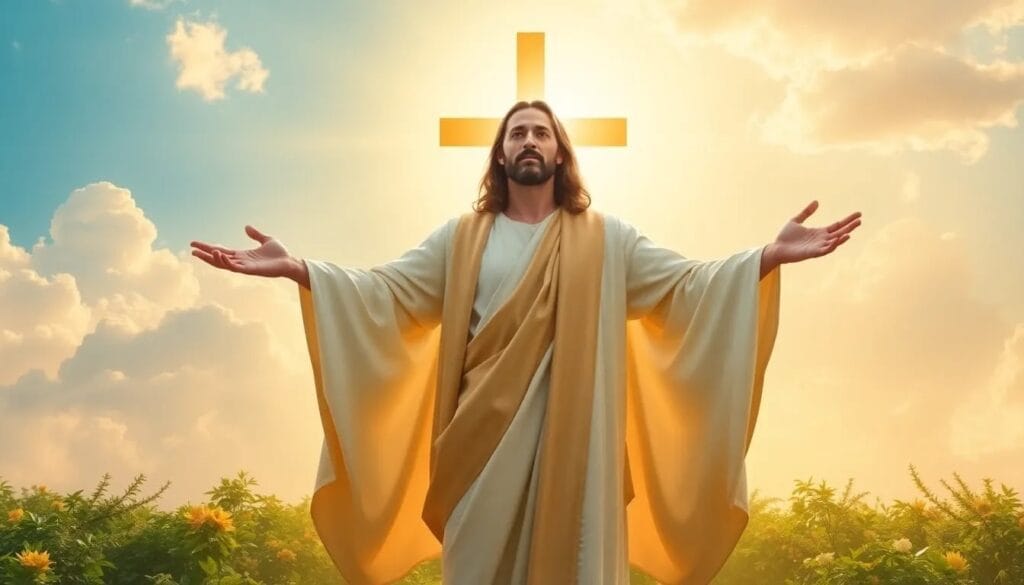
Being «made capable of sharing in the inheritance of the saints in the light» refers to a dynamic of filial adoption and spiritual elevation. The inheritance is not only a future right, but the present reality of a new life in communion with God. The light symbolizes the divine presence, transparency, joy and the truth, contrasting with the darkness of sin and ignorance. This lineage invites a renewed awareness of one's dignity: no longer defining oneself by human limitations, but by participation in divine life.
Redemption and forgiveness: the experience of salvation incarnate
The explicit mention of redemption and forgiveness in the text is not abstract but profoundly concrete. Christ, as the "beloved Son," acts to liberate from the bondage of sin and condemnation. Redemption is therefore a restorative action, a ransom paid for by the blood of Christ on the Cross. Forgiveness It embodies the restoration of a broken relationship, opening a possibility of inner peace that permeates all of life. This experience of grace also transforms human relationships, inspiring reconciliation.
Universal reconciliation: peace through the blood of the Cross
The expression "all things be reconciled to him through Christ" opens onto a cosmic vision of salvation. It is not simply a matter of individual salvation but of a complete renewal of creation: heaven and earth, visible and invisible powers, all is reconciled in Christ. The Cross, an instrument of suffering, becomes a source of universal peace, abolishing the separation between God, humanity, and the universe. This reconciliation is the fulfillment of the divine plan for a unified and harmonious cosmos, also implying an ethical imperative of peace among human beings.
Tradition
From the Church Fathers to the great medieval theologians, this passage has been a major source of meditation on Christology and redemption. Augustine, for example, emphasized the greatness of Christ, the firstborn and head of the Church, the visible and invisible foundation of all spiritual life. The liturgy has echoed this vision by celebrating the kingship of Christ and the victory of the Cross as the culminating moments of the Christian Mystery.
In contemporary spirituality, this text inspires a reading centered on inner transformation: the believer is called to be an agent of peace and unity, to become a manifestation of this heritage in the light. The notion of universal reconciliation also nourishes ecumenical and interreligious commitments, testifying to the social and ecclesial significance of this message.
Suggestions for a living meditation
- To recognize in one's personal life the darkness from which God wants to rescue us.
- To contemplate the majesty of Christ as an image of the invisible God.
- To feel the power of the forgiveness received and to allow oneself to be transformed by it.
- To open oneself to the call of belonging to the Kingdom, despite daily trials.
- Seeking to embody in one's relationships peace derived from the blood of Christ.
- To meditate on the universality of salvation and to pray for the reconciliation of the world.
- To entrust to God the strength to live in the light and to bear witness.
Conclusion
This passage from the Letter to the Colossians This opens a sublime window onto the mystery of Christ and our transcendent vocation: rescued from the shadows, reconciled in the blood of the Cross, we are now called to live and grow in the Kingdom of his beloved Son. This reality is both a radical gift and a demanding mission, inviting us to a conversion that touches every dimension of our being: spiritual, moral, and social. May this powerful Word inspire each of us to embody this divine peace today, becoming agents of reconciliation in our daily lives.
Practical
- Meditate silently on Colossians 1:12-20 every morning.
- Write down in a notebook the "darkness" to leave behind.
- Practice a concrete act of forgiveness or reconciliation weekly.
- Invoke the kingship of Christ in prayer before making important decisions.
- Participating in a Eucharistic celebration while recognizing the primacy of Christ.
- To engage in an action for social peace or solidarity.
- Read a classic spiritual text on the kingship of Christ.