












Reading from the letter of Saint Paul the Apostle to the Galatians
Brothers,
We have understood that it is not by observing the law of Moses that a person is made righteous before God, but only by faith in Jesus Christ; therefore we too have believed in Christ Jesus, in order to be justified by faith in Christ and not by observing the law, because by observing the law no one will be made righteous.
Through the Law I died to the Law in order to live for God; with Christ I am nailed to the cross.
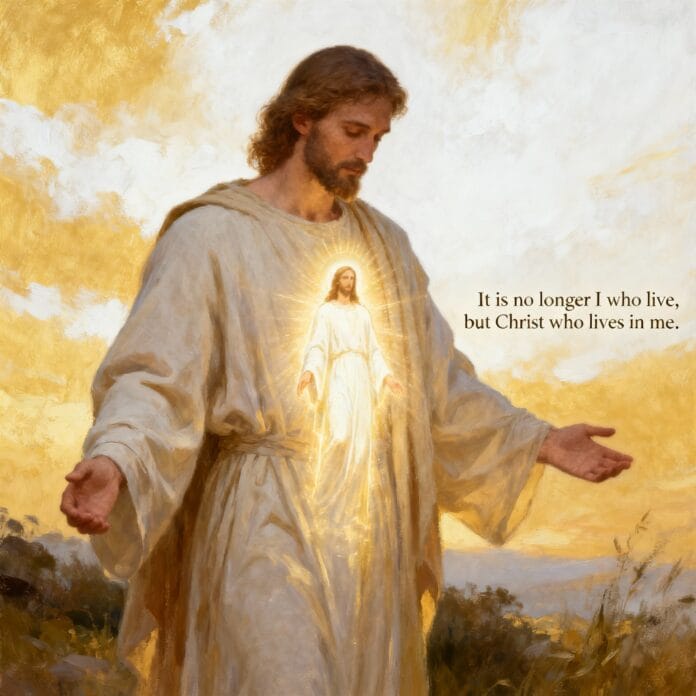
I live, yet not I, but Christ who lives in me. The life I now live in the flesh, I live by faith in the Son of God, who loved me and gave himself for me.
I have no intention of nullifying the grace of God. For if righteousness came through the law, Christ died in vain.
Living in Christ beyond the Law
Faith in Jesus Christ, a new life beyond the Mosaic Law.
There Letter of Saint Paul to the Galatians This article carries an essential message for all believers: faith in Jesus Christ liberates us from the bondage of the Law, enabling a righteousness that comes from God. It is for those seeking to understand the role of faith in the Christian life, between Law and grace, and to experience Christ within themselves daily. By exploring the text of Galatians 2:16, 19-21, it invites us to a profound conversion, renewing our relationship with God and the world.
First, a historical and literary context will be provided to situate this passage. Next, an analysis of the opposition between Law and Faith and the spiritual dynamism of this faith in Christ will be presented. Then, three thematic areas will explore righteousness through faith, dying to self in Christ, and the practical implications for Christian life. A look at the theological tradition will illuminate these points. Finally, suggestions for meditation and a conclusion will encourage readers to embody this life.
Context
The letter to the Galatians was written by the apostle Paul in response to a crisis in the church of Galatia, where Judaizers wanted to impose the Mosaic Law, including circumcision, on Gentile believers. This central passage (2:16, 19-21) summarizes the heart of the controversy: Paul affirms that no one is righteous before God through observance of the Law but only through faith in Jesus Christ.
Historically, the Law of Moses constituted a fundamental religious and communal foundation for the Jewish people. For the first Christians, especially those from pagan backgrounds, the question was whether this Law remained binding. Paul, the apostle to the Gentiles, emphasizes the radical break inaugurated by the death and the resurrection of Christ: it is no longer a question of obeying a series of prescriptions, but of a new life received through faith.
The passage reads: «Through the law I died to the law, so that I might live for God; and crucified with Christ. I no longer live, but Christ lives in me. And the life I now live in the body, I live by faith in the Son of God, who loved me and gave himself for me.» It emphasizes that faith in Christ transforms one’s entire existence into a living union with the One who gave himself out of love.
In a liturgical and spiritual context, this text is often read in connection with the celebration of divine grace, which frees us from sin and the fear of judgment, and invites us to a life guided by the Spirit. Theologically, it establishes the primacy of grace and faith, the foundations of Christian life.
This text invites us from the outset to consider the profound nature of justice before God: it is not bought by works or by the Law, but is received, is lived by faith in a living Christ, seeking to embody this new life where the "self" gives way to Christ.
Analysis
The main message of this text is a spiritual revolution: justification before God is not obtained through works of the Law, but solely through faith in Jesus Christ. This faith is not mere belief, but a living and transformative relationship.
Paul contrasts two systems here: that of the Law, which instills righteousness through human effort, and that of faith, which grounds righteousness in grace. The Law, he says, has a preparatory function, but it does not save because no one can perfectly conform to it. Faith in Christ, on the other hand, liberates from this impossibility by participating in the gift of divine life.
The paradox is that to live this faith, one must first die to the Law—a symbolic death of the «old self» that relied on its own strength. Paul says, «I have been crucified with Christ.» This crucifixion is a form of self-abandonment to make way for a new life, where Christ «lives in me.» This reveals a dynamic of internalization and mystical union.
Spiritually, the scope is immense: faith is an act of trust in the One who gave himself up out of love. It is no longer a performance of conformity to rules, but a loving relationship in which Christian life takes root. Christian existence thus becomes a participation in death and in the resurrection of Christ, opening the way to inner renewal.
It then becomes clear that rejecting this grace would amount to denying the work of Christ, for if righteousness could be earned through the Law, the death of Jesus would be pointless. This living faith engages the whole being, from the heart to daily life, and calls for total trust.

Justice through faith: a gift received rather than a conquest
The justice Paul speaks of is divine, freely given justice that transcends mere legal observance. It is acquired through faith, a trust that transforms divine judgment into forgiveness and friendship. This overturns the traditional understanding of religion, which viewed works as the means of accessing God.
This righteousness through faith liberates us from the constant fear of inadequacy and opens us to a life of inner freedom. It calls for a sincere adherence not to a code, but to a person, Jesus Christ. This concept is a source of hope and peace for every believer who discovers it. love and grace.
Death to self and birth in Christ: the dynamics of transformation
Paul here expresses a radical spiritual act: «Through the law, I died to the law.» He means that to live in God, one must die to the old way of justifying oneself, to the «self» centered on rules and performance. This death is that of the old sinful self, crucified with Christ.
But from this death is born a new life, where Christ himself dwells in the inner being. This suggests not only a moral change, but a profound existential transformation, where faith becomes the source of life itself. It is an invitation to let Christ live in every moment.
This experience of crucifixion and rebirth is at the center of Christian spirituality, where conversion is not a simple change of mind, but a mystical and vital reversal.
Practical implications: living the faith in daily life
Living according to this passage means integrating this living faith in Christ into all our actions, choices, and relationships. It is not about rejecting morality, but about living it not out of obligation, but as a response to love received.
This new life calls for trust in the face of trials, for unwavering hope, and for a motivation of love that transcends rules. It invites a solidarity founded not on law, but on grace.
In social life, this faith challenges all forms of legalism, exclusion, or judgment. It opens the way to forgiveness, inner freedom, and a mission of liberated love that transforms human relationships.
Heritage and Classical Thought
The text of Galatians 2:16-21 finds its echoes in the patristic and theological tradition. Saint Augustine, For example, he meditated at length on grace and faith as the foundations of Christian justice, insisting that the Law prepares for the coming of Christ but cannot justify.
Thomas Aquinas also developed the distinction between natural (acquired) justice and divine (infused) justice, emphasizing that faith is the eye that opens to this justice given by grace.
In the liturgy, this passage inspires trust and surrender, for example in prayers of conversion and penitential liturgies. Contemporary spirituality, particularly in renewal movements, emphasizes this experience of a living faith that transforms the individual.
Thus, the Christian heritage still invites us today to make faith a path of union and inner transformation, living out Paul's call to "die to self" so that Christ may live in us.
Path of meditation: experiencing Christ within oneself
- To recognize that justice comes neither from our efforts, nor from the Law, but only from faith in Jesus Christ.
- Meditating on the death of the old man within, accepted in an attitude of surrender and’humility.
- To open ourselves each day to the living presence of Christ who dwells within us.
- Let faith nourish all our actions, in response to love of Christ.
- Reject any temptation to make legalistic judgments about oneself or others.
- Changing our perspective on hardship: it becomes a place of growth in faith.
- Renewing one's commitment of trust in the grace that sustains the Christian life.
Conclusion
This passage from Galatians invites us to an inner revolution: dying to the Law to live in Christ, no longer by our own strength, but by his life which is enlivened within us by faith. It is an invitation to freedom and to loyalty to infinite grace, for a dynamic life, full of meaning and love.
He calls us to renounce all legalism and to live fully in the light of faith, thus allowing Christ to dwell fully in our hearts. This transformation is both a personal spiritual act and a social mission of justice and peace.
Taking this step means entering into a new covenant where Christ himself is our life, our righteousness, and our hope.
Practical advice
- Meditate on this passage daily to deepen your faith in the living Christ.
- Reject religious perfectionism, accept grace.
- Practice’humility by confessing the need for faith.
- Embrace challenges as opportunities to grow in confidence.
- Engage in relationships based on love and not on the law.
- Invite people to personal prayer to allow Christ to live in them.
- Discuss in a Christian group the implications of faith on justice.