












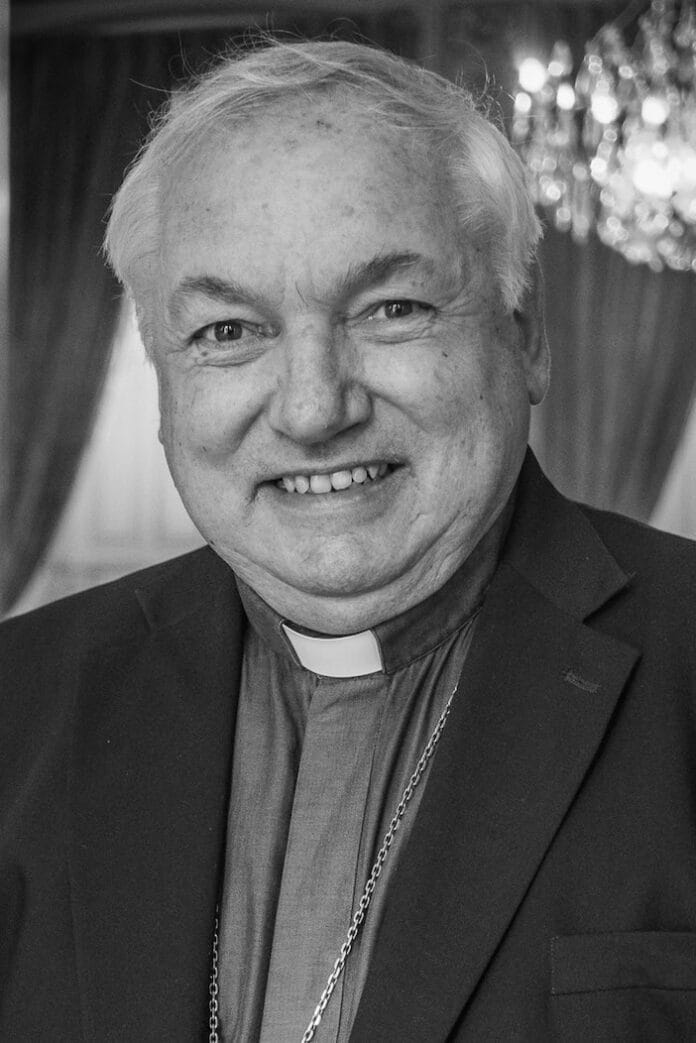
120 years after the 1905 law, three religious leaders are sounding the alarm about a worrying drift in the principle of secularism in France.
French secularism faces abuses: religious leaders warn
A rare consensus between religions
Imagine three religious leaders sitting around a table, representing Catholicism, Judaism, and Islam. They are not meeting to debate their differences, but to defend together a principle that is dear to them: true secularism.
Cardinal Jean-Marc Aveline, Archbishop of Marseille, the Chief Rabbi of France Haïm Korsia, and the Rector of the Grand Mosque of Paris Chems-eddine Hafiz spoke on the 120th anniversary of the 1905 law. Their message? A collective warning against what they call "secularism" – an authoritarian drift of secularism.
This meeting is not insignificant. When three distinct religious traditions unite to defend the same principle, something important is at stake.
Secularism according to religious leaders: a guarantee of freedom
Cardinal Aveline summarizes his vision in a few powerful words: secularism is "a guarantee" against the "takeover" by a religion. In other words, this principle protects all French people—believers or not—from religious domination.
For Chief Rabbi Korsia, secularism simply represents "freedom." The freedom to believe, not to believe, to practice one's faith, or to have none at all. It is the space where everyone can exist according to their convictions.
Rector Hafiz, for his part, speaks of the "neutrality" of the State. A State that does not favor any religion, that does not interfere in it, but that guarantees everyone the right to live their spirituality in the public sphere.
These three visions converge on the same idea: secularism is a tool for freedom, not constraint.
Concern over political ambitions
But why this warning now? The three religious leaders are concerned about a political tendency to transform the 1905 law into a "prohibition law".
Let's take a concrete example: instead of guaranteeing that the State remains neutral, some would like secularism to become a tool to control, limit, or even prohibit religious expression in the public sphere. It's as if a protective shield were being transformed into an offensive weapon.
Cardinal Aveline sums up this resistance with a clear formula: "I resist secularism." Behind these words lies a fundamental distinction: secularism liberates, secularism oppresses.
The immense freedom of the 1905 law
The three representatives emphasized the "immense freedom" brought about by the 1905 law. This freedom now allows:
Peaceful coexistence Different religions coexist in mutual respect. A Catholic can live next to a Muslim, a Jew, an atheist, without the State imposing a single vision.
Religious expression : everyone can practice their faith, wear religious symbols (in certain contexts), build places of worship, organize celebrations.
Protection against manipulation : no religion can use the state apparatus to impose its views on others.
This freedom is not abstract. It is experienced daily in our neighborhoods, our cities, our interactions. It is this freedom that religious leaders are defending today.
Understanding the distinction between secularism and secularism
Secularism: a principle of balance
True secularism, that of 1905, rests on a subtle balance. Think of it like a scale: on one side, the neutrality of the State; on the other, the freedom of citizens.
State neutrality This means that public institutions do not favor any religion. A mayor cannot decide that their town hall will be decorated according to their religious beliefs. A teacher in a public school cannot proselytize in the classroom.
Citizens' freedom This means that everyone can live their faith as they see fit, while respecting public order. A citizen can wear a cross, a kippah, or a headscarf in the street. They can participate in religious events, pray, and fast.
This balance creates a space where personal convictions and collective life coexist harmoniously.
Secularism: when the balance tips
Secularism is when this balance tips towards prohibition. Instead of guaranteeing the neutrality of the State while protecting freedoms, the aim is to erase all religious expression from the public sphere.
Let's imagine some concrete scenarios to understand this drift:
Secular scenario A veiled mother accompanies her child on a school trip. The school accepts it because she is not a civil servant and is simply expressing her personal belief.
Secularist scenario This same mother is being prevented from accompanying the children in the name of a restrictive interpretation of secularism. She is told that her presence "disturbs" public order or "influences" the children.
The difference? In the first case, individual freedom is respected. In the second, it is crushed in the name of a perverted principle.
Why is this trend occurring?
Several factors explain this secularist temptation:
Fear of the other : In a context of social tensions, some see religious expressions as a threat rather than a diversity.
Confusion about values State neutrality is sometimes confused with the homogenization of society. However, a free society is a diverse society, including in its spiritual expressions.
Political manipulation Some political actors use secularism as an electoral tool, hardening their rhetoric to appeal to a worried electorate.
Historical ignorance Many are unaware that the 1905 law was designed to ease tensions, not create them. It aimed to resolve a conflict between the Church and the republican State by establishing a clear but respectful separation.
The concrete consequences of secularism
When secularism transforms into secularismism, the consequences are real:
Social division Religious communities feel stigmatized and misunderstood. Instead of national unity, resentment is being created.
Violation of freedoms Citizens are being deprived of fundamental rights in the name of an abusive interpretation of a principle meant to protect them.
Weakening of the principle itself By constantly distorting it, we risk completely discrediting secularism. Citizens might end up rejecting it, believing it to be inherently oppressive.
International tensions France, which presents itself as a model of coexistence, may appear as an intolerant country in the eyes of other nations.
Living together in a secular society: future prospects
Rediscovering the spirit of 1905
To break this deadlock, we must rediscover the original spirit of the 1905 law. This text was not written in an easy context – France was emerging from an intense conflict between republicans. laypeople and conservative Catholics.
Yet, the legislators chose the path of appeasement. They said: "The state will no longer interfere in religion, and religions will no longer interfere in the state." Simple, clear, liberating.
This wisdom deserves to be rediscovered today. Instead of seeing religious diversity as a threat, let's see it as an asset. Instead of multiplying prohibitions, let's multiply the spaces for dialogue.
The role of religious leaders
The three leaders gathered for this anniversary are setting an example. They are not seeking to impose their views, but to defend a principle that benefits everyone.
Their approach is exemplary because it embodies several values:
Unity in diversity Despite their theological differences, they agree on a common principle. It is a model for the whole of society.
Dialogue with the Republic They do not reject secularism, quite the contrary. They defend it against those who would distort it.
Pedagogy By explaining their vision, they help citizens understand what secularism really is.
Concrete ways to strengthen secularism
How can we, in concrete terms, preserve true secularism?
Education Teaching the true meaning of the 1905 law from primary school onwards. Many French people have a vague or inaccurate understanding of secularism. Clear education would help avoid misunderstandings.
Training of public officials Civil servants, elected officials, and teachers must be trained in neutrality without falling into secularism. Knowing where to draw the line requires finesse and knowledge.
Interreligious dialogue Increase the number of meetings between religious leaders, like the one that prompted this alert. These dialogues build trust and dismantle prejudices.
Political vigilance Citizens must remain vigilant against political rhetoric that exploits secularism. They should ask questions, seek clarification, and reject generalizations.
Mutual respect Everyone, believer or not, can contribute by respecting the beliefs of others. This daily respect, in transport, at work, in neighborhoods, builds a more peaceful society.
The example of Marseille: a model of coexistence
Cardinal Aveline comes from Marseille, a city emblematic of French diversity. This Mediterranean city is home to Catholic, Muslim, Jewish, and Protestant communities, as well as many citizens with no religion.
Marseille is not without its tensions, but it shows that coexistence is possible. Places of worship coexist, religious festivals intersect without clashing, and residents learn to live together despite their differences.
This Marseille model can inspire the rest of the country. It proves that secularism, when properly understood, does not create uniformity but allows for diversity with respect.
A call for collective responsibility
Resistance to secularism is not solely the responsibility of religious leaders. It is a collective responsibility.
For politicians Stop exploiting secularism for electoral purposes. Return to the spirit of appeasement that guided the legislators of 1905.
For the media Avoid caricatures and oversimplifications. Explain the nuances rather than fueling fears.
For the citizens : Get informed, engage in dialogue, reject oversimplification. Understand that the freedom of others strengthens one's own.
For believers To continue living their faith serenely, without provocation but without complexes. To show by example that spirituality and citizenship can be harmoniously combined.
For non-believers Respect the beliefs of others, even if you do not share them. Understand that secularism also protects their right not to believe.
Secularism, a horizon of hope
Let's conclude on a positive note. French secularism, despite current tensions, remains an admired model worldwide. It has allowed millions of French people to live together for 120 years.
This longevity is not the result of chance. It testifies to the relevance of the principle: separate in order to better unite, distinguish in order to better respect.
Cardinal Aveline's words – "I resist secularism" – are not a rejection of modernity or a nostalgia for the past. They are a call to preserve what works, to not give in to the siren call of prohibition and mistrust.
True secularism is that which allows everyone to find their place in society, whether they are a believer or not, practicing or not, from a religious tradition or none at all.
This form of secularism deserves to be defended. It is our common good, our collective heritage. Religious leaders remind us of this quite rightly: let us not allow it to become a tool of oppression.
It is up to us, the citizens of 2025, to pass on to future generations a living, respectful, and liberating secularism. This is the greatest legacy we can leave them.