











A reading from the book of the prophet Daniel
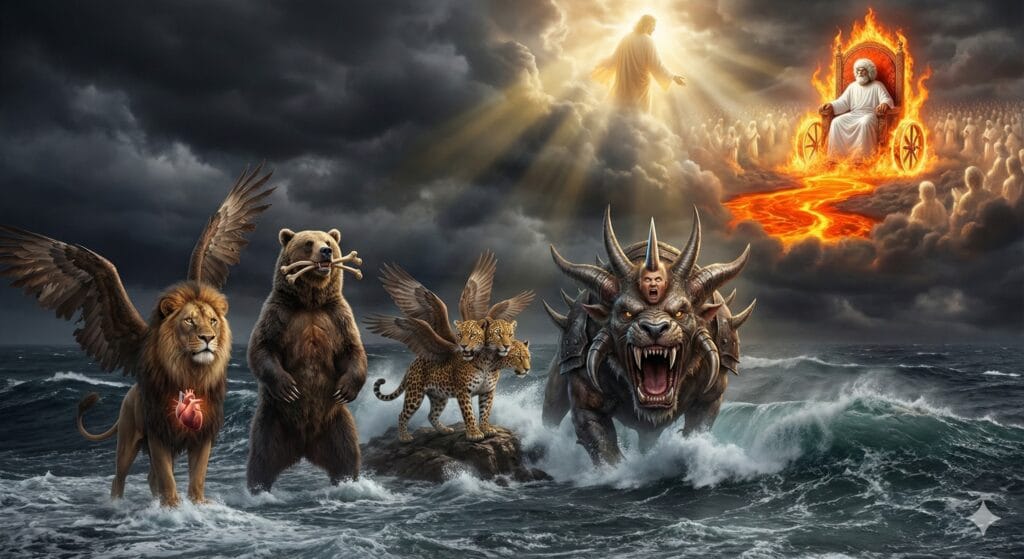
Daniel spoke and said: «During the night, in my vision, I watched. The four winds of heaven were stirring up the great sea. Four enormous beasts came up out of the sea, each different from the others.
The first one resembled a lion, with eagle's wings. While I was watching it, its wings were torn off, it was lifted from the ground and stood upright on its legs like a man, and a human heart was given to it.
The second beast resembled a bear; it stood half upright, and it had three ribs in its mouth, between its teeth. They told it, «Get up, devour plenty of meat!»
I kept looking: I saw another beast, like a panther; it had four bird's wings on its back and four heads. Dominion was given to it.
Then, during the night, I looked again; and I saw a fourth beast, terrifying and dreadful, and exceedingly powerful; it had enormous iron teeth; it devoured and tore to pieces and trampled underfoot what was left. It was different from the other three beasts, and it had ten horns.
As I examined these horns, another horn, smaller than the first, appeared among them; three of the first horns were uprooted before it. And this horn had eyes like human eyes, and a mouth speaking arrogant words.
I watched on: thrones were set in place, and an Elder took his seat; his clothing was as white as snow, and the hair of his head was like pure wool; his throne was made of blazing flames, with wheels of incandescent fire. A river of fire flowed from before him. Thousands upon thousands served him; countless thousands stood before him. The court sat, and books were opened.
I watched, I heard the arrogant words that the horn vomited out. I watched, and the beast was killed, its body thrown into the fire. As for the other beasts, their dominion was taken away, but they were granted a reprieve for a specified period and time.
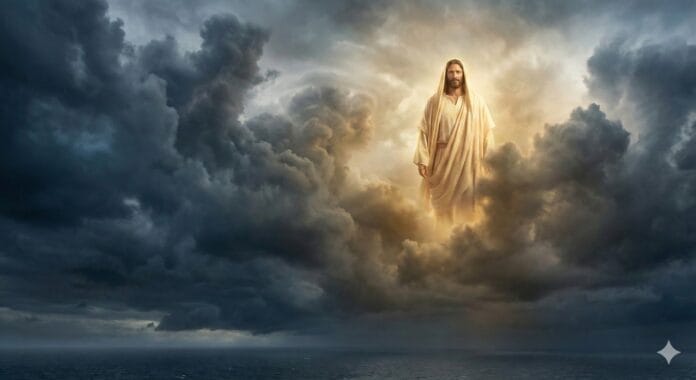
In the visions of the night I saw one like a son of man coming with the clouds of heaven. He came to the Ancient of Days and was led before him. To him was given dominion, glory, and a kingdom, that all peoples, nations, and languages should serve him. His dominion is an everlasting dominion that shall not pass away, and his kingdom one that shall not be destroyed.»
When Heaven Overthrows Empires: The Vision That Changes Everything
The future belongs to the one who comes on the clouds..
Do you sometimes feel crushed by the violence of the world? The systems that grind down the weak, the powers that lie shamelessly, the feeling that the forces of evil have already won? Daniel does too. Exiled to Babylon, deported far from home, he lived under the boot of a terrifying empire. Yet, one night, he receives a vision that shatters all certainties. What he sees is unlike anything the powerful imagine. It is the announcement of a total reversal, a victory that will never end. And this promise concerns us directly.
This text from Daniel 7 This marks a turning point in the entire Bible. It shows us that human history does not belong to tyrants, but to a mysterious figure who comes "with the clouds of heaven." This Son of Man will receive an eternal kingship. Here is what we will discover together: first, the nightmare of the four beasts and what they reveal about our own systems; second, the appearance of the Old Man and the heavenly tribunal that restores justice; then, the Son of Man and his dominion that changes everything; and finally, how this vision transforms our way of life today.
Babylon, Exile, and the Clash of Empires
Daniel wrote in the sixth century BC, during the Babylonian exile. The people of Israel had seen Jerusalem destroyed, the Temple razed, and its elites forcibly taken to a foreign land. There, in Babylon, reigned a colossal, ruthless power that considered itself eternal. Nebuchadnezzar erected giant statues, organized military parades, and imposed his language, his culture, and his violence.
In this stifling atmosphere, Daniel receives visions. Chapter 7 is the pivotal point of the book. Before it, there were mostly narratives (the lions' den, the three young men in the fiery furnace). Afterward come the great apocalyptic visions. This chapter inaugurates a new literary genre: the apocalypseThis unveiling of the hidden meaning of history. It is not about esoteric predictions, but a revelation about what is really happening behind appearances.
The text places the vision "during the night." Night is a time of anguish, but also of divine revelation. Daniel gazes upon the "great sea," stirred by the four winds of heaven. In biblical imagery, the sea symbolizes primordial chaos, the constant threat, the place from which danger arises. From this sea rise four monstrous beasts, each more terrifying than the last.
These beasts represent the successive empires: Babylon, the Medes, the Persians, the Greeks. But their significance extends beyond Daniel's immediate story. They embody every form of power that crushes, devours, and tramples. The lion with eagle's wings evokes brute force combined with speed. The voracious bear swallows without limit. The four-headed panther multiplies its dominion. And the fourth beast? Unspeakable. Terrible. Extraordinarily powerful. It possesses iron teeth and ten horns, symbols of total domination.
The small horn that emerges in the center embodies all arrogance. It has human eyes and a mouth that "utters delirious words." Literally: words that defy God himself. This figure foreshadows all future tyrants who claim to rewrite reality, who lie to enslave, who violate the truth to maintain their power.
This is the world as it appears: a succession of monsters devouring each other before devouring us. And Daniel, watching this scene, must feel completely powerless.
The Tribunal of the Ancient of Days: When God Takes Back Control
But the vision shifts. Suddenly, “thrones were set in place.” Note the plural: it is not a single throne, but several. A heavenly tribunal is established. And at its center, a profound figure: the “Old Man,” whom other translations call the “Ancient of Days.” This Hebrew expression evokes the one who exists before all else, who transcends the ages, who was there when nothing yet existed.
His robes are as white as snow, his hair like immaculate wool. Absolute whiteness, total purity. His throne? Made of flames, with wheels of blazing fire. In the Bible, fire represents the divine presence itself. It purifies, it reveals, it destroys what is false. A river of fire bursts forth before him, an image of a holiness that burns away all falsehood.
Thousands upon thousands serve him. Myriads upon myriads stand before him. These immense numbers speak of infinity. Before this celestial court, earthly empires crumble into nothing. The tribunal takes its place. Books are opened. Everything is recorded, nothing is forgotten. Every act of oppression, every tear shed, every injustice committed: all is inscribed.
Then the fourth beast, the one that spewed delusional words, was killed. Its corpse was thrown into the fire. A final sentence. The other beasts lost their dominion but received a reprieve. Human history did not end abruptly, but its profound meaning was revealed: the powers of evil are only temporary. Their reign is always provisional.
This passage reveals something fundamental: God is not absent. He does not passively observe the chaos. He sits enthroned, he judges, he restores. The Ancient of Days represents absolute transcendence, the one who surpasses all cycles of violence, who cannot be manipulated by anyone. Before him, tyrants are but ephemeral puppets.
The Son of Man: a kingship unlike any other
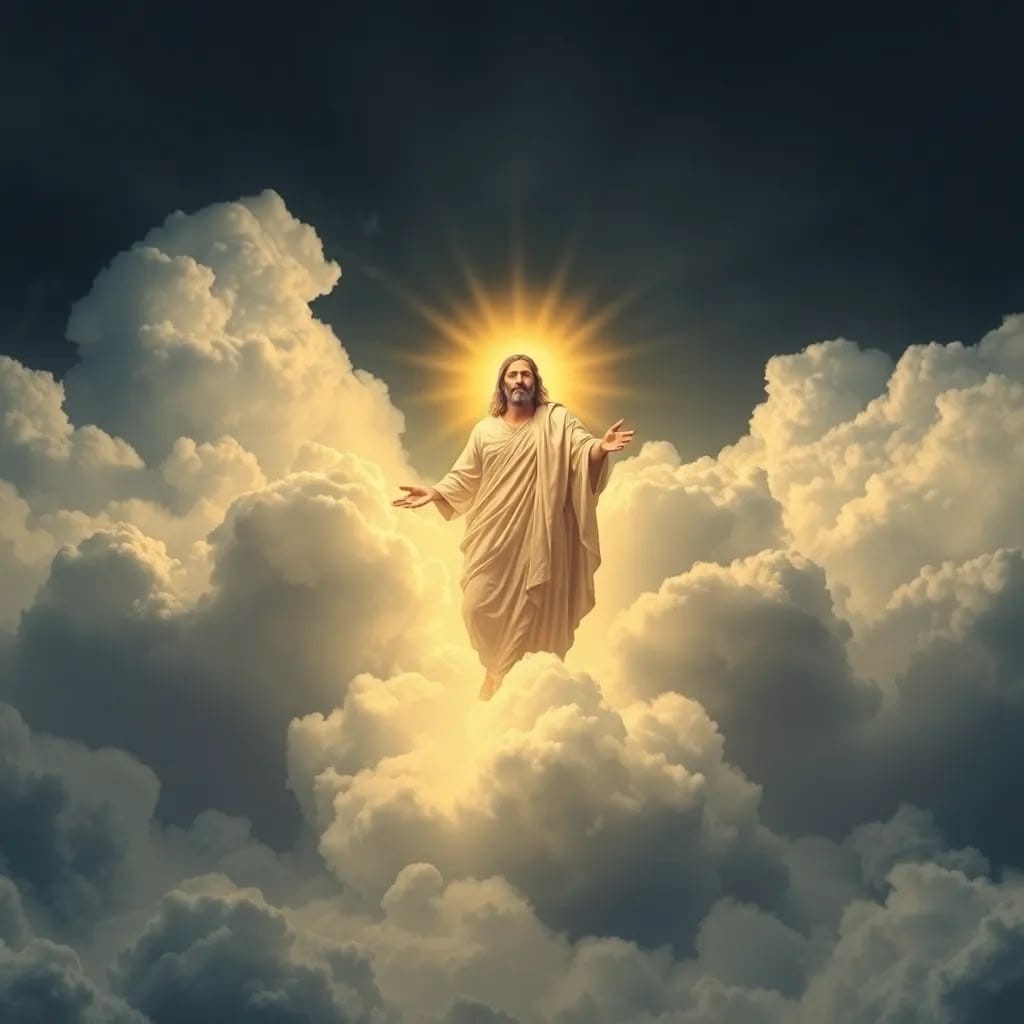
And here is the culmination of the vision. Daniel watches again, “during the visions of the night,” and he sees someone coming “with the clouds of heaven, like a son of man.” Note well: not from the sea of chaos, but from heaven, the place of God. This figure does not arise from violence, but from the divine presence itself.
The expression "Son of Man" primarily means "human being." But here, it takes on an extraordinary depth. Faced with monstrous beasts, a being of authentic humanity appears. He does not dominate through terror, he does not devour, he does not trample. He is presented before the Old Man, who grants him "dominion, glory, and kingship."
This gift changes everything. Unlike beasts who seize their power by force, the Son of Man receives his. It is a divine investiture. His dominion is not based on fear, but on the absolute legitimacy conferred by God himself. All peoples, all nations, people of every language will serve him. Not by coercion, but because this kingship corresponds to the true order of the world.
And what is most striking: “His dominion is an everlasting dominion, which shall not pass away, and his kingdom, a kingdom that shall not be destroyed.” All beasts have had their moment. All have fallen or will fall. But this one will never end. It transcends the ages, it survives all empires, it fulfills God’s original intention for humanity.
The first Christians immediately recognized Jesus in this Son of Man. He himself refers to himself as such in the Gospels. During his trial before the Sanhedrin, he declared: “You will see the Son of Man sitting at the right hand of the Almighty and coming on the clouds of heaven.” He claimed this identity, this mission, this kingship. But he fulfilled it in a completely unexpected way: not by crushing his enemies, but by allowing himself to be crucified. His victory came through love to the very end, through the total gift of self.
Herein lies the scandal and the wonder: the Son of Man triumphs not through violence, but through vulnerability. He overthrows the beasts not by becoming stronger than them, but by revealing another form of power, that of love which goes even to death and which rises again.
Three dimensions that transform our understanding of the world
Human solidarity rediscovered in the face of dehumanizing empires
The four beasts embody systems that deny humanity. They represent everything that reduces people to numbers, to cannon fodder, to exploitable consumers. The lion, the bear, the panther, the nameless beast: all are figures of dehumanization.
But the Son of Man restores humanity. He does not come as a fifth, even more powerful beast. He comes simply as a man. And this assumed humanity becomes the locus of divine revelation. God does not despise our condition. He takes it upon himself, he exalts it, he crowns it.
In concrete terms, this means that true resistance to oppressive systems comes through human solidarity. When you refuse to treat someone like an object, when you recognize their dignity, when you choose brotherhood Rather than fierce competition, you embody the Son of Man. You become a symbol of his kingship. You bear witness that true humanity is stronger than monsters.
Think of the resistance fighters under dictatorships, those who hid the persecuted at the risk of their own lives. Think of the healthcare workers who see people where the system sees files. Think of the teachers who believe in their students when everything pushes them to reduce them to statistics. Every act of recognizing another as a fellow human being is a victory of the Son of Man over the beasts.
Divine justice versus the illusion of impunity
Daniel's vision affirms something radical: tyrants will not get away with it. The heavenly court is seated, the books are opened, and accounts are rendered. This certainty runs throughout the Bible. No injustice remains hidden from God. No abuse of power goes unpunished forever.
This perspective does not absolve us from acting for justice here and now. On the contrary, it gives us the strength to do so. If we knew that evil would ultimately prevail, why resist? But if we believe that God's judgment seat will restore all things, then every struggle for justice takes on ultimate meaning.
Look at the little horn spewing out delusional nonsense. It represents systematic lying, propaganda that reverses truth and falsehood, good and evil. Even today, we live submerged in manipulative rhetoric. Social media amplifies fake news. The powerful rewrite history. Lobbies buy consciences.
But the truth always comes out eventually. Not necessarily right away. Sometimes after decades. But it does. The heavenly court guarantees that falsehood never truly wins. This doesn't mean we should wait passively. On the contrary, we are called to bear witness to the truth, to denounce falsehood, to refuse silent complicity.
Every whistleblower, every honest journalist, every citizen who refuses to be manipulated participates in the work of divine judgment. Speaking the truth, even when it's dangerous, even when it's costly, is already anticipating God's judgment.
The vocation of patience and hope against despair
Daniel sees the beasts reigning. He sees terror taking hold. But he also sees their end. This dual vision changes everything. We know where history is headed. Not because we have a crystal ball, but because God has revealed his plan: the Son of Man will receive an eternal kingship.
This hope is not naive. It does not deny the brutality of the present. Daniel sugarcoats nothing. The beasts devour, tear apart, trample. Evil is real, massive, terrifying. But it is not the final word. This is the radical difference between blissful optimism and Christian hope.
Optimism says, "Everything will work out naturally." Hope says, "God will fulfill his promise, but this requires going through evil, through struggle, through..." loyalty in the ordeal. This hope requires patienceNot resigned passivity, but active perseverance.
When you commit yourself to a just cause and results are slow in coming, when you raise your children in the faith despite widespread indifference, when you resist corruption while everyone else succumbs to it, you embody this patience. You bear witness that the final victory of the Son of Man does not depend on immediate victories, but on loyalty in the long term.
The apostle Paul expressed it beautifully: “We are afflicted, but not crushed; perplexed, but not in despair.” This is the attitude of one who understands Daniel’s vision. He knows that the beasts roar, but that their time is short.
Augustine, John, and the tradition that unfolds this vision
This vision of Daniel did not remain a dead letter. It permeated all of Christian thought. Saint AugustineIn The City of God, he draws inspiration from this to distinguish two logics at work in history. On the one hand, the earthly city, built on self-love to the point of contempt for God. On the other, the heavenly city, founded on the love of God to the point of self-contempt.
The four beasts of Daniel belong to the earthly city. They embody this logic of domination, rivalry, and violence. But the Son of Man inaugurates the heavenly city. His kingship is not based on strength, but on love and service. Augustine wrote in the fifth century, as Rome was collapsing. Some accuse the Christianity for having weakened the empire. Augustine replies: the Roman Empire was already one of the beasts of Daniel, and all the beasts fall. Only the kingship of Christ remains.
Jean, in the ApocalypseHe explicitly echoes the imagery of Daniel. He too sees a monstrous beast rising from the sea, blaspheming against God. He too sees the heavenly tribunal, the slain Lamb taking the sealed scroll and revealing the meaning of history. And he affirms that "the kingdom of the world has become the kingdom of our Lord and of his Christ."
This continuity between Daniel and John shows that the vision was not an exotic curiosity. It became the Christian lens through which to view history. The martyrs of the early centuries, facing imperial Rome, relied on this certainty: the emperor is but a beast among others, and his power will pass away. The Son of Man has already conquered.
Christian liturgy celebrates this victory every time it proclaims: “Christ is king.” Not a king in the manner of empires, but the king who washes the feet of his disciples, who carries his cross, who rises from the dead. His kingship transcends all political regimes. It is not identified with any of them, but it judges them all.
In the Middle Ages, painters depicted Christ in majesty, surrounded by the four animals symbolizing the Evangelists. But these animals were no longer monstrous. They became figures of the Good News. The lion (Mark), the bull (Luke), the man (Matthew), the eagle (John): all serve the revelation of the Son of Man. What was a sign of terror becomes a sign of salvation. This is the transforming power of Christ's kingship.
Six ways to experience this royalty right now
How does Daniel's vision resonate with us in our daily lives? Not primarily as an abstract doctrine, but as a call to live differently. Here are six concrete suggestions.
First, learn to recognize the beasts of our time. They may no longer have horns, but they still operate. Economic systems that create billionaires while children starve, regimes that imprison dissidents, ideologies that dehumanize those who think differently: these are all modern-day faces of the beasts of Daniel. Don't be intimidated by their apparent power. Remember: they pass away, but the Son of Man remains.
Second, choose acts of radical humanity. Every time you treat someone with respect when prevailing logic would lead you to ignore or crush them, you are demonstrating the kingship of the Son of Man. This could be a word of encouragement to a struggling colleague, a refusal to participate in a social media lynching, or a kind gesture toward the supermarket cashier.
Third, cultivate contemplative prayer that sees beyond appearances. Daniel receives his vision “during the night.” We must be willing to withdraw from the noise of the world, to be silent, in order to perceive what God reveals. Take ten minutes each day to reflect on your day in the light of the Gospel. Where did you see the beasts at work? Where did you recognize the Son of Man?
Fourth, engage in the fight for justice, but without messianic illusions. You will not save the world single-handedly. But every righteous action contributes to preparing the Kingdom. Support a human rights organization, participate in a local solidarity initiative, vote according to your conscience. These gestures are not insignificant. They weave the kingship of Christ into concrete reality.
Fifth, bear witness to Christian hope. Around you, many live in anguish or cynicism. They see the beasts, but not the Son of Man. Your way of speaking about the future, of reacting to crises, of maintaining faith despite setbacks: all of this is a witness. Not by denying the difficulties, but by pointing to a victory already won.
Sixth, participate in the liturgy with a renewed awareness. Each Eucharist anticipates the final banquet where all peoples will be gathered. Each baptism plunges into death and the resurrection of the Son of Man. Every act of forgiveness given or received manifests the victory over the logic of vengeance. The liturgy is not an escape, it is an immersion in ultimate reality.
The moment when everything changes for good
We have reached the end of our journey. This vision of Daniel has taken us through the nightmare of empires, allowed us to witness the heavenly tribunal, and to contemplate the coming of the Son of Man. What can we learn from it?
First, that history does not belong to the powerful. They make noise, they crush, they terrorize. But their reign is temporary. All beasts fall, all tyrannies crumble. No domination founded on violence lasts forever. This conviction allows us to resist without despairing, to fight without hating, to persevere without becoming discouraged.
Furthermore, God is not absent. The Elder sits upon his fiery throne. The books are open. Nothing escapes his gaze. Every tear is counted, every injustice will be judged, every truth will be revealed. This does not mean that we should wait passively. On the contrary, the heavenly court calls us to act now according to God's justice.
Finally, the Son of Man has already received eternal dominion. His victory does not depend on our successes or failures. It is accomplished in his death and resurrection. We do not have to establish it, but to bear witness to it, to manifest it, to conform our lives to it. This kingship unfolds each time love triumphs over hate, when truth triumphs over falsehood, when brotherhood breaks down the walls of indifference.
This is Daniel's revolutionary message: empires will pass away, but the Son of Man remains. Tyrants will fall, but his kingdom will never end. So, stop living as if the beasts have the last word. Stop being intimidated by their roaring. Stop giving in to cynicism and resignation.
Live as citizens of the eternal kingdom. Act as if the Son of Man already reigns, because he already does. Resist the logic of death, sow acts of humanity, proclaim hope. The world needs witnesses who believe that history does not end in chaos, but opens onto an endless kingdom.
And when the night seems too long, when the beasts appear invincible, remember: Daniel also saw the horror. But he saw further. He saw someone coming on the clouds, receiving all authority, gathering all the peoples. This vision was not a fleeting consolation. It was the revelation of what is already being fulfilled.
You are called to become part of this royalty. Not through force, but through love. Not by dominating, but by serving. Not by crushing, but by lifting up. This is the revolution that the Son of Man inaugurates. It doesn't make the headlines, it doesn't impose itself by force of arms. But it transforms everything from within. It drives back the beasts. It heralds the dawn of a new world.
So stand up. Lift up your heads. The Son of Man is coming on the clouds. His reign has already begun. And you are invited to manifest it from today.

Seven practices to embody this vision
Spend five minutes each morning reading a passage from the Gospel showing Jesus as the Son of Man, meditating on how he exercises his kingship through love and service rather than domination.
Identify a contemporary “beast” in your environment, whether it be a dehumanizing system or a logic of oppression, and take a concrete act of non-violent resistance this week.
Practice daily self-examination by asking yourself where you recognized the face of the Son of Man today and where you may have given in to the logic of beasts.
Get involved in a sustainable solidarity action, whether local or international, to show that brotherhood is stronger than systems that divide and crush.
Refuse to participate in hate speech or manipulation, especially on social media, and choose to relay words of truth and hope even when it seems insignificant.
Participate in the Eucharist with renewed awareness, seeing in it the anticipation of the final banquet where the Son of Man will gather all peoples in his eternal kingship.
Share this hope with at least one discouraged person this month, reminding them that empires pass away but the victory of Christ remains forever.
References
Daniel 7, 2-14 (source text)
Book of the Apocalypsechapters 4-5, 13, 19-22 (Johannine retellings of Daniel's vision)
Saint Augustine, The City of God, books XIV and XIX (distinction between earthly city and heavenly city)
Synoptic Gospels, passages about the Son of Man (especially Mt 24-25, Mk 13-14, Lk 21-22)
Patristic tradition on the Christological interpretation of the Son of Man (Irenaeus of Lyons, Origen)
Liturgy of Christ the King and readings for the season of Advent (liturgical context of Daniel 7)
Contemporary exegetical commentaries on the Daniel's book (historical and theological context)
Medieval iconography of Christ in Majesty surrounded by the four living creatures (visual tradition of the vision)