












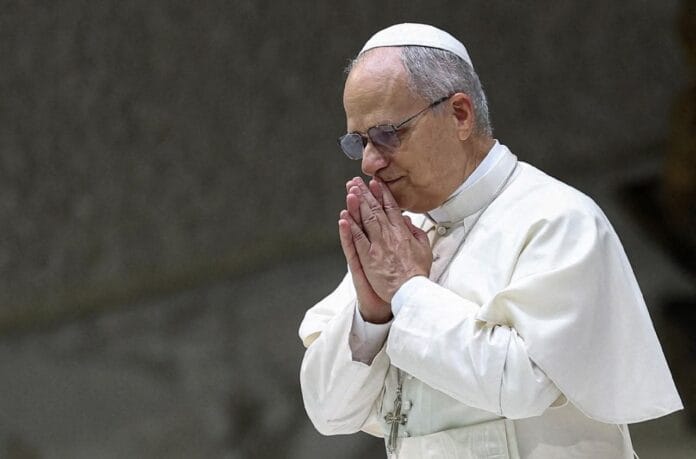
November 17th, Leo XIV addressed a profound message to the participants of the meeting organized by the Pontifical Commission for the Protection of Minors. The event brought together, at Vatican, Representatives from various religious congregations and institutes of consecrated life came together to exchange ideas on a key theme: «"Building communities that protect dignity.".
At the heart of this message, the pope reiterated a fundamental conviction: The dignity of every human being is a gift from God, not a right acquired through effort or merit. Every person, even the most vulnerable, is the product of a unique gaze of love. From this perspective, the protection of minors and vulnerable people becomes more than a moral imperative: it is a way of recognizing and honoring the image of God present in everyone.
A dignity that precedes all action
This reminder is not merely spiritual. It has concrete consequences in the lives of Catholic communities. By affirming that dignity "is not something obtained through force or success," the pope invites us to rethink how institutions assess human value. The Church is not primarily a place where one judges, but a place where one cares for and educates.
This approach is all the more crucial in the context of injuries caused by abuses. The victims remind the Christian community of the need for listening and healing. It is in this tension between suffering and hope that Leo XIV evokes "the wound that becomes a window of grace." In other words, justice as experienced in mercy allows pain to transform into a path to healing.
To serve rather than to dominate: true Christian freedom
The light that dwells in every face
For the pope, there human dignity It also manifests itself in the most subtle features of the human face. He writes: «"On every face, even one marked by fatigue or pain, is reflected kindness of the Creator.". This simple yet powerful idea overturns many modern approaches. Rather than focusing solely on performance or power, it calls on everyone to to look at the other with the eyes of compassion.
Christian faith does not deny the suffering of the world; rather, it sees it as an invitation to be present. Looking, listening, sharing: these are the actions that build this "culture of care" so dear to... pope. Religious communities, especially those dedicated to education and hospitality, are called upon to live this vigilance on a daily basis.
Freedom of service
Leo XIV insists: true freedom is not that which dominates, but that which serves and accompanies. This message speaks as much to bishops as to every Christian. It is about moving beyond the logic of possession to enter into that of... fraternal relationship.
Caring for others then becomes a school of humanity. It is born "from a heart that knows how to listen," from a gaze that recognizes instead of judging. This attitude is learned in the silence of prayer, but is tested in ordinary acts: welcoming vulnerability, asking for forgiveness, making room for truth.
In this sense, the culture of protection It is not merely an internal Church policy; it is a spirituality. It requires experiencing power as a service, and responsibility as an act of love.
Preventing, listening, transforming: a Church in learning
Exemplary communities of trust and dialogue
Greetings the work of the Pontifical Commission, the pope expresses sincere gratitude: these women and men "dedicatedly promote and accompany the growth path of the entire Church." Behind these words lies a vision for the future. THE Vatican recognizes that conversion can only be collective and continuous.
Each community is called upon to become a safe spacewhere speech flows freely and no one is afraid to speak the truth. This is where the dimension of dialogue comes in. Prevention is not just a matter of protocols: it requires a culture of transparency, nurtured by trust andhumility.
Leo XIV highlights this dual movement: on the one hand, sharing experiences and learning on the prevention of abuse; on the other hand, to report truthfully and humility Measures have been taken. This shared responsibility requires courage, but it also opens a path to credibility.
Listening as an act of healing
THE pope recently met with victims of abuse in Belgium, in a climate of listening and prayer. This moment, described as "profound and painful," was a spiritual turning point for many. It illustrates what it means for a Church to listen instead of defending itself: acknowledge the injury without looking away.
It is in this listening, sometimes silent and laborious, that institutional conversion takes root. Attention to victims becomes the test of loyalty to the Gospel. When the other feels heard, forgiveness ceases to be an abstract word and becomes an experience of liberation.
True love is born from the recognition of fragility.
A vocation to love with a free heart
In his message, Leo XIV sends a thought to the monks and nuns who follow Christ on the path of vows of chastity, poverty and obedience. For them, but also for all the baptized, love Authenticity is born from the recognition of one's own weakness.
To be loved in one's fragility, writes the pope, This enables one to love others with respect and sensitivity. This vision overturns the logic of merit: You don't need to be perfect to love; you just need to be true.
In communities where this truth is lived, relationships change in nature. Power becomes shared, speech is liberated, fear recedes. The Church then rediscovers its original face: that of brotherhood.
The wound transformed into a window of grace
The key phrase of the message – «Where justice is lived with mercy, the wound is transformed into a window of grace» – sums up the pontiff’s profound intention. It speaks both of the truth of evil and the possibility of good.
Living justice with mercy does not mean minimizing wrongdoing, but to integrate it into a process of truth and healing. This is to acknowledge that forgivenessIn its divine dimension, it does not erase memory, but purifies it.
A community that learns to live in this way becomes a sign of hope in a world that is often harsh and fragmented. It shows that Light is not the absence of darkness, but its transfiguration.
The future of a protective and humble Church
A mission open to all
Through this message, Leo XIV It charts the course of a Church that learns and reforms. This work of cultural conversion requires...humilitybut also a strong hope: that of building places where everyone is listened to, respected and valued.
Protecting minors and the vulnerable is not just another task. It is the very heart of the Christian mission, because The Gospel always begins with a loving gaze upon the smallest among us.
THE pope Therefore, it invites religious, lay people, and pastoral leaders to collaborate with the Pontifical Commission to embed this culture in all places of ecclesial life: schools, parishes, monasteries, and missions. It is by working together, in humble truth, that the Church will truly become "a safe home for all.".
Mercy and vigilance: the dual impetus of reform
This vision can only be achieved through a constant balance between justice and mercyToo often, one is presented as opposed to the other: justice is seen as harsh, mercy naive. Leo XIV On the contrary, it shows that they complement each other. Mercy gives life to justice, while justice gives depth to mercy.
This dual approach fosters sustained vigilance. It reminds us that prevention should not be a one-off reaction to a crisis, but a permanent mindset. By promoting a culture of protection, the Church becomes a laboratory of universal brotherhood, capable of inspiring the whole of society.
Leo XIV It does not merely reiterate principles; it opens up a new horizon. The horizon of a Church that, wounded but faithful, learns to transform each scar into a sign of new life. For, ultimately, this is where the message of Christ lies: a humanity restored by tenderness.