






The Eucharist is a central sacrament in the Christianity, fundamental to the spiritual life of believers. Its definition Eucharist It refers to a liturgical act in which the real presence of Christ is manifested. This sacrament expresses a profound communion between Jesus Christ and his faithful, strengthening their faith and commitment.
Her origin Eucharist It is found in the New Testament, during Jesus' last supper with his apostles. At that precise moment, he instituted this rite by sharing the bread and wine as his body and blood. This sacred institution marks the beginning of a tradition passed down at the heart of every Christian celebration.
The terminology varies according to denomination: Catholics and Orthodox Christians speak of the "Eucharist," while Protestants often prefer "Holy Communion." These terminological differences reflect diverse theological understandings but all converge on the central importance of this sacrament in Christian life.
The theological meaning of the Eucharist
L'’Eucharist represents a bloodless reenactment of Christ's sacrifice on the crossThis sacrament allows believers to participate in Pascal's mystery without repeating the sacrifice, but by making it present in a sacramental way. Thus, the Eucharist is a bridge between the salvific history and the spiritual life of the faithful.
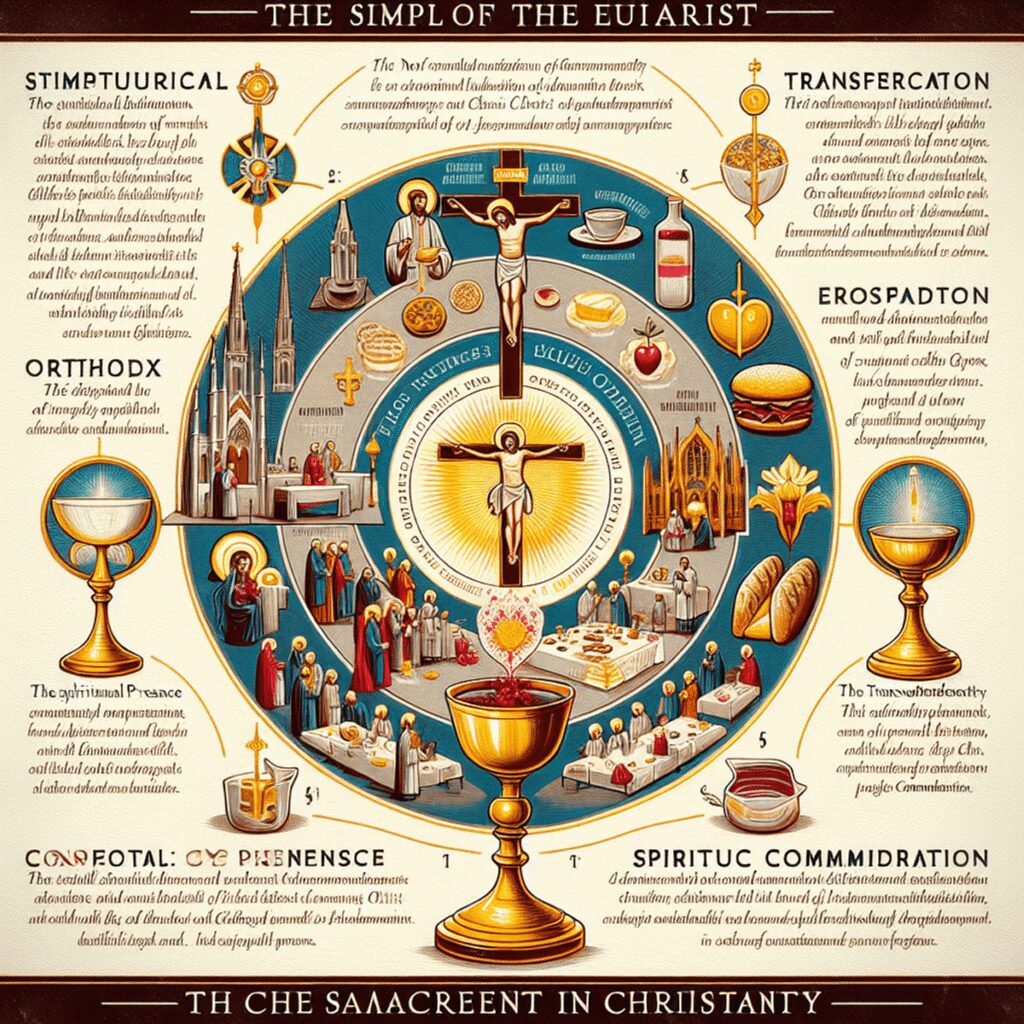
Catholic doctrine places particular emphasis on the notion of transubstantiationThis term refers to the real and substantial transformation of bread and wine into body and blood of Christwhile retaining its outward appearance (taste, color, shape). This real presence transcends mere symbolism: Jesus is truly present in the Eucharistic species. This mystery underscores the depth of the divine gift offered to the faithful at every Mass.
Protestant perspectives differ in their approach to the meaning of the Eucharist:
- Some, like the Lutherans, defend the consubstantiation, where the body and blood of Christ coexist with the bread and wine without complete transformation.
- Calvinists are considering a presence only spiritual, where the believer receives divine grace through an inner communion.
- Other schools of thought, particularly those inspired by Zwingli, consider the Eucharist as a symbolic commemorationa liturgical meal recalling the action of Jesus without his actual presence.
These different interpretations show that the meaning of the Eucharist varies according to traditions, but always remains centered on the profound link between the memory, presence, and sacrifice of Christ. This diversity enriches our collective understanding of this fundamental sacrament.
The main symbols of the Eucharist
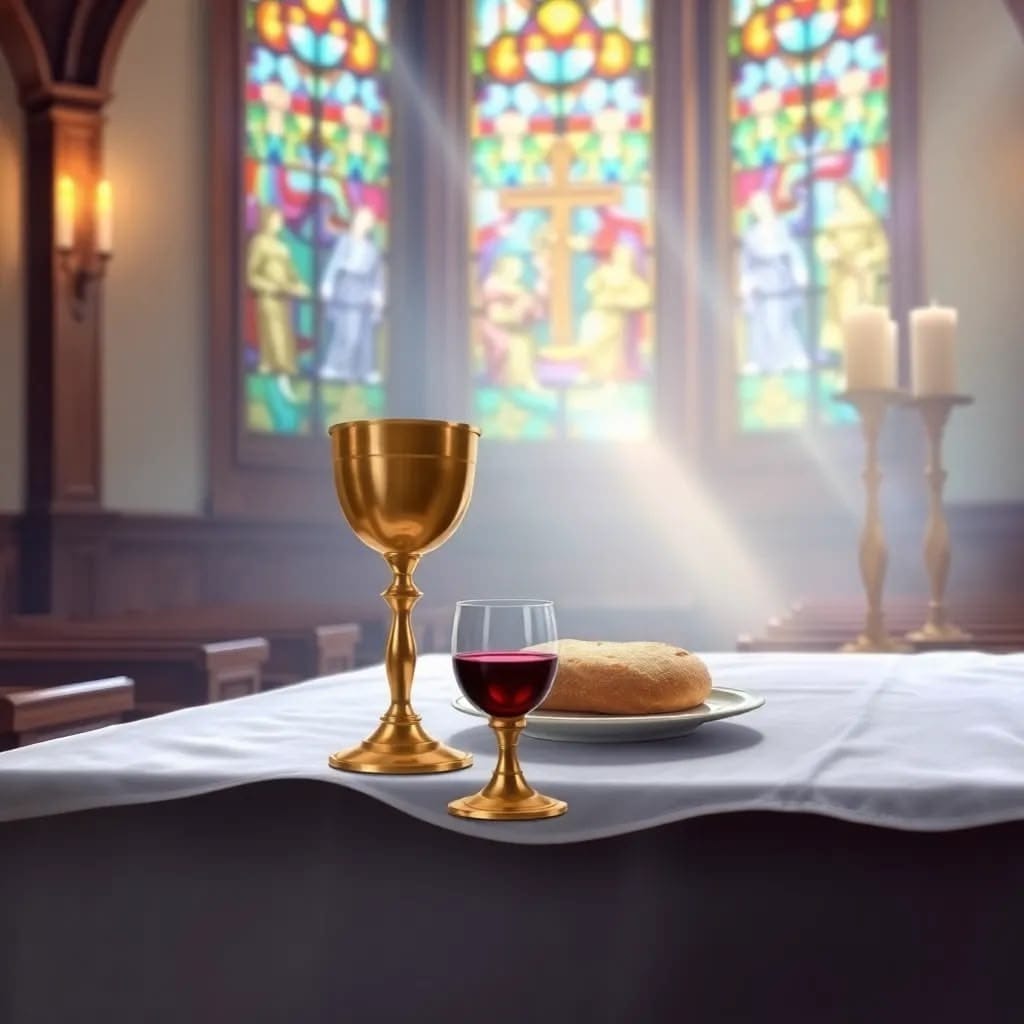
Bread and wine occupy a central place among the Eucharistic symbolsThey respectively represent the body and the blood of Christ, thus reminding everyone of his real presence within the celebration.
- Bread symbolizes the body of Christ, offered to the apostles at the Last Supper, a moment that has become a a living memory for believers. By becoming spiritual food, it nourishes the faith of believers and their union with Jesus.
- WineMeanwhile, it represents the blood shed by Jesus on the cross, a powerful symbol that is often called the blood of Jesus, a sign of the new and eternal Covenant between God and humanity.
These simple elements carry within them a profound spiritual power. Their transformation during consecration transcends their material appearance: they become a visible sign of an invisible grace that renews the inner life of the faithful.
The use of these symbols fosters meditation on the Pascal's mystery, engaging each believer in an active participation in the divine life manifested by the sacrifice of Christ.
The Eucharistic Liturgy: its structure and essential parts
There Eucharistic liturgy it is divided into two main parts which structure the celebration of the sacrament.
1. The Liturgy of the Word
It begins with biblical readings, usually from the Old Testament, the apostolic letters, and a passage from the Gospels. This phase also includes the homily, where the priest or celebrant comments on the texts to nourish the faith of the participants. profession of faith These readings often follow, together affirming fundamental beliefs. The universal prayer concludes this first part, conveying the intentions of the community.
2. The Eucharistic liturgy itself
It begins with the preparation of the gifts—the bread and the wine—presented at the altar. The key moment is the consecrationDuring this time, according to Catholic doctrine, these elements truly become the body and blood of Christ. This is followed by a prayer of thanksgiving and the communion of the faithful, the moment when believers receive this spiritual sacrament.
This precise organization makes visible the richness of the mystery celebrated at each mass.
The spiritual power of the Eucharist for believers
The Eucharist is first and foremost a moment of profound union with ChristBy receiving the consecrated bread and wine, you participate in a real and living presence that transcends mere symbolism. This communion nourishes your faith, connecting you to Pascal's mystery of death and of the resurrection of Christ.
This experience is not limited to your personal relationship with God; it also creates a union among all members of the ChurchThrough this sacrament, the community of believers becomes one body in Christ, manifesting a strong and visible spiritual solidarity.
The invisible grace of the Eucharist acts like a divine breath that transforms you inwardly. It calls you to constant conversion, to grow in Hope and charityThe Eucharist, explained simply, thus reveals its power: to be a source of spiritual life, a force of unity, and a path to holiness.
Frequently Asked Questions
What is the Eucharist and what is its importance in Christianity?
The Eucharist is a central sacrament in the ChristianityThe sacrament of communion, instituted by Jesus Christ at the Last Supper, represents communion with Christ through the consumption of bread and wine, symbolizing his body and blood. This sacrament is fundamental for believers as it expresses their faith and spiritual union with Jesus.
What is the theological significance of the Eucharist according to Catholic doctrine?
According to Catholic doctrine, the Eucharist is the unbloody re-enactment of Christ's sacrifice on the cross. Transubstantiation truly transforms the bread and wine into the body and blood of Christ, thus enabling the real presence of Jesus in this sacrament.
What are the main symbols used in the Eucharist?
The essential symbols of the Eucharist are bread and wine, which respectively represent the body and blood of Jesus Christ. These elements embody the spiritual power of this sacrament and recall Christ's sacrifice for humanity.
How does the Eucharistic liturgy unfold?
The Eucharistic liturgy consists primarily of two parts: the Liturgy of the Word, where biblical texts are proclaimed, and the Eucharistic liturgy itself, which includes the consecration of the bread and wine. This structure allows the faithful to participate fully in the mystery being celebrated.
What is the spiritual power of the Eucharist for believers?
The Eucharist offers believers a profound union with Christ and among the members of the Church. It transmits an invisible grace that strengthens faith, nourishes the soul, and sustains the spiritual life of the faithful on their Christian journey.
What differences exist between the terminologies used to refer to the Eucharist in the different Christian denominations?
In Catholicism, the term used is Eucharist, while the Orthodox Churches also use this term. Protestants often prefer to speak of Holy Communion or the Lord's Supper. These differences reflect varying perspectives on the real presence of Christ and the theological understanding of this sacrament.