












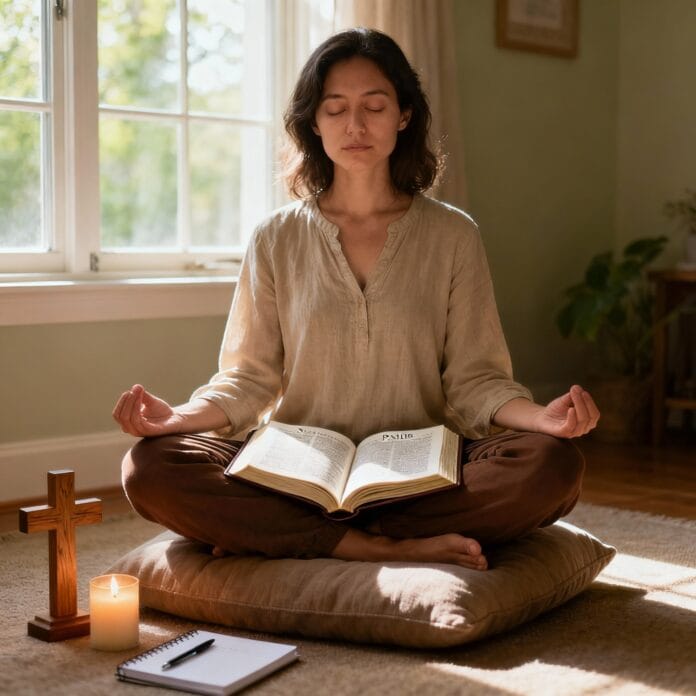
Meditation with the psalms constitutes a spiritual practice A rich and accessible Christian tradition, rooted in biblical reading, it invites a profound encounter with God through the words of the Psalms, filled with faith, praise, and supplication. This form of meditation goes beyond simple reading; it engages the heart and mind in a vibrant daily prayer.
Meditation plays a vital role in the Christian life. It nourishes your relationship with God by helping you to hear his voice more clearly, to embrace his promises, and to recognize your own spiritual path. By pausing to meditate on a passage from the Psalms, you enter into a dynamic where the Word becomes a source of inner transformation.
This article aims to guide you practically in integrating the Psalms into your daily spiritual routine. You will discover how to make meditating with the Psalms a regular, structured practice centered on prayer, reflection, and repentance. In this way, you can enrich your inner life and deepen your communion with God day after day.
Understanding biblical meditation centered on the Psalms
There biblical meditation Centered on the Psalms, meditation involves deeply contemplating a passage of Scripture, not simply to read or study, but to enter into spiritual communion with God. This practice engages the whole being: heart, mind, and soul. Unlike a quick or superficial reading, meditation invites us to absorb the text, to let it resonate within us.
The Psalms play a fundamental role in Christian prayer and praise. They are a vivid expression of human emotions in the face of God—joy, distress, gratitude, and repentance. By meditating on them, you find words that reflect your own spiritual experiences and help you better articulate your worship. The Psalms thus become a bridge between your heart and God's, facilitating a genuine and personal connection.
Distinguishing between reading and meditation is crucial for deepening your relationship with the psalms:
- Reading : the action of scanning the text to grasp its general content or obtain information.
- Meditation : an intense process of reflection where one lingers on each word or phrase, seeking to understand the divine message and its personal implications.
Meditation transforms words into a living experience. It allows us to discover hidden spiritual dimensions that simple reading doesn't always reveal. For example, a verse of praise can become an invitation to thank God throughout your day, while a call to repentance leads you to a sincere examination of your conscience.
Engaging in this form of contemplation helps you gradually integrate the teachings of the Psalms into your daily life. You no longer receive only intellectual knowledge but a spiritual transformation that nourishes your faith and strengthens your walk with God.
A daily meditation routine with the psalms
Integrating the psalms into a spiritual routine It requires a certain discipline and a clear structure. Meditation is not limited to simply reading biblical passages; it invites a spiritual reflection profound, gradually transforming your relationship with God. Here's how to structure this daily time.
Meditating on a passage from the Psalms
To begin, choose a passage from the Psalms to meditate on each day. This selection can follow several methods depending on your preference:
- Sequential reading Go through the psalms in order, one or two verses per day. This allows for a steady and complete progression.
- Theme selection : select psalms related to a specific situation in your life (praise, trust, repentance).
- Inspiring passage : choose a verse or passage that particularly resonates with you at the present moment.
Once the passage has been chosen, meditation consists of delving deeper into the text by asking yourself three essential questions that structure your reflection:
«"What is there to praise in God?"»
Identify the attributes of God expressed in the psalm: his greatness, his faithfulness, his mercy. This praise nourishes your wonder and gratitude.
«"What should I confess?"»
Look for the calls to repentance or the points where the psalmist expresses his weaknesses. This opens the door to a sincere confession of your own shortcomings.
«"What should I ask for?"»
Note the supplications in the psalm: protection, support, deliverance. Formulate these requests in your own words to make your needs resonate with God.
Taking the time to write down your answers to these questions helps to solidify this spiritual reflection and to make meditation more engaging.
How can this practice be implemented on a daily basis?
- Reserve a specific time each day for your meditation — morning or evening according to your rhythm.
- Create a calm space, conducive to concentration and inner listening.
- Use a notebook or a spiritual journal to note down the passages you have reflected upon and your answers to the key questions.
- Review your notes regularly, They bear witness to your spiritual journey and encourage perseverance.
Meditating on the psalms in this way is not just about accumulating knowledge, but about letting their words penetrate your heart. You then enter into a dynamic where structured biblical reading becomes a source of daily inspiration.
This process also naturally prepares for the next stages of practice: transforming this meditation into concrete prayers and gradually deepening personal understanding of the chosen psalms.
Formulate your supplications to God according to the studied psalm
Meditating on the psalms is not limited to simply contemplating the text. It invites us to transform this reflection into a concrete prayer, a fervent supplication adapted to the teachings of the biblical passage being studied. This step is essential to nurturing a spiritual routine which combines meditation, supplication, and repentance.
To formulate your supplications, begin by identifying the needs, hopes, or challenges that the psalm highlights. For example:
- While the psalm expresses confidence in divine protection, you can ask God to strengthen your faith in times of trial.
- When a psalm emphasizes justice or mercy From God, address a request to Him to act in your life or the lives of others.
- If the text reveals a cry of distress, formulate a sincere prayer to receive consolation and deliverance.
Dedicating specific time each day to this practice creates a lasting habit and transforms the Structured Bible reading in a living dialogue with God. This prayer of petition then becomes an active response to the spiritual message received.
Here are some suggestions to enrich your supplication:
- Use a key phrase from the psalm as a point of reference in your prayer.
- Express your personal feelings related to what you have meditated on.
- Be specific in your requests, thus showing that your prayer is rooted in the Word.
This approach allows us to move from a simple reading of biblical passages to a spiritual reflection deep that nourishes your relationship with God on a daily basis.
Identify your mistakes in relation to the passage you meditated on and ask for forgiveness
Repentance occupies a central place in your relationship with God.. She invites you to a sincere examination of your heart, illuminated by meditation on the psalms. This spiritual practice it is not limited to a passive reading of biblical passages; it pushes you to recognize your shortcomings and to confess them openly.
To integrate repentance into your daily spiritual routine, dedicate a specific time to this exercise after meditating and formulating your prayers. Using the biblical passage you studied, reflect on behaviors or thoughts that do not align with the teachings you received. For example, a psalm about justice might lead you to consider your honesty or how you treat others.
Here are some suggestions for further exploring this spiritual reflection:
- What sins does this passage highlight in my life?
- How do these mistakes affect my relationship with God and those around me?
- What attitude do I need to change in order to live better according to the divine word?
Confessing your sins before God opens the way to divine forgiveness. It is an act of’humility which renews your communion with Him and strengthens your commitment to follow His ways. Structured biblical reading, combined with this approach of confession, thus transforms each meditation into a living and transformative experience.
Integrating this time of repentance into your daily practice helps you build a lasting habit, founded on sincerity and authenticity. This discipline encourages a constant dialogue with God, where grace and forgiveness become tangible realities rooted in your spiritual life.

To deepen one's understanding of the psalms through focused reflection
To deepen your meditation with the psalms, it is essential to develop a in-depth reflection on one or two specific aspects of the passage being studied. This approach allows one to move from a superficial reading to a richer and more personal understanding.
How to choose these points of personal application?
- Identify a central theme : look for a keyword or idea that stands out clearly in the psalm, such as trust in God, praise, deliverance, or repentance.
- Identify an expressed emotion : sadness, joy, anger or gratitude can be gateways to a more intimate meditation.
- Focus on a significant verse Often a single verse can encapsulate the entire message of the psalm. Taking the time to analyze it in depth illuminates the whole text.
Once you have chosen this aspect or these aspects, ask yourself targeted questions to further your thinking:
What does this theme teach me about my relationship with God?
How might this change my daily behavior?
What spiritual changes does this passage bring about in me?
This method helps you authentically integrate the psalm into your spiritual life. It encourages a lively appropriation of the text, far from a simple mechanical recitation.
Meditating with the Psalms daily thus becomes a constant source of inner renewal, as each passage offers several levels of interpretation and application. Focusing on one point at a time prevents distraction and fosters a lasting assimilation of biblical teachings. You gradually develop a true spiritual intimacy with God through the Psalms.
To enrich this meditation experience, it can be beneficial to explore different perspectives and approaches. For example, contextual analysis The psalms can offer valuable insights into their profound meaning and their application in our daily lives.
Strengthening one's daily practice with the psalms through spiritual self-assessment
Spiritual self-assessment involves taking a few minutes during the day to connect with what you meditated on in the morning. This reminder of the morning teachings helps keep the message of the psalm alive in your daily life, preventing meditation from remaining a mere intellectual exercise.
Why practice spiritual self-assessment?
- Strengthening the impact of meditation : by revisiting the reflections and prayers from the psalm, you anchor its teachings more deeply.
- Evaluate your behavior : In the face of the situations you have experienced, ask yourself if your actions reflect the praise, trust, or repentance mentioned in the psalm.
- Identify the discrepancies : recognize where you lacked sincerity,’humility or faith opens the way to genuine repentance.
How to proceed in practice?
- Choose a quiet moment In your day, even 5 minutes is enough.
- Read the passage you meditated on in the morning, either mentally or aloud..
- Ask yourself these questions:
- What have I learned about God and his nature?
- Have I lived according to this teaching?
- What changes can I make today?
- You may want to write down your answers. in a notebook to track your progress.
«"Spiritual self-assessment transforms a simple reading into a living experience where your relationship with God develops throughout the day."»
This discipline creates a continuous cycle between meditation and action, which nourishes your faith and spiritual growth. It also helps you remain vigilant against temptations and to live more fully according to the Gospel.
Meditating as a couple or in a community: a source of mutual support in spiritual discipline
Practicing meditation on the psalms as a couple or within a Christian community offers a rich framework for nurturing one's shared spiritual life. community prayer It creates a space where everyone can express themselves, listen, and grow together in faith. This dynamic fosters mutual encouragement, essential for persevering in spiritual discipline.
The advantages are numerous:
- Sharing personal experiences : meditating together allows us to discover different perspectives on the same psalm, thus enriching collective understanding.
- Reciprocal responsibility : committing to meditating together establishes a form of responsibility that helps to maintain regularity.
- Support in difficult times : going through trials with the support of a community strengthens trust in God and in other believers.
- Intensification of prayer : the psalms sung or recited together often carry a special power, fostering a deeper connection with God.
Shared spiritual life acts as a lever for deepening meditation. By comparing one's own reflections with those of others, one refines one's discernment and sometimes discovers new paths of adoration, confession, or supplication inspired by the psalms.
Meditating together is not merely an intellectual exercise; it is a relational experience that brings the body of Christ to life in a tangible way. Whether with a close partner or during regular community gatherings, this practice fosters personal commitment while building strong bonds between believers.
The benefits of a regular daily meditation practice with the psalms for our spiritual life
There daily meditation on the psalms acts as a key driver for our spiritual growth. By taking time each day to delve into the depths of Scripture, you strengthen your relationship with God on many levels. Here's what you can expect:
- A deepened personal relationship with God The psalms are an authentic expression of human emotions in the face of God—praise, distress, gratitude, trust. Meditating on these texts allows you to approach God with honesty and humility. You learn to communicate with Him in all circumstances.
- A inner peace reinforced Regularity in this practice offers a spiritual refuge where your mind finds rest. The words of the psalms, often full of consolation and hope, soothe the troubled soul. This serenity is invaluable in the face of daily challenges.
- A better ability to cope with difficulties When you meditate on the Psalms, you discover biblical models of faith in times of trial. These examples nourish your trust in God and your spiritual resilience. You become stronger to face obstacles without losing sight of the divine presence.
- A constant renewal of heart and mind Through daily repetition, meditating on the psalms deeply imprints their messages on your inner life. This inner work gradually transforms your attitudes and decisions according to divine will.
Regularly practicing this specific form of meditation not only changes the way you pray but also the quality of your daily spiritual life. In doing so, you build a living intimacy with God that becomes a lasting part of each of your days.
Conclusion
Practicing meditation with the psalms daily requires a spiritual perseverance Sincere and committed. This discipline, though demanding, fosters a living and profound relationship with God. By regularly integrating these moments of meditation into your routine, you offer your inner life a constant source of peace, strength, and clarity.
Some key points to successfully complete this process:
- Establish a dedicated time each day, even a short one, to meditate on a passage from the psalms.
- Ask essential questions What should we praise in God? What should we confess? What should we ask for?
- Transforming meditation into concrete prayer, based on the words of the chosen psalm.
- Evaluate one's spiritual journey regularly to adjust one's practice.
- Seeking support from a Christian couple or community in order to enrich this experience.
This approach invites you to discover how meditating with the Psalms daily can transform your spiritual life. It encourages you to go beyond simple reading and enter into a profound encounter with God, based on authenticity, trust, and perseverance.
«"Constant meditation on the psalms then becomes a sure path to a living and renewed faith."»
Frequently Asked Questions
What is biblical meditation centered on the Psalms?
Biblical meditation centered on the Psalms is a spiritual practice Christian which consists of deeply contemplating passages from the psalms to strengthen our connection with God, beyond simple reading, seeking understanding and personal application.
How to integrate meditation with the psalms into a daily routine?
To integrate meditation with the psalms into daily life, it is advisable to choose a specific passage each day, to reflect on key questions such as what one can praise, confess or ask of God, then to formulate one's supplications and practice repentance inspired by the psalm studied.
Why is it important to differentiate between reading and meditating on Scripture?
Reading Scripture involves going through the text, while meditation involves deep contemplation and spiritual reflection that allows for a richer understanding and a stronger personal impact, especially with the psalms that nourish prayer and praise.
How to formulate one's supplications to God according to a meditated psalm?
After meditating on a passage from the psalms, we can transform this inspiration into concrete requests to God by drawing on the content of the psalm, thus expressing our personal needs while remaining aligned with the spirit of biblical prayer and praise.
What is the importance of spiritual self-assessment in the practice of the psalms?
Spiritual self-assessment allows us to recall and integrate the teachings received during morning meditation on the psalms by evaluating our daily behavior in their light, thus strengthening our spiritual discipline and personal growth.
How can meditating on the psalms as a couple or in community support spiritual discipline?
Meditating together as a couple or in a community creates essential mutual support in spiritual discipline, promoting the sharing of experiences, mutual encouragement and an enriched understanding of the psalms in a relational context.