












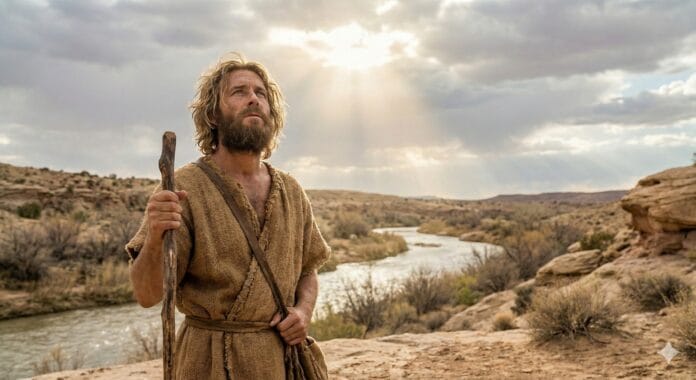
Gospel of Jesus Christ according to Saint Matthew
At that time, Jesus declared to the crowds: «Amen, I say to you, Among those born of women there has not risen anyone greater than John the Baptist; and yet the least in the kingdom of heaven is greater than he.
From the days of John the Baptist until now, the kingdom of heaven has been violently attacked and forced to take possession of it. All the Prophets and the Law foretold the future until John. And if you are willing to accept it, he is the prophet Elijah who is to come. Whoever has ears, let them hear!»
Discover the paradoxical grandeur of the Kingdom of God
How the figure of John the Baptist reveals the spiritual upheaval inaugurated by Christ and transforms our way of being disciples.
In the Gospel of Matthew, Jesus utters a statement as astonishing as it is liberating: John the Baptist is the greatest among men, yet the least in the Kingdom surpasses him. This assertion overturns our understanding and opens up a new horizon. It invites us to grasp that entering the Kingdom introduces a radically different logic, where greatness is measured by the grace received rather than by accumulated accomplishments. This text opens a space for reflection on our own participation in the mystery of salvation and on how we welcome God's newness.
We will begin by exploring the liturgical and biblical context of this passage, before analyzing the paradoxical figure of John the Baptist. We will then develop the three major theological themes of the passage: the historical turning point inaugurated by Christ, the violence perpetrated against the Kingdom, and John's identification with Elijah. We will see how these teachings apply concretely to our lives, resonate with Tradition, and respond to contemporary challenges. A liturgical prayer and practical suggestions will conclude our meditation.
The pivotal moment where the old Alliance meets the new
This passage from Matthew 11, 11-15 is part of a significant liturgical season: Advent. The alleluia antiphon that precedes the Gospel echoes Isaiah 45:8 and expresses the fervent expectation of the Messiah. The prophet implores the heavens to open so that divine justice may descend. This prayer reflects Israel's centuries-long thirst for messianic hope. It culminates in the coming of Jesus, who fulfills what previous generations longed for without seeing it.
The immediate context of the passage shows Jesus responding to the crowds after receiving the messengers of John the Baptist from his prison. John, who had foretold the one who would baptize with the Spirit and fire, experiences a moment of doubt. Jesus confirms his messianic identity through the signs he performs: the blind see, the lame walk, and lepers are cleansed. Then he turns to the crowd to bear witness to John.
This public declaration comes at a strategic moment. John prepared the way of the Lord through his asceticism, his preaching of conversion, and his baptism of repentance. He represents the fulfillment of Israel's prophetic lineage. Elijah, Jeremiah, Isaiah—all foretold the day of the Lord. John embodies this prophetic tradition in its fullness. He is the last and greatest of those who lived under the Old Covenant.
But Jesus introduces a crucial distinction. John's greatness belongs to the old order. He was born of a woman, a Hebrew expression signifying the human condition marked by finitude and death. John is immense in this sense. Yet, the Kingdom of Heaven inaugurates a new reality where the smallest participation in divine life surpasses anything humanity has been able to produce by its own strength.
The expression "the least in the kingdom of heaven" does not belittle John. Rather, it emphasizes that entry into the Kingdom, made possible by death and the resurrection Christ's baptism confers a dignity and a life that transcend all natural grandeur. The baptized, even the humblest, participates in divine sonship. They receive the Holy Spirit who unites them to the Son and leads them to the Father. This new reality infinitely surpasses the highest spiritual achievements of the Old Covenant.
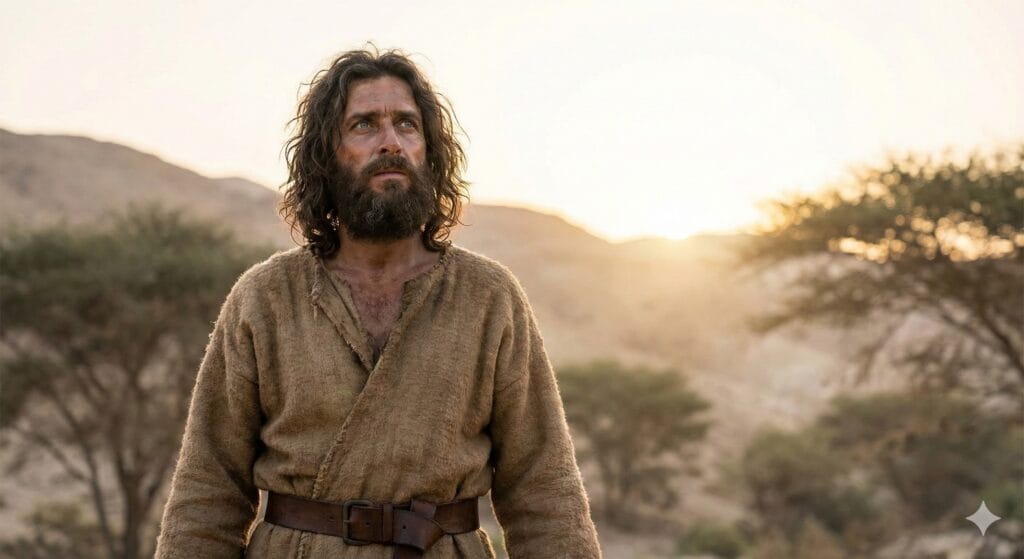
Greatness that fades before the grace received
Jesus does not diminish John to exalt the Kingdom. He establishes an ontological distinction between two modes of existence. John belongs to the economy of preparation, expectation, and promise. Christ's disciples enter into the economy of fulfillment, presence, and giving. This difference is not a matter of merit or effort, but of participation in a new life.
Analyzing this verse reveals the depth of the Christian revolution. The Old Testament celebrates great figures: Abraham, Moses, David, Elijah. Each of them left their mark on the history of salvation through their faith, courage, or faithfulness. John the Baptist stands at the pinnacle of this lineage. He is the one who saw the Messiah, baptized him, heard the voice of the Father, and saw the Spirit descend like a dove. No prophet before him was so close to the mystery of the Incarnation.
Yet, John remains below the Paschal threshold. He dies before the Cross and the Resurrection. He does not physically enter into the Paschal dynamic that radically transforms human existence. The disciples, however, will experience Pentecost. They will receive the promised Spirit, which will make them living temples of the divine presence. This new reality constitutes the true grandeur of the Kingdom.
Saint John Chrysostom comments on this passage, emphasizing sacramental dignity. Christian baptism is not limited to a gesture of purification or moral commitment. It grafts the believer onto the dead and risen Christ. It makes him a partaker of the divine nature, as Peter says in his second epistle. This participation represents an extraordinary elevation of the human condition. Even the humblest person baptized becomes a child of God by adoption, an heir to the Kingdom, a co-heir with Christ.
This paradoxical logic runs throughout the Gospel. The first will be last; he who loses his life gains it., the poor Those who possess the Kingdom in spirit do so. Greatness according to God is not measured by visible accomplishments, but by the acceptance of grace. John prepared the way, but he did not walk the new path opened by Passover. We who live after Pentecost can follow this path that John indicated, without being able to walk it ourselves.
The cosmic turning point that tips history towards its completion
Jesus states that from the days of John the Baptist until now, the Kingdom of Heaven has suffered violence. This enigmatic statement has given rise to countless interpretations throughout the centuries. The Greek verb biazetai This can be understood in an active or passive sense: the Kingdom exerts a force or it is subjected to a force. The Church Fathers often favored the active sense: the Kingdom advances powerfully, it prevails despite resistance.
Saint John Chrysostom sees in this violence the spiritual energy required to enter the Kingdom. It is not a matter of physical or moral violence, but of radical determination. Entering the Kingdom requires breaking with worldly ways, renouncing oneself, and taking up one's cross. This violence is first directed against our own disordered attachments. It demands intense spiritual struggle, constant vigilance, and an asceticism of the heart.
Other commentators, such as Origen, emphasize the passive meaning. The Kingdom does indeed suffer violence at the hands of those who oppose it. John the Baptist is imprisoned and will soon be beheaded. Jesus himself will walk to the Cross. The apostles will experience persecution. Throughout the centuries, the Church will bear within itself the violence of a world hostile to the Gospel. This interpretation underscores the agonistic dimension of salvation history.
The two interpretations are not mutually exclusive. They reveal the same reality: the Kingdom's irruption into history provokes conflict. Light pushes back darkness, but darkness resists. The Kingdom advances like an irresistible force, but it advances at the cost of martyrs' blood. Those who wish to enter must force themselves to overcome their lukewarmness and complacency. Those who refuse direct their violence against the witnesses of the Kingdom.
This conflictual dynamic pervades our era. Proclaiming the Gospel in the 21st century requires courage. The values of the Kingdom often contradict dominant values:’humility faced with pride, loyalty Faced with fickleness, service stands in the face of domination. Living as an authentic Christian demands a form of spiritual violence against the compromises, complacency, and cowardice that lie in wait for us. At the same time, the Church continues to suffer external and internal violence that tests its faithfulness.
Understanding the Kingdom as both a break with and a continuation of the old Covenant
Jesus declares that all the Prophets, as well as the Law, prophesied until John. This statement places John at the turning point between two economies of salvation. The Law and the Prophets refer to the entire Old Testament in the Jewish language of Jesus' time. All this progressive revelation pointed toward a future fulfillment. It announced the Messiah, the Kingdom of God, the day of salvation.
John represents the final link in this prophetic chain. He does not simply announce the one who is to come. He physically identifies him: «Behold, the Lamb of God!» This identification marks the end of the period of waiting and the beginning of the period of presence. From now on, the Messiah is no longer to come; he is here. The Kingdom is no longer merely promised; it is inaugurated. The prophecy is fulfilled in concrete history.
This transition does not reject the Old Testament. On the contrary, it confirms it and brings it to its fullness. Jesus did not come to abolish the Law or the Prophets, but to fulfill them. All the Scriptures of Israel receive their full meaning in Christ. The types, the figures, the promises find their realization in his person and his work. Abraham hoped for descendants; Christ is the true seed. Moses freed the people from Egyptian slavery; Christ liberates from the slavery of sin and death.
This understanding of salvation history structures faith Christian. We do not reject the Old Testament as an outdated document. We read it in the light of Christ, who is its key to understanding. The Psalms take on new depth when we hear Christ's prayer in them. The prophets reveal their significance when we see in them the foreshadowing witnesses of the Pascal's mystery. The Church's liturgy constantly unfolds this continuity within rupture.
John stands on the dividing line. He still belongs to the old world by birth and his ministry of preparation. He already announces the new world through the radical nature of his witness and his closeness to Christ. This pivotal position makes him an essential figure for understanding our own situation. We, too, live between two worlds: the Kingdom already inaugurated but not yet fully manifested. We taste the pledge of the Spirit while we wait. the resurrection final.
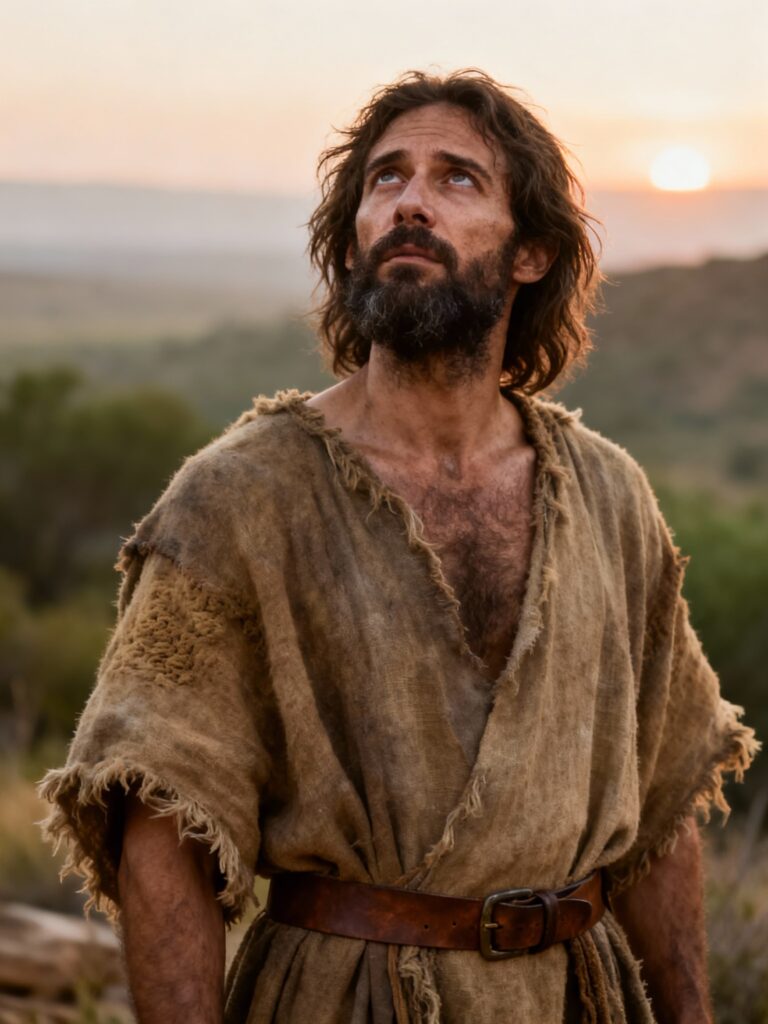
To recognize in John the fulfillment of Elijah's prophecy
Jesus declares, «If you are willing to accept it, it is he, the prophet Elijah, who is to come.» This identification of John with Elijah is rooted in the prophecy of Malachi, which foretold Elijah's return before the great and dreadful day of the Lord. The expectation of Elijah's return structured Jewish messianic hope. It was believed that Elijah would come to prepare the way for the Messiah, reconcile hearts, and restore Israel.
John the Baptist does not claim to be Elijah reincarnated. When asked directly in the Gospel of John, he answers in the negative. Yet, Jesus affirms that he is Elijah. This apparent contradiction is resolved when we understand that John fulfills Elijah's mission without being Elijah himself. He comes "in the spirit and power of Elijah," as the angel had announced to Zechariah at the annunciation of his birth.
The parallels between Elijah and John abound. Both live in the desert, far from the compromises of the world. Both wear rough clothing, symbols of their detachment and their radical prophetic stance. Both call Israel to conversion in the face of the infidelities of the people and their leaders. Both confront political powers: Elijah against Ahab and Jezebel, John against Herod and Herodias. Both pay with their lives for their fidelity to the Word of God.
This typology sheds light on John's mission. He does not inaugurate a new prophecy, but fulfills the old one. He does not come with a novel message, but reminds Israel of the demands of the Covenant. His baptism of repentance renews the call to conversion issued by all the prophets. His denunciation of religious hypocrisy follows in the tradition of Isaiah and Jeremiah. John says nothing new; he proclaims with utmost force what God has always said.
John's identification with Elijah validates his mission and confirms that the Messianic era has arrived. If Elijah has returned, then the Messiah is here. This logic underpins Jesus' preaching. He doesn't ask people to take his word for it, but to read the signs of the times. The prophecies are being fulfilled before their very eyes. Those who have ears must hear, that is, perceive spiritually what their eyes see physically. The coming of the Kingdom manifests itself in concrete events, but requires an eye of faith to be recognized.
To transcend worldly grandeur in order to embrace the smallness of the Kingdom
Jesus' teaching about John the Baptist overturns our standards of greatness. We spontaneously admire heroic figures, strong personalities, and spectacular accomplishments. Society values success, visibility, and influence. John embodies all of this in the spiritual realm: radical asceticism, powerful charisma, and considerable popular impact. Yet, Jesus declares that even the smallest participation in the Kingdom surpasses this greatness.
This revelation first liberates us from the complex of spiritual inferiority. We may be tempted to compare ourselves to saints, mystics, great witnesses of faith and discourage us. How can we compete with François of Assisi, Teresa of Avila or Mother Teresa? How to reach their level of holiness Jesus reminds us that greatness in the Kingdom is not earned through our exploits, but is received as a gift. The humblest baptized person who truly welcomes grace participates fully in the mystery of salvation.
This logic also applies to our ecclesial life. The Church is not measured by its temporal power, its media visibility, or its cultural influence. It exists to make known the grace of the Kingdom. The true greatness of the Church lies in its fidelity to Christ, in its capacity to bring forth sons and daughters of God through the sacraments, in its testimony of brotherly love. A small community that lives the Gospel in truth manifests the Kingdom more than a powerful but unfaithful institution.
In our personal lives, this saying invites us to seek not spiritual performance, but docility to the Spirit. The obsession with measurable progress, with steps to take, with levels to reach, can become a trap. It leads us back to a meritocratic logic incompatible with the freely given nature of the Kingdom. holiness It is not a course to be followed, but a relationship to be deepened. It grows in trust, surrender, and the humble acceptance of divine love.
In concrete terms, this means valuing hidden acts, ordinary loyalties, and discreet services. The mother who raises her children in faith, The worker who sanctifies their profession through honesty, the sick person who offers up their suffering, the volunteer who gives their time without recognition—all these fully participate in the Kingdom. Their greatness escapes the spotlight, but it is real in the eyes of God. The Kingdom is built in these countless daily acts where God's love becomes flesh.
Enter the spiritual battle with determination and perseverance
The violence perpetrated by or against the Kingdom reminds us of the reality of spiritual warfare. Saint Paul speaks of a battle not against adversaries of flesh and blood, but against the spiritual powers of evil. Christian life is not a peaceful stroll, but a struggle. This struggle unfolds on several simultaneous fronts.
First, the struggle against our own disordered inclinations. Paul calls this the flesh, not the physical body, but the orientation of our being toward selfishness and the rejection of God. This inner battle demands vigilance and discipline. Daily prayer, the practice of the sacraments, examination of conscience, and the reading of Scripture are the weapons in this fight. It is not about attaining an impossible perfection, but about growing in docility to grace.
Next, there is resistance to the world's allurements. The spirit of the world, which John calls the prince of this world, constantly offers false happiness that distracts us from true good. Consumer society promises happiness through accumulation. Narcissistic culture exalts absolute autonomy. Contemporary hedonism sanctifies immediate pleasure. Living the Gospel requires constant discernment so as not to conform to these mentalities that are contrary to the Kingdom.
Finally, courage in the face of opposition and persecution. In some parts of the world, being a Christian exposes one to real dangers: discrimination, imprisonment, martyrdom. In the West, persecution takes other forms: mockery, social marginalization, pressure to renounce certain beliefs. Bearing witness to faith In a secularized or hostile environment, it demands a form of violence against our fears and our desires for conformity.
This threefold dimension of spiritual combat is illustrated in the lives of the saints. Benedict of Nursia, fleeing corrupt Rome, François Assisi renouncing his father's wealth, Thomas More refusing to betray his conscience before the king: these are just some of the figures who wielded a holy violence to remain faithful. Their radicalism challenges us. Are we prepared to pay the price for our fidelity? Do we accept that following Christ might cost us something tangible?
Developing a spiritual attentiveness to the signs of God
Jesus concludes his teaching with this appeal: «He who has ears to hear, let him hear.» This phrase recurs regularly in the Gospels and in the Apocalypse. She highlights the crucial importance of spiritual listening. It is not enough to physically hear the words of Jesus. They must be received deeply, allowed to penetrate the heart, and put into practice.
Authentic listening requires, first and foremost, inner silence. Our era suffers from information overload and constant agitation. Screens, notifications, and perpetual noise prevent the quiet contemplation necessary for encountering God. Cultivating silence does not mean shirking responsibilities, but rather creating spaces where the Word can resonate. Times of silent prayer, retreats, and contemplative pauses in the middle of the day create these spaces for listening.
Listening then requires...’humility Intellectual. We often approach Scripture with our presuppositions, our certainties, our systems of thought. We seek to understand God rather than to allow ourselves to be understood by Him. True listening accepts being disturbed, questioned, transformed. It recognizes that the Word of God transcends our categories and can challenge our convictions.
Listening also requires the ecclesial community. We do not read Scripture in isolation, but within the Church, which has received the mission to transmit and interpret it. Personal reading must be integrated with the liturgy, catechesis, theological reflection, and the witness of the saints. This ecclesial mediation protects us from subjective interpretations and situates us within the great living Tradition.
In practical terms, developing spiritual listening involves making practical choices. Setting aside daily time for... lectio divina, This involves prayerful and meditative reading of Scripture. Regularly attending Mass, where the Word is proclaimed and made relevant to our lives. Joining a Bible study group to explore the sacred text together. Reading the commentaries of the Church Fathers and Doctors of the Church to enrich our understanding. Cultivating attentiveness to the events in our lives where God can speak to us through circumstances, encounters, and trials.
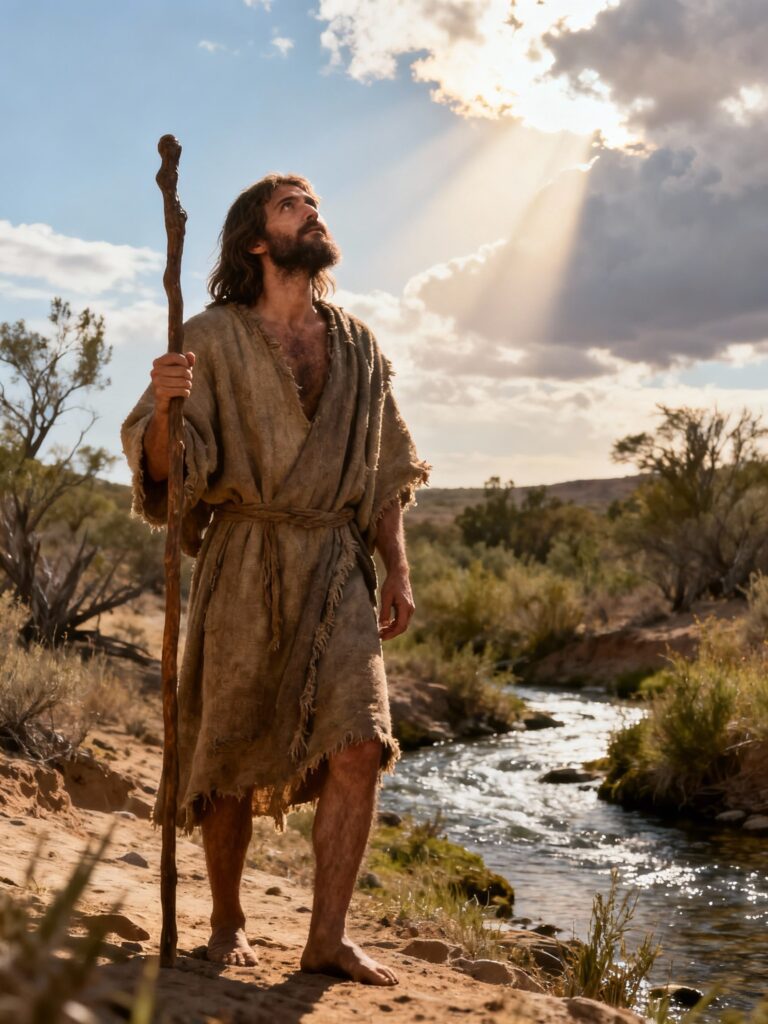
Experiencing the transition between the old and the new at each Eucharist
The Eucharistic liturgy makes present the Pascal's mystery in which the continuity between the Old and New Covenants is articulated. Each Mass reflects this dynamic that Jesus describes when speaking of John. The Liturgy of the Word brings to life the Old Testament, the Prophets, the Psalms. It connects us to the expectation of Israel, to the promise made to the ancestors. Then the Gospel proclaims its fulfillment in Christ.
The Eucharistic Prayer explicitly evokes this transition. We present the bread and wine, fruits of the earth and of human labor, symbols of original creation. These natural gifts become the Body and Blood of Christ, sacrament of the new world. The epiclesis invokes the Holy Spirit to effect this transformation. The real presence of the risen Christ anticipates the final transfiguration of the entire universe.
Communion brings about for each person what Jesus proclaims: the least in the Kingdom participates in divine greatness. By receiving the Body of Christ, we become what we receive, according to the formula of Saint Augustine. We enter into Trinitarian communion. We taste the pledge of the Kingdom. This sacramental participation introduces us into the new life that John announced without fully entering into it.
The time of Advent This intensifies our liturgical awareness. We relive Israel's expectation, we accompany John in his mission of preparation. But we do so knowing that Christ has already come. This tension between the "already" and the "not yet" structures Christian life. The Kingdom is present, but not yet fully manifested. We live in it, but we await it. This dual stance nourishes theological hope.
Anchoring our faith in the great Tradition of the Fathers and Doctors
The Church Fathers meditated deeply on this passage about John the Baptist. Saint Augustine He sees in this an illustration of the difference between the Law and grace. The Law reveals sin without giving the strength to overcome it. Grace brings salvation through faith in Jesus Christ. John belongs to the realm of the Law, even though he is its pinnacle. The disciples enter into the realm of grace, even the humblest.
Saint John Chrysostom elaborates on the sacramental dimension. He emphasizes that Christian baptism confers the Holy Spirit, whereas John's baptism was merely a symbolic purification. This reception of the Spirit makes all the difference. It establishes a filial relationship with God that the Old Covenant could not create. The baptized person becomes a temple of the Spirit, a member of the Body of Christ, an adopted child of the Father.
Saint Thomas Aquinas, in his commentary on Matthew, analyzes the violence of the Kingdom in terms of virtue. He explains that the theological and moral virtues require sustained effort to take root. Magnanimity, a virtue linked to strength, compels one to undertake great things for God despite obstacles. This magnanimity characterizes those who seize the Kingdom through holy force.
Thérèse of Lisieux, a Doctor of the Church, paradoxically illustrates how this violence can be exercised in smallness. Her "little way" of spiritual childhood does not renounce evangelical radicalism. On the contrary, she lives it in trusting abandonment, the offering of small things, and the joyful acceptance of humiliations. Her life demonstrates that the smallest in the Kingdom, through her love, fully participates in divine grandeur.
The Catechism of the Catholic Church quotes this passage to explain the sacramental economy. It shows how the sacraments The rites of Christ transcend the rites of the Old Covenant. Christian baptism does not merely signify purification; it actually effects it. The Eucharist It not only symbolizes the divine presence, it makes it effective. This sacramental efficacy constitutes the radical newness of the Kingdom inaugurated by Christ.
Journeying towards conversion of the heart through concrete steps
Meditating on this passage from Matthew can nourish a personal spiritual journey structured in several stages. Let us begin by humbly acknowledging our insignificance. Not a false one. humility which devalues itself, but the truth of our creaturely condition. We are small, limited, sinful. This recognition liberates us from pride and opens us to receiving grace.
Secondly, let us gratefully receive the gift of baptism. Too often, we live as if our baptism were a past event with no present consequences. Let us rekindle our awareness of our baptismal dignity. We are priests, prophets, and kings by virtue of our incorporation into Christ. This identity grounds our vocation and our mission in the world.
Third, let us exercise holy force against our complacency. Let us concretely identify the areas where we compromise with the Gospel: a dishonest behavior, a destructive relationship, a habit that distances us from God. Let us make a firm decision to convert in one specific area. Let us not scatter our efforts across multiple resolutions, but focus on real and lasting change.
Fourth, let us cultivate listening to the Word. Let us establish a daily practice of prayerful reading. Let us choose a time and a place. Ten minutes is enough to begin. Let us read slowly a short passage, let it resonate within us, and ask the Holy Spirit to enlighten us. Perhaps we can jot down a phrase that touches us to reflect on throughout the day.
Fifth, let us share our faith with others. The greatness of the Kingdom is not experienced in solitude. Let us join a vibrant church community. Let us participate in a prayer or formation group. Let us find a brother or sister with whom to regularly share about our spiritual life. This community dimension It fuels our perseverance and enriches our understanding.
Confronting the prevailing relativism with the firmness of truth
Our era is characterized by a widespread relativism that makes it difficult to affirm absolute truths. To say that Christ is the only Savior, that the Kingdom of God transcends all human achievement, that baptismal grace establishes an ontological difference, shocks contemporary sensibilities. We are accused of arrogance, exclusivism, and intolerance. How can we remain faithful to the message of Christ without falling into sectarianism?
First, by distinguishing between truth and violence. Affirming a truth is not imposing it by force. Jesus proclaims that John is the greatest born of woman, but that the least in the Kingdom surpasses him. This statement does not devalue anyone; it reveals an objective reality. Truth is not negotiable, but it is offered with respect for freedom. Our witness must combine doctrinal firmness with relational gentleness.
Then, by bearing witness through our lives before convincing with our arguments. The credibility of the Gospel is proven by its fruits. If we claim to belong to the Kingdom while living like the world, our discourse remains empty. If our lives manifest a joy, a peace, a charity that transcends natural humanism, then our words find credence. Existential witness precedes intellectual argumentation.
Then, by practicing sincere dialogue without abandoning our convictions. Dialogue does not mean relativism. We can listen respectfully to other points of view, seek the seeds of truth present in other traditions, acknowledge our own limitations of understanding, while maintaining that Christ reveals the ultimate truth about God and humanity. This position is not a matter of pride but of loyalty to the revelation received.
Finally, by accepting marginalization if necessary. Jesus does not promise worldly success to his disciples. He announces that the Kingdom will be marked by violence. Our faithfulness may cost us friendships, career opportunities, and a certain degree of social respectability. Accepting this price is part of the holy violence required to enter the Kingdom. Not out of masochism, but out of love for the truth.
Distinguishing between spiritual greatness and media visibility in the Church
The contemporary Church faces a recurring temptation: to measure its success by its media presence and cultural influence. Grand celebrations, charismatic figures, and spectacular initiatives fascinate. Yet, Jesus reminds us that the true greatness of the Kingdom often escapes the limelight. The least in the Kingdom surpasses John, whose fame spread throughout Palestine.
This perspective frees the Church from the obsession with visibility. Certainly, the Gospel must be proclaimed publicly. Christ sends his disciples throughout the world. But the effectiveness of the mission is not measured by attendance figures or conversion statistics. A modest parish that produces saints accomplishes more than a giant gathering that generates only fleeting emotion.
The true architects of the Kingdom often remain unsung. Consider the cloistered monks and nuns who sustain the world through their prayers. Consider the unsung catechists who pass on... faith To the children. To the visitors of the sick who bring the comfort of Christ. To the faithful priests who celebrate daily the Eucharist in empty churches. Their greatness is not visible, but they are building the Kingdom stone by stone.
This clarity of thought also helps to navigate ecclesiastical crises without losing faith. Scandals, divisions, and defections wound deeply. They can shake our confidence in the Church. But if we understand that the greatness of the Kingdom does not reside in institutional perfection but in the holiness Hidden from the little ones, we keep hope. The Church is holy not by the merits of its members but by the grace of Christ who dwells in it.
Integrating the eschatological dimension into our daily lives
John the Baptist inaugurates the end times. With him, the era of waiting ends and the era of fulfillment begins. But this fulfillment remains partial. The Kingdom is already here but not yet fully manifested. This eschatological tension characterizes Christian existence. We live between two comings of Christ: the past Incarnation and the glorious future return.
This eschatological awareness transforms our relationship to time. Every moment becomes imbued with eternity. Our present choices have definitive consequences. What we build here below, if built in Christ, endures forever. Eschatology does not lead us to despise history; it sacralizes it. It confers an eternal density upon temporal acts performed in charity.
Living this eschatological dimension requires cultivating vigilance. Jesus multiplies the parables on the watch, the waiting, the preparation. We know neither the day nor the hour. This uncertainty should not breed anxiety but rather openness. To be ready is to live each day in grace, to faithfully fulfill our duties in life, to keep our lamp lit by prayer and the sacraments.
Christian hope is nourished by this tension. We hope for what we do not yet see, but for which we have received a pledge. The Spirit within us is the guarantee of our future inheritance. This hope is not simply passive waiting. It commits us to cooperate now in the coming of the Kingdom. Every time we experience justice, peace, mercy, We are anticipating the new world that is coming.
Invoking the active presence of the risen Christ
Lord Jesus Christ, Son of the living God, we give you thanks for this word that illuminates our path. You established John the Baptist as the prophet of your coming. You placed him at the threshold of the Kingdom as a witness to the fulfillment of the Old Covenant. We bless you for all those who, throughout the centuries, have prepared your coming through their faithfulness and hope.
Today you reveal to us that even the smallest contribution to your Kingdom surpasses all human greatness. This message frees us from our complexes and our pretensions. We no longer seek to measure ourselves against the giants of faith by our own strength. We humbly accept the gift of your grace which lifts us above our natural condition. Help us understand the greatness of our baptismal dignity.
You warn us that the Kingdom is subject to violence and requires holy resolve. Give us the courage to fight our lukewarmness and cowardice. Strengthen in us the will to follow you to the end, whatever the cost. May we wield against our selfishness that spiritual force which opens the gates of the Kingdom. Sustain those who suffer persecution for your Name.
You teach us that the entire Law and the Prophets foretold your mystery. Open our minds to the Scriptures. Grant us to recognize in sacred history the patient preparation for your salvation. May our reading of the Old Testament be illuminated by the light of your resurrection. Make us attentive readers of your Word in the Church.
You invite us to listen with spiritual ears. Deliver us from the deafness of the heart. Create within us the inner silence where your voice can resonate. May the noise of the world not drown out your call. Grant us docility to the Holy Spirit who makes your Word present in our concrete lives.
We especially entrust to you those who are searching for the meaning of their lives. May they discover in your Gospel the answer to their thirst for truth and happiness. We pray for the catechumens preparing for baptism. May they joyfully embrace the grandeur of this sacrament that will bring them to new life. We pray for the baptized who have forgotten their dignity. Awaken in them the awareness of belonging to the Kingdom.
Support your Church in its mission to proclaim the Kingdom. May it not succumb to the temptation of worldly glory. May it seek not its own greatness but your glory alone. Multiply within it authentic witnesses who manifest the newness of the Gospel through their lives. Raise up prophets for our time who call for conversion and prepare for your return.
Bless our families, the primary cells of the domestic church. May they become places where the Kingdom is built daily. May parents and children grow together in faith. May they support each other in the spiritual battle. May family love be a sign and participation of your Trinitarian love.
Married, Mother of John and Mother of Jesus, you welcomed the Kingdom into your flesh. You believed the angel's word. You bore the very Life of God. Teach us to say yes as you did. May our lives become vessels of grace. Intercede for us with your Son until we enter into joy of the Kingdom without end.
Through Jesus Christ, our Lord. Amen.
Update the message and build the Kingdom every day
We have explored the depth of Jesus' words about John the Baptist. We have discovered how they reveal the turning point in salvation history and the radical newness of the Kingdom. John embodies the supreme fulfillment of the Old Covenant. Yet, baptismal grace ushers us into a reality that transcends anything humanity has been able to achieve by its own strength.
This revelation is not merely theoretical information. It calls for a concrete response from us. We are invited to become aware of our dignity as baptized Christians. The Kingdom dwells within us through the Spirit. This presence transforms how we see ourselves and others. Every baptized person, even the humblest, participates in the mystery of divine sonship. This truth must inspire how we live in the Church and in the world.
The call to holy violence against our lukewarmness resonates particularly strongly in our contemporary context. Spiritual mediocrity constantly threatens us. We easily slip into routine, comfort, and superficiality. Jesus shakes us up. He reminds us that the Kingdom demands radicalism and consistency. Not spectacular radicalism, but a daily fidelity that does not compromise on what is essential.
The challenge of spiritual listening in a world saturated with information and distractions requires courageous choices. We must create spaces of silence, prioritize quality over quantity, and cultivate depth over distraction. The Word of God can only bear fruit if it finds within us soil prepared by prayer and inner reflection. This preparation demands discipline and perseverance.
Ideas for experiencing teaching on a daily basis
Each morning, consciously revive the grace of your baptism by tracing the sign of the cross with holy water, remembering your dignity as a child of God through filial adoption.
Identify a specific area in which to exercise holy violence this week, choosing a habit to correct or a virtue to develop with determination and constant prayer.
Establish a non-negotiable daily appointment of fifteen minutes for the prayerful and meditative reading of a Gospel passage in silence and contemplation.
Join or create a small monthly Bible study group with two or three trusted people to delve deeper into the Word together and encourage one another.
During your next confession, ask the priest to help you discern the inner resistances that prevent you from fully welcoming the Kingdom into your life.
Choose a saint who practiced this holy evangelical violence, read his biography, ask for his intercession and concretely imitate an aspect of his spirituality.
Share with at least one person in your circle what touched you in this meditation, simply bearing witness to your faith without aggressive proselytizing.
Sources and further exploration for deeper reflection
Holy Scripture : Malachi 3, 1-4 and 4, 5-6 on the announcement of Elijah's return; ; Luke 1, 5-25 and 57-80 on the annunciation and the birth of John; ; John 1, 19-34 on John's testimony to Christ.
Fathers of the Church Saint John Chrysostom, Homilies on the Gospel of Matthew, homily 37; ; Saint Augustine, Sermons on the New Testament, Sermon 66 on John the Baptist and Christ.
Magisterium : Catechism of the Catholic Church, §§ 523-524 on John the Baptist; 717-720 on the Holy Spirit and John the Baptist; 1213-1216 on Christian baptism.
Spiritual Theology Thérèse of Lisieux, Story of a soul, autobiographical manuscripts on the small road; Romano Guardini, The Lord, Meditations on Christ and his witnesses.
Biblical commentaries : Marie-Joseph Lagrange, Gospel according to Saint Matthew, Gabalda Editions; ; Benedict XVI, Jesus of Nazareth Volume 1, chapter on John the Baptist and the beginnings of Jesus' preaching.