












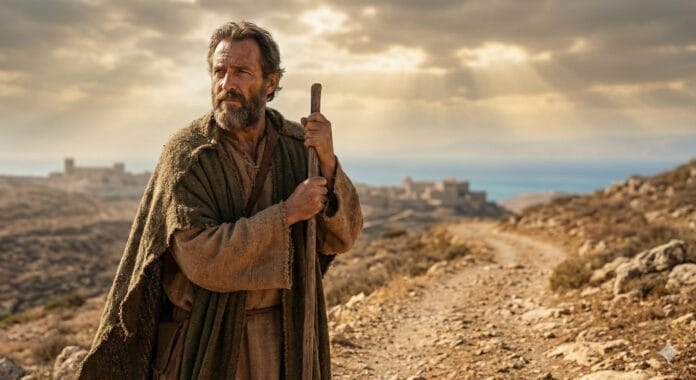
Paul of Tarsus occupies a central place in the history of Christianity. A prominent missionary apostle, he is recognized for having greatly contributed to the spread of the Christian message beyond Jewish borders, particularly among pagan peoples. His theological and spiritual influence remains significant, leaving a lasting mark on Christian doctrine and practice.
L'’spiritual journey of a missionary apostle It refers to the inner and outer journey that shapes one's vocation, actions, and religious commitment. For Paul of Tarsus, this journey is marked by a radical transformation, a series of evangelical journeys, and an intense doctrinal struggle, revealing a profound and complex spiritual path.
The objectives of this article are:
- to present the life and context of Paul of Tarsus;
- to trace the key stages of his spiritual journey;
- analyze his missionary method and his theological message;
- to understand the challenges he faced;
- to measure its lasting legacy in the Christian tradition.
This detailed look will allow you to understand Paul not only as a historical figure, but also as a spiritual model for contemporary missions.
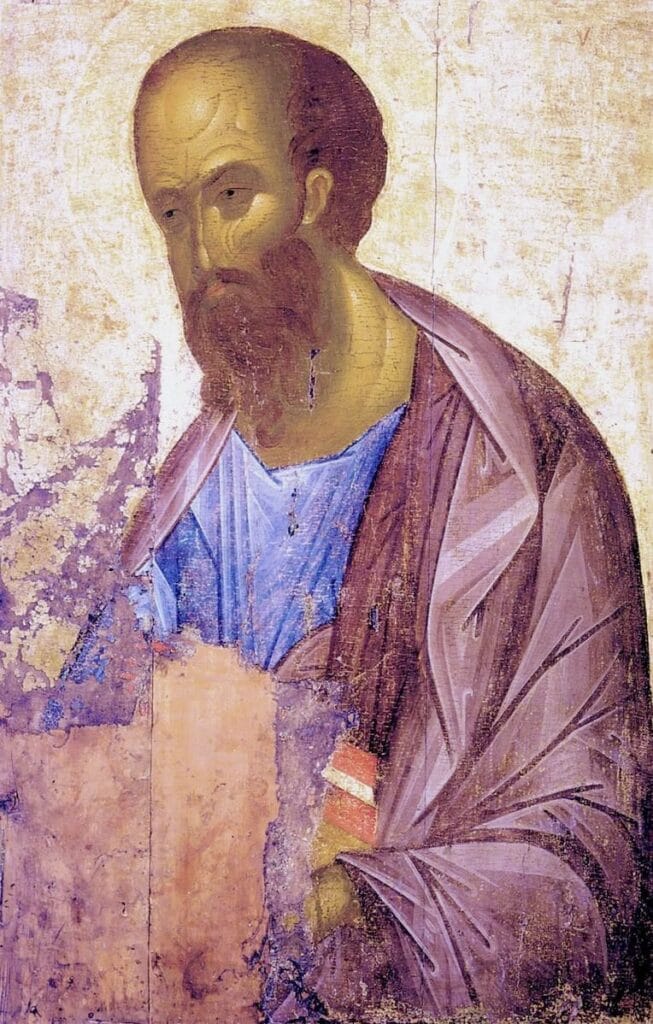
Historical and cultural context of Paul of Tarsus
Paul, born under the name Saul, was born in Tarsus, a prosperous city located in Cilicia, in present-day Türkiye. Tarsus was an important commercial and cultural crossroads of the Roman Empire, home to a diverse population where Greek, Roman, and Eastern influences mingled. This cultural richness shaped Paul's view of the world from his childhood.
Jewish education and studies in Jerusalem
His family belongs to the local Jewish community. Paul receives a rigorous Jewish education which is part of the Pharisaic tradition. He is sent to Jerusalem to study under the direction of Gamaliel, a respected master of Judaism. This solid religious background allows him to acquire a deep knowledge of the Hebrew Scriptures, as well as Jewish religious practices and laws.
Mastery of ancient languages
A fundamental aspect of his profile is his perfect mastery of ancient languages. Paul speaks fluently:
- L'’Hebrew, the language of sacred texts,
- L'’Aramaic, the vernacular language of many Jews at the time,
- THE Greek, a universal language of the Mediterranean world and an indispensable tool for communicating with pagan populations.
Dual cultural belonging
Paul's dual cultural heritage—Jewish and Hellenistic—gives him a unique role in the spread of the Christianity beyond ethnic boundaries.
Roman citizenship
Its Roman citizenship, The status he inherited from his birth in Tarsus afforded him rare legal protection and facilitated his travels throughout the Empire. This status also gave him a keen sense of his civic and political rights.
Influence of the Roman context
The Roman context permeated his daily life: he lived in an empire where local and imperial powers intertwined, where cultural exchanges were constant, but also where religious tensions could be intense. This backdrop influenced his apostolic mission, prompting him to skillfully navigate between different traditions to spread his message.
Paul thus embodies the complexity of a man trained in Orthodox Judaism, enriched by Hellenistic culture and protected by Rome — a mixture that forges his spiritual and missionary identity.

Spiritual Conversion: From Saul to Paul
Saul, later known as Paul, began his adult life as a fervent persecutor of early Christians. A member of the Sanhedrin, He approves of and actively participates in the persecution of Jesus' disciples, seeking to eliminate this nascent movement which he considers a threat to Jewish tradition. His determination is such that he obtains letters of authorization to arrest Christians and bring them back to Jerusalem.
The conversion on the road to Damascus represents a radical turning point in his journey. En route to the city to continue his arrests, Saul experiences a mystical encounter with the resurrected Jesus. A flash of light surrounds him, plunging him into physical and spiritual darkness, and a voice asks him, "Saul, Saul, why are you persecuting me?" This event transforms his life. He remains blind for several days, a period during which he meditates deeply on this revelation.
This experience was not merely a moment of realization; it led Saul to a complete transformation of his identity and vocation. From persecutor, he became a passionate missionary apostle. His religious commitment shifted toward proclaiming the message of Christ, now central to his life. He adopted the name Paul to mark this metamorphosis and began preaching that Jesus was the Messiah awaited, died and resurrected for the salvation of all.
This spiritual conversion marked a break with his past and revealed a new intensity in his evangelical zeal. It established the moral and theological authority that characterized his subsequent missionary journeys as well as his foundational writings for the early Church. Paul thus embodies the transformative power of a personal encounter with the divine, which redefined his entire mission on earth.
It is interesting to note that this transformation is not simply the result of an individual experience but is part of a broader historical context. Indeed, the way Paul understood and interpreted his conversion had profound repercussions on the development of the Christianity. This reflection on conversion highlights the spiritual and psychological dimensions of this experience which continues to influence millions of believers around the world today.

The major stages of missionary journeys
Paul of Tarsus undertook three major missionary journeys between 45 and 58 AD, which formed the cornerstones of his spiritual path as a missionary apostle. These early missionary journeys led him to travel across a vast geographical area centered on Asia Minor and the eastern Mediterranean, extending the spread of the Christianity beyond traditional Jewish boundaries.
Presentation of the three trips
- First voyage (around 45-47 AD)
- This journey begins at Antioch, Paul's main base, then he traveled through Cyprus and the Pamphylia region. He delivered his first sermons to Jewish and Gentile communities. This journey established the model of evangelization that would be reused later.
- Second voyage (circa 49-52 AD)
- More ambitious, this journey extends to Galatia and Epirus, with notable stops at Antioch from Pisidia, then to Greece: Philippi, Thessalonica, Corinth. Paul founded several local churches there while adapting his message to the different cultural contexts.
- Third voyage (circa 53-58 AD)
- Focused primarily on Asia Minor, and particularly Ephesus, this journey intensifies the work pastoral and theological work with the communities already established before Paul went to Jerusalem and then Rome.
Main routes
- Cyprus : first strategic step to reach the island populations of the Mediterranean basin.
- Pamphylie : key region for consolidating the beginnings of the nascent church.
- Antioch of Pisidia : important urban center where Paul addresses both Jews and Gentiles.
- Greece Philippi, Thessaloniki and Corinth are hubs for spreading the Christian message in the Greek world.
- Rome : ultimate destination symbolizing the desire to expand the Christianity in the heart of the Roman Empire.
Objectives and methods during missions
Paul favors a methodical approach based on:
- Public proclamation in synagogues to reach first Jews familiar with the Scriptures.
- The adaptation of the speech according to the audience encountered — Jewish or pagan — by highlighting the fulfillment of the prophecies of Israel in Jesus Christ.
- The creation of autonomous local communities capable of continuing the evangelical mission after his departure.
- A personal commitment marked by perseverance in the face of opposition and physical dangers.
This missionary journey reveals a spiritual path where Paul combines profound faith, intellectual strategy, and pastoral boldness to make the Christianity in a complex multicultural environment.

The method of preaching and the theological message
Paul of Tarsus relies heavily on L'’history of Israel to present Jesus as the awaited Messiah, the one foretold by the prophets. He uses biblical narratives to show how the promises made to the ancestors of Israel find their fulfillment in Jesus Christ. This approach connects Jewish tradition to the newness of the Gospel message, making Christ understandable and legitimate in the eyes of Jewish audiences.
The heart of Paul's message is centered on the salvation by faith in Jesus Christ alone. He insists that this salvation does not depend on works of the law or strict observance of commandments, but on a living trust in the person and redemptive work of Jesus. This principle marks a break with traditional religious practices and opens the way to a direct relationship between God and humanity, accessible to all.
To reach his different audiences, Paul adapts his speech depending on whether he is addressing Jews or pagans:
- To the Jews, He highlights the Hebrew Scriptures, demonstrating that Jesus is the prophesied Savior, emphasizing the continuity between the Old and New Testaments.
- To the pagans, He favours a more universal language, often evoking philosophical ideas common in the Greek-Roman world, such as the notion of a single divinity or the search for the true God.
This ability to adapt his preaching without abandoning the theological foundation demonstrates great missionary skill. Paul does not sacrifice his message, but he chooses words and examples that resonate with each audience to bring about genuine conversion.
«Therefore I was made a servant by the grace of God, to proclaim to the Gentiles the gospel of the invisible God» (Colossians 1:23).
Thus, his message remains centered on a living faith in Jesus the Savior, based on the history of Israel but open to the whole world.
The challenges faced: opposition and persecution
Paul of Tarsus' mission took place in a context marked by strong Christian persecution. His commitment to emerging communities was not without obstacles. Several episodes illustrate the local resistance to his message.
Examples of oppositions encountered
- In Lystra, Paul was violently stoned and left for dead (Acts 14:19). This type of physical attack demonstrates the danger associated with his preaching.
- HAS Antioch In Pisidia, he faced fierce opposition which forced him to leave the city precipitously (Acts 13:50).
- In several Greek cities such as Thessaloniki and Philippi, hostile crowds and local authorities actively opposed his missionary work.
Reactions to physical and moral threats
- Paul does not respond with violence but with a spiritual resilience remarkable. He considers these sufferings as part of his apostolic vocation.
- His letters demonstrate a firm but humble attitude, highlighting the strength of faith rather than the fear of persecution.
- Prayer and mutual encouragement among Christians are essential means of confronting social and religious pressures.
Perseverance in the mission despite the difficulties
- Despite the violence he endured, Paul continued his missionary journeys with determination. Each instance of opposition strengthened his commitment rather than discouraging him.
- His ability to adapt his speech to the audience allows him to overcome certain cultural or religious barriers.
- This tenacity contributes to the rapid expansion of the Christianity within both Jewish and pagan populations.
The trials Paul endured thus embody a constant balance between external confrontation and internal resistance. His journey illustrates how the local resistance Facing an innovative message can provoke violent reactions but can also reveal exceptional spiritual strength.

The key role in the debates on Jewish law and the Gentiles
Paul of Tarsus found himself at the heart of a crucial debate concerning the’observance of Mosaic law for non-Jewish converts. The main issue concerned whether or not to impose the prescriptions of the Torah on Gentiles, particularly circumcision. This question deeply divided the early Christian communities and threatened their unity.
Debates surrounding the observance of the Torah
- Some groups insisted that pagan converts strictly observe Jewish law, including circumcision, as an essential condition for salvation.
- Others, often from Hellenistic Judaism, argued for greater freedom, rejecting the obligation of ceremonial rites.
- Paul played a decisive role in defending a new position: salvation does not depend on the strict observance of ritual laws but on faith in Jesus Christ.
Paul's position: faith versus legal observance
Paul clearly opposes faith has strict legal compliance. For him:
«"It is not by the works of the law that a person is justified, but by faith in Jesus Christ" (Romans 3:28).
This statement marks a break with a legalistic approach to Judaism. He insists that the Holy Spirit It now replaces the letter of the law as a spiritual guide. Circumcision loses its obligatory nature for Gentiles. This freedom offered by Paul opens a new path that does not exclude Jewish identity, but allows for inclusion without preconditions.
Contribution to Christian identity
Through this theological approach, Paul contributes to forging a distinct Christian identity of traditional Judaism. The nascent Church ceases to be simply a Jewish sect and becomes a universal community.
- The emphasis on faith in Christ alone creates a common bond between Jews and Gentiles.
- He thus established a doctrinal framework that would allow this new religion to spread throughout the Greco-Roman world without being limited by cultural or ethnic barriers.
The spiritual journey of Paul of Tarsus illustrates here his ability to reconcile Jewish heritage and universal missionary openness, a central element of his path as a missionary apostle.
The theological legacy through the epistles
THE Pauline epistles These letters occupy a central place in the formation of early Christian theology. Addressed to the first Christian communities, they are not mere correspondence: they constitute a powerful doctrinal corpus that shapes the understanding of the Christian message.
The Importance of Paul's Letters for the Early Church
Paul uses his epistles to answer practical questions about faith, morality, and community organization. They play a key role in strengthening the fledgling churches by providing clear teachings in the face of internal and external challenges. For example, in his letter to the Corinthians, he addresses divisions and behaviors that need correcting, while in his letter to the Romans, he presents a systematic reflection on salvation.
Major themes addressed
- Divine grace Paul emphasizes that salvation is a free gift from God, not earned through human works. This notion of grace becomes a fundamental pillar for understanding the relationship between humanity and God.
- Justification by faith He asserts that it is through faith in Jesus Christ that one is justified before God, and not through strict observance of Jewish law. This idea revolutionizes the relationship to the Law and opens the Christianity to the Gentiles.
- Union with Christ The epistles also develop the idea of a new life in Christ, where the believer is called to participate in his spiritual death and resurrection.
- Community life and ethics Paul teaches about love fraternal, charity and behaviors consistent with the Gospel.
«It is no longer I who live, but Christ who lives in me» (Galatians 2:20) perfectly illustrates this spiritual transformation at the heart of the Pauline message.
Lasting influence on Christian doctrine
Paul's writings shaped not only beliefs but also liturgical and pastoral practices of the Christianity. His thinking has inspired generations of theologians, notably Augustine and Luther, who have drawn on his concepts to develop their own doctrines.
The Epistles remain an essential source for understanding the foundations of the Christian faith. Their theological richness continues to fuel debates and meditations in contemporary churches.
Paul was not only a missionary apostle; he was also a major architect of early Christian thought whose legacy endures through his letters.

Conclusion
THE spiritual journey Paul of Tarsus illustrates a radical transformation, from a relentless persecutor to a determined apostle, bearer of a universal message. His mystical encounter on the road to Damascus marked a decisive turning point, grounding his missionary commitment in faith in Jesus Christ and divine grace.
Its apostolic mission profoundly marked the history of Christianity in the ancient world. By spreading the Gospel to the Gentiles, he helped to transcend ethnic and cultural boundaries, thus laying the foundations for an inclusive and global Church. His travels, letters, and theological debates shaped a distinct Christian identity, open to all.
Paul of Tarsus remains a missionary model for current generations. His example of perseverance in the face of opposition, his adaptability to diverse audiences, and his fidelity to his calling continue to inspire contemporary Christian missions. His spiritual journey reveals the power of a living faith capable of transforming lives and opening new horizons.
«Paul of Tarsus: Spiritual Journey of a Missionary Apostle» invites us to draw inspiration from this unique trajectory to renew today the Christian commitment in dialogue and mission.
Frequently Asked Questions
Who was Paul of Tarsus and what is his importance in Christianity?
Paul of Tarsus was a major missionary apostle of the Christianity primitive, known for his missionary journeys, his epistles and his key role in spreading the Christian message throughout the ancient world.
How did the spiritual conversion of Paul of Tarsus take place?
Paul, initially a persecutor of Christians under the name Saul, had a mystical encounter with the resurrected Jesus on the road to Damascus, which profoundly transformed his religious commitment and led him to become a missionary apostle.
What were the main missionary journeys of Paul of Tarsus?
Between 45 and 58 AD, Paul undertook three major missionary journeys covering Asia Minor and the eastern Mediterranean, including places like Cyprus and Pamphylia., Antioch from Pisidia, Greece and Rome, to spread the Christianity.
What method did Paul use to preach and what was his central theological message?
Paul used the history of Israel to explain the prophesied coming of Christ and adapted his discourse to Jewish and Gentile audiences. His central message was salvation through faith in Jesus Christ alone.
What challenges and opposition did Paul of Tarsus encounter during his missions?
Paul faced physical persecution, including stoning, strong local resistance, and moral threats. Despite these difficulties, he demonstrated great spiritual resilience and persevered in his mission.
What role did Paul of Tarsus play in the debates on Jewish law and Gentile converts?
Paul contributed to the debates concerning Torah observance for non-Jewish converts, defending the primacy of faith over strict legal observances. In doing so, he helped forge a Christian identity distinct from traditional Judaism.