


On October 24, 2025, in front of the detention center of migrants In Broadview, a suburb of Chicago, a tense scene revealed a new fracture at the heart of American society. While agents from Immigration and Customs Enforcement (ICE), the American immigration police, repeatedly denied access to priests attempting to distribute communion to migrants prisoners, the pope Leo XIV intervened, calling for consideration of the spiritual needs of these often-forgotten people. This rare and particularly scathing papal intervention underscores once again the essential role of faith and of human dignity in the face of the strict immigration policies implemented in the United States.
The protests in Broadview and the refusal to allow priests entry
For several weeks, the ICE detention center in Broadview has become a focal point of tensions related to American immigration policy. On October 11 and again on November 1, 2025, up to 2,000 Catholic faithful, religious, and priests gathered at the gates of the center to pray, celebrate Mass, and above all, try to bring communion to the detainees. migrants detainees. These attempts were not only spiritual gestures, but also acts of solidarity towards people deprived of their liberty in conditions often decried.
Despite these protests, the authorities refused access to the priests, citing security reasons and internal protocols. This refusal sparked strong reactions, particularly within the local Catholic community, but also among the Vatican, who saw in this attitude a serious violation of the fundamental spiritual rights of the prisoners.
The strong and solemn appeal of Leo XIV
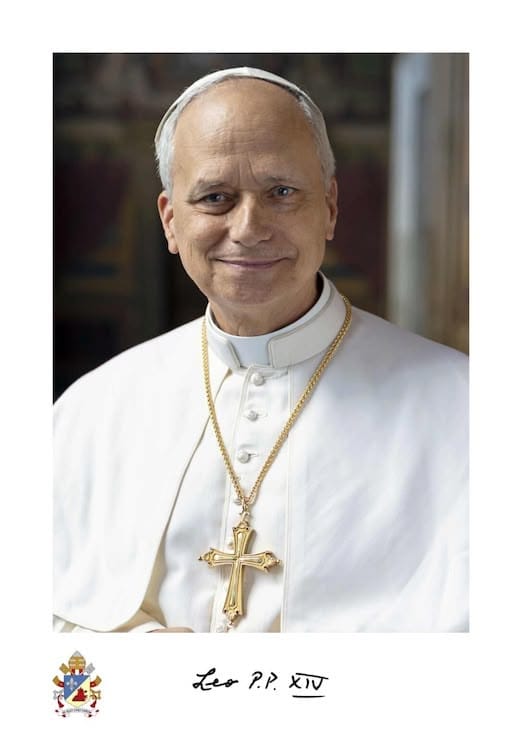
In an already very tense context, the pope Leo XIV, originally from Chicago, took the word on Tuesday, November 4, 2025 to denounce these refusals and strongly urge the American immigration police to respect the spiritual needs of detainees.
In his remarks, he expressed deep compassion for these migrants often long separated from their families, adding:
«"I strongly urge the authorities to allow the pastoral agents to respond to the needs of these people. Often, they are isolated, no one really knows what's going on… but their spiritual needs must be respected.»
THE pope Leo XIV, elected in May 2025, has adopted a more reserved tone than his predecessor but is beginning to openly criticize certain American public policies, particularly immigration policy under the administration Trump. He insists that the human dignity must never be violated, even in the national security framework.
American immigration policy: firmness and controversy
Since the beginning of 2025, the administration Trump has tightened its measures against illegal immigration, describing the situation as an "invasion" and conducting an aggressive campaign of arrests and deportations across the country. Chicago, the third largest city in the United States, has thus found itself at the heart of a symbolic "war zone," with more than 3,000 people detained in the region, according to the Department of Homeland Security.
This policy has provoked strong opposition in some Catholic circles, particularly among those who believe that the defense of human life, in the broadest sense, must include respect for migrants, regardless of their status or history. The pope Leo XIV He himself recalled in October 2025 during a general hearing that the pro-life struggle is global and cannot exclude the fight against what he calls the "inhumane treatment" of migrants in the United States.
A committed religious opposition
The actions outside the ICE center in Broadview are the visible expression of a deep and organized Catholic opposition. The gatherings, including public prayers, masses, and repeated attempts to give communion to the detainees, have demonstrated the resolve of a large group of believers and priests.
A religious figure from Chicago recently confided:
«"When we talk about feeding the hungry, clothing the naked, and sheltering the homeless, and these acts are criminalized by federal law, it means that our mission as a Church is threatened."»
In this climate, Symbolic marches were also organized, including a notable who connected the childhood home of pope Leo XIV at the Statue of Liberty in New York, to protest against current immigration policy.
Detention conditions and international criticism
The call of pope This comes at a time when the ICE detention center in Broadview is facing numerous accusations of inhumane conditions. Human rights organizations such as the ACLU and the MacArthur Justice Center denounce basic deprivations such as lack of access to water, medical care, hygiene, and even a confidential call to a lawyer.
A court hearing will be held on November 4 to examine these allegations, as part of an emergency class-action lawsuit against the Department of Homeland Security. Witnesses also report instances of excessive use of force by agents during raids and demonstrations, a use of violence that has shocked many observers, including in the United States.
The US government, through the White House, rejects these accusations, stating that it applies the laws "in the most humane way possible.".
The spiritual and human dimension: a call to respect dignity
What emerges from the intervention of Leo XIV is a clear call not to forget the spiritual dimension in the management of detainees, even those temporarily deprived of their liberty.
Imprisonment, with its isolation and often its discomfort, does not erase the spiritual dimension of individuals. For thousands of migrants Coming from various denominations, but especially Catholic, faith is also a refuge, a comfort, even a psychological survival factor.
THE pope recalls the importance of having access to pastoral care, whether in the form of prayers, sacraments or spiritual guidance, as a fundamental right that must be respected even in a judicial setting.
Challenges and prospects for the United States
The call of pope Leo XIV This will undoubtedly fuel the political debate surrounding American immigration policy. It is a strong signal that the issue of migrants goes beyond simple administrative or security management to touch on fundamental values of human dignity and respect for rights.
This situation also raises the question of the role of religious institutions in a sometimes conflictual political context. While a segment of the American Catholic community is more politically conservative, papal interventions reaffirm an ethical stance that transcends partisan divides.
Conclusion
The recent stance taken by pope Leo XIV, Calling on U.S. immigration authorities to respect the spiritual needs of migrant detainees highlights the acute tension between political firmness and respect for human and religious rights in the United States. As thousands of Catholics express their solidarity through prayer and symbolic gestures, this issue becomes a key marker of an identity crisis. deep morality. Faced with refusals of access to priests and accusations of inhumane conditions, the Church insists that the spiritual dimension, often neglected, be finally taken into account and respected.