











Gospel of Jesus Christ according to Saint Luke
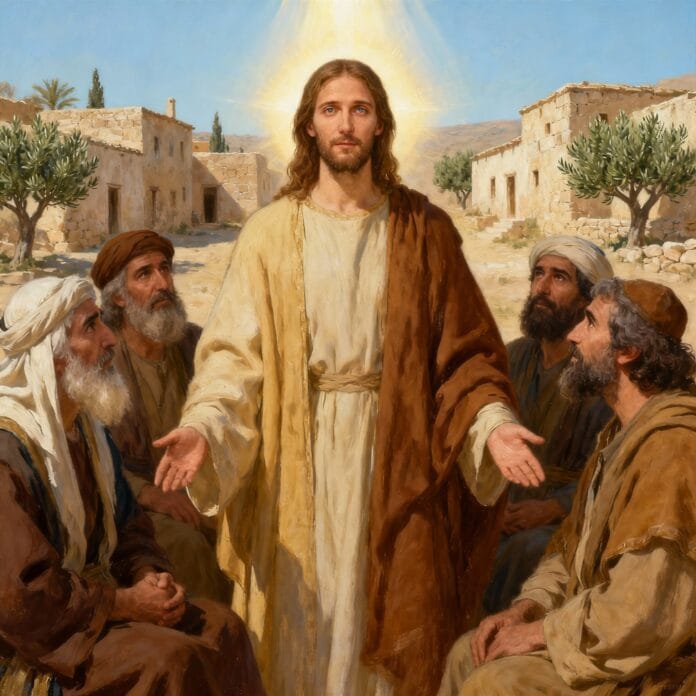
At that time, when the Pharisees questioned Jesus about when the kingdom of God would arrive, he answered them: «The coming of the kingdom of God will not be seen by visible signs. Nor will people say, «Look!» or «There it is!» For truly, the kingdom of God is among you.»
Then he said to his disciples, «The days will come when you will long to see one of the days of the Son of Man, and you will not see it. People will tell you, «There he is!» or, «Here he is!» Do not go off after them, nor rush after them. For as lightning that appears lights up the sky from horizon to horizon, so will the Son of Man be in his day.”.
But first, he must endure great suffering and be rejected by this generation.»
Recognizing the reign of God in the present
How to experience God's presence in our midst today, here and now, according to the teachings of Jesus.
The Kingdom of God: a mystery often perceived as distant, future, almost abstract. Yet, Jesus affirms that he is already "among us." How can we understand this divine closeness? And above all, how can we experience it in the concrete rhythm of our days? This message is addressed to those who seek to unite faith, life, and hope through the rediscovery of the Kingdom as an active and inner presence. It is a path to recognizing God at work right where we are.
- Gospel context: the Kingdom, elusive yet present
- Analysis: a discourse that shifts from the visible to the spiritual
- Deployment: three key areas to understand the Kingdom's presence
- Practical applications: faith, social life and mission
- Spiritual significance: in the tradition of Christ living in us
- Meditation: Standing at the Center of the Kingdom
- Contemporary challenges: the modern illusions of "elsewhere"«
- Liturgical prayer: invoking the light of the inner kingdom
- Conclusion: moving from a distant perspective to active presence
- Practical skills: simple gestures of life in the Kingdom
- Essential biblical and theological references
Between Heaven and Earth: locating the text
A Kingdom already here and yet to come
When the Pharisees ask Jesus when the kingdom of God will come, their question reflects a political, religious, and eschatological expectation. In the context of first-century Judaism, to reign meant visible sovereignty: domination over enemies, the restoration of the temple, peace promised by the prophets. Jesus' response thwarts this expectation: he shifts the center of gravity. He removes the Kingdom's spectacular dimension to restore its spiritual essence. This reign is not a new power, but a presence to be acknowledged.
Luc places this episode at the heart of a series of lessons on the spiritual discernment. The Kingdom will not come as an observable event, says Jesus. It is already here — «in your midst.» In Greek, the expression can also be read as «in you,» which reinforces the twofold meaning of the message: God reigns at the heart of the community and in the depths of each soul.
The second part of the passage, addressed to the disciples, introduces a tension between the present and the future. The Kingdom is here, but the Son of Man must still suffer before "his day" bursts forth like lightning. This paradox underpins all of Lucan theology: the promise is already being fulfilled in secret, but it will reach its fullness at the Parousia.
Read again in light of John 15:5 — «I am the vine, you are the branches» — the text takes on a tangible form. The Kingdom of God is not an external institution; it is the flow of divine life within us. Those who abide in Christ bear fruit; those who separate themselves from Him wither. In the vineyard of the Kingdom, each branch participates in the same flow of sap. The Kingdom of God is this life that connects, this union of the divine and the human in love active.
Thus, Jesus' words overturn expectations: the Kingdom is not something to be awaited but something to be inhabited. It is a reality that is embodied right now, in the mystery of a humble, silent, but real presence.
Analysis: Words that change perspectives
The visible deceives, the invisible reveals
The central idea of this teaching is a revolution in perspective. Where humanity seeks outward signs, Jesus points to an inner presence. Where we expect triumph, he points to communion.
First, Jesus rejects any spectacular interpretation of the Kingdom. «It will not be said, »Look here!’ or ‘Look there!’” In other words, no one can possess, circumscribe, or manipulate the divine reign. This rejection of control illuminates a spiritual truth: God does not present himself as an object of observation but as a loving relationship. The eye that wants to see becomes blind; the heart that opens itself receives.
Secondly, the expression "in your midst" emphasizes the incarnate presence. In the figure of Christ, the kingdom is already manifested. Jesus himself, through his living presence, is the Kingdom personified. In him, heaven touches earth, history is illuminated by eternity. The Kingdom is not a place: it is someone.
Third, the rest of the passage affirms that the Son of Man must first suffer. This announcement anchors the Kingdom in the cross. There is no reign without the passage through passion. This link between glory and suffering structures the Christian faith: it is in the vulnerability of love that the power of God is expressed. The Kingdom present in our midst is therefore not a human victory, but the discreet presence of salvation in action.
The entire text reveals a logic of interiority, patience, and transformation. It is no longer about waiting for a Kingdom of domination, but about recognizing a Kingdom of relationship—one that grows silently, through loyalty, mercy, peace shared.
The Kingdom as the real presence of Christ within oneself
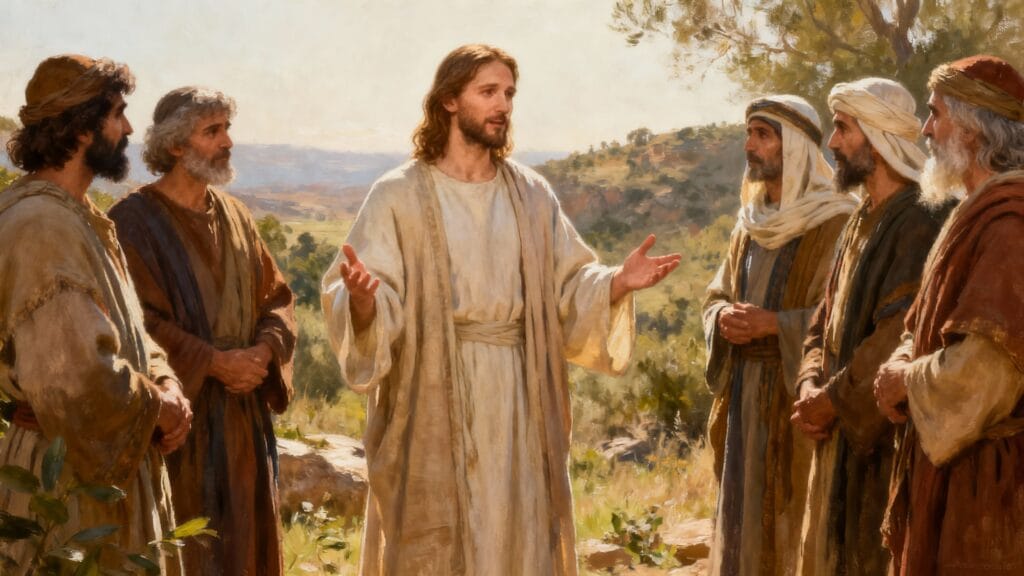
To receive this message is to understand that God is not absent from the world. The living Christ continues to dwell in those who believe. The Kingdom is not a future hope, but a present indwelling: God draws near to the point of dwelling within us.
In prayer, in charity, In the Eucharist, the heart becomes the seat of God's reign. This is not primarily an external change, but an inner metamorphosis: God reigns where love reign. Saint Paul will say: "It is no longer I who live, but Christ who lives in me." The presence of the Kingdom becomes the daily breath of the believer.
The Kingdom as a living community
Jesus speaks “in your midst.” He does not reduce the Kingdom to a solitary experience. The reign of God takes shape in a community: where two or three are gathered in his name. It is embodied in brotherhood shared, in gestures of mutual attention, in forgiveness given and received.
Recognizing the Kingdom today means discerning God in our relationships: in a reconciled family, a restored friendship, a shared commitment to service to the poor. The Kingdom is the relational fabric transfigured by charity.
The Kingdom as a dynamic hope
Christ also announces the day when “the Son of Man” will appear like lightning. Even though the Kingdom is already here, it has yet to be fully realized. This tension keeps faith in motion. It prevents the believer from settling into mere contemplation.
The Kingdom that is present calls us to action. It calls us to build, heal, teach, and love, until all is recapitulated in Christ. Thus, every act of justice, every act of care offered, every act of forgiveness becomes a seed of the Kingdom. We do not wait for it passively: we collaborate in it.
Practical applications: living from the Kingdom today
To make God reign in every sphere of life
In personal life
To meditate on this word is to move from “later” to “now.” To welcome God into one’s midst is to transform the present moment into a place of eternity. A simple prayer, a word of peace, a silence filled with presence become sacraments of the Kingdom.
In family life
The Kingdom reveals itself in shared tenderness, in the capacity to forgive after a quarrel, in the choice to serve rather than dominate. Where love God is already alive, God already reigns.
In professional life
Working in the spirit of the Kingdom means seeking justice and cooperation more than performance. It means recognizing each colleague as possessing a divine dignity.
In social life
The Kingdom inspires concrete acts of solidarity. It compels the Church and every believer to stand alongside the poorest. This reign places the person, not profit, at its center.
In spiritual life
He who abides in Christ — like the branch in the vine — lets his life bear fruit. Prayer becomes listening; the sacraments, channels of the already active reign.
Resonances: tradition and theological scope
An inner Kingdom, a theology of communion
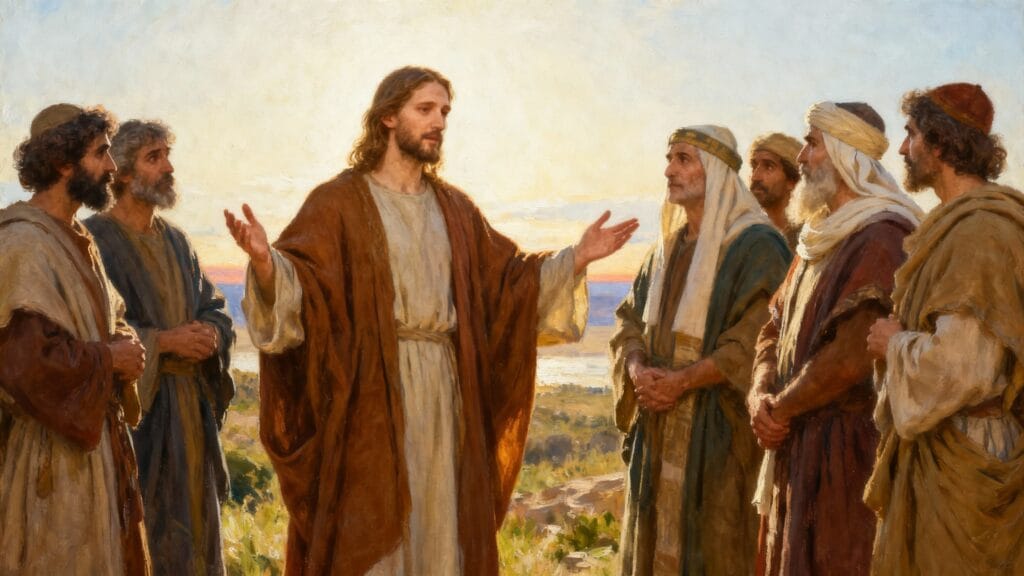
Since the Church Fathers, this word has nourished a profound mysticism of presence.
Origen asserted: "He who prays for the Kingdom of God to come prays for it to be born within him." Augustine, in The City of God, distinguishes the earthly kingdom, marked by love of oneself, of the heavenly Kingdom, founded on love of God to the point of self-contempt. Gregory of Nyssa saw in the growth of the Kingdom an infinite movement: the more the soul advances, the more it discovers.
Contemporary theology embraces this vision from another angle: the Kingdom is not a territory but a relationship. The Trinitarian presence is communicated; it is shared. Thus, to live the Kingdom is to enter into the very heart of divine communion: the Father who gives, the Son who gives himself, the Spirit who unites.
In the liturgy, each Eucharist announces and accomplishes this mystery: Christ makes himself present “in our midst”. Every time we say “Our Father”, we ask that his kingdom come — not from outside, but by unfolding what has already been sown.
This is the major spiritual significance: God does not reign by force, but by love received. The believer becomes a citizen of the Kingdom each time he lives charity of Christ.
Meditation track
Section title: “Entering the Kingdom in Silence”
- Choose a peaceful place. Breathe gently.
- Read slowly: “The kingdom of God is in your midst.”.
- Close your eyes and repeat silently: “In my midst, Lord, you reign.”
- Allow gratitude to rise for a joy, an encounter, a peace received.
- Extend this feeling to those we hold in our hearts.
- Ask for the grace to recognize the Kingdom in the simple gestures of the day.
- End with the sign of the cross: not as a closing, but as a sending forth.
Current challenges
Recognizing God in a shattered world
Our era shares the question posed by the Pharisees: When will the reign come? Many seek visible signs—progress, crises, upheavals. Others reduce the Kingdom to a moral or aesthetic ideal. The danger lies in the dissociation between spirituality and everyday reality.
The believer, however, is called to discern differently. The Kingdom of God is not the utopia of a perfect world, but the germination of another order, invisible yet real. This requires a conversion of perspective, a learning of silence. Where one gives in to fear or cynicism, the task is to rediscover active hope.
Another challenge is to avoid confusing the Kingdom with an institutional project. The structures of the Church serve the Kingdom, but do not encompass it. The reign remains greater than any organization. Christ reigns even where he is thought to be absent.
Finally, in the fracture of the digital world, Recognizing the presence of the Kingdom requires cultivating a receptive heart. The superficiality of constant activity distances us from contemplating the present. Yet the Kingdom is experienced in reality—in the face of a loved one, in an authentic encounter, in the silence of prayer.
Responding to these challenges means affirming that the kingdom of God remains the place of inner freedom and of brotherhood real. That's where our hope lies.
Prayer
Prayer for the reign of the heart
Lord Jesus,
You who said that your Kingdom is in our midst,
We welcome you in the silence of this day.
Reign over our scattered thoughts,
based on our hasty words,
about our fears and hesitations.
Make our hearts a space of your peace.
Grant us to love without measure,
to serve without delay,
to believe without seeing.
You, the vine of life, let your divine sap flow within us.
That every action, every relationship,
bear witness to your living presence.
Come and reign, Lord, in the simplicity of our lives,
until the day the flash of your return
will illuminate the entire horizon of creation,
In joy of the Father, the Son, and the Holy Spirit.
Amen.
Conclusion
Choosing presence over waiting
The Kingdom of God is not a mystery to be solved, but a presence to be welcomed. Jesus reverses our perspective: the divine is not observed from afar, it is experienced in our midst. To enter into this dynamic is to learn to recognize the face of God in the folds of everyday life, to transform each moment into a space of the Kingdom.
This message calls for an inner transformation: ceasing to wait for God's spectacle and instead consenting to his silent intimacy. Therein lies true freedom: living now as citizens of the Kingdom, in peace that no one can take away.
Kingdom Practice
- Begin each morning with a brief act of presence: saying, “Lord, you reign here.”
- To offer a free gesture of love without expecting anything in return.
- Read a verse from the Gospel and let it resonate inwardly throughout the day.
- Cultivate a space of silence, even if only five minutes, to listen to the heart.
- Transform the work in service: see in each task a participation in the Kingdom.
- To forgive unconditionally, in order to free the flow of grace.
- End the day with a thanksgiving: “The Kingdom has come near today.”
References
- Gospel according to Saint Luke 17, 20-25.
- Gospel according to Saint John 15, 1-8.
- Origen, Homilies on Matthew, XXV.
- Saint Augustine, The City of God, Book XIX.
- Saint Gregory of Nyssa, Life of Moses.
- Catechism of the Catholic Church, §2816-2821.
- Joseph Ratzinger, Jesus of Nazareth, Volume I.
- Henri Nouwen, The Inner Kingdom.