










The profound meaning of the sacraments in the spiritual journey of a contemporary believer constitutes an essential dimension of the Christian faith. The sacraments are more than rites: they embody visible and effective signs through which God communicates his grace and accompanies each believer throughout their spiritual life.
In the ChristianityThe sacraments are defined as sacred acts instituted by Christ, bearing an invisible divine reality. They mark key stages in personal and communal journeys, giving form to the experience of God's presence.
Their central role today lies in their ability to nurture an intimate relationship with God and to structure the spiritual journey. For the contemporary believer, often confronted with the challenges of modernity and secularization, the sacraments offer a solid foundation for living an authentic and committed faith.
The sacraments: visible signs and means of divine grace
The sacraments play a fundamental role as visible signs and effective manifestations of God's presence in the lives of believers. They are not mere symbols, but tangible realities through which the divine graceEach sacrament acts as a channel through which God communicates his strength, love, and mercy to the individual.
Visible signs and spiritual efficacy
- The sacraments use concrete elements — water, oil, words, gestures — to make the invisible perceptible.
- This visibility reassures the believer about the reality of divine communication.
- The efficacy of the sacraments does not depend on human perfection, but on the active power of God who makes them alive.
Manifestation of divine grace
- Grace is that free and undeserved gift that God bestows to transform the soul.
- Through baptism, for example, it purifies and renews; through the Eucharist it nourishes spiritually.
- Each sacramental rite actualizes a divine mystery, making accessible a profound experience of God.
Function in the personal relationship with God
The sacraments establish or strengthen this intimate bond between the believer and the Creator. They are both a visible anchor in faith and an inner source of spiritual energy. You are never alone on your journey: the sacraments bear witness that God comes to meet you in a tangible way, invites you to grow in his light, and supports you in your personal challenges.
This dual dimension — visible sign and effective means — makes the sacraments an essential pillar for living an authentic relationship with God today.
Baptism: entry and initiation into Christian life
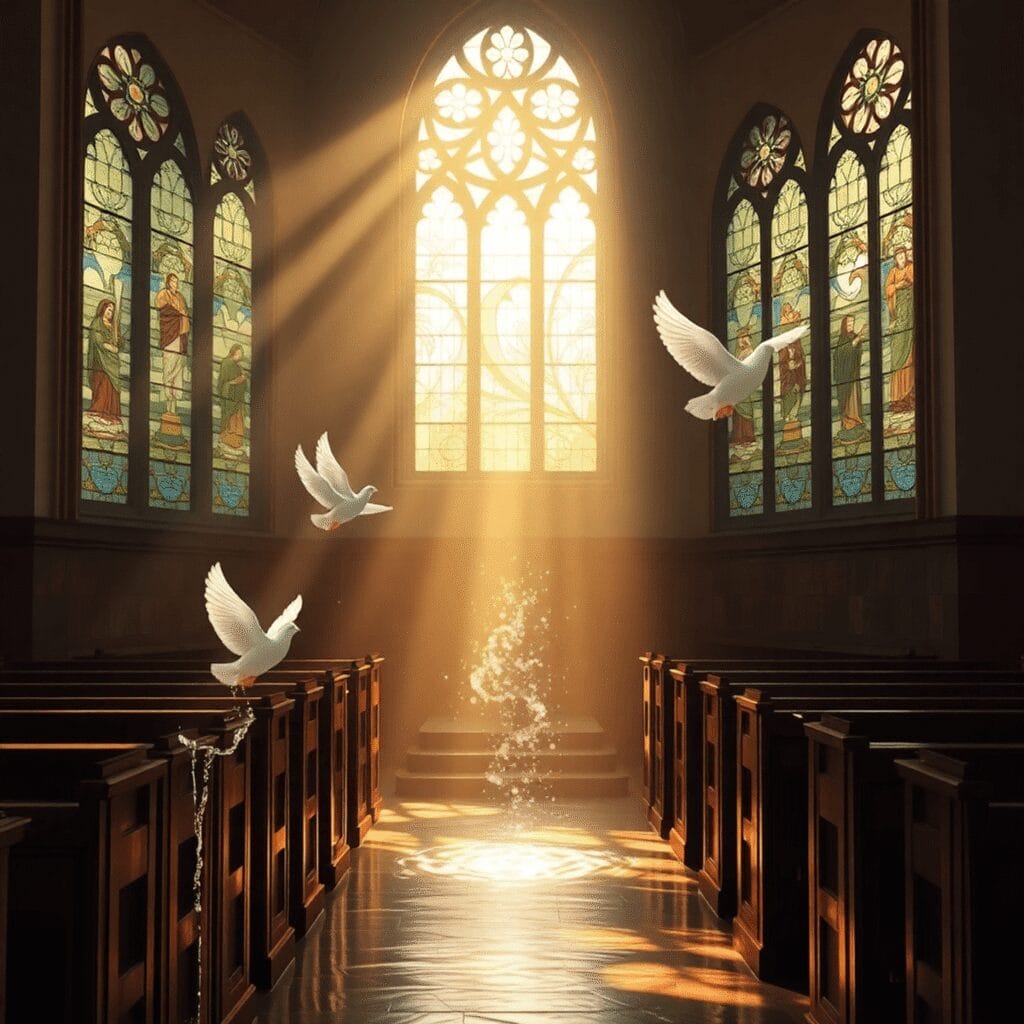
Baptism represents a fundamental moment in the spiritual life of a believer. It symbolizes the purification sins and mark the entrance official in the Christian community. This sacrament is not limited to a simple water rite; it is a true gateway to a new life, oriented towards God and love fraternal.
For contemporary adults, often from non-religious backgrounds, baptism takes on a special significance. It embodies a profound quest for meaning, a reconciliation with oneself and with the divine. This personal journey requires a sincere commitment, often accompanied by a desire for lasting inner transformation.
The catechumenate process prepares for this sacramental initiation through several essential stages:
- education : a gradual discovery of the foundations of the Christian faith, its values and its mysteries,
- prayer : developing a personal relationship with God through different forms of prayer,
- community sharing : integration into the life of the local Church through exchanges, mutual support and collective celebrations.
This educational and spiritual process allows each person to approach baptism with awareness and freedom. It underscores the importance of this sacrament as the effective beginning of a vibrant and committed Christian life.
Baptism thus opens onto a new path, inviting us to fully live the grace received within a welcoming fraternal community.
The confirmation: spiritual maturation and strength to bear witness
There confirmation It acts as a deepening of baptism, marking an essential step in the spiritual journey of a contemporary believer. It confirms and strengthens the grace received at baptism, thus accompanying the spiritual maturation necessary for a mature and conscious faith.
THE gifts of the Holy SpiritThe gifts conferred at confirmation play a fundamental role in this progression. These gifts are traditionally seven in number: wisdom, understanding, counsel, fortitude, knowledge, piety, and fear of the Lord. Each contributes to enlightening the mind and strengthening the heart so that the believer can live their Christian life to the fullest. For example:
- Wisdom helps to discern divine truths in complex life situations.
- The strength gives the courage to publicly bear witness to one's faith despite difficulties.
- The council guide in making decisions in accordance with the Gospel.
Confirmation is not limited to personal enrichment; it also engages the faithful in a more active community responsibility. By receiving this sacrament, you are called to participate fully in the life of the Church, not only as a passive member but as an engaged participant. The sacrament then becomes a driving force for involvement in the projects and services of the local Church. This active role is essential for the mission of the Church in the public spherewhere each believer is called to be a living witness of their faith.
Thus, confirmation embodies a passage toward a faith that is affirmed and witnessed. It provides the spiritual means to spread the Gospel in the contemporary world. The profound meaning of the sacraments in the spiritual journey of a contemporary believer finds its full relevance here: they are not simply symbolic rites but living experiences that transform and empower.
There sacramental liturgy : living memory of the mysteries of Christ
There sacramental liturgy presents itself as a living and memorial act, anchoring the believer in the real presence of mysteries of ChristEach celebration transcends the mere repetition of a ritual; it re-enacts the foundational event of the Christian faith, making the encounter with God tangible. Through this dynamic, the liturgy becomes a space where sacred time meets secular time, offering an authentic spiritual experience.
THE profound sense of the sacred is at the heart of this celebration. According to the guidelines of VaticanIt is not simply a matter of formally observing the rites, but of an inner disposition that opens one to contemplation and thanksgiving. This attitude allows the faithful to perceive the liturgy not as a mere external unfolding, but as a profound encounter with the divine. The importance given to this sense of the sacred invites active and conscious participation, thus fostering inner transformation.
The relationship between liturgy and popular piety It is characterized by a complementarity without mutual substitution. The official liturgy structures and guarantees the validity of the sacraments, while popular piety nourishes the personal and communal yearning for God through diverse expressions: prayers, processions, devotions. These two dimensions enrich each other without merging or replacing one another. Together, they contribute to bringing the mysteries of Christ to life in the daily lives of believers and the ecclesial community.
The sacramental liturgy thus remains the privileged place where the living presence of God is manifested in his people, constantly reminding us that the sacraments are effective signs of his infinite grace.

The sacraments as dynamic experiences in the contemporary world
The sacraments go beyond the scope of simple traditional rites to become true dynamic spiritual experiencesThey act as powerful levers for inner transformation, inviting each believer to a renewed personal commitment. This dynamic is not limited to an outward gesture; it touches the very heart of the personal relationship with God, opening a space where faith is lived intensely and deepened.
You will notice that the sacraments also strengthen thecommunity membershipIn an era marked by individualism and social fragmentation, they constitute a strong bond between the faithful. By sharing the same rites and participating in the same celebrations, each believer is integrated into a vibrant community, where solidarity and mutual support flourish.
Faced with modern challenges such as the accelerated modernization and the increasing secularizationThe sacraments offer a concrete spiritual refuge. They support believers in their search for meaning and authenticity, reminding them that faith is not merely an intellectual assent but a living experience that engages with the realities of the modern world. This support is also manifested in the sacraments' capacity to strengthen spiritual resilience, encourage moral discernment, and stimulate Gospel-inspired social engagement.
"The sacraments are not relics of the past, but open doors to a new life, capable of meeting the demands of our time."
Thus, fully experiencing the sacraments today means embracing this dynamic dimension that nourishes both the individual soul and the Christian community fabric.
Conclusion
Living the The profound meaning of the sacraments In the spiritual journey of a contemporary believer, it is about welcoming these visible signs as a live experienceEach sacrament nourishes faith, strengthens contemporary spiritual commitment, and forges a strong bond with the community. They are not mere rituals, but essential moments that reveal God's active presence in your life. You are invited to experience them fully, to allow their grace to transform your heart, and thus participate in a rich and authentic community life, a reflection of a living and shared faith.
Frequently Asked Questions
What is the central role of the sacraments in the spiritual life of a contemporary believer?
The sacraments play a central role as visible signs and effective means of divine grace, nurturing the personal relationship with God and structuring the spiritual journey of the believer today.
How do the sacraments manifest divine grace in the lives of the faithful?
The sacraments are visible signs that communicate the presence of God and his grace, acting as concrete means by which the believer receives inner transformation and spiritual support.
What is the significance of baptism for a contemporary adult from a non-religious background?
Baptism symbolizes entry into Christian life, purification, and reconciliation. For an adult often distant from religion, it represents a profound initiation through a catechumenate process that includes teaching, prayer, and community sharing.
How does confirmation contribute to the spiritual maturation of the believer?
Confirmation completes baptism by strengthening ecclesial commitment through the gifts of the Holy Spirit; it strengthens the believer to publicly bear witness to his faith and assume his responsibilities within the Christian community.
What is the profound meaning of sacramental liturgy in contemporary spiritual experience?
The sacramental liturgy is a living memory of the mysteries of Christ, inviting an authentic experience of the sacred, reconciling the orientations of the Vatican with popular piety without the two replacing each other.
How do the sacraments respond to modern challenges such as secularization?
Beyond traditional rites, the sacraments offer a dynamic experience that promotes inner transformation, strengthens the bond with the current Christian community, and supports believers in the face of contemporary challenges such as modernity and secularization.