













The role of angels in the Christian tradition and their current significance arouse profound interest, both for their historical importance and their spiritual presence today. Angels occupy a central place in the Christian faith, being considered celestial beings who connect the divine to the human.
The term "angel" comes from Greek aggelos and from Latin angelus, which both mean "messenger." This etymological origin underscores their primary function: to carry messages from God to humankind. They are not mere symbols, but active entities within the divine plan.
Their general role is to act as intermediaries between God and humankind. They transmit divine will, protect believers, and watch over each person's spiritual path. This mission of accompaniment reflects the constant link between heaven and earth, a link embodied by these pure spirits in service to the Creator.
Angels in the Bible: Old and New Testaments
THE angels in the Old Testament They play a crucial role as divine intermediaries, intervening at key moments in biblical history. Their presence is manifested in particular through several significant episodes:
- Isaac's Protection : during the sacrifice almost accomplished by Abraham, an angel intervenes to stop the gesture, highlighting divine protection towards Isaac (Genesis 22).
- Revelation to Moses It is an angel who guides Moses on Mount Horeb, appearing to him in the form of a burning bush to reveal to him the presence of God (Exodus 3).
- Guidance towards the Promised Land : angels accompany and protect the Hebrew people during their exodus and their journey to the Promised Land, providing spiritual and physical assistance in the face of dangers.
In the New Testament, Angels continue to perform essential functions, often related to the announcement and unfolding of the mystery of the incarnation:
- Annunciation to Married by Gabriel : L'’Archangel Gabriel is responsible for informing Married that she will conceive Jesus through the action of the Holy Spirit (Luke 1:26-38). This moment is fundamental because it marks the beginning of salvation according to the Christian faith.
- Accompanying the key events of Jesus Christ : angels play an active role at the birth (announcing to the shepherds), in the temptation in the desert (supporting Jesus), as well as during his resurrection (announcing to the women that Jesus is alive).
THE biblical interventions of angels, Whether in the Old or New Testament, these figures illustrate their primary function as messengers and protectors. They act as divine agents, transmitting God's will while helping humankind understand and experience this transcendent presence. This consistent role underscores their importance in the Christian tradition and their symbolism as a bridge between heaven and earth.
The nature and spiritual role of angels according to Catholic tradition
In the Catholic tradition, angels are defined as pure spirits, That is to say, beings without a material body. Their spiritual nature grants them an immaterial, but no less real, existence. They possess perfect intelligence and free will, which allows them to act with discernment and choice, without being subject to human physical constraints.
Their role goes beyond that of mere messengers: they are active agents in the divine order, fulfilling God's will while respecting human freedom. Their intervention is often discreet, acting on the soul, the spirit, or circumstances rather than through immediate, visible manifestations.
Archangels in Catholic doctrine
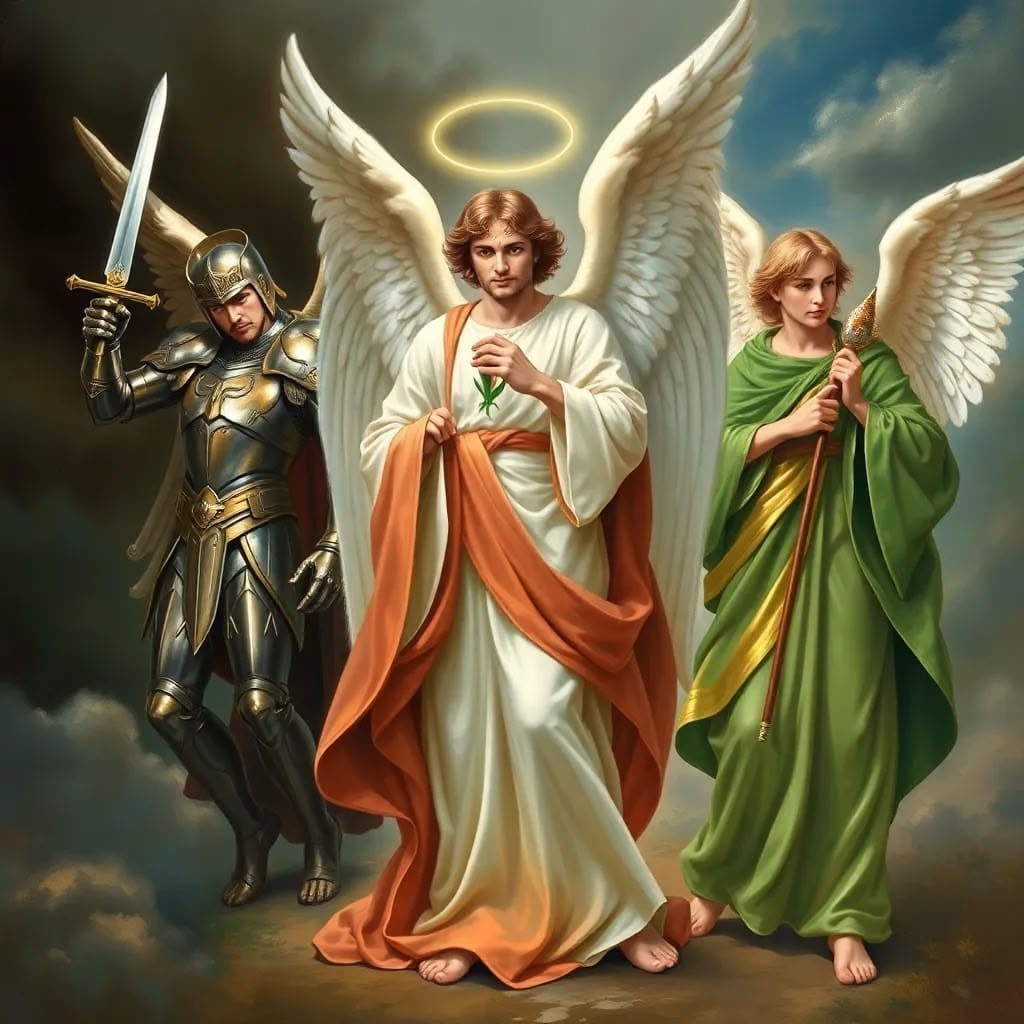
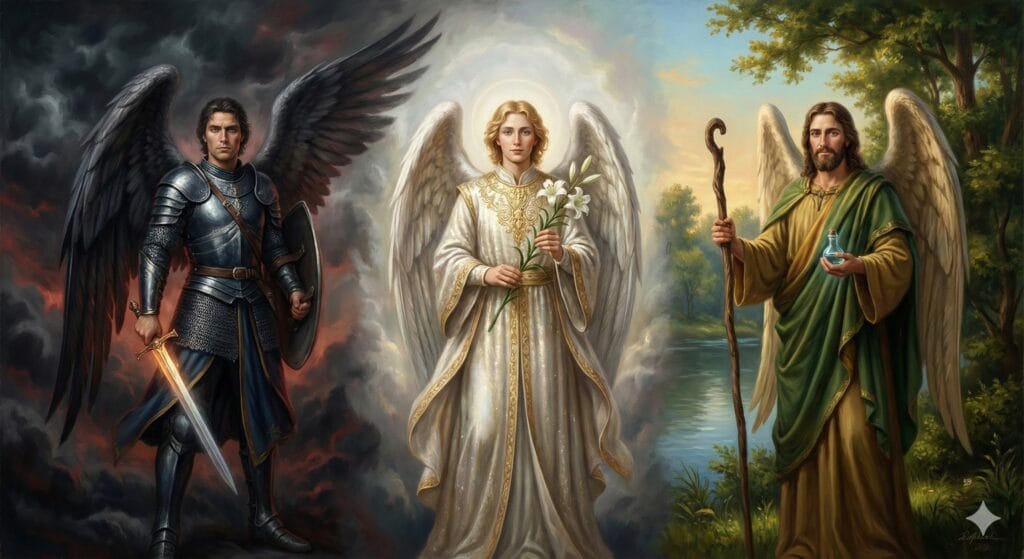
Three archangels occupy a special place in Catholic doctrine:
- Michel As leader of the heavenly army, he is the protector against the forces of evil. He symbolizes divine power in the fight against Satan and his demons.
- Gabriel : messenger of God, he is best known for having announced to Married The incarnation of Christ. It represents divine communication, revelation, and proclamation.
- Raphael : a symbol of healing and protection during travel. Its name means "God heals", highlighting its role as a spiritual and physical guide.
These archangels embody different facets of the role of Catholic angels: spiritual warriors, messengers, protectors, and healers. Their presence illustrates the diversity of missions entrusted to celestial spirits. For a deeper understanding of these angelic figures in the Catholic tradition, you can consult this source.
The Catholic understanding of angels
The Catholic understanding emphasizes that angels are neither deities nor autonomous intermediaries; they always remain exclusively at God's service. Their spiritual nature and freedom make them essential actors in the dialogue between the divine and the human, without ever supplanting divine sovereignty. These elements are also analyzed in depth in a recent academic work which explores various aspects related to this theme.
The extraordinary actions of angels and their limitations
Angels, in the Christian tradition, cannot perform miracles by their own power. Miracles remain a divine act, reserved for God alone. However, they perform angelic actions which may seem miraculous in the eyes of men. These actions are often discreet and subtle interventions that influence the course of events without violating the natural laws established by God.
What angels can do
Here are some examples of what angels can do:
- To act on the material world by protecting, guiding or inspiring people.
- Always respect human freedom, never impose their will.
- They exert their influence more on the soul, thoughts or emotions, encouraging people to choose good.
This measured intervention reflects a harmony between the spiritual power of the angels and respect for the free will given by God to human beings. Thus, their role is that of invisible companions who support without coercing.
Their nature of’pure spirits This allows them to overcome certain physical barriers. This power makes their interventions extraordinary, but always subordinate to divine will. Here you understand how the role of angels in the Christian tradition and their current significance manifests itself through a protective and helpful presence, without ever usurping God's power or diminishing human responsibility.
The contemporary role of guardian angels in the Christian faith
Guardian angels occupy an essential place in the daily lives of Catholic believers. Their spiritual presence is perceived as constant support in the face of hardship, a tangible sign of divine benevolence. Each believer is accompanied by a guardian angel, responsible for ensuring a spiritual protection which goes beyond mere material dangers.
Their role has several dimensions:
- ProtectionGuardian angels watch over you, warding off negative influences and guiding your steps to avoid harm.
- AccompaniementThey act as invisible companions, offering comfort and inner peace during difficult times.
- Spiritual guideTheir action is not limited to physical protection, but extends to the awakening of your moral and spiritual conscience.
The Catholic faith teaches that this personal relationship with a guardian angel fosters spiritual growth. You are thus invited to cultivate attentive listening to their subtle inspirations, often perceived as intuition or an inner light. This interaction helps strengthen your trust in God and guide your choices toward good.
In this context, guardian angels embody more than a simple belief: they represent a living link between heaven and earth, a divine presence accessible in all circumstances.
Personal reflection on angels in contemporary spirituality
The place of angels in contemporary spirituality invites everyone to a personal reflection deep.
- Are they simply symbols of protection and hope, or do they embody a real and active presence in our lives?
- How do you perceive their role in the face of modern challenges and the quest for spiritual meaning?
- Can their current meaning enrich your personal journey, beyond traditional beliefs?
This reflection opens up an intimate space where the dialogue between faith, experience, and reason allows us to rediscover the The role of angels in the Christian tradition and their current significance.
Frequently Asked Questions
What is the main role of angels in the Christian tradition?
In the Christian tradition, angels are considered intermediaries between God and men, playing the role of divine messengers and spiritual protectors.
What is the etymological origin of the term "angel"?
The term "angel" comes from the ancient Greek "angelos" meaning "messenger," reflecting their primary function of conveying God's messages to humans.
How do angels intervene in the Old and New Testaments?
In the Old Testament, angels protect and guide figures like Isaac and Moses. In the New Testament, they announce key events such as the Annunciation to Married by the archangel Gabriel and accompany the life of Jesus Christ.
What is the spiritual nature of angels according to Catholic tradition?
According to Catholic tradition, angels are pure spirits endowed with intelligence and will, without physical bodies. They include three principal archangels: Raphael, Gabriel, and Michael, each with a specific symbolism.
Can angels perform miracles on their own?
No, angels cannot perform miracles on their own. They can carry out extraordinary actions that seem miraculous, but always while respecting human freedom and under divine will.
What is the contemporary role of guardian angels in the Christian faith?
Today, guardian angels play an important role as spiritual protectors and guides in the daily lives of Catholic believers, offering support and protection from dangers.