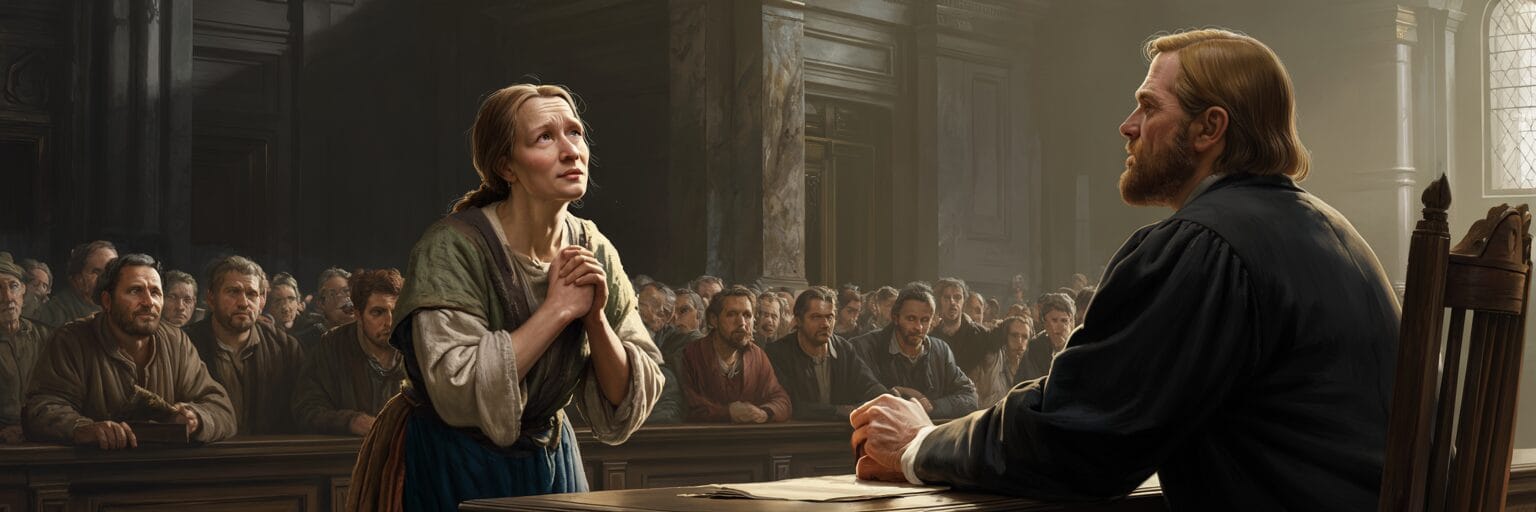


- The serpent heals, the Cross saves: Gregory of Nazianzus enlightens Nicodemus
- Gregory of Nazianzus facing the serpent erected in the desert
- How elevation changes our way of experiencing suffering
- The Cross as an antidote, not as a symbol
- To look is not to understand — it is to trust
- God did not come to judge, but to save
- What this meditation leaves us
- Lectio divina
- ✝ Biblical references
13And no one has ascended into heaven except the one who descended from heaven, the Son of Man who is in heaven. 14Just as Moses lifted up the serpent in the desert, so must the Son of Man be lifted up., 15So that everyone who believes in him may not perish but have eternal life.» 16For God so loved the world that he gave his one and only Son, that whoever believes in him shall not perish but have eternal life. 17For God did not send his Son into the world to condemn the world, but to save the world through him.
An important, serious, respected man comes to Jesus at night—not out of cowardice, but because he doesn't yet know how to categorize what he has seen. His name is Nicodemus. And Jesus, instead of reassuring him, tells him an old desert tale: a people dying of poisoning, and God commanding the creation, from the poison itself—the bronze that bears the shape of evil—of the one object that saves. All one has to do is look up at it. Then Jesus utters the phrase that shifts everything: he too will be lifted up, like that cold metal serpent impaled on a pole. Not to frighten. To heal. Because God, he says, did not send his Son to judge the world in its evil state, but so that, by looking upon him crucified, this world might find life again.


The serpent heals, the Cross saves: Gregory of Nazianzus enlightens Nicodemus
Why does the raising of the Son of Man on the cross echo the image of the bronze serpent, and how does this change our perspective on suffering?
There is one thing most readers anticipate when faced with John 3:13-17: they skip the story of the serpent to rush to the verse they know by heart, the one about God's love for the world. Saint Gregory of Nazianzus, Doctor of the Church and one of the greatest Christian orators of the fourth century, rejects this shortcut. In his Discourse 45, delivered for Easter shortly before his death, he focuses precisely on this disturbing image—a metal serpent, brandished as a remedy—and sees in it something that few other Fathers have dared to say so bluntly: that God, to save us, accepted to take the very form of that which kills us. This meditation follows his gaze, phrase by phrase, until it places us, too, before the pole erected in the desert.
Gregory of Nazianzus facing the serpent erected in the desert
First, we must understand who is speaking. Gregory of Nazianzus is not a scholarly theologian wielding cold concepts. He is a man weary of councils, wounded by the ecclesiastical intrigues of Constantinople, and withdrawn at the end of his life to the solitude of Arianza in Cappadocia. It was there, around 383, that he composed his 45th Discourse, entitled In sanctum Pascha, a text delivered—or rather, written, since by this time he was hardly preaching in public—to accompany the Easter celebration. This discourse is not a learned treatise intended for specialists: it is an Easter homily, imbued with the spirit of the liturgy, in which Gregory revisits, one by one, the great biblical episodes that foreshadow the mystery of salvation, and the bronze serpent of Moses is among them.

What immediately strikes one about him is his refusal to evade the issue. Many commentators, faced with this image of a serpent erected as an instrument of healing, seek to soften it, to explain it quickly in order to move on. Gregory, on the contrary, dwells on it and draws from it a theological boldness that goes far beyond simple typology—that traditional way of reading the Old Testament as a preparation for the New. For him, the bronze serpent is not a decorative symbol: it is the key to an entire philosophy on how God chooses to save.
In this same discourse, developing the hymn of Christ's humility, he wrote this phrase, which has become one of the most quoted in all of Greek patristics: «He who enriches others impoverishes himself, for he adopts the poverty of my flesh so that I may be enriched by his divinity» (Discourse 45, On Holy Easter). Simply translated: God does not come down to us halfway. He truly takes on our poverty, our fragile and mortal flesh, so that we may truly receive his riches. This is not a symbolic exchange—it is a real exchange, almost scandalous in its logic. Imagine a doctor who, to treat a contagious disease, would not simply prescribe a remedy from a distance: he would enter the sick person's room, breathe the same air, touch the same feverish skin—so that his own health might, through this contact, become the health of the other.
This is precisely what Gregory sees in Moses' actions in the desert. The people, exhausted by their journey, began to murmur against God and against Moses—we know this scene from the Book of Numbers, this weariness that turns into rebellion. As punishment, venomous snakes bit the camp, and many died. The people repented, begged Moses to intercede, and God gave him an astonishing command: not to eliminate the snakes, but to make one, out of bronze, and raise it on a standard. Anyone bitten who looked at this image was healed. Gregory comments on this paradox with almost clinical precision: the remedy takes the exact form of the ailment. It is there, he says in essence in his development of this passage, that lies the deepest enigma of the entire Redemption—God does not destroy the poison from the outside; he takes it upon himself in an image, to conquer it from within.
And it is precisely this movement that Jesus takes up again before Nicodemus. This doctor of the Law, a member of the Sanhedrin, comes at night—John specifies this detail, and it is not by chance: Nicodemus is still in the shadows of his own understanding, torn between his respect for this man who performs signs and his fear of losing his position among his people. Jesus does not offer him an abstract argument about divinity. He presents him with an image that every Jew knows by heart from childhood: «Just as Moses lifted up the bronze serpent in the desert, so must the Son of Man be lifted up» (John 3:14). Gregory, in his flamboyant oratorical style, develops this same insight in a striking summary: «He received what comes from below to give what comes from above; he became poor so that we might become rich in his poverty» (Oration 45, On Holy Passover). In other words: the Cross is not a tragic accident that God repairs after the fact. It is the very place chosen so that evil, faced directly, will cease to kill us.
How elevation changes our way of experiencing suffering
The Cross as an antidote, not as a symbol
There is a widespread temptation, even among sincere believers, to treat the cross as a pious, almost decorative image—a piece of jewelry, a symbol worn around the neck without giving it a second thought. Gregory of Nazianzus forbids this lukewarm interpretation. For him, the cross functions exactly like the bronze serpent: it is an antidote, in the most concrete sense of the word. He writes, still in this same Easter discourse, a sentence that sums up his entire theory of Redemption: «He took the form of a servant so that we might receive freedom; he descended so that we might be exalted» (Discourse 45, On Holy Easter).
Let us consider a simple scene. A child has lost his way in a dense forest, and to find him, it is not enough to call his name from the edge: one must enter the thickets oneself, let oneself be scratched by the brambles, advance through the darkness he traverses. It is this logic that Gregory attributes to God's action in Christ. He does not remain at a distance from our mortal condition to deliver us from it by decree. He descends to the very place where we are bitten—to death itself—so that, by looking at him raised there on that wood, we may cease to die from within. This is not a soothing metaphor: it is a surgical operation performed from within the sick body.
You might like...


To look is not to understand — it is to trust
A second aspect deserves further attention, as it touches on something very relevant today: our difficulty in trusting without being in complete control. In the desert episode, those who are bitten are not healed because they understand the mechanism of the remedy—they are healed because they look up. It is a gesture of almost disconcerting simplicity: no complicated ritual, no additional sacrifice, just a glance turned toward the object placed before them, even as the pain of the venom still grips them.
Jesus repeats this gesture exactly when he announces to Nicodemus: «so that in him everyone who believes may have eternal life» (Jn 3:15). Here, to believe is not primarily to adhere to a system of ideas. It is this movement of the eyes toward the Cross, this trust that precedes understanding. Gregory of Nazianzus, in another famous passage of his work—Discourse 27, known as the Theological Discourse—rightly emphasizes the limits of our reason in the face of the mystery of God: he reminds us that true theology is not primarily a matter of demonstration, but of contemplation, like Moses who climbed the mountain and saw God only from behind, never fully grasping him. It is the same humility that is required before the Cross: we do not fully understand how this wood becomes healing, but we are called to turn our eyes toward it, as the people of the desert turned theirs toward the bronze.
Consider someone in a hospital waiting room who doesn't understand the medical terms being explained, yet chooses to trust the surgeon's hand nonetheless. This isn't naivety—it's a form of courage that accepts not being in control. Before the Cross, our gaze functions in the same way: it doesn't penetrate all the mysteries of Redemption, but it surrenders to them, and it is this very surrender that becomes the path of life.
God did not come to judge, but to save
The third movement of this text is perhaps the most urgent to hear today, in a world saturated with accusations and constant trials—on social media, within families, in our own nocturnal thoughts where we relentlessly judge ourselves. Jesus says it unambiguously to Nicodemus: «God did not send his Son into the world to condemn the world, but to save the world through him» (John 3:17). This verse overturns a still widespread image of God, that of a stern judge who waits for our sin to punish us.
Gregory of Nazianzus, in his Discourse 45, goes so far as to describe this mystery as a movement of love that precedes all meritocracy: Christ «became poor so that we might become rich in his poverty»—not because we deserved it, but as a pure gift. In the Apophthegms of the Desert Fathers, a collection of sayings attributed to the first monks of Egypt, we find this now-famous saying of Abba Moses the Ethiopian: when questioned about a brother who had sinned, he refuses to judge him and says that he has come rather to weep over his own sin—a gesture that illustrates, on a human scale, this same logic of non-judgment that Gregory attributes to God himself. This is not indifference to evil: it is a gaze that chooses to heal rather than condemn.
Imagine a parent whose child has done something very wrong and comes home terrified of being punished. What this child sometimes receives, unexpectedly, is not a lecture, but a welcoming gesture that completely disarms them—far more effective than any punishment in changing their behavior. It is this experience, on an infinitely larger scale, that John recounts through the words of Jesus: God does not primarily seek to establish our guilt; he seeks to meet us where we are wounded, so that we may lift our eyes and live.

What this meditation leaves us
This text first invites us to change the way we look at our own wounds. We tend to want to hide them, deny them, or, conversely, wallow in them with sterile complaint. The gesture required in the desert is different: it is about looking the wound in the face, not to drown in it, but to turn our gaze toward that which heals. The cross, in this perspective, is not an object of morbid sadness—it is the precise place where the evil was fully embraced in order to be transformed from within.
This thought of Gregory of Nazianzus has had a considerable influence on the Christian tradition. Centuries later, it reappears in the theology of the wondrous exchange developed by authors as diverse as Saint Augustine and, much later, by the mystics of the Cross such as Saint John of the Cross. The central idea remains constant: God does not save from afar, but saves by descending to the very depths of our being. This patristic insight, born in the desert of Arianza where Gregory spent his final days far from ecclesiastical honors, continues to nourish Christian piety each time the Liturgy of the Glorious Cross or the Passion is celebrated.
From this passage, we are left with a simple attitude to adopt: that of not fleeing from what wounds us, but bearing it before the Cross, as one bears a wound before the only remedy capable of truly healing it. This is not an invitation to seek out suffering—it is an invitation to no longer endure it alone. Gregory concludes his Easter discourse on a luminous, almost sung note of victory, which sums up this entire journey: «Let us become like Christ, since Christ is like us; let us become gods through him, since he is man through us» (Discourse 45, On Holy Easter).
Lectio divina
«"Just as Moses lifted up the bronze serpent in the wilderness, so must the Son of Man be lifted up" (Jn 3:14).
Where do you turn your eyes when the sting becomes too sharp to ignore? Is there a wound within you that you prefer to hide rather than bear in the light? What would happen if, instead of fleeing from what hurts you, you dared to look it in the face, standing before the Cross? Can you believe, even for a moment, that this gaze alone is enough to begin your healing?
Lord, you came down to the very spot of my wound. You were not afraid to take the form of what hurts me. Teach me to lift my eyes to you without waiting to understand everything. May your wood become, for me too, a path to life. Heal what I carry in silence. Lift me up with you.
A glance, raised in the desert night, towards a gleam of bronze suspended against the sky.
✝ Biblical references
2 passages · 2 books
God so loved the world that he gave his one and only Son. (John 3:16)
The Gospel of the Word: a profound theology of the Incarnation and the signs of Jesus.
→ Explore the Codex John- The Son of Man must be lifted up (John 3:13-17)
- I have found the one my soul desires (Song of Songs 3:1-4a)
- God sent his Son so that, through him, the world might be saved (John 3:16-18)
- The Father loves the Son and has given everything into his hand (John 3:31-36)
- God sent his Son into the world so that, through him, the world might be saved (John 3:16-21)
- Healing with Christ: how the Church continues the work of the Physician of souls and bodies
- «I pray for them» — The intercession of Christ, the beating heart of our salvation
- To believe: the most human act, the most divine act
- Coming into the light: when good work reveals God
- Christ alone? The descent and ascent of the Word according to John Scotus Eriugena


May the Lord bless you and keep you. (Numbers 6:24)
Israel's journey through the desert for forty years between Egypt and Canaan.
→ Explore the Codex Numbers


🗺 Map
 IN
 IN
 IN
 IN
 IN
Recommended reading
The first comprehensive study devoted to Gregory the Great since Dudden's in 1905, written by one of the foremost specialists in early Christianity. Markus paints a vivid portrait of a Roman aristocrat converted to the ascetic ideal, torn between monastic vocation and episcopal office, at the dawn of the Middle Ages. An essential classic for understanding the man behind the pontificate.
View on Amazon →
The first critical study in English devoted to the man, his writings, and his inner life, this seminal work by McGuckin definitively illuminates the mind of one of the greatest architects of Nicene theology. Through his extraordinary personality, the book opens a window onto the world of Late Antiquity and the place he held within it…
View on Amazon →
A major study that presents Irenaeus not only as the first great refuter of Gnosticism, but also as a true founder of Western humanism, animated by a Socratic love of truth and a classical taste for beauty. Osborn shows how logical argumentation and aesthetic sense converge in Irenaeus's reading of Scripture, which he then constituted as a new…
View on Amazon →
Gregory's most widely read work, a collection of miracle stories and lives of Italian saints, includes the famous Book II entirely devoted to Saint Benedict of Nursia—the only ancient account of his life. This English translation from the Fathers of the Church series makes accessible a text that shaped Western hagiography throughout the centuries…
View on Amazon →
The definitive English translation, used in the English-speaking academic world as the standard edition for studying Saint John of the Cross. It brings together in a single volume his complete works: Ascent of Mount Carmel, Dark Night of the Soul, Spiritual Canticle, Living Flame of Love, letters and short works, with doctrinal and historical introductions by renowned Discalced Carmelite translators. An indispensable tool for…
View on Amazon →
Considered the best English-language introduction to Irenaeus's theology, this study fills a gap: no general work on Irenaeus had been published in English since 1959. Minns clearly explains why the rudimentary yet recognizable Christianity embodied by Irenaeus is already, in its broad outlines, that of the Catholic Church. A lucid and elegantly written text, designed for…
View on Amazon →
An essential reference in the "Early Church Fathers" series, this book offers the best English-language overview of the life and thought of the great Cappadocian. Brian Daley combines an in-depth study of Gregory's Trinitarian and Christological theology with new translations of eight major speeches, making him directly accessible to the modern reader. An invaluable resource…
View on Amazon →
The best entry point into Gregory's own thought: this volume brings together, in modern English translation, the five famous "Theological Discourses" delivered in Constantinople, the foundation of the Church's Trinitarian and Christological doctrine, as well as his two letters to Cledonius on the person of Christ. Rather than reading about Gregory, this book allows you to read Gregory himself…
View on Amazon →
Jean Daniélou's seminal work situates Irenaeus within the vibrant intellectual context of the 2nd century, between Greek philosophy and nascent Gnosticism. This masterful study, an essential reference for anyone seeking to understand how Christianity developed doctrinally before Nicaea, illuminates Irenaeus's apologetic strategy in the face of Valentinian doctrines. A scholarly yet indispensable work for placing Irenaeus among the great witnesses…
View on Amazon →
This is Irenaeus's great foundational treatise, the richest ancient source on 2nd-century Gnosticism and the first major systematic theology of Christianity. This pocket edition, in a single volume, finally makes accessible to the general public a text originally published in nine scholarly volumes in the Sources Chrétiennes series. Here, one discovers the theology of…
View on Amazon →
A short and illuminating text, originally conceived as a catechism for a new convert, that summarizes the entire economy of salvation from creation to the incarnation. It is the best entry point into the thought of Irenaeus for anyone who has never read a Church Father: accessible, pastoral, and yet of unparalleled theological depth. Guillaume Bady masterfully introduces this…
View on Amazon →
An ideal entry point in French to discover the complete works of the Mystical Doctor in a single volume. André Bord, Doctor of Letters, provides a rigorous and up-to-date translation based on the Spanish critical edition, accompanied by notes that illuminate the context and technical vocabulary of San Juanist theology. Available on Kindle at a low price, this volume allows you to read…
View on Amazon →
Gregory's own foundational text, written at the very beginning of his pontificate to outline the figure of the ideal pastor. This bilingual Latin-French edition from the Sources Chrétiennes collection, annotated by Bruno Judic, provides direct access to the work that shaped the Western conception of the episcopate throughout the Middle Ages. A fundamental text, as accessible to Latin scholars as to…
View on Amazon →
A study focused on an essential and often underestimated aspect of Gregorian chant: his work as a hagiographer in the Dialogues, at a time when the era of martyrs was over and new models of sanctity needed to be invented. Boesch Gajano shows how this text, far from being minor, constitutes a key to understanding all of Gregorian thought and…
View on Amazon →
The perfect starting point for those discovering Saint John of the Cross without immediately diving into his most challenging treatises. Canon Constant Tonnelier, chaplain of the Carmel of Laval, offers fifteen progressive meditations that introduce the reader to his doctrine of the night and union with God through love. A success from the "Pray 15…" collection.
View on Amazon →
This small volume brings together Irenaeus' most famous passage, taken from Book IV of Against Heresies, the one that gives the work its title and remains one of the most quoted phrases in all of patristic literature. It poses the central question of humanity's vocation: what must one do with one's life to glorify God? A…
View on Amazon →
A meticulous Spanish translation of the Dialogues, published by Trotta in a leading series on religions. This text remains the richest ancient source on the life of Saint Benedict of Nursia, surrounded by accounts of miracles and meditations on the fate of the soul after death. A narrative and accessible gateway into the spiritual world of…
View on Amazon →
A very affordable Kindle volume that brings together in Spanish the only two complete surviving works of Irenaeus: the major Contra las herejías and the shorter Demostración de la enseñanza apostólica. Ideal for the Spanish-speaking reader who wants the entire corpus of Irenaeus in a single digital volume, with introductions and annotations from the patristic collection edited by Alfonso Ropero.
View on Amazon →
The first volume of the definitive Italian edition of Contro le eresie, in the scholarly series "Testi patristici" published by Città Nuova, with translation and notes by A. Cosentino. This volume covers the books in which Irenaeus describes Gnostic mythologies, particularly Valentinian ones, in detail before systematically refuting them. An essential text for Italian-speaking readers wishing to study…
View on Amazon →
The definitive Italian translation of Markus's seminal work on Gregory the Great, published in the Cultura e Storia series. In it, Markus analyzes Gregory's culture within the context of late Roman education and patristic tradition, while covering every aspect of his pontificate: Bishop of Rome, administrator of ecclesiastical lands, architect of the mission…
View on Amazon →
A recent Portuguese translation (2024) of a portion of the Registrum Epistularum, the vast correspondence of over 800 letters that documents Gregory's daily pastoral, diplomatic, and administrative activities. Published in the prestigious Patrística series by Paulus publishers, it offers Portuguese-speaking readers direct access to the Pope's thought through his most concrete exchanges with bishops…
View on Amazon →
A biography explicitly designed to appeal to a broad audience, including readers without a formal background in history—a gamble that has paid off, according to academic critics themselves. Eich draws on the most recent historiographical work to trace Gregory's life at the crossroads of Antiquity and the Middle Ages, with particular attention to the relationships between the Bishop of…
View on Amazon →
The German translation of the Demonstration of Apostolic Preaching, in the accessible collection "Writings of the Church Fathers." This short text presents a concise and pastoral account of early Christian faith, following the thread of salvation history from Abraham to Christ. Ideal for German-speaking readers wishing to discover Irenaeus without immediately delving into the extensive…
View on Amazon →
A complete and affordable German edition of the five books of *Adversus haereses*, presented as a foundational text of early Christianity. It allows German-speaking readers access to the entirety of Irenaeus's argument against Gnostic systems, from his meticulous description of Valentinian doctrines to his theology of recapitulation and the resurrection of the body. A good compromise between rigor…
View on Amazon →