












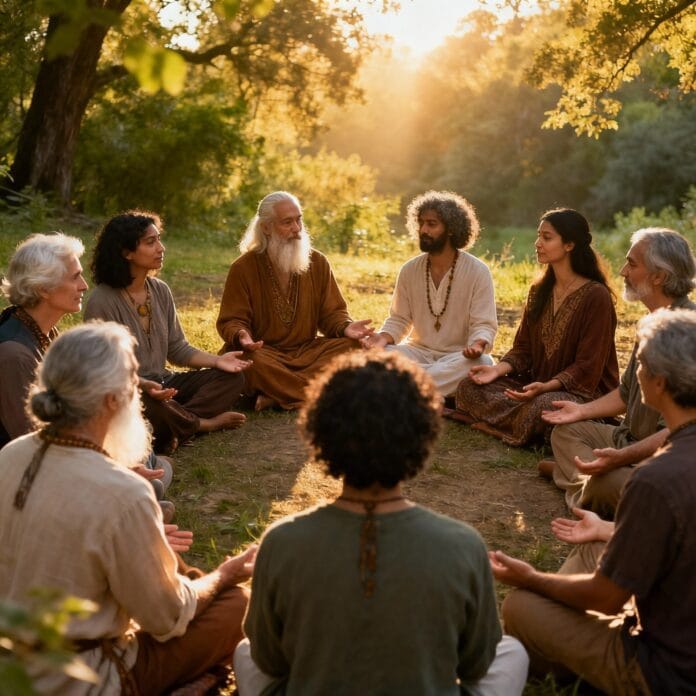
You've experienced it: you open your Bible, come across a passage that seems to be written in a foreign language, and close the book in frustration. This feeling of encountering an invisible wall when faced with sacred texts affects millions of believers worldwide. But imagine if those same obscure passages suddenly became windows onto profound spiritual truths.
The revelation you are about to discover could transform your relationship with Scripture forever. For behind every difficult biblical passage lies a wealth waiting to be unveiled, not through complex academic methods, but through community and intercultural approaches that bring ancient texts to life.
Universal frustration with sacred texts
Every Bible reader has experienced that discouraging moment when the words seem to dance across the page, revealing no meaning. Endless genealogies, detailed ritual laws, cryptic prophecies—all these barriers can transform spiritual reading into an obstacle course. This difficulty is neither a lack of faith nor a failure to understand on your part.
The Bible was written in cultural, historical, and linguistic contexts radically different from our own. The biblical authors addressed their contemporaries with references, metaphors, and cultural codes that were familiar to them. When we approach these texts with our modern, Western frameworks, we often miss essential dimensions of the message.
This reality explains why so many sincere believers sometimes feel disconnected from the Scriptures. But this disconnect is not inevitable. Rather, it represents an invitation to discover new approaches to reading that can transform these obstacles into gateways to a richer and more vibrant understanding.
The community reading revolution
One of the most transformative approaches to deciphering complex biblical passages has its roots in Latin American communities, where liberation theology developed a revolutionary method: interpretation from lived experience.
This community-based approach is based on a simple but powerful principle: Biblical texts come to life when they encounter real human experience. Rather than starting with historical or linguistic analysis, this method first invites participants to share their life situations, challenges, hopes, and struggles.
How does community reading work?
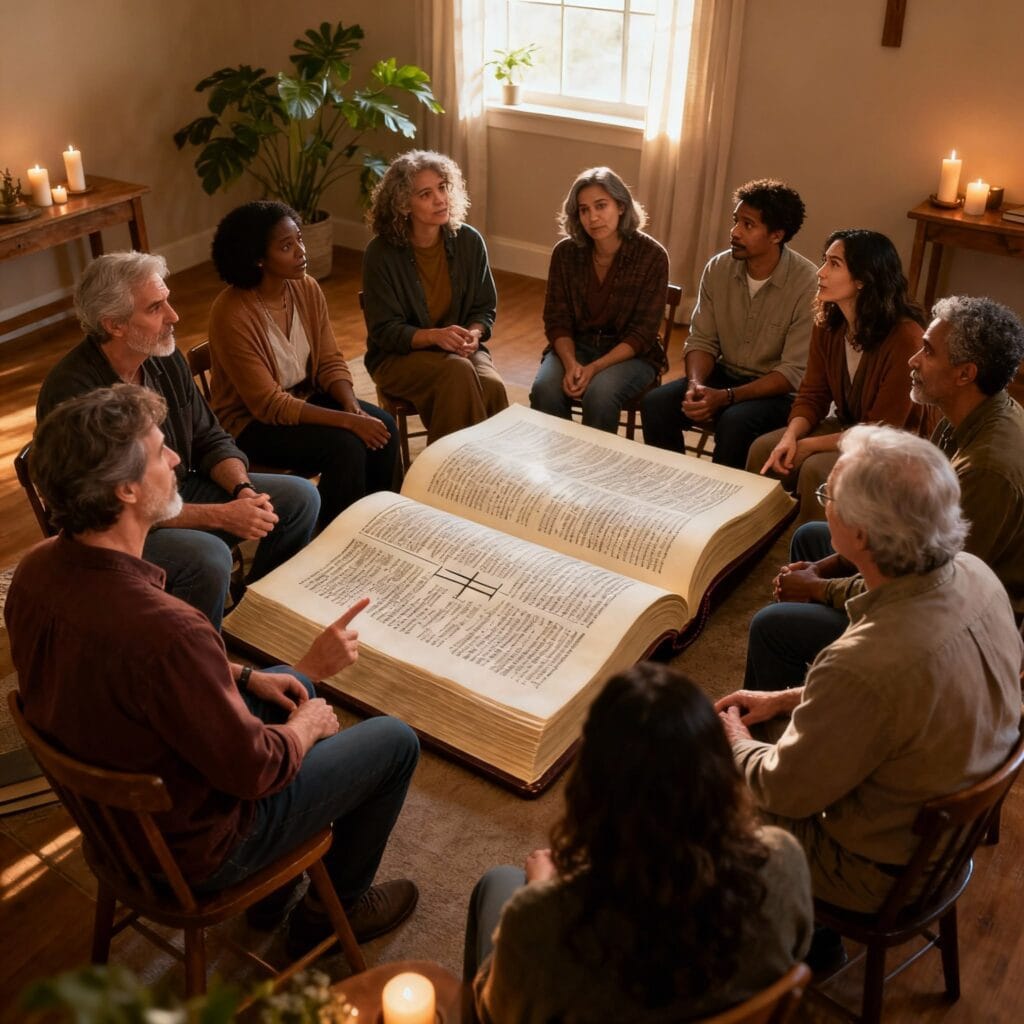
Imagine a group of people gathering around a challenging biblical passage, such as the parable of the workers in the eleventh hour. Instead of beginning with traditional exegesis, each participant first shares their own experience of work, injustice, generosity, or jealousy. These personal accounts create fertile ground in which the seeds of the biblical text can germinate.
This approach often reveals dimensions of the text that individual or purely academic interpretation fails to capture. Group members discover that their diverse experiences illuminate different aspects of the passage, creating a multifaceted and rich understanding.
The beauty of this method lies in its ability to make sense of even the most enigmatic passages. The ritual laws of the Old Testament, for example, take on new meaning when read through the lens of current community concerns regarding the social justice, the protection of the most vulnerable or the organization of collective life.
The feminine perspective: revealing the invisible
Another transformative key to unlocking difficult biblical passages lies in integrating female perspectives that have long been marginalized in traditional interpretation. This approach does not distort the text, but rather restores often-neglected relational and communal dimensions.
Women generally bring to biblical reading a particular attention to relationships, emotions, and interpersonal dynamics. This sensitivity reveals layers of meaning in passages that may at first glance appear purely factual or ritualistic.
Rediscovering stories through relationships
Consider the stories in the Old Testament that appear to focus on political or military events. A careful reading of the relational dimensions frequently reveals profound human dramas and questions about... loyalty, betrayal, forgiveness and reconciliation. These universal themes create bridges between ancient and contemporary experiences.
This female perspective also excels at identifying secondary characters in biblical narratives, generally women whose stories contain powerful teachings about resilience, faith, and transformative action. These figures, long overlooked, become sources of inspiration and understanding for contemporary challenges.
The feminine approach also reveals how many biblical passages use domestic, familial or bodily metaphors that traditional masculine interpretation has often spiritualized to the point of emptying them of their original evocative power.
Intercultural interpretation: broadening horizons
The third revolutionary approach to understanding complex biblical passages involves integrating intercultural perspectives that reveal meanings rooted in specific cultural contexts. This method recognizes that the Bible itself is an intercultural book, born from the encounter between different civilizations and traditions.
Non-Western cultures often provide striking insights into passages that European tradition has frozen into limited interpretations. African, Asian, or Oceanian communities sometimes possess cultural frameworks closer to those of biblical authors than our contemporary Western societies.
The richness of diverse cultural perspectives
Cultures with an oral tradition, for example, intuitively understand the narrative structure and mnemonic techniques of biblical texts. They naturally grasp the importance of repetitions, parallelisms, and formulas that may seem redundant to our minds accustomed to written texts.
Community societies illuminate the collective dimensions of many biblical teachings that Western individualism tends to privatize. They reveal how concepts like salvation, responsibility, and blessing possess essential communal dimensions for their full understanding.
This intercultural approach also transforms our understanding of parables and agricultural or pastoral metaphors that constitute an important part of biblical teachings. Communities that still live in direct contact with these realities reveal nuances of meaning that our urban societies struggle to grasp.
Transformation by the global community
These three approaches – community-based, women's-based, and intercultural – converge on a fundamental discovery: Understanding difficult biblical passages does not require individual expertise, but rather a collective and diverse intelligence. This revelation transforms our relationship with Scripture and creates a new sense of belonging to a global community of spiritual seekers.
This community transcends geographical, cultural, and religious boundaries. It brings together all those willing to step outside their hermeneutical comfort zones to embrace new perspectives. Within this dynamic, your own difficulties with biblical texts cease to be personal obstacles and become valuable contributions to community dialogue.
Building bridges between experiences
When you share your questions about an obscure biblical passage, you offer the community a unique perspective shaped by your particular experience. Your perplexity becomes a gateway to other perspectives that can illuminate aspects of the text that have remained in the shadows.
This community dynamic creates a virtuous circle where every sincere question enriches collective understanding. Passages that once seemed impenetrable become meeting places where deep spiritual connections are forged between people from all walks of life.
The beauty of this approach lies in its ability to make each reader an active contributor to collective spiritual intelligence, rather than a passive consumer of pre-established interpretations.
Moving from frustration to wonder
The path from frustration with difficult biblical passages to wonder at their hidden richness is not magical, but it is accessible. It simply requires a paradigm shift: abandoning the illusion of solitary understanding and embracing the richness of communal and intercultural dialogue.
This transformation begins with a simple act of faith: accepting that your lack of understanding is not a failure, but an invitation. An invitation to join this global community of spiritual seekers who discover day after day the hidden treasures of Scripture through their exchanges and diverse perspectives.
The first steps towards discovery
Your journey of rediscovery can begin immediately. Choose a biblical passage that has always troubled you and approach it with curiosity rather than frustration. Ask yourself what experiences in your life might shed light on this text, what questions it raises about human relationships, what different cultural perspectives might illuminate it.
Next, share these reflections with others. Seek out communities, physical or virtual, where this approach to community and intercultural reading is valued. Listen to how others approach the same passages from their own experiences and traditions.
Gradually, you will discover that your relationship with Scripture is transformed. Obscure passages become invitations to discovery, difficult texts opportunities for encounter, and questions without immediate answers open doors to the infinity of spiritual wisdom.
Your invitation to community discovery
This transformation of your biblical experience should not remain an individual project. It takes on its full dimension through sharing and exchange with a community of spiritual seekers who share the same thirst for an authentic understanding of the sacred texts.
You are now part of this global community that refuses to leave difficult biblical passages in the dark. Your unique experience, your specific questions, and your personal discoveries are valuable contributions to this ever-evolving collective intelligence.
The time has come to transform your past frustration into present wonder, and your personal understanding into shared wealth. The biblical passages you never understood are now waiting to be explored with new eyes, in the living dynamic of an engaged spiritual community.
Join this adventure of community discovery now. Share the biblical passage that poses the most challenge, exchange ideas on your approaches to reading it, and discover the perspectives of scholars from around the world. Your journey of biblical understanding has just taken on a new dimension, enriched by the infinite promise of intercultural and community dialogue.
Ultimately, those biblical passages you never understood until now are just waiting to reveal their hidden treasures. All you need to do is accept that you no longer have to search alone, but rather join this global community of spiritual explorers who transform every question into an opportunity for collective growth.