












Reading from the second book of Samuel
In those days, all the tribes of Israel came to David at Hebron and said to him, «See! We are your own flesh and blood. In the past, when Saul reigned over us, you led Israel into battle and brought them back, and the Lord said to you, «You will be the shepherd of my people Israel, you will be the ruler of Israel.»»
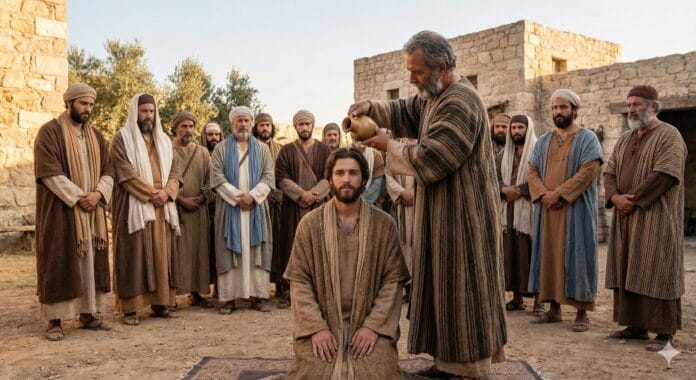
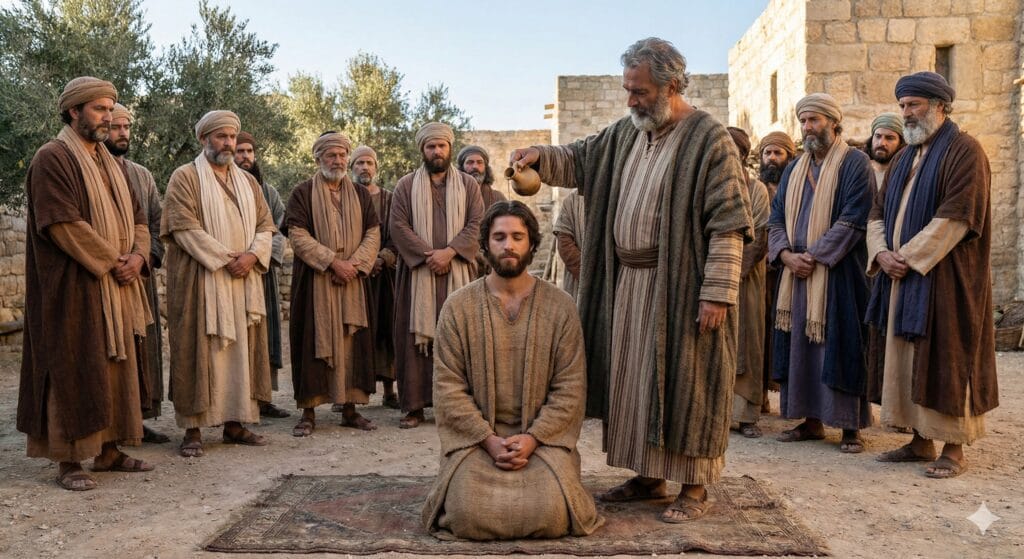
So all the elders of Israel came to the king at Hebron. King David made a covenant with them at Hebron before the Lord. They anointed David king over Israel.
Recognizing the Chosen One: David's Anointing and the Promise of Unity for Today
Anchoring oneself in the covenant: understanding the dynasty of David in Hebron as a promise of fraternal cohesion and inner renewal, through biblical history and Catholic tradition.
In the turmoil of societies searching for their bearings, the story of David's anointing by the tribes of Israel in Hebron stands out as a foundational fresco where faith and brotherhood take flesh. In the Church and the life of the believer, This narrative invites us to reread the alliance as a communal act and a call for unity carried by loyalty and the divine promise. Here is a lively and theological journey through this key passage, to bring out all its spiritual and practical force, illuminated by tradition.
- The context and scope of the story of David's anointing.
- An analysis of the theological and existential implications of the passage.
- A thematic exploration of alliance, vocation, and unity.
- The resonances in the Christian and liturgical tradition.
- Concrete suggestions for praying, meditating and embodying the message on a daily basis.
The Roots of an Alliance: David in Hebron
The account of David's anointing, as expressed in 2 Samuel 5:1-3, marks a major turning point in biblical history and the spirituality of Israel. Situated after the death of Saul, this event ushers in a resolution of internal conflicts and the establishment of a legitimate and stable monarchy. The city of Hebron thus takes on considerable historical significance: an ancient patriarchal city and the burial place of Abraham, it embodies the continuity of the divine promise with its deep roots.
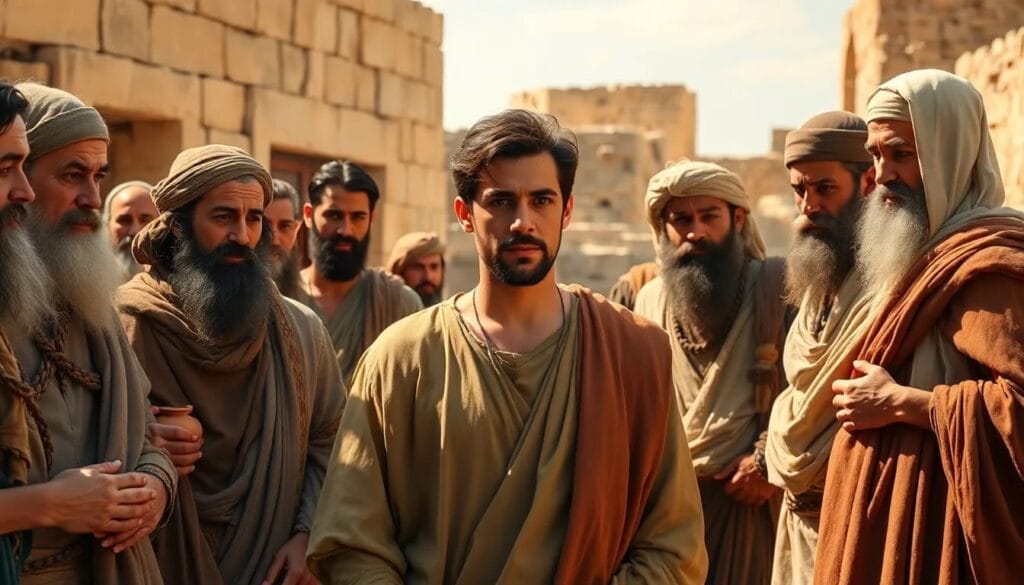
The twelve tribes presented themselves to David, solemnly declaring their kinship: "We are your bones and your flesh." This formula was not insignificant: it bound the new king to the very flesh of Israel, echoing the language of creation and of brotherhood visceral. It is not an adventurer or an autocrat that is chosen, but one who has already led the people on the paths of struggle and consolation. Their act of loyalty is rooted in their shared memory.
The text emphasizes the initiative of the tribes, the recognition of the facts (David as military leader and guide), and then the divine word: «You shall be the shepherd of Israel.» The image of the shepherd transposes the political figure into the delicate realm of care, closeness, and service to life. It is finally before God that the covenant is concluded, renewing the practice of the patriarchal covenant, this time extended to the kingdom. The royal anointing, a liturgical and sacred gesture, marks the election and consecration of the king, a visible sign of a mission transmitted by God.
The fundamental significance of the passage lies in the restored unity of the people, the regained stability, and the mediation of the king as a relay of loyalty divine and social solidarity. This alliance is not a simple political transfer: it establishes a collective vocation and opens a new era in the history of Israel.
Choose and serve
David's anointing is not limited to the appointment of a leader: it embodies a principle of discernment, of fulfilled expectation, and of inner renewal. Throughout his life, David experiences wars, exiles, and contradictions, but it is here, in the embrace of fraternal trust and of loyalty divine, that her mission takes on its full meaning.
The central idea of the text revolves around the convergence of divine will and the people's consent. The Lord's word resounds: "You will be the shepherd," but it is realized through the active rallying of the tribes. The paradox—that sovereignty grants its favor to the one whose weakness consents to the call—is a recurring theme in the biblical narrative. It is not strength, nor birth, but the recognition of proven service and faithfulness that legitimizes the newly chosen one.
This passage leads us to reconsider our vocation: called to be received and recognized, but also to unfold within the community alliance. The rite of anointing, far from being mere adornment, signifies the gift of the Spirit and the commitment to a life of service. It paves the way for humble leadership, capable of guiding without dominating, of building without excluding.
On an existential level, David's anointing highlights the necessity of discernment in history as in every life. It invites us to recognize, in events and trials, loyalty patience of God and the active responsibility of the community. Theological scope: the covenant is inscribed as a dynamic process where grace precedes institution, and where legitimacy is rooted in the trust received and given.
The alliance, the foundation of relational justice
At the heart of the narrative lies the concept of covenant, a key word and the backbone of the Bible. In Hebron, the covenant first and foremost signifies the establishment of justice based on memory and reconciliation. By recognizing David, the tribes end their division and choose to build a shared future. Here, the covenant implies reciprocity, forgiveness of past conflicts, and collective recommitment.
In the biblical tradition, the covenant between God and his people is never one-sided. It presupposes a mature response, a conversion of heart («come, be our shepherd»). Applied to community life (church, families, societies), this dimension encourages us to move beyond isolation and resolutely dedicate ourselves to the common good. The image of the shepherd-prince embodies this authority that accompanies, protects, and fosters growth, rather than one that exercises domination or passive expectation.
In times of disunity, the dynamics of alliance invite us to become agents of reconciliation, to choose shared memory over resentment or fragmentation. True relational justice is based on restored memory: it does not deny the wounds, but inscribes them within a project renewed by mutual listening and the shared calling received together.
The anointing, a sign of a vocation focused on service
The anointing, central to the scene in Hebron, carries a profound theological significance. It is first and foremost an act of consecration: David receives the mission of being king, not as a privilege but as a service. This service is inseparable from the people, from the well-being of the most vulnerable to peace of the whole.
The anointing brings about a transformation: the messiah becomes "Christos," the anointed one, the figure of the awaited. From a Christian perspective, this gesture announces and prepares the coming of Christ, the Anointed One par excellence, whose kingship will first and foremost be that of the«humility, selflessness, of mercy. Through baptism, Christians also participate in this spiritual anointing which sends them to bear witness, forgive, and serve.
Vocation, according to the spirit of David's anointing, is therefore an open vocation: it rejects the logic of castes, invites each person to discern their mission within the gift received, and to respond with concrete availability. To be anointed is to make oneself available to the Word and to the community, in a balance of listening and boldness, of fidelity and creativity.
Unity, the fruit of recognition and the pillar of ecclesial renewal
Unity cannot be decreed; it must be built. In Hebron, it arose from the twofold movement of inner reconciliation and mutual recognition. Even today, the Church and societies experience periods of division, rupture, and temptations toward fragmentation. The example of David's anointing offers a spiritual and ethical roadmap for building communion: listening to wounds, recognizing gifts, and remembering the shared journey.
Within the dynamics of the Church, this unity remains a challenge that must be renewed. It involves welcoming differences without absolutizing them, and making choices together. loyalty to the promise, and to open oneself to the unexpected grace. The requirement is not uniformity, but communion in diversity, like the assembly of tribes around the shepherd-king.
Applied to daily life, unity becomes an art of relationship, a daily practice of listening, patience, and courage. A concern for unity invites us to move beyond hasty judgments, to make gestures of peace and reconciliation, and to choose to walk together despite our differences.
Following in the footsteps of witnesses
The episode of David's anointing has profoundly influenced Christian thought and prayer. From the Church Fathers onward, the figure of David has been seen as a key element in the mystery of Christ: the "shepherd of Israel" foreshadowing the Good Shepherd who will lay down his life for his sheep. Patristic authors such as Augustine, Gregory of Nyssa, and Ambrose saw in Davidic kingship a prefiguration of the spiritual kingship of the Messiah.
In the Middle Ages, the liturgy commemorated David as a model of penitence, a humble and prayerful leader, invited to reread his trials in the light of mercy divine. Hymns and psalms quote him abundantly, recalling the universal resonance of his experience. Catholic tradition sees this anointing as a sacramental act: at each decisive stage (baptism, confirmation, ordination), the Church prays for the outpouring of the Spirit for a communal mission.
Even today, contemporary spirituality reinterprets David's call in terms of discernment, creative boldness, and personal responsibility. Great spiritual figures emphasize the community dimension of every vocation, on the necessity of mutual listening and dialogue in building unity. Thus, the "Davidic dynasty" is not merely a vestige of the past: it inspires every approach to commitment, service, and collective fidelity in faith.
Walking in the light of the anointing
- Reread in prayer one's past commitments and responsibilities: discern how the Word of God has guided and strengthened major choices.
- Meditating on the figure of the shepherd: adopting attitudes of kindness, attention to others, and active patience in one's surroundings.
- Take the time for a self-examination on unity: identify a person or group to reconcile, to listen to without reservation.
- Formulate a prayer for your leaders, religious or civil: ask for the grace of selfless service and concern for the common good.
- Offering a concrete act of solidarity: supporting, consoling or encouraging a loved one in difficulty as a gesture of fraternity.
- Take a passage from the Psalms of David as a basis for daily praise: let gratitude resonate for victories and trials overcome.
- To name before God a wound of division experienced: to ask for the grace of peace inner strength and courage to rebuild.
To regain momentum within the alliance
David's anointing at Hebron continues to shine through its invitation to make loyalty a collective work and a vocation, a response of humble commitment. This biblical passage offers us an inspiring image of brotherhood true, that which is rooted in the collective memory and assumes the task of renewal. David is not just a chosen king, he embodies the people gathered together, the promise of a refounded unity, the trace of a hope offered to each one.
Implementing this message today requires gestures that are sometimes modest, courageous decisions, and the will to connect what sometimes seems to scatter everything. It is in loyalty To the alliances, both small and large, may God's grace weave the fabric of unity and prepare the way for the Kingdom. Dare to believe that every life, like David's, can prepare peace, To heal the broken bones and pass on the blessing. That is the challenge, but also joy, of a people gathered in the covenant.
To be practiced daily
- Reread a psalm of David each week in prayerful union with the’Universal Church.
- Write a letter or message of reconciliation to someone with whom the bond has weakened.
- Meditate for ten minutes on the concept of "shepherd", symbolic of the servant-leader, to draw inspiration from it during the week.
- Organize or join a concrete solidarity action within the parish or neighborhood.
- Make a discreet but regular commitment to the service of the common good (example: sharing, listening, silently supporting).
- Learn about the history of Israel and the Davidic monarchy to nourish your prayer and biblical culture.
- Offering a prayer intention each Sunday for the unity of the Church and peace social.
References
- THE Second Book of Samuel (chapters 5-7) – Catholic Bible.
- The Psalms attributed to David – Liturgy of the Hours.
- Saint Augustine, Sermons on the Psalms.
- Gregory of Nyssa, Homilies on David.
- Ambrose of Milan, On the Sacrament of Anointing.
- Catechism of the Catholic Church, art. 436-440.
- Roman liturgy, Mass of Christ the King and readings for ordinary time.
- Papal encyclicals on unity and service to the common good.