











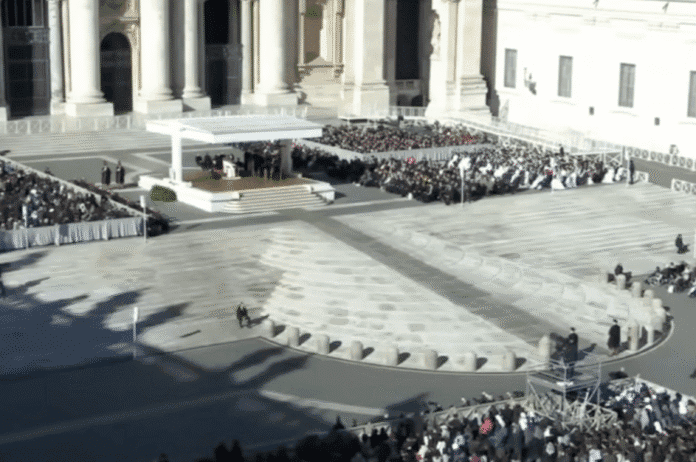
On Wednesday, November 19, 2025, in Saint-Pierre Square, the Pope Leo XIV invited the faithful on a profound spiritual journey, blending Easter spirituality And integral ecology. In a world in the midst of an ecological and spiritual crisis, the Sovereign Pontiff has launched a vibrant appeal to reconnect with the original mission entrusted to humanity: to cultivate and keep the garden of God, our Creation.
The message of Mary Magdalene, guardian of hope
THE Pope He began by rereading the Gospel passage where Mary Magdalene, coming to the tomb, does not at first recognize the risen Jesus, but believes she sees the "guardian of the garden." This figure symbolizes for him the eternal human mission. Indeed, Christ, through his death and resurrection, accomplished this original task entrusted to humankind from the beginning. Genesis : to protect, cultivate, and make Creation flourish.
This image is reassuring and enlightening: the garden is not lost, it is there to be rediscovered—a garden where light and life triumph over darkness, reminding us that current difficulties are not an end, but a call to renewed hope. Like the Pope He emphasized that the tears shed in the face of challenges are a "gift" that purifies and opens the heart to this hope.
Easter spirituality, a foundation for ecology
The relationship between Easter faith and ecological responsibility is at the heart of the message of Leo XIV. Based on the encyclical Laudato si'’ Like his predecessor Francis, he insists on the need for a contemplative view of nature. Without this contemplation, humankind ceases to be a benevolent guardian and becomes destructive.
THE Pope It calls for a profound conversion—an ecological conversion that is not a mere one-off gesture, but a true lifestyle, an active spirituality. This inner transformation is grounded in the death and resurrection of Christ, which give meaning to a lasting and compassionate commitment to protecting "Creation and people threatened by the lust of wolves.".
From the Valley of Tears to the New Jerusalem
THE Pope invites an inner transformation, similar to that of Mary Magdalene on Easter morning. This "transformation" is a conversion within a conversion, a passage from the valley of tears to the new Jerusalem, a symbol of a world renewed by love and justice.
On this path, each believer becomes an actor of solidarity, resonating with the cry of the poor and the earth. The Pope nurtures hope through the commitment of young people and people of goodwill who seek a new harmony, a more direct relationship with Creation, capable of overcoming divisions and serious ecological and social rifts.
In conclusion, Leo XIV invokes the Holy Spirit to give us the grace to hear the voices of those who have no voice — a call to open our eyes and hearts to this garden, or Paradise, to welcome and cultivate, each according to their unique task.
This powerful message reminds us that facing current ecological and human challenges requires a ecological conversion deep, rooted in Christian faith and contemplation. It is by rediscovering this divine garden that humanity can hope to meet today's challenges together and build a harmonious and hopeful future.