









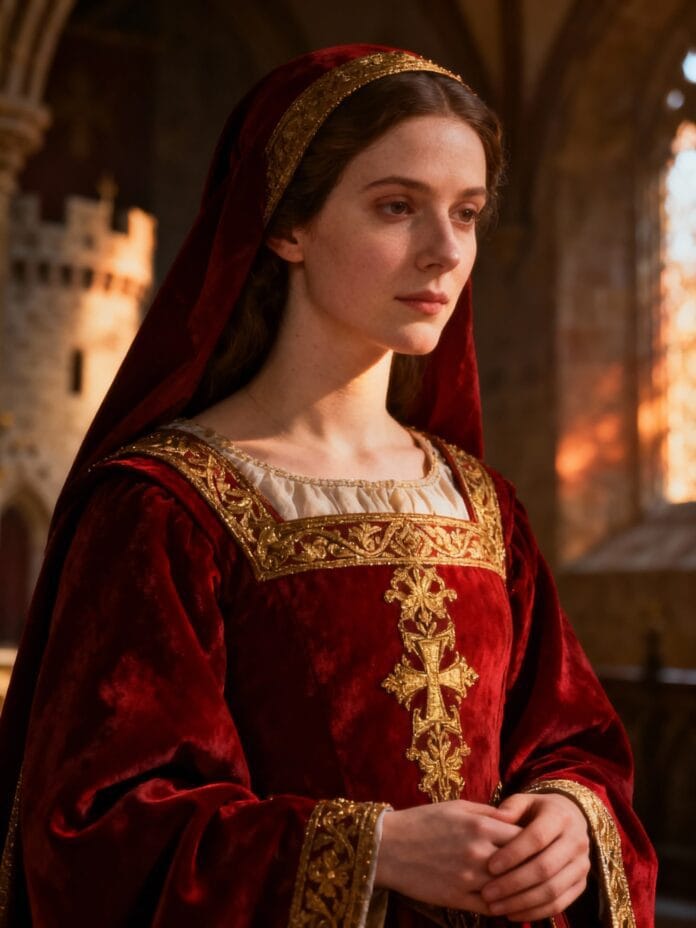
Born in Hungary, Saint Margaret became Queen of Scotland through her marriage to Malcolm III. Celebrated on November 16th, she exemplifies a sovereign who united the good of the kingdom and service to the Church in the 11th century. A mother of eight, she led a life where intense prayer and fasting did not preclude astute political action. She left her mark on her era through her profound generosity towards the poor and through her zeal to reform the Scottish Church, introducing the Roman liturgy. She died in Edinburgh in 1093, a model wife, mother and queen.
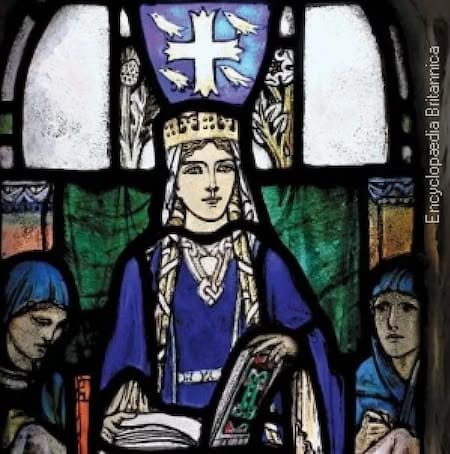
Place charity At the heart of power, a nation is transformed. Saint Margaret of Scotland, queen in the 11th century, demonstrates this truth. Arriving in Scotland as a political refugee fleeing the Norman invasion, she married King Malcolm III. Far from passively accepting her fate, she became the heart and soul of the court. She proved that it is possible to influence a kingdom not through force, but through piety and justice. Her life challenges our ability to transform our responsibilities, whether familial or professional, into concrete and Gospel-inspired service.
An exiled princess, a reforming queen
Margaret was born in Hungary around 1045. She was a princess at the crossroads of worlds. Her father was Edward the Exiled, an Anglo-Saxon prince, and her mother was of Hungarian royalty. She spent her youth in Hungary before her family was summoned back to England by Edward the Confessor. But the Norman invasion of 1066 changed everything. Fleeing William the Conqueror, Margaret, her mother, and her siblings embarked for the continent.
A storm, which hagiography views as providential, cast their ship ashore on the coast of Scotland. King Malcolm III "Canmore," a rugged but pious warrior, welcomed them. A widower from his first marriage, he was captivated by Margaret's piety and intelligence. They married around 1070 at Dunfermline. This marriage united a king of a warlike nature with a learned and deeply devoted queen.
Margaret became a trusted advisor to her husband. The couple had eight children, including three future kings of Scotland (Edgar, Alexander I, and David I) and one queen of England (Matilda, wife of Henry I). Margaret used her influence to bring about a profound reform of the Church of Scotland, which was still influenced by Celtic rites. She convened synods to align local practices with Roman Catholic custom: observance of Sunday rest, the beginning of Lent on Ash Wednesday, and Easter communion. She founded monasteries, including Dunfermline Abbey.
Her personal piety is intense. She spends long hours in prayer, makes liturgical vestments, and devotes herself personally to service to the poor, washing their feet and distributing alms. King Malcolm, full of admiration, sometimes assisted her in this service. Her end was tragic. On November 13, 1093, her husband Malcolm III and their eldest son Edward were killed in a battle against the Normans at Alnwick. Upon learning the news, Margaret, already ill, died three days later, on November 16, 1093, at Edinburgh Castle. She was canonized in 1250.
The Pearl and the King
The undeniable historical fact is Margaret's profound influence on Scottish culture and liturgy. Her efforts to introduce Roman norms are well documented.
The image of Margaret is passed down to us through a biography (Vita) written by her confessor, Turgot, at the request of her daughter Mathilde. This text, intended for edification, idealizes the queen. It recounts how her influence softened King Malcolm III, an illiterate warrior. Legend has it that the king, unable to read, venerated his wife's prayer books. He had them covered in gold and precious stones and kissed them reverently, moved by a devotion he understood only with his heart.
This symbol of the book, revered by the warrior king, illustrates Margaret's mission. She is the one who brings culture (the book) and Roman faith (prayer) to a still harsh kingdom. She embodies the strength of piety and of gentleness to "civilize" temporal power, not through coercion, but through love and example.
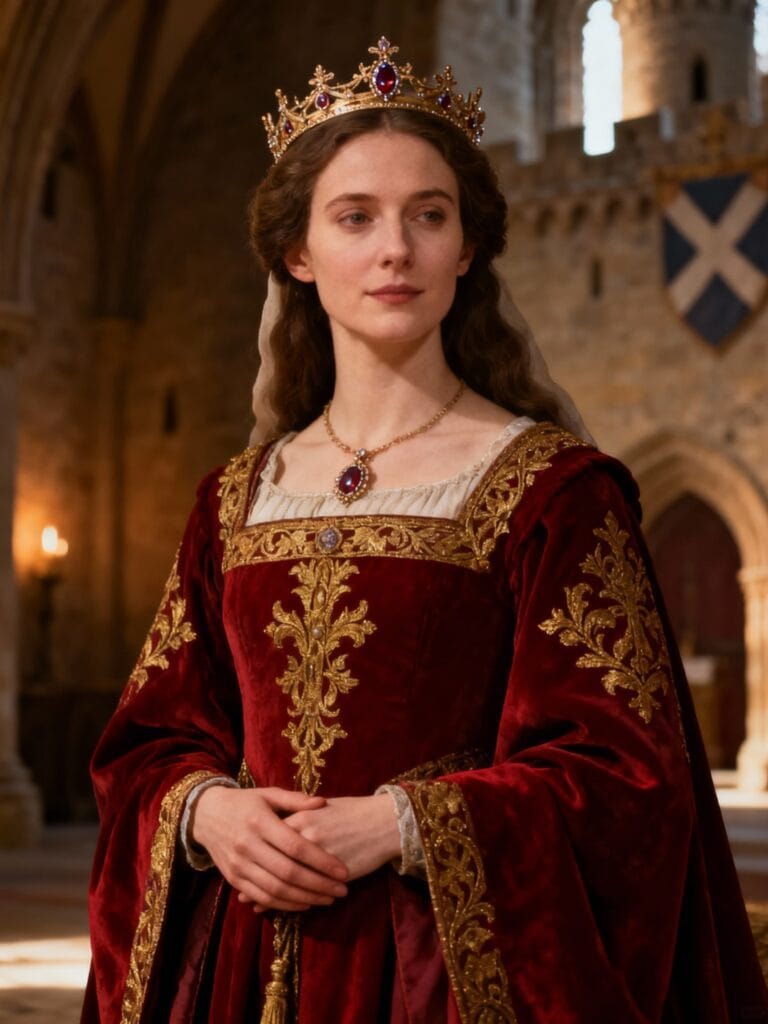
Spiritual message
Marguerite shows us that holiness is lived in "doing." Her faith was not an escape from the world, but a commitment. In the world. As queen, she managed the affairs of the kingdom. As a mother, she raised eight children. As a wife, she guided her husband. As a Christian, she reformed the Church and served the poor. She embodies a total faith, which does not separate the spiritual from the temporal. The Gospel asks us to be "the salt of the earth." Margaret was the salt of Scotland.
Her message is a call for consistency. She quotes: «"The hand of the poor is the guarantee of royal treasures. This safe, even the most cunning burglars could not break into."» She believed that the true wealth of a nation, or of a life, is measured by its capacity to protect the most vulnerable. Today, she asks us: "Where are your 'treasures'? Are they protected by the service of your brothers?" Her life is a concrete example of charity which orders everything else, from private prayer to public action.
Prayer
Saint Margaret of Scotland, you who knew how to combine the duties of queen, wife, and mother with ardent faith, look upon us. Ask the Lord for the grace of consistency, so that our actions may reflect our words. Grant us the strength to serve those entrusted to our care, in our families and our work, with justice and tenderness. Inspire in us your charity, so that we may see in the poorest the "treasurers of God." Teach us to sanctify our daily lives, to reform what needs reforming, so that all may be turned toward Christ, our King. Amen.
To live
- Giving 15 minutes of your time or targeted material assistance to a person in need, treating them as a "treasure".
- Making a decision (family or professional) by analyzing it from the perspective of justice and charity, before that of profit.
- Spend 10 minutes reading the Gospel of the day (or Matthew 25:31-40) while asking yourself: "How can I serve Christ in others today?"«
Memory and places
The memory of Saint Margaret is primarily linked to...’Scotland. The abbey of Dunfermline, which she founded, was the site of her burial and that of her husband, Malcolm III. It became a major center of pilgrimage. Although the tombs were desecrated during the Reformation, the small Romanesque chapel that bears her name (St Margaret's Chapel), located at the top of the Edinburgh Castle, It is considered the oldest building in the city. It was there that she prayed and where she died.
His relics had a European destiny. Transferred by Philip II of Spain to the palace of the’Escurial near Madrid, they were scattered. His skull (the "head") was then given to Married Stuart. During the French Revolution, an English Benedictine monk saved the relic. It was eventually entrusted to the Jesuits of Douai, in northern France. Today, the skull of Saint Margaret is kept in the Saint-Pierre Collegiate Church of Douai.
Liturgy
- Readings/themes: Wisdom guiding leaders (Book of Wisdom) ; the parable of the grand prize pearl (Matthew 13:45-46); charity in action (Matthew 25).
- Party : Optional memorial on November 16 (date of his death, dies natalisCelebrated on June 10th or 16th in Scotland before the calendar reform.