











Have you ever wondered why we wait? Not just waiting in line or hoping for a promotion, but really to wait for something that changes everything. Advent Christian invites us to rediscover this forgotten art: transforming waiting into an inner journey, vague hope into concrete expectation.
In a world saturated with promises of instant happiness, Advent It presents a paradox: accepting that we cannot control everything in order to open ourselves to the unexpected. This liturgical season reconnects us to an age-old wisdom passed down by the prophets, while simultaneously unmasking the false hopes that exhaust us.
The prophets of Advent: a hope rooted in reality
Messengers for difficult times
Isaiah, Micah, Jeremiah, John the Baptist: these names resonate in our celebrations of Advent. But who were these prophets really? Not fortune tellers or dream peddlers. They spoke to peoples tested, scattered, discouraged. Their context? Exile, invasion, the destruction of the Temple, the loss of national identity.
Take Isaiah. He prophesies while Assyria threatens Jerusalem. His people live in constant fear. Micah observes the social injustices tearing Israel apart. Jeremiah announces the fall of Jerusalem to people who refuse to listen. John the Baptist preaches in a desert, both literal and spiritual, to a generation under Roman occupation.
None of them offered abstract hope or magical thinking. Their message? One presence It was coming. A Messiah. A restoration. But not as anyone imagined.
John the Baptist: prophet of doom or of hope?
Jean-Baptiste is fascinating. Dressed in camel hair, eating grasshoppers, shouting "« Repent "!" in the desert. Friendly? Not really. Prophet of doom? It's tempting to think so.
However, look more closely. His world was going collapse. Jerusalem would be invaded by the Romans in 70 AD. The Temple would be destroyed. Was he wrong? No. He was right.
But here's the key: this destruction would generate the Christian world, destined for a bright future. Jean announced an end to prepare for a beginning. Like a surgeon who must cut in order to heal.
His enchanted world was not that of a God who solves all our problems like a cosmic handyman. It was that of a God who transforms our ruins into foundations.
The Divine Promise: concrete, not abstract
The prophets weren't peddling easy positivism. Isaiah speaks of a "shoot that springs from the stump of Jesse"—an image of rebirth after the cutting, not an absence of suffering. He announces "light upon the people who walked in darkness"—first acknowledging the darkness.
Micah prophesies that Bethlehem, "Too small among the clans of Judah," the leader of Israel will emerge. Smallness becomes a source of greatness.
This Prophetic word It is called the Divine Promise. Not a pious wish, but a commitment from God in real history. The prophets called for a conversion of the gaze : to see the seeds of salvation where all seems lost.
Imagine. You are in exile in Babylon. Your country is destroyed, your temple in ruins. And Jeremiah writes to you: «I have plans for your prosperity and not for disaster, plans to give you hope and a future.»Jr 29, 11) Madness? No. Faith.
The mirages of modern hope
Progress: The Disillusioned Prophet of the Enlightenment
Much hope was placed in Progress. Enlightenment philosophers proclaimed that science and reason would eradicate poverty, end conflicts, and eliminate inequalities. The future would inevitably be better than the past.
This belief has structured two centuries of Western thought. But look around you. Have wars disappeared? Poverty Injustices? The 20th century, the century of maximum scientific progress, was also the century of totalitarianism, the Holocaust, genocides, and world wars.
Technological progress has not produced the promised moral progress. We have incredible smartphones and abysmal loneliness. We can communicate instantly with the entire world, yet we no longer know how to talk to our next-door neighbor.
Science and technology: the new saviors?
Today, that hope has been recycled. Science and technology, They say they will manage to control and improve everything. liberalism The economy promises prosperity for all through the free market. transhumanism It announces the end of illness, of aging, perhaps of death itself.
Let's be clear: science and technology They are marvels. They have eliminated diseases, made life easier, and broadened our horizons. But can they answer the essential questions? What is a good life? How can we truly love? What should we do with our mortality?
A concrete example: you can have the best artificial intelligence to optimize your schedule, but it won't tell you if you're spending your time with the right people.
Happiness as the absence of suffering
It is an old idea that happiness is tranquility and consists of no longer suffering. stoicism Ancient philosophy taught ataraxia – the absence of disturbance. Buddhism aims for nirvana – the extinction of desire and therefore of suffering.
Noble? Yes. Complete? Debatable. This vision turns life into a problem to be solved, existence into a pain to be numbed. But joy Christianity is not the absence of suffering. It can coexist with it.
Think of a mother giving birth. The pain is real, intense. Yet, when she holds her child, she often says, "I would do it all again." Why? Because some suffering is fertile. They create, transform, and bring forth something new.
The trap of materialism
Popular wisdom holds that material possessions bring pleasure and peace. More money = more happiness. More possessions = more security. More comfort = more satisfaction.
Really? How many rich people are unhappy? How many celebrities with every possible comfort sink into depression? Suicide affects rich countries as much (sometimes more) than poor countries.
Materialism offers a simple promise: "Buy this, you'll be happy." But it's a promise on credit that's never repaid. There's always a new product, a new desire, a new need.
Romantic love: guaranteed marital happiness?
And romantic love is supposedly the only thing that guarantees marital happiness. This modern belief is powerful. Find your "soulmate," experience love at first sight, and you'll live happily ever after.
The result? Impossible expectations. Divorces when the passion fades. A perpetual quest for the "perfect" partner who doesn't exist. True love isn't a permanent state of romantic euphoria. It's a daily choice, a commitment, a patient process of building.
Ask couples who have been married for 50 years. They won't talk about eternal butterflies in their stomach. They'll talk about fidelity in difficult times, repeated forgiveness, and mutual growth.
So, where are the true prophets?
Faced with these false hopes, Psalm 4 poses the right question: «"Who will show us happiness?"» (Psalm 4:6)
The psalmist's answer: only the Lord "raises the light of his face upon us, puts joy in our hearts... and establishes us in safety."«
Not a magic formula. A relationship. Not a possession. A presence. Not something to have. A being.
The art of waiting: transforming waiting into fruitfulness
Redefining hope
What is the true definition of Christian hope? Not a naive optimism, That forced smile that denies the problems. Not a naive positivism that claims "everything will be alright" for no reason.
Hope is the courage and trust in God, Master of history and hearts. It is believing that God is at work even when we see nothing. It is holding on when everything seems to be collapsing.
Let's take a current example. "There weren't many people at the daycare center of Bethlehem "They will be crowds in Jerusalem!" This logic of the Gospel overturns our anxieties.
Are you short of priests in your parish? "There are enough for the small remnant of believers that we are, and there will be new ones for the many believers of tomorrow." Hope does not deny present reality; it reads it with the eyes of God.
Leave behind the false gods
Hope requires renunciation. Let us abandon hope in Man and his prophecies to surrender ourselves to Christ, and renounce false gods.
What false gods? The god of inevitable Progress. The god of Technology Salvific. That of reassuring Materialism. That of saving romantic Love. That of permanent Comfort.
These are not bad things in themselves. But when erected as absolutes, as ultimate sources of meaning, they become idols that disappoint.
Avoid the traps of temptation
Faced with difficulties, several temptations lie in wait:
Paralyzing nostalgia. Some would like to return to the past, indulging in the delights of nostalgia that mask the poison of discouragement. "Things were better before." Really? Or are we idealizing a past that had its own problems?
Nostalgia looks back. Hope looks forward. Nostalgia says, "Let's find what we've lost." Hope says, "Let's welcome what's coming."«
Reactive violence. Like Peter in Gethsemane, who drew his sword and cut off the ear of the high priest's servant, some advocate the violence of the sword. But Jesus put the ear back in place and said to Peter, "Put your sword back in its place."«
Reactive violence stems from fear. Hope stems from faith. Violence seeks to impose. Hope offers solutions.
Self-pitying victimhood. Others play the victim and dream of martyrdom, to move the enemy, but Evil cannot be our legitimacy..
To revel in the role of victim is to give evil a power it does not deserve. Christian hope does not deny the reality of persecution, but it refuses to define it.
Waiting as a fertile space
Waiting is often experienced as a frustration. You are waiting for a medical answer. You are waiting for your child to find their way. You are waiting for a relationship to be repaired. You are waiting to understand the meaning of your life.
Advent offers another way of understanding expectation: a fertile space, a place of transformation, a womb that prepares life.
Think of a planted seed. It waits in the earth. Nothing is visible. But everything is happening. Roots are forming, the stem is preparing, life is organizing itself. The waiting is not empty. It is full of invisible activity.
When we accept that we cannot control everything, a space opens up within us for welcoming the unexpected. That's exactly what he's experiencing. Married At the Annunciation, she does not control. She receives. "I am the servant of the Lord; let it be done to me according to your word."«
To remain open
Hope then becomes the gesture of to remain open, without knowing exactly what will come. No guarantees. No detailed plan. Just trust.
It's about preparing oneself internally to welcome something new, to allow a desire to mature within., not to have, but to be more.
Note the difference:
- Having more = acquiring external things
- To be more = to transform oneself internally
Advent This invites us to the second question. Not "What will I receive at Christmas?" but "Who will I become to welcome Christ?"«
The example of the pregnant woman
A pregnant woman may be busy but not preoccupied, ready to suffer but to give life.
This is a powerful image of hope. A pregnant woman lives in anticipation. She knows that childbirth is approaching. She knows it will be painful. But she is not paralyzed by fear. Why?
Because this suffering has meaning. It leads to life. It is not absurd. It is fruitful.
Likewise, Advent It prepares us for a spiritual "birth." There may be growing pains, sacrifices, dark nights. But all of this prepares us for a birth.
Waiting with Mary and Joseph
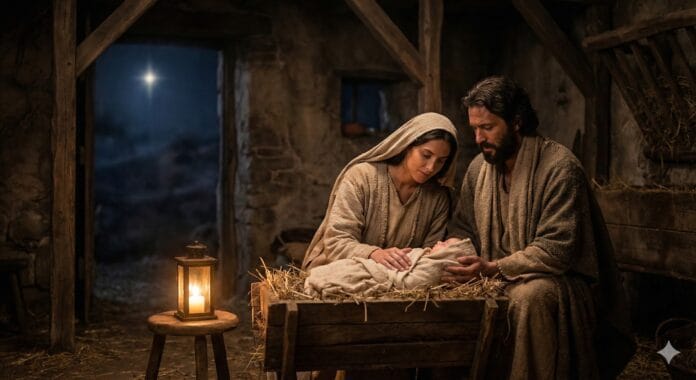
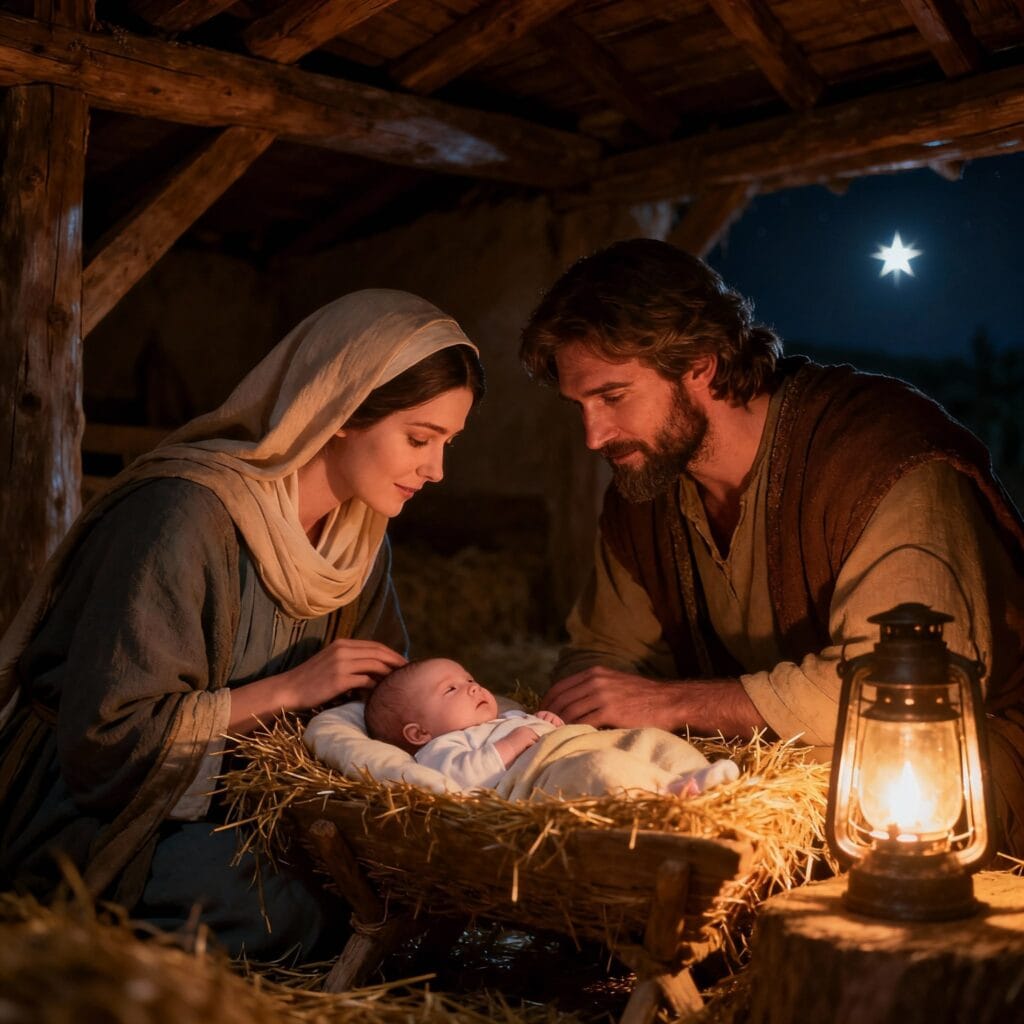
Let's wait with Married and Joseph, this child whose only known qualities are his sex and name, like all parents on earth.
It's wonderful when you think about it. Married Joseph and his wife are in a very ordinary situation in some respects. They are expecting a baby. They know its sex (boy). They know its name (Jesus). But they don't know what it will look like, how it will grow up, or what its personality will be like.
Yet, In the midst of a world that did not know her, they were inhabited by a sacred Promise!
No bright lights in the sky for the people of Nazareth. No public announcements. Just two ordinary people carrying the extraordinary in the secret of their hearts.
Perhaps this is what Christian hope is: to bring the extraordinary into the ordinary. To live inhabited by a Promise that the world does not yet see.
The great prophetic images
Advent offers us powerful prophetic images:
The branch that sprouts. From the cut stump, seemingly dead, a new branch springs forth. Life is not over. It renews itself.
Light upon the people who walked in darkness. Acknowledging the darkness, but announcing the light. Not "let's pretend everything is fine," but "a light is coming.".
Peace messianic to be built. Not a ready-made peace, fallen from the sky. A peace to be built, a common project, a collective commitment.
These images invite a conversion of the gaze To see the seeds of salvation where all seems lost. That is the art of the prophet. That is the art of hope.
A challenge for today
Do you see too many Muslims around you and are you worried? Prophetic twist: "They are here to discover the Christ we will present to them and may well be the new prophets!"«
Not naivety. Hope. Not a denial of real tensions. A vision transformed by faith.
Christian hope does not close its eyes to challenges. It looks at them with the eyes of Christ. It sees opportunities where others see threats. It sees brothers and sisters where others see strangers.
The wait transformed
The art of waiting is to transform waiting into an inner journey. Not to passively endure. Not to frantically fret. But to actively inhabit the time of waiting.
In practical terms, how?
- Embrace the mystery. You don't know everything. That's normal. That's human. It's even necessary so that God has room to act.
- Cultivate desire. Not the lust for ever more. The deep desire to be more like Christ, more loving, more free, more alive.
- Live in the present. Waiting is not an empty parenthesis between "now" and "finally". It is a rich time, a place of growth, a laboratory of faith.
- Remain open. God often comes in unexpected ways. Expect to be surprised. Prepare to welcome the unexpected.
- Trust. Even in the dark. Even when you don't understand. Even when things aren't going the way you wanted.
Advent It is not simply a period of preparation for Christmas, like preparing for a holiday. It is a school of hope, a learning of fruitful waiting, an initiation into the mystery of the divine Promise.
In a world saturated with false hopes – Progress that disappoints, technology that which does not save, materialism that does not soothe, romantic love that is not enough – Advent reconnects us to the true source.
This source is faith in a God who engages in history, who keeps his promises, who brings forth life from death, light from darkness, hope from despair.
The prophets showed it to us. John the Baptist shouted it to us. Married And Joseph embodied it for us. It is now up to us to live this hope, to let it transform our expectation into an inner journey, our frustration into fruitfulness, our fear into confidence.
For here is the secret of Advent It is not we who wait for God. It is God who waits for us to open the door to him. He knocks. He waits. He hopes. He trusts us to welcome him.
So, this Advent, ask yourself this question: what needs to be "given birth" within you? What renewal is germinating in the secret of your heart? What promise do you carry that the world around you cannot yet see?
The waiting is not empty. It is full of a life that is being prepared. Like Married, Let it transform you. Like Joseph, hold fast in doubt. Like the prophets, keep your eyes fixed on the Promise.
Christ is coming. He is already here. He will come again. Between these three comings, Advent teaches us to wait differently: not by counting the days, but by letting the days count us, shape us, prepare us to welcome the Wholly Other into the ordinariness of our lives.
Happy Advent. Enjoy the wait!