






A meeting that is reshaping the lines of Vatican diplomacy in Middle East.
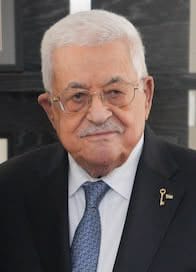
With a calm and measured gesture, the pope Leo XIV On Thursday, November 6, the Apostolic Palace welcomed Palestinian President Mahmoud Abbas for the first time. Behind the gilded doors of the Apostolic Library, the meeting between these two figures—the recently elected American pontiff and the veteran Palestinian leader—transcended mere protocol. It was a powerful message to a world weary of the warHope can still be expressed, even on the edge of silence.
We are in Rome, on an autumn morning bathed in soft light. Vatican A mixture of anticipation and gravity fills the air. The slow steps of the Palestinian delegation echo on the cobblestones of the Saint Damasus courtyard, as they return to familiar surroundings. It has been over a decade since Mahmoud Abbas first crossed these thresholds. But today, the context has changed: the Middle East is fractured again, calls for a ceasefire are multiplying, and the Holy See, since the death of Francis, seems to be seeking a new tone, between spiritual continuity and diplomatic prudence.
A meeting laden with symbolism
Papal audiences are often subdued, economical in gestures, but saturated with meaning. This one is no exception. The Holy See summarized in a single sentence what observers had been discussing for weeks: "the urgent need to provide aid to the civilian population of Gaza and to end the conflict by pursuing a two-state solution." These words, sober and precise, open a door. They first recall the traditional position of the Vatican: the right of the Palestinian people to exist in a sovereign state, but also the need for a secure and recognized Israel.
Below Leo XIV, This formula has taken on a particular significance. Like the opening words of the new pope After his election – «no one is superfluous in God’s plan» – his approach to diplomacy seems to be marked by inclusion. The Palestinian question, often overshadowed by the urgent issues of the moment, regains a spiritual dignity. pope He does not speak like a strategist, but like a pastor; he does not seek to arbitrate, but to appease.
Inside the room, the atmosphere was described by one witness as "profound but without rigid solemnity." Mahmoud Abbas, at 90 years old, found himself facing a man with a simple tone and direct gaze. Their discussions focused on the humanitarian situation in Gaza, the internal difficulties of the Palestinian Authority, and also the role of religions in the pacification of fragmented societies.
This seemingly conventional dialogue actually marks a turning point. Vatican diplomacy, often invisible, is expressed here through consistency: across the decades, from John XXIII to Leo XIV, She weaves a thread that links prayer to politics, and faith to reason.
The context of a prolonged tragedy
The meeting takes place in a climate The situation is dire. Since the ceasefire came into effect nearly a month earlier, Gaza is barely surviving. Humanitarian convoys struggle to cross Israeli border crossings. Water is scarce, as is food. The specter of an epidemic haunts the refugee camps. The UN speaks of a "humanitarian disaster of historic proportions.".
In this context, the voice of the Holy See has undergone several shifts. pope In the final weeks of his life, Francis took some striking positions. Some states interpreted his words as too direct a condemnation of the Israeli offensive. His death in April 2025 brought to a close a significant chapter in contemporary Catholicism. Leo XIV, elected in May, inherited a minefield – both literally and figuratively.
Originating from an America divided between conservatism and openness, the pope Leo XIV He chose to reform the methods before the rhetoric. Fewer political pronouncements, more quiet initiatives: this is how he operates, according to his close associates. His words for Gaza – «martyred land» – are measured, but powerful. By refusing to enter the debate on «genocide,» he has adhered to an evangelical line: denouncing evil without naming enemies.
His meeting with Mahmoud Abbas reinforces this stance. The Holy See is not simply aligning itself, it is taking a firm stand. It is seeking the point where diplomacy meets conscience. For the pope, The issue is not to support one side, but to remember that every life broken is a defeat for all of humanity.
A tribute to François, a passing of the torch
Before entering the Vatican, Mahmoud Abbas made a point of paying his respects at the Basilica of Saint Mary Major. At François's graveside, he laid a white bouquet. This discreet gesture moved the journalists present. "I cannot forget what he did for the Palestinian people," he confided. The memory of pope The Argentinian still hovers over Rome: his outspokenness, his compassion for civilian victims, his ability to make faith a political language without ever falling into militancy.
This episode places Mahmoud Abbas's visit within a continuum of emotional connection. The diplomacy of Vatican, Unlike that of states, it is largely transmitted through people. Leo XIV is aware of this: it's not about replacing, but about extending. In a hypothetical interview one might imagine, the pope would say: "Every step towards peace "It is a trace left by the one who walked before us."»
In honoring Francis, Mahmoud Abbas also recalled the fruits of this long-standing dialogue: in 2015, the Holy See recognized the State of Palestine. This diplomatic gesture, historic at the time, remains a symbolic pillar. For the Vatican, This is not a choice against Israel, but a choice for justice. This nuance, often misunderstood, inspires the caution of the new pontificate today.
Leo XIV: The Art of Silent Diplomacy
What is striking in the first few months of Leo XIV, This is his art of silence. Less visible than Francis, he speaks through signs. His travel itinerary, announced for 2026, includes Jerusalem, Amman, Cairo, and Bethlehem. These names are enough to outline a spiritual diplomacy: building bridges rather than slogans.
Born in Texas, former archbishop of Chicago, the pope Leo XIV He understands geopolitical realities, but approaches them through a human lens. According to those close to him, he is "more of a psychologist than a diplomat." His message on Gaza—that no future can be built on revenge—is in line with the prophets: clear-sighted about the evil, but refusing to despair.
With Mahmoud Abbas, this logic finds a natural interlocutor: a disillusioned but persevering man who knows that a symbol is sometimes worth more than a decree. The two share a common faith—not religious, but historical—in the possibility of a dialogue that survives the ruins.
The Vatican and the Middle East: Key Issues
Since Paul VI, the question of Middle East inhabits papal diplomacy. John Paul II made it a priority, Benedict XVI sought to engage in dialogue with Judaism as much as with Islam, and Francis travelled the region like a pilgrim of hope. Leo XIV inherits this complex geography.
The Holy See has neither an army nor economic interests, but it possesses considerable moral capital. In an age saturated with communication, the Vatican He goes against the grain: he speaks slowly, acts patiently. A photo, a hearing, a short press release – and these gestures sometimes become more eloquent than an international summit.
dialogue that unites ChristiansPope Francis reaffirmed that the two-state solution remains, for the Catholic Church, the only credible way out of the Israeli-Palestinian conflict. This principle is rooted in the moral doctrine of peace Just: no people can be deprived of its collective dignity. But this position is not merely a slogan; it is embodied in pastoral actions – support for Christian schools in Bethlehem, humanitarian aid to Gaza, behind-the-scenes diplomacy with Israel.
Between diplomacy and pastoral care, a porous border
It is important to understand the specific nature of Vatican diplomacy: it does not act to conquer, but to reaffirm. Its ministers pray as much as they negotiate. Thus, the meeting with Mahmoud Abbas, while clearly having political significance, remains first and foremost a spiritual act. pope Leo XIV place peace to the level of an evangelical call – a universal vocation.
Behind the scenes, officials close to the State Secretariat describe a pope attentive to concrete suffering: displaced children, families deprived of water, doctors performing miracles of patience. The Christianity, For him, actions speak louder than principles. That's also what this hearing is trying to convey. peace It's not a concept, it's a shared meal, an outstretched hand.
Mahmoud Abbas, the weariness of a patriarch
For Mahmoud Abbas, this visit takes the form of a pilgrimage. At his age, every trip has something of a testamentary quality. The Palestinian leader, often criticized at home, finds in Vatican a listening ear that he rarely obtains elsewhere. Facing the pontiff, he does not only speak about politics; he evokes Jerusalem, the memory of refugees, the survival of Palestinian identity.
This presence also has a personal dimension. Since 2014, the date of the joint prayer with Shimon Peres and Francis, Mahmoud Abbas has cherished the memory of a moment of grace. In the gardens of Vatican, An olive tree planted that day continues to grow. Ten years later, it has become a living symbol: fragile but rooted.
The stakes of recognition
The Holy See was one of the first states to recognize Palestine, in 2015. This gesture, often perceived as symbolic, nevertheless has tangible effects. It legitimized Palestinian diplomatic existence on the international stage. This recognition also established a precedent: faith can precede politics, not to impose it, but to inspire it.
Below Leo XIV, This recognition is not denied, it is prolonged. pope He doesn't need to repeat what his predecessor stated; he is acting in continuity with that loyalty. The message is clear: peace It cannot be decreed; it is built on mutual recognition.
Jerusalem, spiritual and diplomatic heart
At the heart of all tensions, Jerusalem remains a city of paradox: holy to three religions, the scene of insurmountable divisions. Vatican it exercises constant vigilance. The protection of Christian sacred places, the guarantee of freedom of worship, the respect for religious neutrality – these are all themes regularly championed by the popes.
Leo XIV, According to those close to him, he is considering a trip to the Holy Sepulchre in 2026. This visit would send a powerful message, reminding everyone that the city is first and foremost a place of prayer before it is a battlefield. Mahmoud Abbas, for his part, sees it as an opportunity: to restore Jerusalem's universal dimension, transcending political boundaries.
This convergence creates a rare ground for dialogue: between Roman Catholicism and Palestinian nationalism, the same desire is expressed – that of preserving the memory of a land where faith and suffering are intertwined.
A message for the world
The scene lasted less than an hour, but its echo lingers. In a world saturated with images of war, the encounter of Vatican reminded us of another way of talking about peace: without grandiloquence, without promises, but with humanity.
That Leo XIV and Mahmoud Abbas shared this conviction, which is something diplomats sometimes struggle to articulate: peace This is not a negotiation, it is a conversion. As long as hearts remain hostile, borders are useless. As long as a child dies for lack of water, victory remains an illusion.
THE pope, As he left the room, he reportedly whispered this phrase to his guest: "We are not masters of time, but servants of patience."That says it all: Vatican diplomacy continues its work, slow but faithful, where cries are exhausted.".
Rome, mirror of the world
That same evening, St. Peter's Square slowly emptied. The pilgrims may not have known that a fragment of history had just been written that day. But in the corridors of the Palace, the silence had a particular depth – that of moments when faith meets reality.
THE Vatican, This tiny state, without an army, remains a moral giant. In a time of multiplying conflicts, its voice reminds us of a simple truth: brotherhood It is not a decision made, it is an education. Leo XIV, By welcoming Mahmoud Abbas, he revived this pedagogy of peace. It promises nothing spectacular, but it keeps alive the most fragile word in the world: hope.
Towards a new spiritual balance
This first contact between the pope The American and Palestinian president's relationship may herald an era of rebalancing. The Catholic Church, by refocusing on the message of the heart, is restoring the dimension of forgiveness to diplomacy. The Holy See, with its modest resources, continues to exert influence through consistency: it prays before speaking, it listens before acting.
For Mahmoud Abbas, this visit may represent one of the final chapters of his long political life. Leo XIV, This is one of the first moments of his pontificate. One watches the evening fall, the other the dawn break. And between the two, a suspended moment – the one where history decides that there is still time to try.
Beyond the conflict: a universal appeal
What the Vatican The address here does not only concern the Middle EastThis is a universal message: no war can erase the duty of humanity. In the midst of geopolitical turmoil, Leo XIV imposes a form of moral slowness – to remind us what it means to be human.
The faithful around the world recognize in this pope A demanding gentleness. His call to "provide aid to the civilian population" is not an administrative phrase: it is a command. He speaks on behalf of Palestinian mothers, weary Israeli soldiers, and homeless children. This language, neither diplomatic nor religious, is simply human—and perhaps that is why it resonates so deeply.
The quiet strength of an outstretched hand
The meeting of November 6 may remain as a footnote in history books, but it encapsulates the spirit of a nascent pontificate: modesty and clarity. Leo XIV It did not change the course of things, but it reminded us of their meaning.
As the spotlights faded on the Apostolic Palace, a journalist whispered: "He didn't promise anything, but he listened." That's the genius of papal diplomacy: transforming listening into a political act.
In a tense world, this simple exchange embodies a rare courage – that of still believing in words of mercy and gestures of peace.