












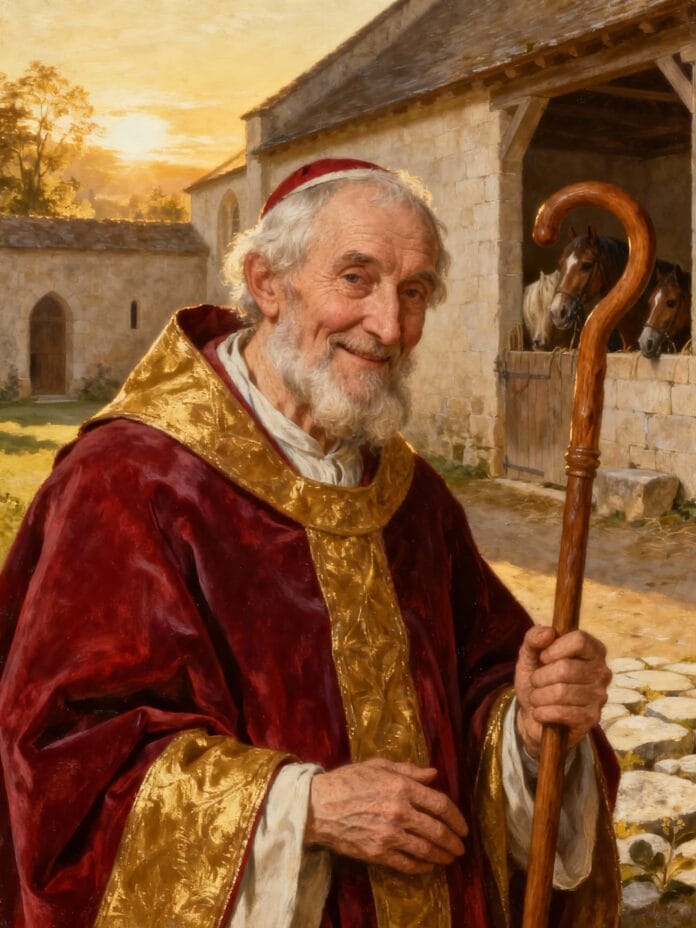
Brice, a disciple of Saint Martin who became Bishop of Tours in the 5th century, learned loyalty to God through the fire of trial and the rebirth of the heart.
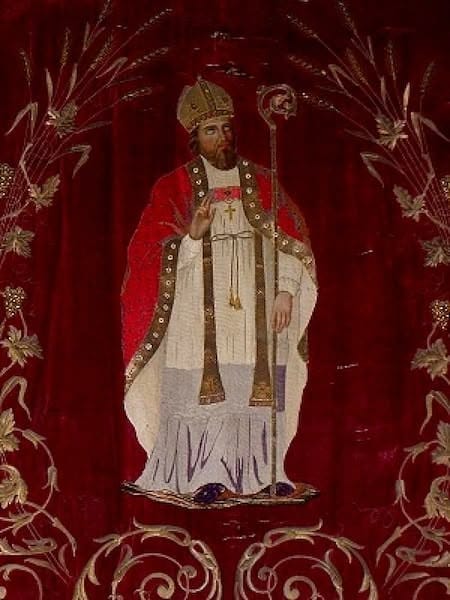
Turning his pride into service: Saint Brice, a rebellious monk who became a faithful pastor, lives through the turmoil of 5th-century Gaul. Accused, exiled, and then rehabilitated, he learns to walk in patience and the truth. Today, he invites everyone to purify their perspective on themselves and others, to rediscover joy of forgiveness received and given.
The fire of conversion
Born in Tours around 370, Brice grew up in the entourage of the great Saint Martin, who took him in as a child at the Marmoutier monastery. His fiery temperament quickly led him to leave the monastic lifeHe seeks comfort, surrounds himself with horses and servants, and distances himself from...humility of his master.
Upon Martin's death in 397, Brice returned transformed. Ordained a priest, then Bishop of Tours, he governed the local Church for nearly forty years. Yet his path was not straightforward: his disciples judged him too strict or too worldly. A slanderous rumor erupted—he was accused of having impregnated a nun.
Brice, convinced of his innocence, presents himself in Rome before the pope Celestine I. He remained there for several years, praying and serving discreetly. When the faithful of Tours discovered the falsity of the accusations, they recalled him to resume his seat.
He died around 444, reconciled with his people. His life became a mirror of inner transformation: that of a man who went from presumption to grace.
The Cradle Test
It is said that at the time of the scandal, Brice carried the nun's child in his arms and placed him on the altar, saying, "May God judge." The child supposedly said he was not the bishop's son. This is an unverifiable fact, but a powerful symbol: silence and trust can defend better than words. This scene symbolizes the truth laid bare before God alone—a recurring motif in the spirituality of Tours.
Spiritual message
Saint Brice reminds us that there is no holiness without growth. The soul does not advance through immediate perfection, but through fidelity renewed each day. His falls, his returns, his patience in exile embody this. the work secret of grace.
The Gospel invites us to this same conversion: “Be merciful, just as your Father is merciful.” Brice, having become humble after his shame, shows that mercy received makes one capable of active gentleness.
Image of the day: a lamp relit after the shadow — the heart that allows itself to be won back.
Prayer
Lord Jesus, You who raised Brice from his pride and his sins,
Grant us the grace of a reconciled heart.
Teach us to believe in truth more than in judgments,
to be served without seeking brilliance,
and to keep the faith when everything is faltering.
May your Spirit turn our trials into a place of conversion.
Amen.
To live
- Forgive someone in silence, without justification or reproach.
- Offers a hidden service to a person who is excluded or criticized.
- Meditate for ten minutes on Matthew 5,7: "Blessed are the merciful."«
Memory and places
The relics of Saint Brice rest in Tours, continuing the cult of his master Saint Martin. The parishes that bear his name — Saint-Brice-en-Coglès in Brittany, Saint-Brisson in Burgundy, Saint-Brès in Languedoc — recall the extent of his memory.
His cult spread to Picardy, where he was invoked as a healer.
The stained-glass windows of the sanctuary in Tours depict a bishop holding a child in his arms: a symbol of God's judgment made visible in innocence. Every November 13th, the city remembers the disciple who returned from afar, a figure of mercy recovered.
Liturgy
- Readings: Philippians 2:1-11 (Christ humbled himself); John 21:15-19 (Peter restored to his love).
- Song: Hymn of mercy found — Ubi caritas et amor, Deus ibi est.