












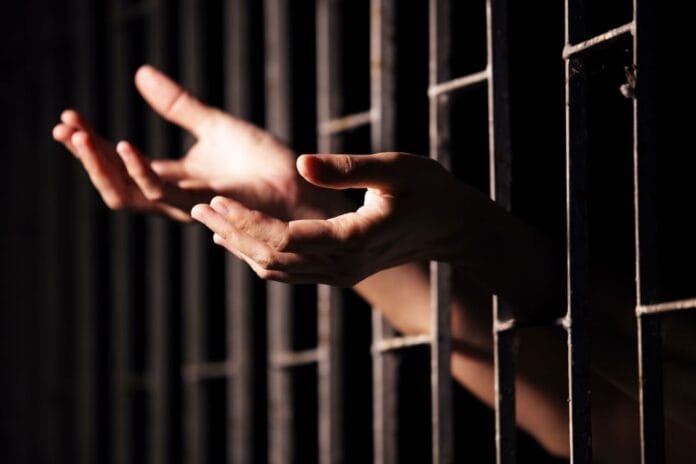
Imagine for a moment: this weekend, more than a hundred French bishops will voluntarily enter prisons. Not for a simple courtesy visit, but to celebrate Mass with the inmates, to pray with them, to remind them that they are not alone. This is precisely what is being planned for December 13 and 14, 2025, as part of the Jubilee of Prisoners. Behind this religious initiative lies a much deeper message: an uncompromising denunciation of the catastrophic state of our prisons and a powerful call to change our perspective on those who are incarcerated.
In a country where more than 80,000 people languish in cells designed for 62,000, where thousands of inmates literally sleep on the floor, this mobilization by the Catholic Church is timely. But it is not merely a gesture of compassion: it is a genuine cry of alarm about a prison system on its last legs.
An unprecedented mobilization behind bars
The Jubilee: much more than a religious tradition
Let's start by talking about what a Jubilee really is. For many, the word evokes a birthday celebration or a somewhat dusty Catholic tradition. But make no mistake: the Jubilee is rooted in a revolutionary idea for its time – that of forgiveness, liberation, and a new beginning.
This tradition dates back to the Bible, where every 50 years a "year of mercy" was proclaimed: debts were forgiven, slaves freed, and lands restored. Jesus himself drew inspiration from this when launching his public mission with these powerful words: "The Lord has sent me to bring good news to the poor, to heal the brokenhearted, to proclaim liberty to the captives, and release to the prisoners."«
In 2025, the Pope Francis – now succeeded by Leo XIV – wanted this jubilee year to be placed under the sign of hope. And among all the events planned throughout the year (youth jubilees, of the migrants, (including the sick…), but the situation of prisoners holds a very special place. December 14th has been chosen as the international day to celebrate incarcerated people.
What makes this moment unique is that the Pope He himself opened the first Holy Door in a prison – that of Rebibbia in Rome, on December 26, 2024 – just two days after the official inauguration of the Jubilee at St. Peter's. A powerful symbolic gesture: to show that even behind bars, hope is possible.
When 102 prisons open their doors to bishops
In France, the Conference of Bishops has decided to respond massively. This weekend, December 13th and 14th, no fewer than 102 prisons across the country will welcome a bishop. From Lannemezan to Tabes in the Hautes-Pyrénées (where the first celebrations already took place in early December with Bishop Jean-Marc Micas), from Brittany to Corsica, no region has been forgotten.
But what exactly will they do? The program varies from place to place, but the idea remains the same everywhere: to offer inmates a moment of spiritual connection, a respite from their often violent and dehumanizing daily lives. On the agenda:
Jubilee Masses where inmates can connect and feel part of the community’Universal Church, despite their isolation.
Celebrations of forgiveness – a particularly important moment for those who bear the weight of their actions and seek a form of reconciliation, with themselves or with society.
Symbolic passages through "jubilee gates"« installed specifically in prisons. This door represents a passage to a new future, an invitation not to be trapped in one's past.
Time for listening and discussion with the chaplains, who are strengthening their presence with discussion groups, Bible workshops and personal meetings.
As Bruno Lachnitt, permanent deacon and general chaplain of the Catholic prison chaplaincy, explains: "They will not, of course, be able to go to Rome, so we looked for a way for the prisoners to experience the Jubilee nonetheless." So the Jubilee comes to them.
This initiative is part of a global movement: on December 14, similar celebrations will take place in prisons around the world, in communion with Rome. Thousands of inmates, from Africa to Latin America and Asia, will experience this moment together. Such global synchronization around the prison situation is rare.

A prison system on the verge of implosion
These figures are staggering.
Now, let's address the elephant in the room: the disastrous state of our prisons. The bishops are not simply coming to pray; they are taking this opportunity to sound the alarm with words that leave no room for doubt.
Hold on tight, because the numbers are staggering. As of December 1, 2024, France had 80,792 people detained for only 62,404 places available. Do the math: that represents a prison density of 129,5%. Put another way, imagine a classroom designed for 30 students where almost 40 are crammed in. But it's even worse than that.
Because these average figures mask a much more brutal reality. In remand prisons – those facilities that house people awaiting trial (and therefore presumed innocent!) and those sentenced to short terms – the density climbs to 156,8%. Some establishments even reach the 200% or more: Majicavo in Mayotte, Tours, Bordeaux-Gradignan… In these prisons, overcrowding is no longer a problem, it is a humanitarian catastrophe.
And here's the detail that should outrage us all: More than 4,000 inmates sleep on mattresses placed directly on the floor, for lack of beds. Yes, you read that right. In 2024, in a country that prides itself on being the cradle of human rights, thousands of people – many of whom have not even been convicted yet – spend their nights on the floor, in cells designed for one or two people but which house three, four, sometimes five.
To put things in perspective: at the beginning of 2018, French prisons had 3,000 more places than they do today. Seven years later, they have certainly gained a few more places, but they still have to accommodate 12,000 more prisoners. It's mathematically untenable.
The human consequences of a failing system
But beyond the statistics, let's talk about what this means in concrete, everyday terms. The bishops of France, in their plea published for the Jubilee, mince no words: prison overcrowding "contributes to degraded care – feelings of humiliation, increased violence and idleness, and a loss of meaning in their work for prison staff."«
Let's break this down:
Constant humiliation Imagine living 24/7 in a space of just a few square meters with strangers, without privacy, forced to relieve yourself in front of others. Individual cells, promised by law since… 1875 (yes, you read that right, 150 years!), remain a dead letter. Every day, the human dignity The most basic one is being violated.
The pervasive violence When too many people are crammed into too little space, with too few activities, tension inevitably rises. Aggressions between inmates increase, creating a climate of constant fear.
Destructive idleness With a lack of staff and infrastructure, it's impossible to organize activities, training, or work for everyone. The result? Endless days spent doing nothing, brooding, and despairing.
Staff exhaustion Prison officers work in untenable conditions, constantly under pressure, unable to properly carry out their duties. Many lose sight of the meaning of their work and succumb to burnout.
And here's the worst part: this entire system doesn't reduce crime; it creates more. The current prison system prevents inmates from leaving prison "better" than when they entered, thus generating more recidivism than security. Approximately 541% of those released are reconvicted within three years. French prisons have become schools for crime rather than places of rehabilitation.
Bishop Jean-Luc Brunin, Bishop of Le Havre and head of the Catholic prison chaplaincy, states it unequivocally: overcrowded prisons are destructive prisons, where not only are convicted people locked behind walls but in a state of desperate degradation, as if there were nothing left to expect from them.
France is no exception at the European level: it ranks among the countries with the highest levels of prison overcrowding, just behind Cyprus and Romania. The European Court of Human Rights has repeatedly condemned France for its "inhuman and degrading" prison conditions. But nothing really changes.
A radical call for a paradigm shift
Restore rather than simply punish
Faced with this damning situation, the bishops do not simply lament. They propose a radically different vision of justice and punishment. And their message could well shake some long-held beliefs.
To understand punishment solely as an act of suffering would reduce it to dehumanizing rather than empowering. This is the core of their argument. Today, in the collective imagination—fueled by certain political discourses—prison must "hurt," must be a terrible experience to deter crime. But the bishops remind us of a truth confirmed by criminological studies: this approach doesn't work.
Why? Because it only considers the punitive aspect and completely overlooks the goal of rehabilitation. However, except for a few true life sentences, All these prisoners will be released one day.. And when they emerge broken, damaged, socially isolated, without qualifications, without a network, without hope, what do you think will happen?
The proposed alternative is that of restorative justice This is an approach that seeks to repair rather than simply punish. This doesn't mean being "lenient" or "naive"—no one is saying there shouldn't be any consequences. But choosing to restore the humanity of those who have erred by helping them take responsibility and envision a new future is in the interest of all of society, starting with the victims.
Think about it for a second: what seems safer to you? That a criminal leaves prison after spending ten years deteriorating in violence and idleness, or that he leaves after undergoing therapy, learning a trade, reflecting on his actions and preparing for his reintegration? The answer seems obvious.
Concrete alternatives to incarceration
The bishops are therefore calling for profound change: any measure that aims to increase the prison population runs counter to the safety of our citizens. Building more prisons will not solve the problem – past decades have proven that. Every time spaces are added, they fill up immediately, as if supply creates its own demand.
What are the viable solutions to break this deadlock?
massively develop alternative punishments : the work In the public interest, probation, electronic monitoring… These sanctions already exist, but they are underutilized. Only 30% of sentences that could be modified are actually implemented. There is enormous room for improvement here.
Drastically reduce pre-trial detention Today, more than 20,000 defendants—people presumed innocent—are awaiting trial in prison. This is absurd. Judicial supervision could replace detention in many cases, provided the justice system has the resources to process these cases quickly.
Speed up legal proceedings Much of the overcrowding stems from the fact that people wait months, even years, before being tried. More judges, more hearings—it's expensive, certainly, but far less so than the human and financial cost of overcrowded prisons.
Promoting prison regulation It's the most taboo idea, but it's already proven its worth. During the Covid pandemic, France released nearly 13,000 prisoners nearing the end of their sentences early, and the sky didn't fall. Overcrowding practically disappeared. Why not establish an automatic mechanism: when a critical threshold is reached, prisoners nearing the end of their sentences are released with enhanced monitoring?
Investing in transition structures Between prison and complete freedom, there is a critical lack of support centers. These are places where people can prepare for their release, find housing, a job, and rebuild their lives. It's proven: "dry" releases from prison (without support) significantly increase the risk of recidivism.
Monsignor Fisichella, who organized the Jubilee at Vatican, posed the uncomfortable question: In the millennium that is opening up before us, determined by the progress of technology, through a culture like that of digital, which allows us to know where we are at any time and also to know what we are doing, why not think about structuring alternative measures, instead of thinking about building new prisons?
The shift in perspective on prisoners
But beyond technical measures, the bishops are calling for something deeper: a "conversion of perspective" on those in detention. And that is perhaps the most important message of this Jubilee.
Every human being is created in the image of God, and the resulting dignity is inalienable and indestructible. No one can be reduced to the act they have committed, whatever it may be. Even if you are not a believer, this principle should resonate with everyone. A person can never be reduced to the worst act they have committed..
It's easy to say "they're rotting in prison" when talking about a criminal in general. It's much harder when you realize that behind that word, there is a human being with a story, sometimes a terrible past (violence suffered in childhood, social exclusion, addictions…), who has certainly committed the irreparable but who remains capable of change.
Prison chaplains are direct witnesses to this. They see incredible transformations every day: men and women who, in prison, discover spirituality, begin a journey of self-discovery, and find a form of inner peace. Our chaplains in detention bear witness that behind prison walls, the love of Christ uplifts, reconciles, and opens the way to hope.
Saint Vincent de Paul, who was already working with prisoners in the 17th century, said: «Do not take care of prisoners if you are not willing to become their subject and their student!» A surprising statement: to become the student of those who have sinned? But that is precisely where all wisdom lies: every human being, even one who has seriously erred, can teach us something about resilience., forgiveness, the reconstruction.
This shift in perspective means accepting that:
Locking people up is not enough Punishment is legitimate, but if the punishment is not accompanied by a plan for transformation, we are only postponing the problem.
Security comes through reintegration : a prisoner who is well supported and leaves with a job, accommodation and psychological support is infinitely less dangerous than a prisoner who leaves broken and embittered.
The victims deserve better Contrary to popular belief, many victims don't just want revenge, but a guarantee that it won't happen again. A system that fosters recidivism doesn't protect them.
We are all concerned These prisoners are not from another planet. They are our neighbors, our former colleagues, sometimes our future loved ones. Their failure is also our collective failure.
A message of hope despite everything
So, what can we take away from this Jubilee of the prisoners? First, that it is not just another religious event. It is a moment when the Catholic Church – an institution that has not always distinguished itself by its progressivism – takes a courageous and radical stance on a subject that most prefer to ignore.
By visiting prisons en masse this weekend, the French bishops are sending several strong messages:
To the prisoners : you are not forgotten, you are not reduced to your mistakes, you retain your dignity as a human being, and a different future remains possible for you.
To the company Our prison system is a disgrace that concerns us all, and it's time to stop burying our heads in the sand. The prison system as it currently operates doesn't protect us; it exacerbates the problems.
To political decision-makers The "prison-only" approach is a dead end. There are other paths, fairer, more effective, more humane. We must have the courage to take them, even if they are unpopular in the short term.
To the believers Living one's faith authentically means caring for the most marginalized, even—and especially—when they are criminals. Visiting prisoners is an act of mercy; it is not optional.
The Jubilee Year 2025, themed "Pilgrims of Hope," takes on its full meaning in prisons. For if there is one place where hope seems impossible, where despair reigns supreme, it is behind bars. And yet, bishops and chaplains affirm with conviction: even there, hope can be reborn. Even there, change is possible. Even there, redemption is not an empty word.
Of course, not everyone will emerge transformed. Some inmates will remain dangerous and will need to be kept away from society for the long term. But how many could turn their lives around if they were truly given the means? How many lives could be changed with the right support?
This Jubilee also reminds us of a disturbing truth: The way a society treats its prisoners is a moral test. When we passively accept that thousands of people live in undignified conditions, when we let the situation fester while contenting ourselves with security rhetoric, we reveal something about ourselves. We show that, deep down, some lives matter less than others.
The bishops of France, with this Jubilee for prisoners, confront us with our contradictions. They remind us that Humanity is not divided into good and evil, but into those who have fallen and those who have not yet fallen.. And that the true greatness of a society is measured by its ability to reach out to those who have fallen, even very low.
So this weekend, while these bishops are passing through prison gates, perhaps we could each, in our own way, pass through our own gates: those of our prejudices, our indifference, our fear. And ask ourselves: what are we prepared to do so that the human dignity that it be respected everywhere, including in the darkest places of our Republic?
For, as the bishops write in their plea: Faith in God cannot be reconciled with renouncing belief in the best that each person carries within them, with the despair of others, or with a justice that merely punishes without restoring. And this demand is not addressed only to believers: it concerns us all, as human beings living together in a society that aspires to be civilized.
The Jubilee for Prisoners is therefore not an end in itself, but a beginning: the beginning of a collective awakening, a renewed commitment to a more humane justice system, and a transformed perspective on those we have imprisoned. The hope it seeks to instill is not just for prisoners—it concerns us all. For a society that despairs of its prisoners is a society that despairs of itself.