












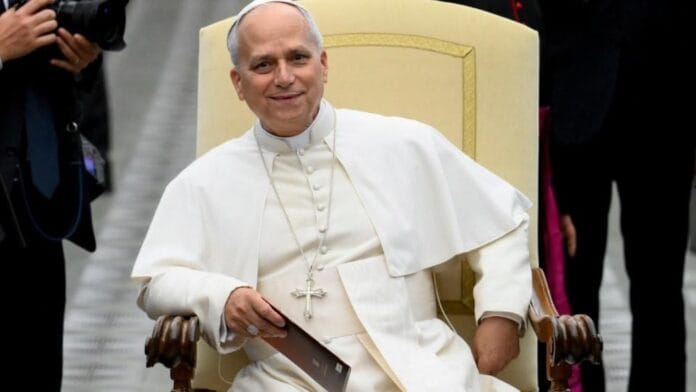
There are times when the walls of a room transform into an invisible cathedral. On Saturday, December 6, 3,000 people experiencing hardship gathered in the Paul VI Hall at the Vatican To live a unique experience: a concert where music becomes a bridge between heaven and earth. This sixth edition of the Concert with the poor was not just another charity event, but a true celebration of human dignity through art.
THE Pope Leo XIV, Present at this edition, while his predecessor François—who had initiated the event—did not participate, he delivered a powerful message at the end of the evening. His words still resonate: music is not a privilege, but a fundamental right accessible to all, rich or poor. A vision that revolutionizes our relationship with culture and solidarity.
Music as the universal language of the soul
A divine gift for all, without exception
Have you ever been so captivated by a melody that you forgot everything else? This almost mystical experience, the Pope Leo XIV He describes it as an elevation of the soul. But be careful, he is not talking here about a simple distraction or entertainment that would make us escape our problems.
His vision goes much further. «Music can uplift our souls,» he affirms, “not by intoxicating us, but by reminding us of our true identity: that of beloved children of God. This is a fundamental difference. Rather than denying our difficulties, music invites us to remember that we are infinitely more than the sum of our worries.”.
This approach is rooted in the Augustinian tradition. The spiritual father of the Pope current, Saint Augustine Hippolytus already considered music to be a science in its own right. For him, musical harmony reflected the divine order of creation. Leo XIV It revives this age-old intuition, making it accessible to our time.
The bridge between earth and sky
Imagine an invisible staircase that gradually ascends towards the absolute. This is the image used by the Pope to describe the power of music. It conveys feelings, emotions, "even the deepest movements of the soul," and transforms them into something greater.
This metaphor of the bridge or the staircase is not insignificant. In our often fragmented world, where inequalities create divides between people, music fosters connections. It links humanity to the divine, but also connects people to one another. Whether we are homeless or heads of state, a Mozart symphony touches us with the same potential intensity.
The cardinal Konrad Krajewski and the Dicastery for the Service of charity, Those who collaborated on this event alongside Cardinal Vicar Baldo Reina understood this well. By opening the doors of the Paul VI Hall free of charge to 3,000 disadvantaged people, they are concretely affirming that beauty belongs to no one in particular — it belongs to everyone.
When feelings become song
There is something profoundly concrete in the approach of Pope. He does not simply state abstract principles about the transcendence of art. He insists on the capacity of music to express our most intimate emotions, those that we sometimes struggle to put into words.
Think about those moments when you feel overwhelmed: joy The intensity of a birth, the sadness of bereavement, the anxiety about the future. Words often fail, but a melody can express the inexpressible. This cathartic function of music takes on an even more powerful dimension for people in precarious situations, who face daily hardships that many of us will never experience.
The concert's repertoire blended liturgical tradition with contemporary classics, creating a bridge between several musical worlds. This diversity was not accidental: it reflected the diversity of the 3,000 people present, each with their own story, their own wounds, their own hopes.
Christmas and Advent: when the celebration becomes inclusive
The mystery that cannot do without music
THE Pope He establishes a direct link between music and the celebration of Christmas. "As if this Mystery could not be celebrated without music, without hymns of praise," he observes. It's a fascinating remark when you think about it.
Why has each culture, each language, developed its own Christmas carols? From the French "Minuit chrétiens" to the German "Silent Night," from the Latin "Adeste Fideles" to African-American gospel songs, the Nativity is universally expressed through song. Even the Gospel itself describes a "great concert of angels" resounding in heaven at the birth of Jesus. Bethlehem.
This omnipresence of music in Christmas festivities tells us something essential: joy True Christmas cannot remain silent. It naturally overflows in song, praise, and shared celebration. And indeed, sharing this joy with those living in poverty is what gives Christmas its full meaning.
Keeping watch during Advent: a call to openness
For this first Sunday of Advent At Vatican, Leo XIV He issued a demanding invitation. It's not simply a matter of passively waiting for Christmas to come, but of actively preparing our hearts. How? By ensuring that they are not "burdened, nor absorbed by selfishness and material concerns.".
This vigilance is not a punishment or a moral constraint, but a liberation. How often do our daily concerns—bills to pay, tensions at work, objectives to achieve—imprison us in a bubble where there is no longer room for others?
THE Pope It offers an alternative: turning our hearts toward those in need, remaining attentive, and being ready to listen. This is precisely what this concert does. It is not a condescending act of charity where the rich "give" culture to the poor. No, it is an encounter where everyone receives: those in need receive a moment of beauty, and all participants—organizers, artists, volunteers—receive the opportunity to share what truly matters.
Jesus, the song of God's love
«Jesus is God’s song of love for humanity,» declares the Holy Father. This poetic formulation transforms our understanding of the Incarnation. God does not simply convey an intellectual message or impose a moral law. He sings. He expresses himself in the most universal language imaginable.
And we are invited to learn this song "so that we, too, may sing it through our lives." This is the concrete challenge: to make our daily lives an extension of this song of love. How? By welcoming the excluded, by sharing beauty, by rejecting indifference.
Every act of solidarity, every gesture of care shown to those who suffer, becomes a note in this divine melody. The Concert with the poor This is not just an isolated event, it is a model for the whole year.
A sixth edition that leaves a lasting impression.
Michael Bublé and the meeting of repertoires
This year, the Italian-Canadian jazz singer Michael Bublé was the star guest, accompanied by actress Serena Autieri. A significant choice: Bublé embodies the bridge between tradition and modernity, between musical refinement and popular accessibility.
His renditions of Great American Songbook standards, imbued with swing and elegance, resonate with several generations. By inviting him to perform in this context, the organizers send a clear message: quality culture doesn't have to be elitist. It can reach everyone.
The Choir of the Diocese of Rome, directed by Monsignor Marco Frisina, and the Nova Opera Orchestra completed this exceptional lineup. Imagine the scene: the harmonies of the liturgical choir blending with jazz arrangements, classical voices conversing with contemporary energy. It is precisely this diversity that reflects the richness of the Church and of humanity.
A live Christmas tale
The event was conceived as "a Christmas tale," an expression that evokes childhood, wonder, and sharing. Unlike a traditional concert where the audience remains passive, this narrative format invites everyone to enter into a shared story.
The various charities involved in the project — the details of which were praised by the Pope — helped to create a warm atmosphere. Each participant was not just an anonymous spectator, but a guest of honor at this celebration.
Free and open to all, the concert breaks down the usual barriers. No VIPs in the front rows, no seats reserved for wealthy donors. Just 3,000 people, many of whom know the streets, the cold, exclusion, gathered in the same space to experience a moment of grace together.
The legacy of Francis, the vision of Leo XIV
This concert was created at the initiative of Pope François, who nevertheless did not participate this year. This sixth edition therefore marks a symbolic transition: Leo XIV takes up the torch and imprints his personal touch on it, marked by the Augustinian tradition and a particular emphasis on the salvific role of beauty.
Where Francis had emphasized the existential periphery and the preference for the poor, Leo XIV deepens the aesthetic and spiritual dimension of this encounter. Music is no longer just a means of touching hearts, it becomes lived theology, incarnate prayer.
This continuity in change shows the strength of the institution: initiatives carried out by one pontificate can be enriched and developed by the next, thus creating a sustainable dynamic in service of the most vulnerable.
Lessons for our own lives
Beyond the event itself, this concert challenges us. How often do we reserve "beautiful things" — whether art, culture, or quality time — for special occasions or select circles?
The invitation from Pope It's clear: making beauty accessible is an act of justice. Not only charity (which has its place), but justice. Because every human being, regardless of their economic situation, has the right to wonder, to spiritual elevation, to encounter beauty.
In practical terms, this could translate into small gestures: inviting someone who is alone to a concert, sharing books or music, opening our festive events to those who are usually excluded. Every initiative, however modest, extends the spirit of this Concert with the poor.
During this period of Advent, As our societies prepare to celebrate Christmas, often in a frenzied consumerist atmosphere, the message of Pope Leo XIV resonates with a particular force. Music, beauty, and culture are not superficial luxuries, but fundamental needs of the human soul.
By inviting 3,000 people experiencing hardship to enjoy an exceptional moment in the Paul VI Hall, the Church reminds us that dignity is not measured by bank account. It affirms that everyone deserves to be touched by grace, uplifted by harmony, and moved by melody.
«Let us listen to this song! Let us learn it well, so that we too may sing it with our lives,» the Holy Father tells us. Perhaps this is the essence: to transform our existence into a symphony of love and care for others. To make of each encounter, each act of solidarity, a note in this grand concert that connects earth to heaven.
In a world that is often cacophonous, where the noise of conflicts and divisions too often drowns out the melody of brotherhood, This event reminds us that another kind of harmony is possible. It begins when we agree to share not just our excess, but what we hold most dear: beauty, time, presence.
As the last notes of the concert faded away on Saturday night at Vatican, Something continued to resonate in the hearts of the 3,000 participants. Perhaps the renewed conviction that, yes, we are so much more than our problems. That, yes, music can uplift our souls. And that, yes, together, we can sing through our lives this song of love that God addresses to all humanity.