












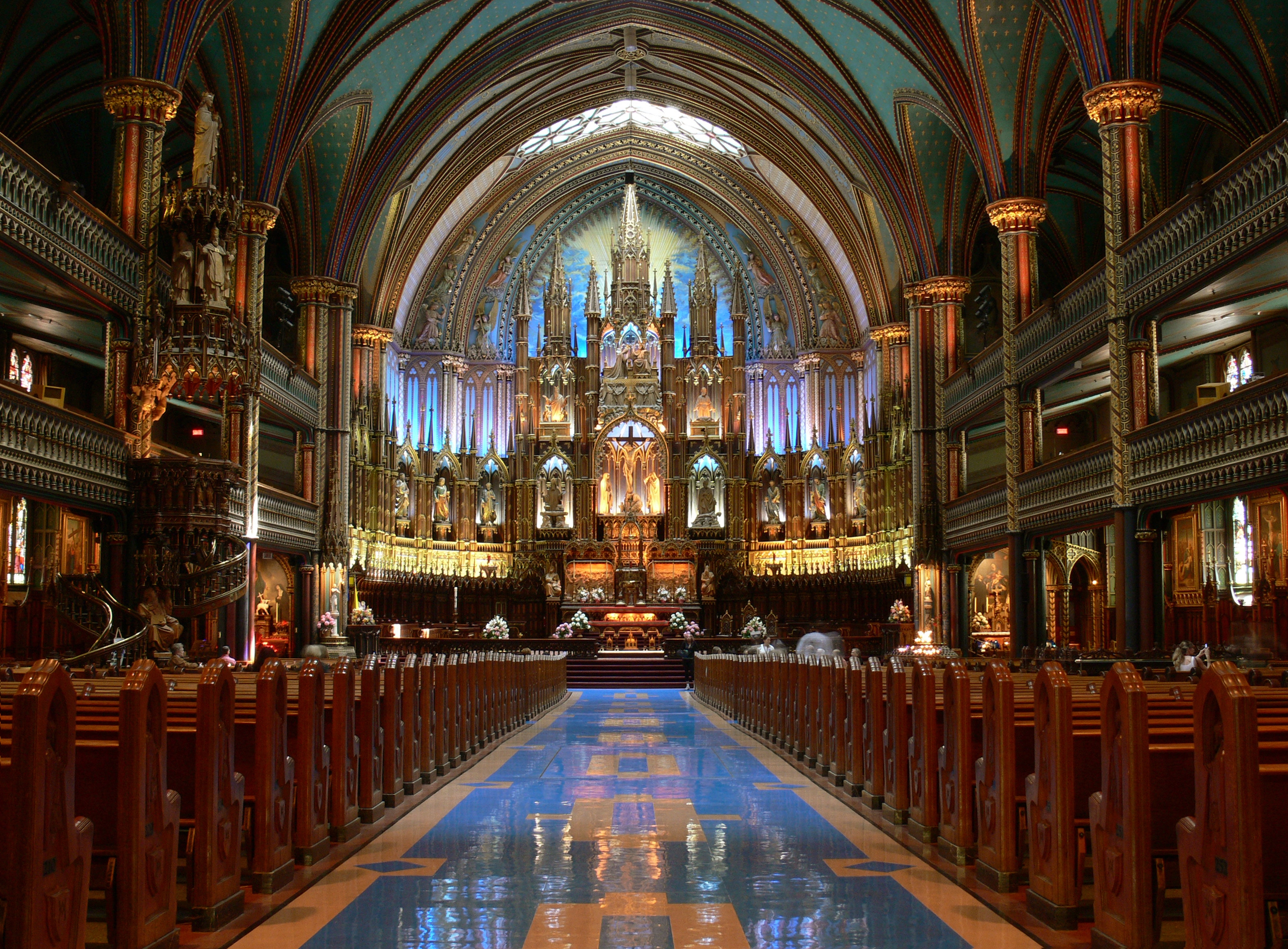
The feast of the dedication of a church has something mysterious about it. One might think it concerns only a stone building, an ancient rite reserved for bishops and candles lit in the dimness of a sanctuary. Yet, in this act of consecration, the entire people of God are once again called to holiness. The dedication of a church is not simply a commemorative moment: it is a true theological and communal experience, where stone and flesh meet, where the visible speaks of the invisible. Let us enter together into this mystery.
Understanding the dedication: a consecrated building and a renewed people
From biblical origins in the Christian sense
The practice of dedication has its roots in the Old Testament. King Solomon, when inaugurating the Temple in Jerusalem, prayed that God would dwell there, not confined within its walls, but present among his people. This gesture of offering a place to God has endured through the centuries. Christians, Heirs to this tradition, understood that every place of worship had to be consecrated to become the privileged space for the encounter between God and man.
But from the very first communities, perspectives shifted: Jesus himself had proclaimed that the true temple would be his own body. From then on, the temple of stone became the symbol of the living temple that is the Church – not just the institution, but the assembly of the baptized. The dedication, therefore, celebrates not an architectural structure, but a communion.
The symbolism of the building: the temple as a mirror of the heart
Every stone of a church tells the story of the faithful who built it. Crossing the threshold of a sanctuary, one does not enter a sacred museum, but a lived-in place. The sanctuary exists only because believers desired to pray and receive there. the sacraments, to transmit the faith there. That is why Father Congar reminded us: "The Church is not the walls, but the faithful."«
Yet, the stone has something to say. It embodies permanence. The building takes root in time; it becomes a witness. It reminds us that the people of God, too, are built stone by stone, life after life, grace after grace. The walls, the light, the stained-glass windows, the altar: everything in a church speaks of the mystery of Christ building his sanctuary within us.
The people, the temple of God
When a church is consecrated, both the walls and the hearts are blessed. Saint Peter wrote that the baptized are "living stones" built to become a spiritual house. This is what the dedication ceremony manifests: a transformation. The building becomes a holy place, but this holiness only has meaning if the people who gather there become holy in turn.
Thus, honoring a church is not about idolizing walls; it is about recognizing, through them, our profound vocation: to be the place where God comes to dwell. The dedicated church becomes the image of a people united by charity, cemented by faith, illuminated by the presence of God.
The rites of dedication: the baptism of a place for the salvation of a people
A solemn and meaningful ritual
The liturgy of dedication is one of the richest in the Catholic tradition. It includes a sequence of very precise symbolic gestures: blessing, sprinkling, anointing, incensing, and illumination. Everything is done to signify that this place becomes not only functional, but also spiritual.
The bishop, representing Christ, first arrives outside the sanctuary. He blesses the walls with living water, reminding everyone that everything must be purified before welcoming God's presence. Then he knocks three times on the door—a striking gesture that evokes both Christ knocking at the door of the heart and the people's entry into the heavenly Jerusalem. The church then opens, and the community enters in procession, singing the Lord's praises.
Relics and the altar: memory and presence
One of the most powerful moments is the placement of the relics in the altar. This gesture comes from the most ancient Christian tradition: the first faithful celebrated the Eucharist on the tombs of martyrs. The relics concretely signify that all worship is rooted in the lived faith of those who gave their lives for God. They remind us that a church is not an isolated place, but connected to the entire communion of saints.
When the bishop seals these relics, he unites the earthly place with heaven. The altar, consecrated with oil, sprinkled with water, and perfumed with incense, becomes the table of Christ's sacrifice and the living center of the sanctuary. Just as the altar is anointed, so too are the baptized: each Christian, in turn, becomes an inner altar where the divine presence is offered.
The Eucharist, the pinnacle of dedication
The first Mass celebrated in a consecrated church is the high point of the rite. Everything that precedes it converges on this moment. The altar then becomes the beating heart of the place, the place where Christ himself comes to dwell forever. If the liturgy lingers on material gestures—the light of candles, the fragrance of incense, the hymns of praise—it is to remind us that all of creation participates in the celebration.
At that moment, something invisible takes place: the people present become once again the body of Christ. As he said Saint Augustine, What we receive, we become. Thus, to consecrate a church is to renew the baptism of the entire Christian people.
A spiritual pedagogy
This rite is profound because it teaches us the coherence between faith and life. Everything in the dedication corresponds to the stages of a spiritual journey: purification (water), illumination (light), sanctification (anointing). We can say that the dedication of a church is a living catechesis: it opens our eyes to our own vocation. Just as the place becomes "the house of God," the Christian becomes "the dwelling place of the Spirit.".
The holiness of the Christian people: from stones to flesh
Innocent III's dream: a Church still to be rebuilt
The history of the Basilica of St. John Lateran perfectly illustrates the link between the building and the people. pope Innocent III, according to tradition, dreamed that the basilica collapsed before being supported by Saint Francis and Saint Dominic. This dream was not merely a symbolic vision: it revealed a universal spiritual truth. The Church, constantly threatened by decline or division, remains standing thanks to the saints whom God raises up in every age.
The dedication perpetuates this message: each generation is called to rebuild the Church, not through architectural plans, but through holiness of life. The sanctuary is only strong if the faithful are. When faith weakens, the walls also crack. When charity It is reborn, the stones shine again.
A shared responsibility: priests, religious, and lay people
The beauty of the Dominican rite underscores this intimate bond between the faithful and their church. Among the Preaching Friars, it is a layperson who lays the first stone. This is no coincidence: it reminds us that the entire people are co-builders of the temple of God. Holiness is never confined to the sacristy. It is embodied in daily life, in the way we love, serve, and give.
Each Christian, through prayer, faithfulness, and work, adds their stone to the spiritual edifice of the Church. And just as cement unites stones, charity It unites hearts. Without it, the most beautiful architectures crumble.
Beauty in the service of faith
Caring for a church is caring for our faith. When we maintain a place of worship, we express our desire for God to be honored there. This is not spiritual materialism: it is a concrete act of love. A clean, beautiful, and bright church is more welcoming to the prayers of souls. And that is why the great traditions of Saint Benedict At Saint Dominic, they have always insisted on the dignity of the sacred place.
Beauty is a theological language. It elevates the soul, it makes the presence of God visible. "God's inn," as it was beautifully called, is the place where saints come to regain their strength before returning to the world. A church, therefore, is not a closed sanctuary, but a place of sending forth.
Dedication, edification, deification
The Church Fathers often played on the three Latin words: ædificatio, dedication And deification. We build a church, we dedicate it to God, and in doing so, we enter into the process of deification—becoming participants in divine life. This progression sums up the whole... Christianity To build, to offer, to be transformed. The dedication then becomes the visible image of spiritual life. What God does in a church, he wants to do in us.
The promises of eternal life
The stone sanctuary will eventually age, but the’Living Church, She, however, carries the promises of eternal life. As long as God's people welcome the Holy Spirit And if it relies on Christ, the walls will stand. And even if they were to collapse, the spiritual edifice would remain, for it is built upon loyalty of the Lord.
This hope animates all the dedication celebrations. That is why the liturgy speaks of joy and light. On that day, we already contemplate the heavenly Jerusalem, that city where there will no longer be any need for a temple, because God himself will be the dwelling place of his people.
One church, one soul, one mission
Each dedicated church tells a story. Behind every altar, there are hands that laid stones, voices that prayed, lives offered. But above all, there is the presence of a God who ceaselessly builds his work in human frailty. When the people gather, the promise is renewed: «This is the dwelling place of God among men.»
So, the next time you enter a church—whether ancient or modern, simple or majestic—remember that you are its living stone. The place speaks to you: it reminds you that holiness is not a distant idea, but an inner architecture that God wants to build within you. This is the profound meaning of the dedication: the encounter between stone and flesh, between the house of God and the people of God.