












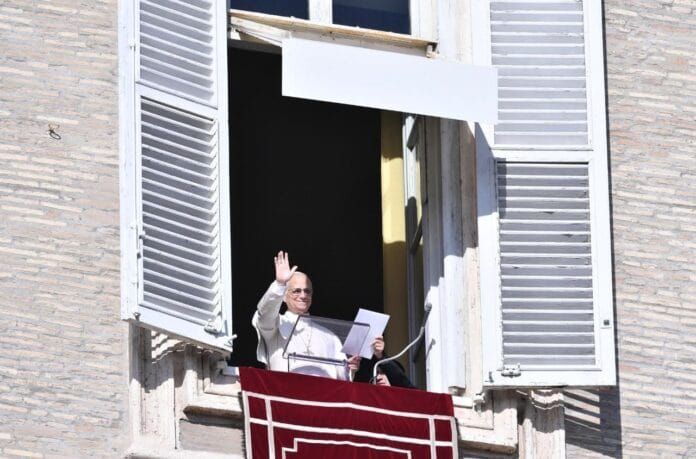
Imagine for a moment: you are in St. Peter's Square, under the Roman winter sun. Thousands of people surround you, having come from all over the world to celebrate...’Immaculate Conception. THE Pope Leo XIV He takes the floor and challenges you: "Nothing is impossible for God." These words resonate particularly on this second Sunday of Advent, this very special liturgical time which invites us to prepare ourselves to welcome Christ.
But in concrete terms, what does this mean for us today? How can we live through this waiting period without falling into passivity or abstraction? This is precisely what we will explore together.
Advent: a time to welcome God's impossible
The new Kingdom that is coming
When we recite the Lord's Prayer and say, "Thy kingdom come," we are not simply asking for a cosmetic change. We are invoking a radical transformation of our reality. Pope Leo XIV He forcefully reminds us: the course of history is not already written by the powerful of this world.
It's a revolution in perspective. Think about your own life: how many times have you felt that everything was predetermined? That the die was cast? Advent This comes to shake up this resignation. He tells us: wait, there's something new coming, and it's going to change everything.
This new thing, God is preparing it for us. But be careful: this is not a God who would come to dominate or crush us. It is a God who comes "to reign not to dominate us, but to liberate us," as the Successor of Peter emphasizes. This is an essential nuance that changes our entire relationship to spirituality. Advent.
Let's take a concrete example. You may know someone who is going through a difficult time: a divorce, job loss, illness. This person may feel like they are at a complete dead end. Advent He said to him, "Look, there is a way out that you don't see yet. God is preparing something new for you."«
The prophet Isaiah uses a beautiful image to describe this Kingdom: a shoot. Leo XIV He comments: "An image that evokes neither power nor destruction, but birth and new beginnings." Have you ever watched a bud pierce the bark of a tree in spring? It's fragile, discreet, almost invisible. And yet, it's the sign of new life arriving.
When God overturns our certainties
John the Baptist, the forerunner, gives us this powerful call: do not play with life. Seize the present moment to prepare for the encounter with the One who does not judge appearances but works and the intentions of the heart.
It's unsettling, isn't it? We live in a society obsessed with appearances, with the image we project on social media, with what others think of us. And here is John the Baptist reminding us that none of that matters in God's eyes.
Imagine the scene: you're preparing for a job interview. You carefully dress, rehearse your answers, work on your posture. This is normal and necessary. But spiritually, Advent This invites us to another type of preparation: that of the heart. What are your true intentions? What truly motivates your actions?
THE Pope speaks of a Kingdom that manifests itself "in gentleness And mercy »"Once again, this goes against the grain of our world. We are used to displays of force, spectacular actions, noisy revolutions. God, however, chooses the discretion of a birth in a stable.", gentleness of a swaddled child.
But make no mistake: this gentleness is not weakness. It is a quiet strength that transforms profoundly. Think of water which, drop by drop, eventually carves away at the rock. It is slow, patient, but irresistible.
The images of the prophet Isaiah that the Pope They are striking: «The wolf will live with the lamb, the leopard will lie down with the kid, the calf and the lion cub will feed together, and a little boy will lead them.» This is literally impossible in the natural order of things. A wolf does not live with a lamb. It is contrary to all the laws of nature.
And yet, this is precisely what God promises: the impossible becomes possible. What seemed weak or marginal flourishes. Natural enemies are reconciled. A small child guides the most powerful.
Apply this to your daily life. You may have a conflict that seems insurmountable with a colleague, a family member, or a neighbor. Reconciliation seems impossible. Advent invites you to believe that God can create the conditions for this reconciliation, even if you don't see how.
A luminous and practical spirituality for today
Little lights in our daily lives
THE Pope Leo XIV He concluded his message with a beautiful image: "The lights along the streets remind us that each of us can be a small light if we welcome Jesus, the seed of a new world."«
That is the beauty and simplicity of spirituality. Advent. It is neither abstract nor ethereal. It is "luminous and concrete," as the [author/organization] emphasizes. Pope. It is experienced in everyday gestures, in small acts of kindness, in seemingly insignificant choices.
Think of the Christmas lights that decorate our cities right now. Every string of lights, every bulb contributes to the whole. A single light seems insignificant. But when thousands of lights come on together, they transform the darkness into a magical wonderland.
That's exactly what we are called to be during Advent : small lights. Not dazzling spotlights, not blinding spotlights, but discreet and constant flames.
How does this translate into concrete terms? Let's take a few very practical examples:
In your professional environment, being a beacon of light can mean taking the time to truly listen to a colleague going through a difficult time, even if you're overwhelmed. It means refusing to participate in the coffee machine gossip. It means recognizing the work Well done by a member of your team.
At home, it might mean tidying the kitchen without being asked. It might mean putting down your phone when your spouse or child is talking to you. It might mean forgiving a hurtful word instead of dwelling on it for days.
In your neighborhood, it means smiling at the shopkeeper, holding the door for the person behind you, asking about your elderly neighbor.
None of this is spectacular. Nothing will make the headlines. And yet, it is precisely these actions that are building the Kingdom of God here and now.
THE Pope He speaks of Jesus as "the seed of a new world." A seed, again, is tiny. You can miss it if you're not paying attention. But this seed contains within it the entire promise of the mature plant, the ripe fruit, the future forest.
Hope in the face of the powers of the world
«"How the world needs this hope!" he exclaimed. Leo XIV. And it's true, isn't it? Look around you: wars, economic crises, climate disasters, political divisions. It's enough to make you lose hope.
Advent This reminds us that we do not place our hope in the powerful of this world, in purely human solutions, or in the promises of politicians or experts. We place it in a God who does the impossible.
This does not mean being naive or passive. On the contrary. Christian hope is active and committed. But it does not rely solely on our own strength.
Imagine a farmer planting his seeds. He prepares the land, sows, waters, and protects his crops. He does his part. But he can't make the plant grow. That growth is a mystery beyond his understanding. He must trust in the process of life.
That's exactly our situation during Advent. We prepare our hearts, we take the necessary steps, we commit ourselves to doing good. But we know that profound transformation, the coming Kingdom, is the work of God. Our role is to welcome, to cooperate, not to obstruct.
THE Pope He insists: we put our "thoughts and energies at the service of a God who is coming to reign." It's a total commitment of our being. Not just a small spiritual effort on Sunday morning. It's a complete reorientation of our lives.
This hope has a name: it is called "gospel," good news. And the Pope It specifies that it "motivates and engages." Truly good news changes everything. It gets you moving. It makes you want to get up in the morning. It colors all your activities differently.
Think about the day you received life-changing news: the birth of a child, landing a job you'd been hoping for, or recovering from an illness. This news didn't leave you indifferent. It unleashed a surge of energy within you.
Advent It announces the greatest good news in history: God is coming to dwell among us. He does not remain in his distant transcendence. He makes himself near, accessible, tangible. It is truly unheard of.
Experiencing Advent: Moving from waiting to action
Preparing concretely for the meeting
John the Baptist calls us to "not play with life" and to "make the most of the present moment to prepare for the encounter." But how, concretely, do we prepare to meet God?
First step: silence. Our world is saturated with noise, information, and demands. Notifications on our phones, continuous news feeds, incessant conversations. To prepare for the arrival of someone important, you tidy your house, you make space. Spiritually, it's the same.
Try this: every day Advent, Take five minutes—just five!—to sit in silence. No music, No podcasts, no phone. Just silence. At first, it will be uncomfortable. Your mind will race. That's normal. But gradually, this silence will create an inner space where God can dwell.
Second step: examine his intentions. The Pope It reminds us that God judges "not by appearances but by works and the intentions of the heart." This is the moment for radical honesty with oneself.
Why do you do what you do? What truly motivates you? Consider your professional, family, and community commitments. Some may be guided by noble intentions: service, love, justice. Others perhaps by pride, fear of judgment, or a need for recognition.
This isn't an exercise in self-flagellation. It's a journey toward truth. The more lucid you are about your true motivations, the more you can direct them toward good.
Third step: welcoming mercy. The Kingdom of God is manifested «in gentleness And mercy »We all have failures, injuries, regrets. Advent is the ideal time to dare to look at these shadowy areas and expose them to the light of mercy divine.
In practical terms, this can involve the sacrament of reconciliation for Catholics, but also simply a moment of prayer where you name your weaknesses, your mistakes, your sufferings before God. And where you receive his forgiveness.
Becoming the seeds of a new world
THE Pope He invites us to become "seeds of a new world." This is probably the most powerful image in his entire message. A seed is a promise, a beginning, a potential waiting to unfold.
How does one become a seed? By accepting to be small, humble, and discreet. A seed makes no noise. It doesn't seek the limelight. It simply does its job: to grow, patiently, day after day.
Let's put this into practice. You want to contribute to a better, fairer, more fraternal world? Wonderful. But be careful not to try to change everything at once. Great upheavals often begin with small seeds planted with perseverance.
Take the example of someone who wants to combat social isolation among the elderly in their neighborhood. They could embark on a large, ambitious project, create an association, and raise funds. Or they could simply start by visiting their 80-year-old neighbor once a week for coffee.
The second path is less spectacular. But it's precisely the logic of the seed. An authentic relationship is built, a faithful presence is shown, a friendship grows. And perhaps later, other neighbors will join the movement. And a network of solidarity will naturally form.
THE Pope Isaiah quotes this beautiful phrase: «The wolf will dwell with the lamb.» It is the image of impossible reconciliation becoming reality. In your life, who is your «wolf»? Who is this person with whom peaceful coexistence seems impossible?
Advent It invites you to take a step towards this person. Not necessarily a grand, spectacular gesture. Perhaps just a smile, a sincere hello, a small act of kindness. You are planting a seed. You don't know if it will germinate. That's not your concern. Your role is to plant.
The spirituality of Advent, THE Pope She insists that it is "bright and concrete." Bright because it radiates hope. Concrete because it is lived in the reality of your daily life, not in disconnected mystical flights of fancy.
Every day of Advent, You can ask yourself these three simple questions:
- Where have I been, a little light today?
- What new thing from God have I welcomed?
- How have I been a seed of the Kingdom?
Some days, the answers will be obvious. Other days, you'll feel like you haven't accomplished anything. That's normal. The seed grows in the earth, invisible for a long time. But it grows.
«"Nothing is impossible for God." These words from Pope Leo XIV summarize the entire message of Advent. Faced with the impossibilities that clutter your life – this broken relationship, this enduring suffering, this dream that seems dead – Advent whisper: wait, look, God is preparing something.
This liturgical season is not a time of passive resignation where we wait with our arms crossed. It is a time of active, confident, and committed waiting. A waiting that translates into concrete acts of kindness, into daily choices for the light, into tenacious hope despite everything.
The world desperately needs this hope, he said. Pope. He is right. But he also needs you, me, all of us who agree to become those little lights, those discreet seeds of a new world.
Advent It begins in your heart, today. What will you do with it?