



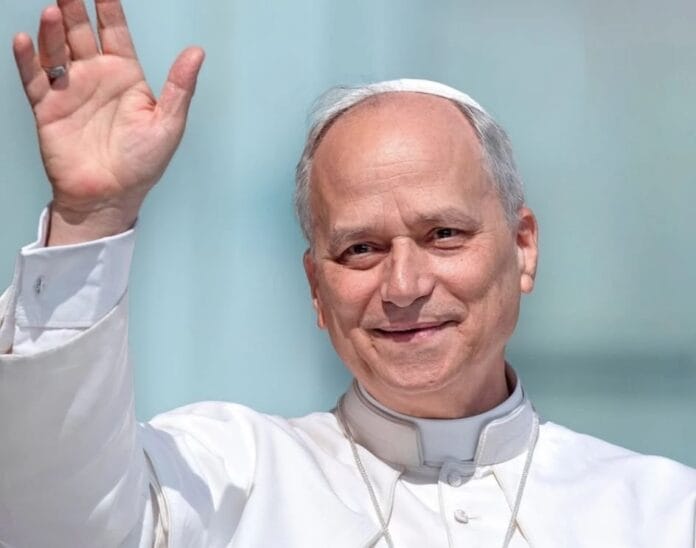
December 9, 2025 will remain an important date in the history of diplomatic efforts to end the war in Ukraine. Within the peaceful walls of Castel Gandolfo, the summer residence of the popes, the pope Leo XIV Ukrainian President Volodymyr Zelensky was received for the third time. What might seem like a simple protocol audience actually represents a pivotal moment in international diplomacy.
This meeting comes at a particularly sensitive time. While Washington is pushing for a swift resolution to the conflict with a controversial plan that demands major territorial concessions from Kyiv, the head of the Catholic Church has positioned himself as an essential moral player in the debate. By insisting on the need for a "just and lasting peace,", Leo XIV sent a clear signal: there can be no stable peace if it is not fair and does not respect the dignity of the Ukrainian people.
The symbolic dimension of this audience is reinforced by the European context. Zelensky had just completed a marathon tour of London, Paris, and Berlin, where he met with the continent's key leaders. All expressed their support, but concrete commitments are still pending. to wait for. Ukraine finds itself caught between American pressure to accept a territorial compromise and the vital need for solid security guarantees for the future.
The moral weight of the Vatican in a world in crisis
The role of Vatican in international conflicts is not new, but under the pontificate of Leo XIV, first pope In the American era of history, this diplomacy takes on a particular dimension. Elected in May 2025, this pontiff quickly made peace in Ukraine an absolute priority. As early as May 12, just a few days after his election, he was speaking with Zelensky by telephone. A first meeting followed on May 18, on the sidelines of the opening mass of the pontificate.
What is striking about the approach to Leo XIV, That is his consistency. In every exchange with the Ukrainian president, he repeats the same fundamental demands: continuous dialogue, respect for international law, and above all, a peace that is both just and lasting. These two adjectives are not chosen at random. They reflect the rejection of Vatican to endorse an agreement that would sacrifice moral principles on the altar of realpolitik.
The meeting on December 9th lasted approximately thirty minutes, a relatively short format for this type of audience. However, the essential point was not the duration, but the message conveyed. The Holy See's communiqué, published immediately afterward, emphasized three key points: the need to continue the dialogue, the hope that ongoing diplomatic initiatives would lead to a just and lasting peace, and the urgent need to resolve the situation of prisoners of war and the return of Ukrainian children deported to Russia.
This emphasis on the fate of children is not insignificant. Since 2023, the Vatican has invested heavily in this humanitarian issue, appointing Cardinal Matteo Maria Zuppi as special envoy. Thousands of Ukrainian children have been forcibly taken to Russia since the beginning of the conflict, a situation that international organizations describe as a war crime. For the pope, Their return to their families is a non-negotiable condition for any true peace.
The commitment of Vatican This position stems from a long tradition of mediation. Unlike state powers, which may have geopolitical or economic interests, the Holy See positions itself as a moral voice. This relative neutrality sometimes allows it to open channels of dialogue that are impossible for other actors. In the Ukrainian conflict, this position is all the more valuable as fault lines multiply, particularly between the United States and Europe regarding the strategy to adopt.
Between Washington and Brussels: Ukraine at the heart of a transatlantic power struggle
To understand the importance of the meeting at Vatican, It is necessary to understand the extremely tense diplomatic context in which this is taking place. Since November 2025, the administration Trump A 28-point peace plan was leaked, causing a veritable earthquake in European capitals. This plan, the result of negotiations between American and Russian advisors, proposes a solution that largely favors Moscow's interests.
The most controversial points of this plan are clear and brutal. Ukraine would have to permanently cede the Donetsk and Luhansk regions to Russia, while Kherson and Zaporizhzhia would be divided along the current front line. The Ukrainian army would be reduced from 800,000 to 600,000 troops. Ukraine would have to enshrine in its constitution that it would never join NATO, and no Alliance troops could be stationed on its territory. In exchange, Kyiv could apply for membership in the European Union and would benefit from American security guarantees, the details of which remain unclear.
The American plan also includes a massive economic component, but here again, the details are problematic. The United States and Russia would share access to Ukrainian resources and infrastructure, particularly in the gas sector. Russian assets frozen in Europe, amounting to approximately $300 billion, would be partly used by Washington to finance reconstruction, with the United States receiving a $501,300,000 commission on the profits. Europe would have to contribute an additional $100 billion.
For European capitals, this plan is unacceptable for several reasons. First, it legitimizes Russian territorial gains, setting a dangerous precedent in Europe where borders could be altered by force. Second, it weakens Ukraine militarily, making it vulnerable to future aggression. Finally, it places the bulk of the financial burden of reconstruction on Europe while granting the United States and Russia the economic benefits.
The European reaction did not occur to wait for. During the G20 summit in Africa In November, the French, German, and British leaders issued a joint statement describing the American plan as a mere "draft" requiring substantial modifications. They announced their intention to present a counter-proposal that would better guarantee Ukrainian sovereignty and European security interests.
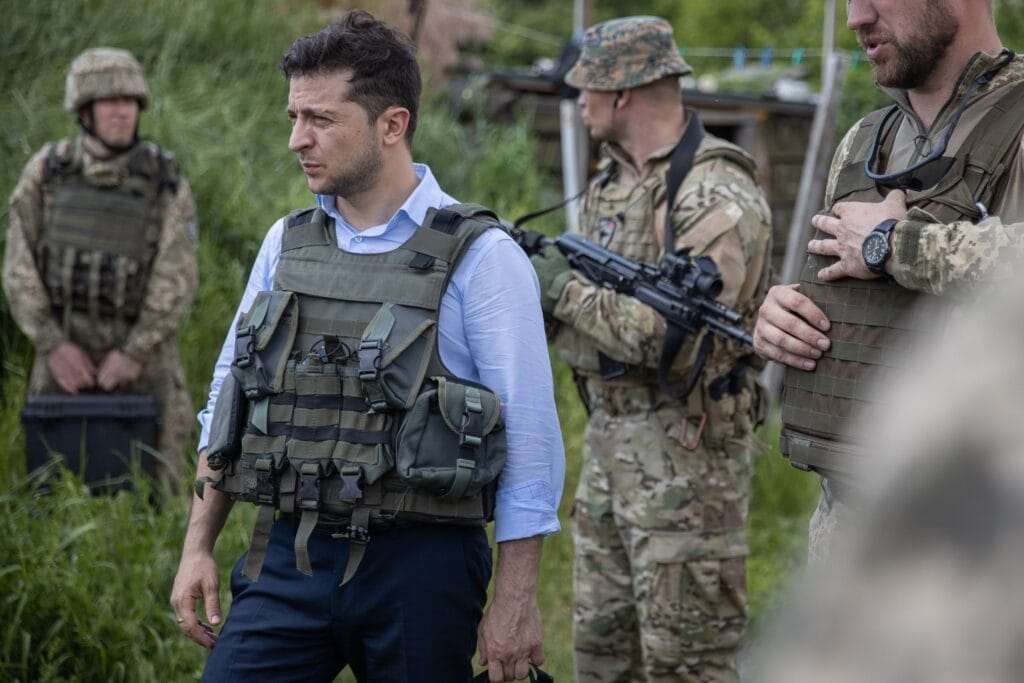
It was in this volatile context that Zelensky launched his European tour in early December. On December 8, he met in London with British Prime Minister Keir Starmer, French President Emmanuel Macron, and the new German Chancellor Friedrich Merz. All reaffirmed their support, but the discussions revealed the limits of European unity. The Europeans promise security guarantees to Ukraine, but struggle to define concretely what this means without NATO or a permanent military presence on Ukrainian territory.
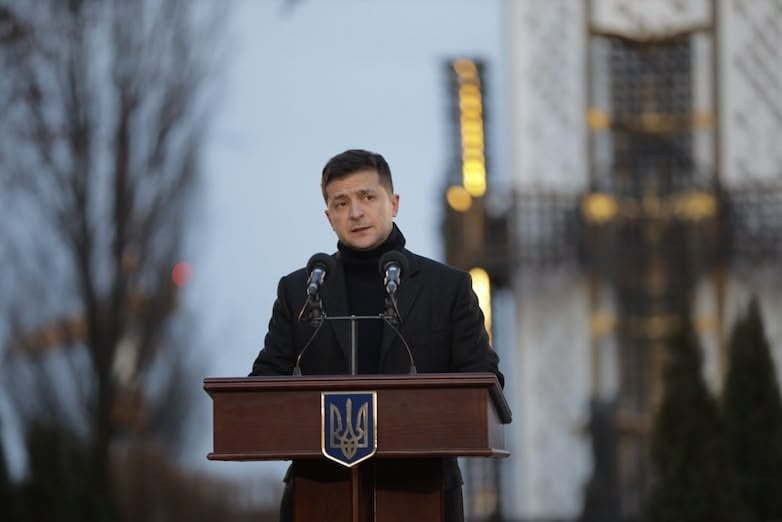
The following day, Zelensky was in Brussels to meet with the NATO Secretary General and the President of the European Commission before flying to Rome. This intense diplomatic activity demonstrates the urgency felt by Kyiv. The Ukrainian president reiterated the same message everywhere: "Ukraine has neither the legal nor the moral right to cede its territories. That is why we are fighting."«
The visit to pope fit perfectly into this strategy. By obtaining the moral support of Vatican, Zelensky strengthens his position in the face of American pressure. pope Leo XIV, By virtue of his unique status and American nationality, he represents a valuable interlocutor. His call for a "just and lasting peace" serves as a reminder of the ethical principles that any negotiation should respect.
Children of Ukraine: a humanitarian tragedy at the heart of the negotiations
Beyond the territorial and military issues, the meeting in Castel Gandolfo highlighted an often-forgotten dimension of the conflict: the fate of the thousands of Ukrainian children deported to Russia. This issue, particularly dear to the pope, illustrates the moral complexity of a conflict that goes far beyond geopolitical considerations.
Since February 2022, international organizations estimate that at least 19,000 Ukrainian children have been forcibly taken to Russia. Some speak of much higher figures, potentially reaching 50,000. These children, often from occupied areas or families separated by the war, They were placed in Russian families, orphanages, or "re-education" centers. Russian authorities present this as a humanitarian mission to protect children in danger. The international community considers it a clear war crime.
The International Criminal Court was not mistaken. In March 2023, it issued an arrest warrant for Russian President Vladimir Putin and the Russian Commissioner for Children's Rights, Maria Lvova-Belova, for the "illegal deportation" of Ukrainian children. This is an unprecedented legal action against the leader of a nuclear power that is a permanent member of the UN Security Council.
THE Vatican became involved in this issue very early on. In June 2023, the pope François Cardinal Zuppi had been appointed as his special envoy to Ukraine, with a primary mission: to facilitate the return of deported children. Zuppi made several discreet trips to Moscow and Kyiv, meeting with officials from both countries. The results were modest but real: a few dozen children were able to be reunited with their families thanks to these mediations.
THE pope Leo XIV He took up this issue again with the same determination. In each of his exchanges with Zelensky, he emphasized the urgency of the matter. On August 26, 2025, Ukraine's national day, he sent a letter to the Ukrainian president expressing his solidarity with "all those wounded, those who have lost loved ones, and those who have been deprived of their homes." He implored "the Lord to move the hearts of people of goodwill, so that the din of weapons may fall silent and give way to dialogue.".
More recently, on November 21, 2025, the pope had received at Vatican A group of mothers and wives of Ukrainian prisoners, as well as families of deported children, attended the hearing. This widely publicized hearing aimed to maintain international pressure on the issue. For these families torn apart, the support of the Vatican This represents much more than a symbolic gesture. It signifies that their plight is not forgotten in geopolitical calculations.
The issue of children perfectly illustrates why the pope insists so much on a "just peace." An agreement that would normalize relations without demanding the return of these children would be morally unacceptable. This is exactly the kind of cynical compromise that the Vatican refuses to endorse. For Leo XIV, peace cannot be built on forgetting such human rights violations.
This position places the Vatican in a delicate situation. On the one hand, the Holy See ardently desires an end to the fighting and suffering. On the other, it cannot accept a peace that would condone war crimes or abandon innocent victims. The art of Vatican diplomacy lies precisely in navigating between these pitfalls, maintaining dialogue with all parties while remaining steadfast on fundamental principles.
In the 28-point American peace plan, the issue of deported children is barely mentioned, buried in considerations of prisoner-of-war exchanges and a general amnesty for all acts committed during the conflict. This amnesty, outlined in point 26 of the plan, would wipe the slate clean of all prosecutions, including for war crimes. It is precisely this kind of provision that the Vatican cannot accept without vigorous protests.
The commitment of pope This issue is also echoed in the Ukrainian position. For Zelensky, the return of the children is an absolute red line in any negotiation. He reiterated this during his meeting with Leo XIV No agreement can be signed until this issue is satisfactorily resolved. This convergence of views between Kyiv and the Vatican mutually reinforces both positions.
A lasting peace or just a ceasefire?
The formula used by the Vatican — «Just and lasting peace» — deserves closer examination. It encapsulates a vision of conflict resolution that stands in stark contrast to the transactional approach that currently seems to dominate negotiations. But what does such a peace actually mean in the Ukrainian context?
A just peace first and foremost requires respect for international law and the principles of the United Nations Charter. This means that borders cannot be altered by force, that the territorial integrity of states must be respected, and that those responsible for war crimes must be held accountable. On all these points, the American plan is problematic because it effectively endorses Russian territorial conquests and provides for a general amnesty.
Lasting peace, however, requires credible security guarantees that will prevent a recurrence of the conflict. This is where the current proposals reveal their weaknesses. The American plan offers "security guarantees" whose content remains vague. Ukraine cannot join NATO, no Alliance troops can be stationed on its territory, and its army must be reduced. In the event of Russian aggression, the United States promises a "decisive coordinated military response" and the reinstatement of sanctions, but without specifying the concrete modalities of this intervention.
To understand Ukrainian and European concerns, it's important to remember that this type of vague guarantee has already failed. In 1994, Ukraine agreed to relinquish its nuclear arsenal (the third largest in the world at the time) in exchange for the Budapest Memorandum. The United States, the United Kingdom, and Russia guaranteed Ukrainian territorial integrity and sovereignty. We know what followed: the annexation of Crimea in 2014, support for the Donbas separatists, and then the full-scale invasion in 2022. Guarantees on paper are only valuable if they are accompanied by credible enforcement mechanisms.
That is why the Europeans, morally supported by the Vatican, They insist on the need for much more substantial guarantees. Some suggest a status for Ukraine similar to that of Israel: massive and continuous military aid, regular joint exercises, intelligence sharing, and assurances of rapid intervention in the event of aggression. Others speak of a European military presence in some form or another, perhaps not combat troops but at least instructors, advisors, and monitoring systems.
THE Vatican does not take a position on the specific military aspects; that is not its role. But by emphasizing the "sustainable" nature of peace, Leo XIV It is worth remembering that fine principles are not enough. A peace that leaves Ukraine vulnerable and Russia tempted by further aggression would only be a temporary truce, a mere respite before the next war.
The timing is also a crucial issue. The administration Trump clearly wants a quick agreement, ideally before the end of 2025. This haste deeply worries Europeans and the Vatican. A botched negotiation risks producing a flawed agreement that will solve nothing in the long term. Vatican diplomacy, drawing on two millennia of experience, knows that patience is often the best ally of peace true.
Recent history is replete with examples of rushed peace agreements that failed because they did not address the root causes of conflict. The Dayton Accords in Bosnia (1995) did end the fighting, but they created a dysfunctional state structure that perpetuates ethnic divisions. The Oslo Accords between Israelis and Palestinians (1993) raised immense hopes before collapsing due to a lack of implementation mechanisms and sufficient mutual trust.
THE Vatican He therefore argues for a slower but more robust approach. It is better to take the time to negotiate a genuine peace agreement, with concrete and verifiable guarantees, than to accept a cosmetic ceasefire that would resolve no fundamental problems. This position echoes that expressed by Zelensky during his European meetings: "We do not want an artificial peace that will turn into war in a few years."«
Europe facing its destiny
The Ukrainian crisis and the current negotiations pose an existential question for Europe: is it capable of defending its interests and values autonomously, or does it remain dependent on American choices even when these diverge from its own priorities? The role of Vatican, The moral, but also European, voice takes on its full meaning here.
The administration's attitude Trump This reveals a profound shift in American foreign policy. Washington now seems to view Europe not as a privileged strategic partner, but as a declining region whose concerns matter little. Recent statements describing European leaders as "weak" and Europe as a group of "declining" nations have shocked the continent's capitals.
This approach is reflected in the proposed peace plan. Europe did not participate in its drafting, yet it is expected to bear the brunt of the financial costs. Frozen Russian assets, mostly held in Europe, would be used extensively to the benefit of the United States. Europe would have to contribute an additional $100 billion for Ukrainian reconstruction. Meanwhile, Washington and Moscow would share access to Ukrainian energy resources.
According to a European diplomat quoted in the press, this situation represents "a surprising level of economic brutality." But beyond the financial aspect, it is the political message that is worrying: the United States seems ready to negotiate the future of Europe with Russia, without genuinely consulting the Europeans.
Faced with this challenge, the European Union is attempting to organize itself. France and the United Kingdom (even though it is no longer in the EU) have taken the initiative to create a "coalition of the willing" to support Ukraine. This coalition met several times in December to define alternative "security guarantees" to the American plan. Germany, long reluctant to commit militarily, is beginning to shift its position under the leadership of its new chancellor, Friedrich Merz.
But this European mobilization faces numerous obstacles. First, Europe lacks the military resources to replace the American security umbrella. European defense budgets, although increasing, remain largely insufficient. Second, European unity remains fragile on these issues. Some countries, such as Hungary and Slovakia, are much closer to Moscow and hinder any overly firm European policy toward Russia.
Finally, European military aid to Ukraine is already showing signs of strain. A recent report from the Kiel Institute in Germany The report reveals that European aid decreased in the second half of 2025, failing to compensate for the cessation of American aid. If this trend continues, Ukraine could find itself in an even more precarious military position, increasing pressure to accept an unfavorable peace agreement.
It is in this context that the moral support of Vatican takes on its full importance. By constantly recalling the ethical principles that must guide any conflict resolution, Leo XIV It offers Europeans a moral foothold to resist American pressure. pope cannot provide military divisions, but its voice counts in European and global public debate.
The position of Vatican This view is also echoed by many intellectuals and opinion leaders in Europe: true peace cannot be built on abandoning the fundamental principles of international law. If Europe accepts that borders be changed by force in Ukraine, it opens the door to other future attacks, potentially on its own territory.
What future for the negotiations?
At the time of writing, the future of the negotiations remains extremely uncertain. The 28-point American plan has been revised to 20 points following objections from Europe and Ukraine, but the changes appear limited. A joint version of the three main documents (peace agreement, security guarantees, reconstruction program) was expected to be published on December 10, according to some sources, but nothing has yet been confirmed.
Zelensky is expected to present the Ukrainian and European positions to Washington in the coming days. This presentation will be crucial. If the United States maintains its current demands, particularly regarding territorial concessions and limitations on the Ukrainian armed forces, Kyiv could face an impossible dilemma: accept an unacceptable agreement or continue a war that is becoming increasingly difficult to sustain militarily.
Russia's stance adds further uncertainty. Moscow has not officially commented on the American plan, limiting itself to general statements about its willingness to negotiate. But on the ground, Russian forces continue their advance, particularly in the Donetsk region. This strategy suggests that Russia is seeking to maximize its territorial gains before any negotiations, so that it can then negotiate from a position of strength.
There China China is also playing an increasingly important role. According to recent intelligence cited by Zelensky, Beijing is intensifying its military-industrial cooperation with Moscow. This Sino-Russian alliance significantly complicates the diplomatic equation and strengthens Putin's position in the face of Western pressure.
In this complex landscape, the Vatican Vatican continues its discreet but steady diplomacy. Communication channels remain open with all parties. Cardinal Zuppi continues his efforts on the issue of deported children. Other Vatican emissaries are working behind the scenes to facilitate dialogue and keep the possibility of mediation alive.
The commitment of pope Leo XIV This illustrates an often-forgotten truth: in modern conflicts, non-state actors play a crucial role. Vatican It has neither an army nor oil wealth to offer, but it possesses a moral authority that can influence public opinion and political decision-makers. In a world where legitimacy counts as much as brute force, this influence should not be underestimated.
The meeting of December 9th in Castel Gandolfo may well go down in history as a moment when a voice was raised to remind us that there are non-negotiable principles, even in the darkest times. pope reaffirmed that peace It cannot be built on injustice, the victims cannot be forgotten, and haste is often the enemy of lasting solutions.
For Ukraine, this moral support represents far more than a symbolic gesture. At a time when pressure to accept a territorial compromise is becoming overwhelming, knowing that the highest moral authority in the Catholic world is defending Ukraine's right to a just peace strengthens Kyiv's position. It also gives courage to the millions of Ukrainians who continue to resist, sometimes at the cost of their lives.
For Europe, the message of Vatican This serves as a salutary reminder. The continent was built after 1945 on the refusal to allow borders to be altered by force. It is this principle that has guaranteed peace in Western Europe for 80 years. Abandoning it in favour of short-term realpolitik would be a historical mistake whose consequences would be felt for generations.
The coming weeks and months will be decisive. Negotiations will intensify, pressure will mount, and difficult choices will have to be made. In this process, the voice of Vatican will continue to make its voice heard, tirelessly reminding us that true peace must be just and lasting. This is perhaps the greatest service that the pope Leo XIV may give back, not only to Ukraine, but to all humanity which aspires to a world where law prevails over force.
The meeting at Castel Gandolfo ultimately reminds us of an essential lesson: in times of crisis, we need not only strategists and diplomats, but also moral voices that prevent us from losing sight of what truly matters. pope He plays this role with consistency and determination. It remains to be seen whether the world will listen to him.