












Gospel of Jesus Christ according to Saint Luke
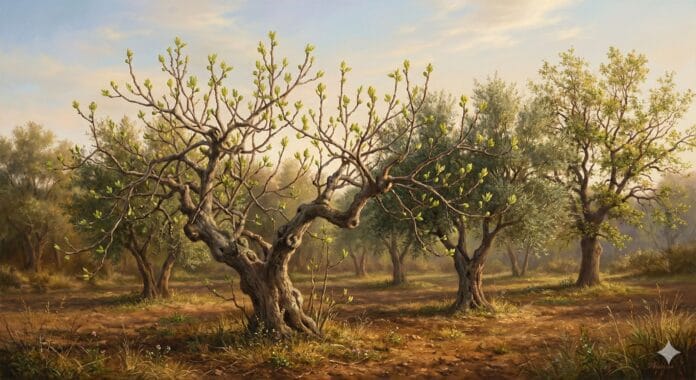
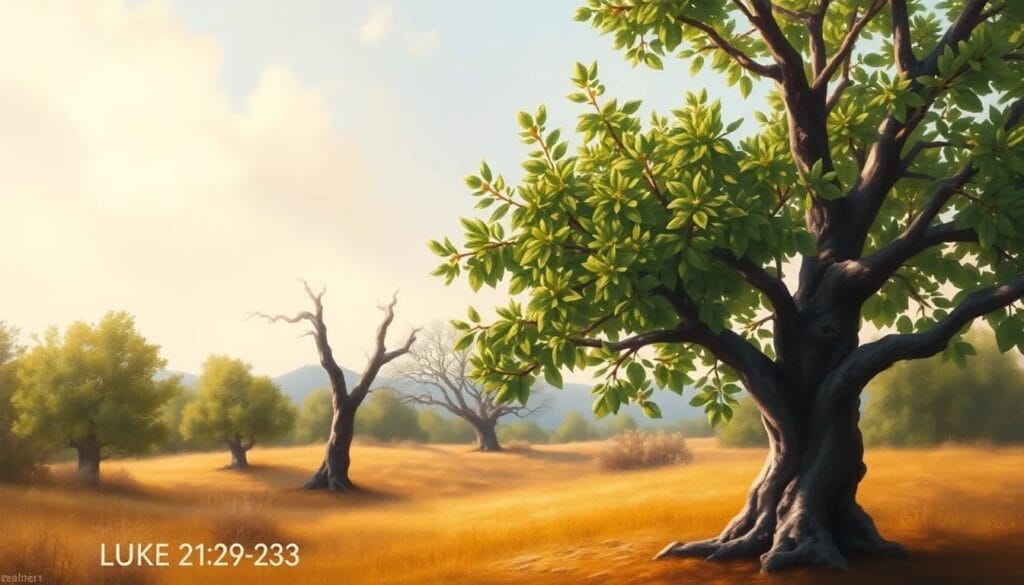
At that time, Jesus told his disciples this parable: «Consider the fig tree and all the trees. Observe them: as soon as they put forth their buds, you know that the hot season is near. In the same way, when you see these things happening, you know that the kingdom of God is near. Truly I tell you, this generation will certainly not pass away until all these things have happened. Heaven and earth will pass away, but my words will remain.»
Discerning the signs of the Kingdom: how to recognize God's nearness in our world
When Jesus teaches us to read the invisible through the visible, so that we may live in the active hope of his coming.
In a world saturated with predicted catastrophes and collective anxiety, Jesus invites us to a different perspective. His parable of the fig tree (Luke 21(29-33) teaches us the art of discerning the signs of the Kingdom that is already growing among us. Far from paralyzing us with fear of the end, Christ trains us in a confident vigilance, capable of recognizing God at work even in the midst of upheaval. This message remains for us today a school of spiritual clarity and embodied hope.
The common thread: From observing nature to recognizing the Kingdom, Jesus trains us in a new way of seeing that transforms our expectation into action. We will first explore the context of this parable in Luke's eschatological discourse, then we will analyze the divine pedagogy of the sign, before developing three themes: reading the world as God's language, the joyful urgency of Advent, and the strength of the Word in the face of all that passes.
A word of hope in the heart of the crisis
The eschatological discourse according to Luke
This excerpt is part of Jesus' great eschatological discourse (Luke 21(5-36), delivered in the Temple in Jerusalem a few days before his Passion. The disciples had just admired the magnificence of the sanctuary's stones when Jesus announced its imminent destruction. What followed was a series of prophecies about wars, persecutions, and cosmic upheavals—realities that would terrify any listener.
Yet, in the midst of this seemingly somber discourse, Jesus inserts this luminous parable of the fig tree. The contrast is striking: after evoking the distress of nations and shaken powers, he now speaks of buds and the approaching summer. It is as if Christ wanted to reframe our vision. Catastrophes are not the final word; they are the pangs of childbirth.
Luke places this discourse at a pivotal moment. Jesus has just denounced the scribes who "devour widows' houses" (Lk 20:47) and admired the offering of the poor widow (Luke 21, 1-4). The Temple, symbol of the divine presence, will be destroyed, but something greater is about to happen. The true presence of God is now manifested in thehumility and justice, not in stones and gold.
This parable of the fig tree thus functions as a hermeneutical key: it gives us the lens through which to read tragic events not as ends but as beginnings. It teaches us that God works even in apparent chaos to bring about his Kingdom. It is this divine pedagogy of hope that we must grasp today.
The pedagogy of the sign in the teachings of Jesus
A sacramental logic: the visible reveals the invisible
Jesus uses here a pedagogical method he particularly favors: starting with the concrete to lead to the invisible. “Look at the fig tree and all the other trees” (v. 29) – the imperative is strong. He doesn’t say “reflect” or “meditate,” but “look.” The contemplation of nature here becomes a school of theology.
This approach is rooted in the entire biblical tradition. The Psalms already invited us to see the glory of the Creator in creation: “The heavens declare the glory of God” (Psalm 19:2). Jesus radicalizes this intuition: not only does nature reveal God, but it also becomes a sign of his action in history. The budding fig tree is not merely a convenient illustration; it is truly analogous to the coming Kingdom.
The structure of the reasoning is simple yet profound: “As soon as they bud, you know that summer is near. Likewise…” (vv. 30-31). Jesus establishes a rigorous parallel between two orders of reality. In the first, we spontaneously exercise discernment: no one doubts that buds announce summer. In the second, we must learn to exercise the same discernment. spiritual discernment : certain events infallibly announce the proximity of the Kingdom.
This logic is profoundly sacramental. It presupposes that the material world is not opaque to grace, that secular history can become a place where the sacred is manifested. This is precisely what the Church experiences in its sacraments: water becomes a sign of new birth, bread becomes the presence of Christ. Jesus is training us here to see all reality as potentially imbued with the divine presence.
The stakes are high: if we learn to read in this way, we cease to be passive spectators of an incomprehensible world and become active witnesses of a Kingdom that is unfolding before our eyes.
Learning to read the world as God's language
Jesus' first invitation is to develop a true hermeneutics of reality. Too often, we live in an instrumental relationship with nature and events. We calculate, we manage, we plan – but we forget to contemplate and discern.
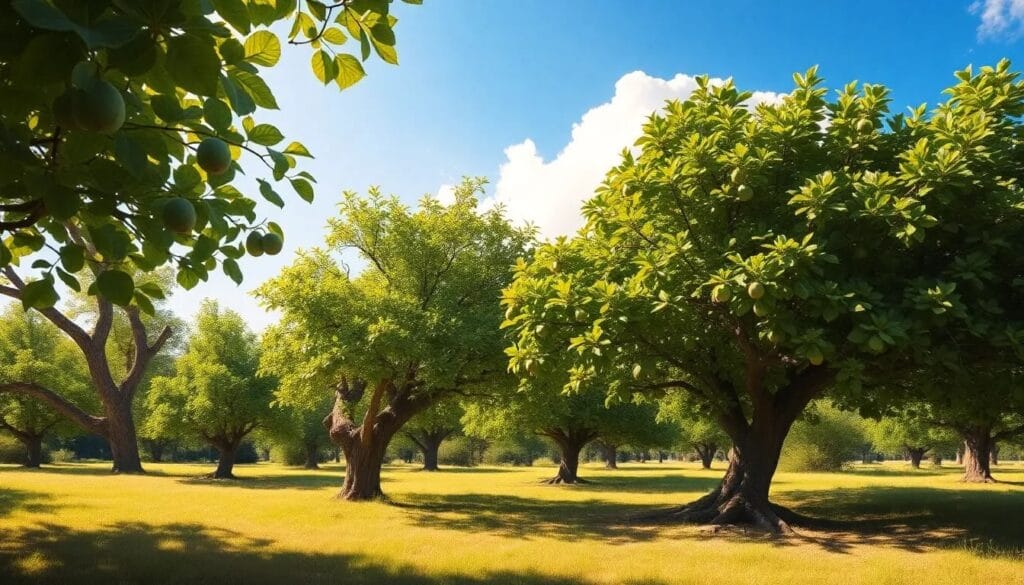
The fig tree Jesus spoke of was a familiar tree to his listeners. In Palestine, it symbolized peace and prosperity: each one “under his own vine and under his own fig tree” (1 Kings 5:5; Micah 4:4). But Jesus doesn't initially refer to this cultural symbolism. He begins with an even simpler observation: the natural cycle of the tree. In winter, the fig tree loses all its leaves and appears dead. Then, in spring, the first buds appear—and everyone knows that summer is approaching.
This peasant wisdom becomes theological wisdom in Jesus. God reveals himself in the rhythms of the created world. There is a word of God inscribed in the seasons, in the cycles of death and rebirth experienced by all creation. Paul will say it magnificently: "The whole creation groans in the pains of childbirth" (Rm 8, 22). This is not a poetic metaphor but an ontological reality: something new seeks to be born throughout all cosmic history.
In practical terms, this means we must relearn how to observe. In our lives, overloaded with information but lacking in attentiveness, Jesus reminds us of the importance of contemplative gaze. Watching a tree bud is not a waste of time; it is training us to recognize God's signs. Those who no longer see the seasons will also be unable to discern spiritual times.
This understanding of the world also presupposes a fundamental trust in the coherence of creation. If buds unfailingly herald summer, it is because there is a reliability inherent in the created order. God is not capricious; he reveals himself according to a logic we can learn. This trust is crucial for our spiritual life: we can rely on the signs God gives us.
But be careful: Jesus doesn't say that everything is a sign. He speaks of "this" (v. 31), referring to specific events he has just described. Discernment doesn't consist of sacralizing just anything, but of recognizing the true signs amidst the background noise of history. It's an art that requires training. humility, and grounding in the Word.
The joyful urgency of Advent – living striving towards the Kingdom
The second lesson of this parable concerns our existential stance. Jesus does not simply say that the Kingdom is near; he affirms that we can and must "know" that it is near (v. 31). This knowledge must transform the way we inhabit time.
Advent For a Christian, whose Gospel reading this parable is for the first Sunday, life is not primarily a countdown to Christmas. It is a fundamental attitude: living in anticipation of the Lord's coming. The Church Fathers distinguished three comings of Christ: in the flesh to Bethlehem, in glory at the end of time, and in hearts today by grace. Advent trains us to recognize and embrace these three dimensions.
This striving towards the Kingdom creates an urgency, but a joyful one. “Stand up and lift up your heads, for your redemption is drawing near” (Luke 21(p. 28) – the Alleluia acclamation that accompanies this passage is revealing. We are not in apocalyptic anxiety but in confident expectation. Like a pregnant woman who feels the first movements of the child and knows that birth is approaching, so the Church discerns in events the first signs of the new world.
This urgency should transform our priorities. Jesus says, “This generation will certainly not pass away until all these things have happened” (v. 32). Some exegetes have seen a difficulty here, since two thousand years have passed. But the Greek word “genea” designates less a chronological period than a quality of existence: sinful humanity, the old order. Jesus affirms that this old order is doomed, that the new is already emerging, and that we are called to live now according to the laws of the coming Kingdom.
Let us think of Paul writing to the Romans: “The night is far gone, the day is at hand” (Rm 13, 12). This awareness of imminence should free us from attachment to fleeting things and make us available for what endures. Not in an escape from the world, but in a more radical commitment: since the Kingdom is already growing, let us work to manifest it through our justice, our peace, our charity.
This joyful urgency stands in opposition to both despairing fatalism and naive optimism. Faced with the crises of our time—ecological, social, and moral—the Christian is neither the ostrich who denies the problems nor the prophet of doom who sees only decline. He is the one who recognizes that the current sufferings are birth pangs, signs that something new wants to be born if we cooperate with grace.
The permanence of the Word amidst all that passes
The third point leads us to the heart of Christ's promise: "Heaven and earth will pass away, but my words will never pass away" (v. 33). This solemn affirmation forms the foundation of our hope.
In the Bible, "heaven and earth" refer to the entirety of the created cosmos. Jesus uses a proverbial expression here to mean "absolutely everything." Even the realities that seem most stable to us—the stars, the mountains, institutions—are subject to change and will eventually disappear. This vision echoes that of the Second Letter of Peter: "The elements, by fire, will be destroyed" (2 Peter 3:12).
But amidst this universal relativity, only one thing remains absolute: the Word of Christ. Why this permanence? Because this Word is not a human teaching among others, but the very expression of the eternal Word. John saw this from the Prologue: “In the beginning was the Word, and the Word was with God, and the Word was God” (John 1, 1). The words of Jesus are the words of the divine Logos, and therefore participate in the eternity of God.
This statement has immense practical consequences. First, it means that we can rely on the Word of Christ as on the only unshakeable rock. In a world of upheaval where all our certainties are wavering, the Word stands firm. Jesus had already said this in the parable of the two houses: the one who hears his words and puts them into practice is like the man who builds on the rock (Mt 7, 24-25).
Furthermore, this puts everything else into perspective. Empires fall, ideologies crumble, intellectual trends come and go—but the Word remains. The Temple in Jerusalem, whose magnificent stones the disciples admired, was indeed destroyed in 70 AD. Civilizations that seem eternal to us are not. Only the Word transcends the ages without losing its relevance.
This permanence also underpins the Church's mission: to transmit intact the deposit of faith. Benedict XVI often reminded us that the Church is not the master of the Word but its servant. She cannot alter it according to the times. She must faithfully preserve it and proclaim it in all its radicality, even when it is unsettling. For it is this unchanging Word that provides an anchor for adrift humanity.
Finally, this promise nourishes our eschatological hope. If Christ's words do not pass away, his promises will be fulfilled. When he announces, "The kingdom of God is near," we can be certain of it. When he promises, "I am with you always, to the very end of the age" (Mt 28(p. 20), we can absolutely trust it. God's reliability is committed to his Word.
Practical applications in different spheres of life
In our personal spiritual life
This parable first invites us to cultivate a contemplative gaze upon our own existence. Where do we see God at work? What are the "buds" in our spiritual life that herald new growth? Perhaps it is a renewed desire to pray, a thirst for the Word, a heightened sensitivity to injustice, a new capacity to forgive.
In practical terms, we could establish a weekly time for reflection where we identify the signs of God's presence in our week. Not to congratulate ourselves, but to recognize that "it is he who works in us to will and to act" (Philippians 2:13). This practice develops our capacity for discernment and nourishes our gratitude.
In our relationships and our family life
Within the family, this pedagogy of signs teaches us to recognize moments of grace in the small things of everyday life. A child's smile, a reconciliation after an argument, a selfless act of service—all these are buds of the Kingdom. We can teach our children to name these moments: "You see, when you shared your toy, it was the Kingdom of God growing between us."
This attentiveness also transforms how we navigate family trials. Illness, conflict, and bereavement are not signs that God abandons us. If we face them in faith, they can become opportunities for a renewed closeness to the suffering Christ and occasions for solidarity that already manifest the tenderness of the Kingdom.
In our social and professional commitment
In our work and civic engagement, this parable liberates us from both cynicism and utopianism. We do not claim to build the Kingdom by our own strength—that would be the Promethean illusion. But we recognize that every act of justice, solidarity, and respect for creation is a bud of the Kingdom, a sign that God is at work in history.
Do you work in education? Every student who discovers their dignity is a sign of the Kingdom. Are you a caregiver? Every patient cared for with compassion manifests compassion of Christ. Are you in business? Every professional relationship lived with integrity and respect already shapes the world of justice that God desires.
This vision gives profound meaning to our actions without crushing us under the weight of messianism. We are not the saviors of the world—the Savior has already come. But we are called to collaborate with his work, to prepare the way, to make visible what grows invisibly.
In our reading of current events and history
Faced with the anxiety-inducing news that saturates our screens, this parable offers us a different perspective. Rather than being swept away by the flood of catastrophic information, we can exercise discernment: where is God at work despite everything? Where does the Spirit inspire responses of solidarity, courage, and creativity?
Every time a community mobilizes to welcome refugees, every time young people commit to climate justice, every time a reconciliation movement emerges in a conflict – these are buds of the Kingdom. Our role is not to deny the tragedies, but also to recognize and encourage the signs of hope that appear in the midst of the darkness.
Echoes in tradition
The Patristic Hermeneutics of the Sign
The Church Fathers meditated extensively on this parable. Augustine, in his commentaries on the Gospel, sees in it an illustration of "natural theology": God reveals himself through creation even before revealing himself through the prophets and Christ. The fig tree thus becomes a metaphor for all humanity which, viewed through the eyes of faith, bears the signs of the redemption to come.
Origen develops a bolder allegorical interpretation: the fig tree represents Israel, and the "other trees" the pagan nations. Together, they blossom in the springtime of the Gospel, demonstrating that salvation is universal. This Christological and ecclesiological reading transforms the parable into a prophecy of mission: wherever the Gospel is proclaimed, the Kingdom blossoms.
Cyril of Alexandria emphasizes the eschatological dimension: the buds are not the final fruit, but its certain announcement. Similarly, the signs of the Kingdom in history are not yet its fullness, but they infallibly guarantee that this fullness will come. This distinction is crucial to avoid any triumphalism: we are in the time of buds, not yet in the time of harvest.
Liturgical and sacramental resonances
The liturgy of Advent This makes this parable a major axis of contemporary Christian spirituality. Time is not a cyclical repetition as in cosmic religions, nor a meaningless linear flow as in the nihilism modern. It is a time "oriented", focused towards an end which is also an accomplishment.
The sacraments They themselves operate according to this logic of the sign: the water of baptism is truly water, but it signifies and brings about the new birth. The Eucharistic bread is truly bread, but it signifies and brings about the presence of Christ. Each sacrament is a "bud" of the Kingdom, a real anticipation of the eternal life that we already live in faith.
This sacramental perspective invites us not to separate the visible and the invisible, the material and the spiritual. Christianity This is not a gnosis that despises the flesh, but an incarnate faith that recognizes that grace comes through concrete realities. This is why liturgical gestures – water, bread, wine, oil, the laying on of hands – are so important: they demonstrate that salvation reaches the whole person, body and soul.
Eschatological scope and Christian hope
This parable masterfully articulates the "already here" and the "not yet" of the Kingdom. 20th-century Protestant theologians, notably Oscar Cullmann, spoke of "Church time" as an intermediate time: between the decisive victory of Christ at Easter (the "D-Day") and the full manifestation of this victory at the Parousia (the "V-Day").
The buds signify that the decisive battle has been won—spring has conquered winter—but the full manifestation of this victory still requires time. This tension is inherent in Christian existence: we live in the certainty of hope, but not yet in the vision. “We walk by faith, not by sight” (2 Corinthians 5:7), while knowing that this faith rests on tangible signs.
This eschatology has major ethical implications. It prevents us from sacralizing the present order (since it is destined to pass away) while simultaneously granting eternal value to our acts of love (since they blossom for the Kingdom). It liberates us from anxious activism (God is bringing about his Kingdom) without permitting passivity (we must collaborate as faithful stewards).
Meditation track
A weekly exercise in discerning signs
Every Sunday evening or Monday morning, take fifteen minutes for a spiritual review of your week. In a dedicated notebook, write down under three columns: "Buds" (signs of hope, grace, growth), "Winter" (trials, dryness, difficulties), and "Vigilance" (what I am called to pay attention to this week).
This regular practice gradually shapes your perspective. You learn to see beyond the negative, but also to acknowledge difficult realities. You cultivate that "sober intoxication of the Spirit" spoken of by the Fathers: lucidity and hope together. After a few months, reread your notes—you'll be amazed to see how many "buds" have actually borne fruit.
Contemplative meditation inspired by nature
Choose a tree near your home – if possible a deciduous tree that clearly displays the seasons. Visit it regularly, at least once a month. Observe its transformations: the appearance of buds in spring, the unfurling of leaves in summer, the autumn colours, the winter bareness.
During these moments of observation, pray from what you see. Ask yourself: What spiritual season am I in? Where are my buds? What must die within me so that something new can be born? Let the tree become your spiritual teacher, the one who teaches you the rhythms of grace.
Advent prayer with scriptural texts
Throughout the entire time of Advent, Meditate daily on a verse from this passage in Luke. Choose one verse per day: Monday "See the fig tree," Tuesday "As soon as they bud," Wednesday "Summer is near," etc. Repeat the verse slowly, let it resonate within you, note what desires, questions, or consolations it awakens.
You can also pray with your body: assume a posture of watchfulness, standing with your arms slightly raised (like the acclamation "Stand up straight and lift up your head"). Maintain this posture for a few minutes, repeating silently: "Come, Lord Jesus." This bodily prayer expresses and nourishes the attitude of active waiting that Jesus wants to awaken in us.
Community sharing and reflection within the Church
If you belong to a prayer group or movement, suggest a time of sharing where each person names a "bud of the Kingdom" they have recently observed in their life, in the Church, or in the world. This sharing of signs of hope is profoundly evangelical: it builds up the community, nourishes the faith of the most vulnerable, and gives glory to God who is at work.
However, we must be careful not to fall into naive idealism. Our sharing must remain realistic: we also acknowledge the winters, the nights, the droughts. But we acknowledge them in the light of Easter, that is, confessing that even there, God can bring forth something new. This shared confession of faith strengthens our personal hope.
Contemporary challenges
How can we discern without falling into illuminism?
A first challenge concerns discernment itself. How can we know if what we identify as a "sign of the Kingdom" truly is one? Aren't we at risk of projecting our desires onto events, of seeing signs where there are none?
This risk is real, and the history of the Church unfortunately includes instances of illuminist deviations where individuals or groups have claimed to read fanciful divine messages in events. The answer lies in three criteria for discernment: consistency with Scripture, confirmation by the ecclesial community, and concrete results in life.
A true sign of the Kingdom will never contradict the Gospel. If someone claims to discern that God is calling them to hatred, contempt for the poor, and injustice, it is certainly an illusion. Furthermore, discernment cannot be purely individual: it must be confirmed by other mature believers, ideally in connection with tradition and the Magisterium. Finally, true signs bear fruits of peace, joy, and charity—not turmoil, division, or pride.
Doesn't eschatological urgency lead to disengagement?
Second objection: if "heaven and earth will pass away," why commit to improving the world? Don't we risk falling into a disempowering quietism?
History shows, on the contrary, that Christian eschatological hope has been a powerful engine of social transformation. It was monks who cleared land across Europe, preserved ancient culture, and developed agriculture. It was Christians who founded hospitals, schools, and charitable works. Why? Precisely because they believed their actions had eternal significance.
The key is to distinguish between "passing away" and "disappearing completely." In Catholic theology, particularly in Thomas Aquinas and in Gaudium et Spes, it is affirmed that everything lived in love will be transfigured and assumed into the Kingdom. Heaven and earth will "pass away" in the sense that they will be transformed, purified, and beautified—not annihilated. Thus, our acts of justice and charity are not lost; they prepare for and anticipate the new world.
How can we maintain hope in the face of disasters?
Third challenge: the ecological, social, and moral crises of our time are unprecedented in scale. How can we continue to "see the buds" when everything seems to be collapsing?
First, by rejecting the media's catastrophizing, which only sees the negative. For commercial reasons, the media highlight tragedies and ignore the thousands of positive initiatives that are flourishing everywhere. Alternative information is needed: actively seeking out "good news," solidarity projects, and innovations serving the common good.
Then, by putting our anxieties into perspective in the light of long history. Every era has experienced its apocalypses: barbarian invasions, plagues, world wars. And yet, the Church has endured through it all, humanity has survived, and God has continued to raise up saints and prophets. Our time is neither worse nor better than any other—it is our time, the time in which God calls us to bear witness.
Finally, by cultivating a theological hope that is not dependent on circumstances. Christian hope is not the optimism that believes "everything will be alright." It is the certainty that God is faithful and that his plan of love will be fulfilled, whatever happens. Even if the worst were to happen, even if our civilization were to collapse, God would remain God, and his love would remain the final word in history.
Prayer for waiting and welcome
Lord Jesus, eternal Word of the Father,
You who taught your disciples the art of discernment,
teach us to see the world through your eyes.
Open our blind hearts to the beauty of your Kingdom which is already sprouting in our midst.
Make us vigilant watchmen,
Nor asleep in indifference,
nor paralyzed by anxiety,
but standing in joyful anticipation of your coming.
Like the budding fig tree that announces the summer,
May our lives be signs of your Kingdom:
through our justice, let us be buds of your peace;
through our charity, let us be buds of your love;
Through our hope, let us be buds of your victory.
When the night grows thick around us,
When world news weighs heavily on our shoulders,
when our own trials make us doubt,
Tell our hearts again your unwavering promise:
"Heaven and earth will pass away, but my words will never pass away."
Anchor us in this Word that does not pass away,
Solid rock amidst the storms,
A sure light in the midst of darkness
a safe path amidst our wanderings.
Come, Lord Jesus,
Come to our churches, which await you.
Come to our families who thirst for your peace,
Come into our wounded societies that seek your face,
Come into our hearts that yearn for you.
Grant us the grace to prepare your ways,
By flattening through forgiveness the mountains of pride,
by filling the valleys of indifference through solidarity,
by straightening out the crooked paths of lies through truth.
May our Advent not be a mere passive waiting period,
But an active commitment to collaborate with your Spirit,
to recognize your signs,
to announce your Good News,
to demonstrate through our lives that your Kingdom is already here.
Lift us up when we are bowed down under the weight of sin,
Lift up your heads when discouragement overwhelms you.
because you are our approaching redemption,
You are our coming joy,
You are our hope that does not disappoint.
We give you thanks, Lord of history,
For all the buds of your Kingdom that we have observed:
for every act of reconciliation that dismantles hatred,
for every outstretched hand that lifts up the poor,
for every word of truth that exposes the lie,
for every prayer that rises to you from the hearts of your children.
Lead us from the winter of our sin to the spring of your grace.
From the sleep of indifference to the awakening of love,
from death that passes to life that remains,
for you are the Lord who comes,
today, tomorrow, and forevermore.
Maranatha! Come, Lord Jesus!
Amen.
Becoming active readers of God's signs
This parable of the fig tree offers us much more than an abstract teaching about the end times. It trains us in a new way of inhabiting our present. In a world where meaning seems to be lacking, where catastrophes accumulate, where so many of our contemporaries oscillate between disillusioned cynicism and frenetic activism, Jesus offers us a third way: that of trusting vigilance.
Learning to discern the signs of the Kingdom means rejecting both the blindness that sees nothing and the illusion that sees anything. It means developing a gaze that is both contemplative and critical, a gaze that can recognize God at work without confusing Him with our own projections. This spiritual wisdom requires time, practice, and...humility – but it bears fruits of peace and hope.
The central promise remains: the Word of Christ will not pass away. In a world of ceaseless flux where everything changes and collapses, this anchor is crucial. We can build our lives on the rock of this Word, invest our energies in what endures, and orient our lives toward the coming Kingdom. Not to flee the urgencies of the present, but rather to confront them with the wisdom of one who knows how to distinguish the eternal from the perishable.
The call, therefore, is for a conversion of perspective. Let us cease to see the world as a set of problems to be solved or threats to be avoided. Let us see it as the place where God sows his Kingdom, where the Spirit brings forth new things, where Christ goes before us and awaits us. Wherever justice grows, wherever solidarity is manifested, wherever truth is spoken with courage, wherever forgiveness reconcile – there, the fig tree buds, there, the Kingdom draws near.
May we become those lucid and joyful witnesses that our time so desperately needs: neither the prophets of doom who prophesy catastrophe, nor the naive optimists who deny the dramas, but the watchmen who know how to recognize the dawn in the middle of the night and who, by their way of living, already manifest the light of the coming day.
Concrete practices to implement
- Establish a weekly time for spiritual reflection where you identify three signs of God's presence in your week, noting them in a dedicated notebook to track the progress made.
- Adopt a tree near your home as a spiritual companion, by visiting it regularly to observe its transformations and meditate on the seasons of your own spiritual life.
- Create an "Advent" corner in your home with a candle that you light each evening while reading a verse from this passage and sharing a sign of hope observed during the day.
- Join or form a small sharing group where each person monthly names a "bud of the Kingdom" identified in their life, work, or neighborhood, to mutually build faith.
- Choose a difficult situation from your life and ask yourself in prayer: "Where is God at work here? What bud could grow through this trial?" without forcing an answer but with trusting openness.
- Cultivating a partial media fast by replacing fifteen minutes of consuming anxiety-inducing news with fifteen minutes of reading Christian testimonies or solidarity projects that manifest the Kingdom.
- Memorize verse 33 "Heaven and earth will pass away, but my words will not pass away" to repeat it like an anchor in moments of doubt, anguish, or discouragement.
Main references
- Gospel according to Saint LukeChapter 21 – The complete eschatological discourse provides the indispensable context for understanding the parable of the fig tree and its message of hope.
- Pastoral Constitution Gaudium et Spes (Vatican II, 1965) – Particularly numbers 39 to 45 on the dignity of human activity and its relation to the Kingdom of God.
- Augustine of Hippo, Commentary on the Gospel of Saint John – For his reflection on signs and divine pedagogy through creation and history.
- Hans Urs von Balthasar, Divine Drama (Volume IV) – For his theology of history as the place of progressive manifestation of God's design.
- Oscar Cullmann, Christ and Time (1946) – Fundamental study on the Christian conception of time as time oriented between fulfillment in Christ and the Parousia.
- Jürgen Moltmann, Theology of Hope (1964) – For his reflection on eschatology as the driving force of Christian engagement in history and not as an escape from the world.
- Benedict XVI, Encyclical Spe Salvi (2007) – On the virtue of Christian hope, its difference from optimism, and its capacity to transform our view of the present.
- Romano Guardini, The end of modern times – For his theological reading of the signs of the times and his invitation to a spiritual discernment of contemporary history.