












Gospel of Jesus Christ according to Saint Luke
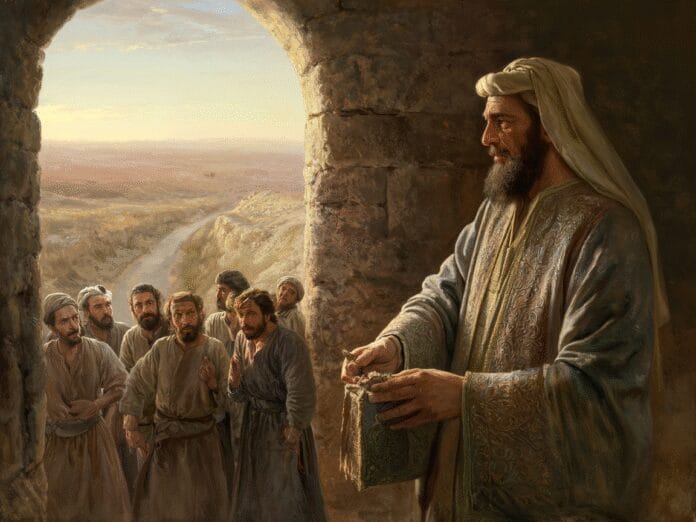
At that time, as people listened to him, Jesus told a parable: he was approaching Jerusalem, and those who heard him believed that the kingdom of God was about to appear immediately.
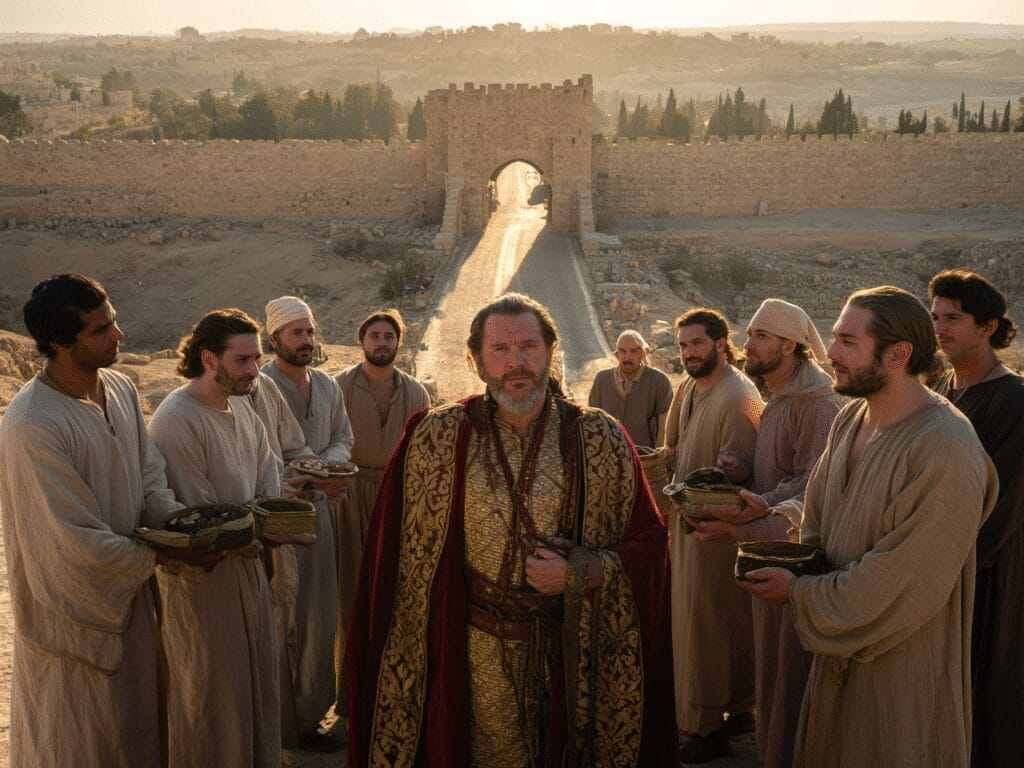
This is what he says: «A man of noble birth went to a distant country to receive the title of king, and then to return. He summoned ten of his servants and entrusted to each one a sum equivalent to a mina; then he said to them, «While I am away, make this money earn a profit.»”
But the people of his country hated him, and they sent an embassy after him to declare: "We refuse to let this man become our king."«
When he returned after obtaining the kingship, he summoned the servants to whom he had entrusted the money, to find out what each one had earned.
The first man came forward and said, "Master, the sum you entrusted to me has yielded ten times more." The king replied, "Excellent, devoted servant! Since you have proven yourself reliable in so little, receive authority over ten cities."«
The second man came and said, "Master, the sum you entrusted to me has yielded five times as much." To him also, the king said, "You too, take charge of five cities."«
The last one came and said, «Master, here is the sum you entrusted to me; I kept it wrapped in a cloth. For I was afraid of you: you are a strict man, you take back what you did not deposit, you reap what you did not plant.»
The king replied, "It is by your own words that I will condemn you, you unworthy servant! You knew that I am a strict man, that I take back what I have not deposited, that I reap what I have not sown; so why did you not deposit my money with a money changer? On my return, I would have received it back with interest."«
Then the king said to those standing there, "Take this sum from him and give it to the one who has ten times as much." They replied, "Master, he already has ten times as much!"«
«I tell you, to everyone who has, more will be given, but from the one who does not have, even what he has will be taken away. As for these adversaries of mine who have refused to let me reign over them, bring them here and execute them before my eyes.»
After saying these words, Jesus went ahead to Jerusalem.
Cultivating the fruitfulness of faith
How the Parable of the Mines reveals to us the spiritual art of making the gift received bear fruit..
Today's Christian, torn between activism and fear of failure, may recognize himself in the servant who buries his treasure. This parable, often read as the "judgment of performance," actually says... joy of the Kingdom that grows as trust is exercised. It questions our relationship to mission: why hide what has been entrusted to us? And how do we answer the One who asks us: "Why didn't you put my money in the bank?"«
- Contextualize the extract: a King, an expectation, a responsibility.
- Read the parable: trust, fear and revelation of the heart.
- Developing the axes: the gift entrusted, the bold initiative, the spiritual fruitfulness.
- Taking action: making it bear fruit in our spheres of life.
- Theological implications, meditation, and current challenges.
The King on the road to Jerusalem
Luke situates this parable within a tension: Jesus "was near Jerusalem." The disciples expected the immediate manifestation of the Kingdom; Jesus, however, announces an absence and a return. The nobleman who departs "to receive the kingdom" prefigures Christ ascending to his Passion: he departs to reign from the Cross, then will return to judge according to the fruitfulness of lives.
This story is surprising: ten servants each receive a mina—about three months' wages—but only one speaks at length about it. The interest, therefore, lies not in the amount itself, but in the inner disposition toward a "modest" yet total gift. Luke presents three attitudes: the one who dares to risk everything, the one who commits moderately, and the one who abstains out of fear.
The parable addresses a temptation that remains relevant today: passively awaiting the coming of the Kingdom instead of working toward it now. Jesus corrects this impatience by reminding us that the time of waiting is the time of fruitfulness. «Doing business» means acting, creating, transforming; here, not for material gain, but for spiritual growth. The word «bank» then becomes a symbol of transfer: depositing one’s life in the flow of divine trust.
Through the contrast between fear and faith, Luke prepares the way to Jerusalem: entering into the logic of the Kingdom requires investing the fear of judgment in love trusting of the Master.
The heart of the servant, a mirror of the disciple
The parable of the mines encapsulates everything’Gospel of Mercy active: God entrusts to each person something to cultivate—life itself, faith, the gifts received. The king's return reveals the truth of service: not a reckoning, but a revelation of the heart.
The first servant does not take credit for the gain: "Your mina yielded ten more"; everything comes from the Lord. This discretion demonstrates true faith: acting without appropriating the fruits. In return, the reward is a mission: "Be in charge of ten cities"; the gift received engenders a broader responsibility.
The second progresses less, but remains within the dynamic of growth. The last, on the contrary, embodies religious rigidity: he "wraps the gift in a cloth," a gesture of burial, a symbol of a dead faith. His fear distorts the image of the Master: he sees a harsh God, whereas the Lord entrusts generously. This reversal shows that fear kills the relationship, while trust opens it to life.
Thus, the question "Why didn't you put my money in the bank?" becomes the divine challenge addressed to every stagnant Christian: why didn't you place your heart in the movement of grace? Why fear instead of cooperating?
The gift entrusted: an initial trust
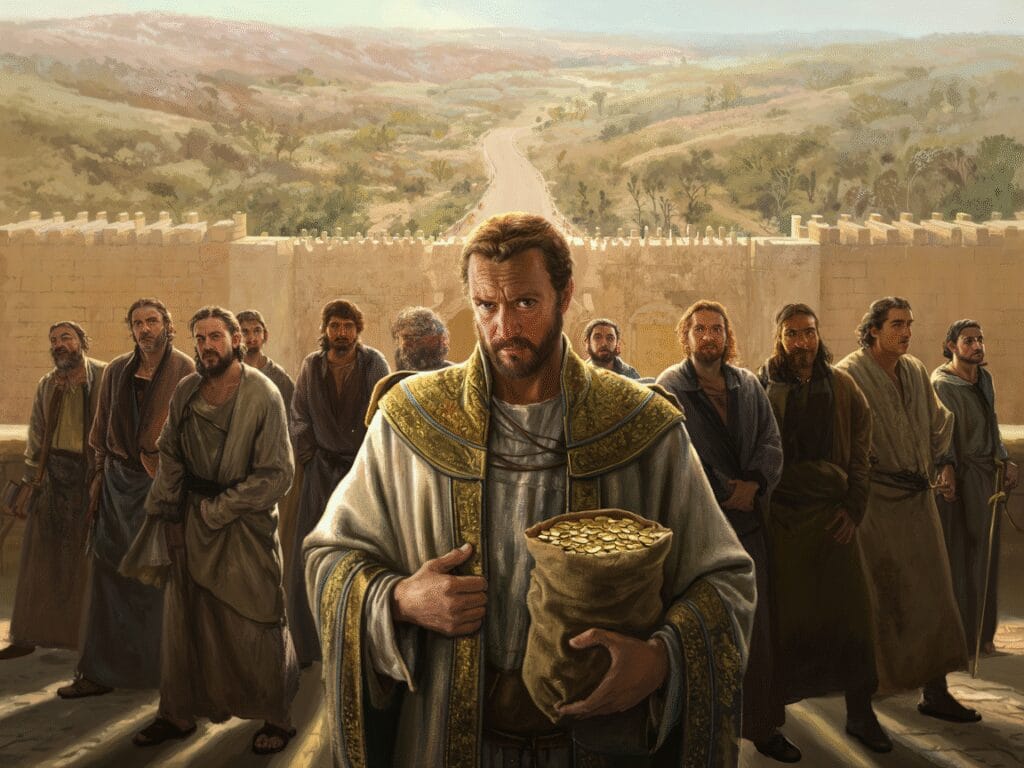
Every Christian life begins with a deposit: the mine symbolizes faith, the word, the breath received at baptism. God gives unconditionally, then withdraws to make room for freedom. This is the mystery of the Incarnation: God trusts even before proof.
This trust calls for an active response. To receive without acting is to break the flow of giving. Faith dies when it is not given. Money "that lies dormant" represents the hidden Word, unshared, kept like a secret. Each disciple then hears: "I have entrusted my life to you; what will you do with this treasure?"
The audacious initiative: risking fertility
The king is not asking for specific results, but for initiative. Christ's call resonates thus: "Do good business," that is to say, invest your creativity, your active faith, your courage. Love He multiplies what he dares; fear freezes what it wants to protect.
In the dynamic of the Kingdom, risk is not a failing but a mark of trust. The faithful servant dares without guarantees; he knows that grace bears fruit in giving, not in paralyzing prudence. This spiritual boldness recalls the logic of the cross: losing to gain, giving to receive.
Spiritual fruitfulness: the fruit of trust
The text concludes with a paradoxical statement: "To him who has, more will be given." Here again, Jesus reverses the logic of the world. In the Kingdom, fruitfulness attracts fruitfulness: those who act according to grace receive even more, for trust grows with practice.
The Master does not reward efficiency, but loyalty confident. Each fruitful "mine" becomes a sign of the Kingdom planted in history. The Christian life is therefore not an economy of merit, but a circulation of life: "the fruit that remains" (Jn 15:16) is that of love which is given without calculation.
To make it flourish in our spheres of life
This saying of Christ permeates all our realities:
- In the inner life, It is about nurturing faith through regular prayer, entrusting one's talents to the breath of the Spirit rather than to pride or fear.
- In family life, Every act of service or forgiveness increases communion, like a small spiritual capital that bears fruit over time.
- In professional life, Working honestly, creating fair value, encouraging others: these are all ways to "bank" the grace received.
- In the ecclesial mission, It is about being a witness: announcing, teaching, serving; investing faith in the world instead of withdrawing it in the face of indifference.
Thus, "the bank" represents the living fabric of our human relationships, a place where giving circulates and produces a common good.
Tradition and theological scope
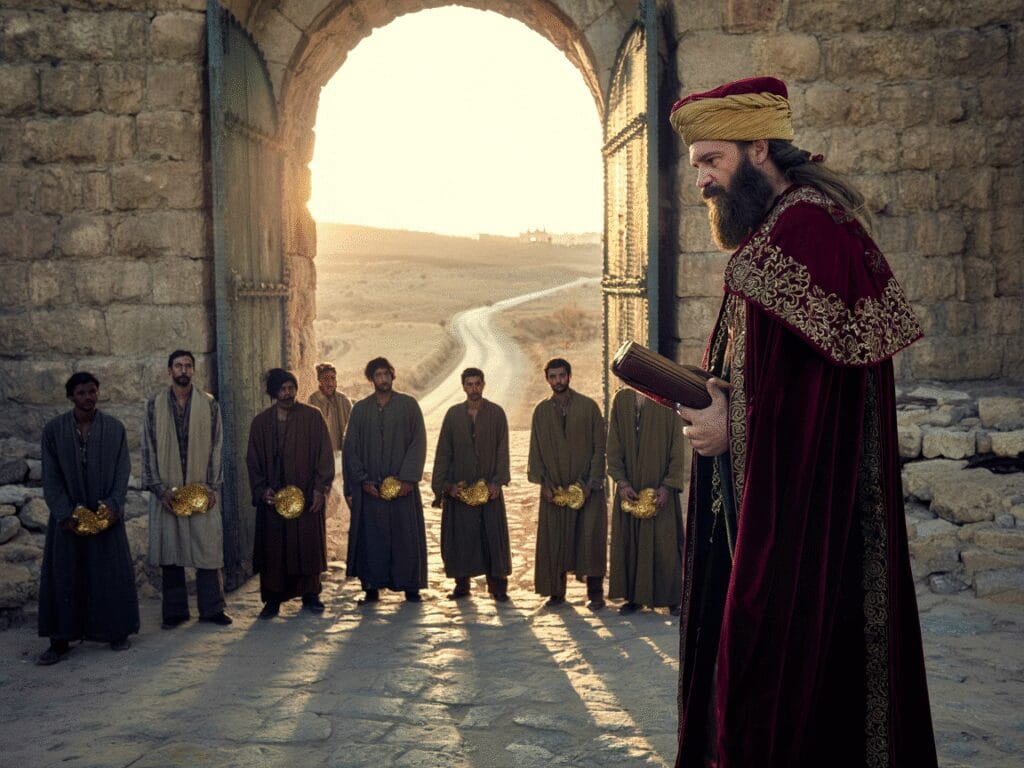
The Church Fathers meditated at length on this parable. Origen sees in it the degrees of charitySaint John Chrysostom, a call to community responsibility; Saint Augustine, A warning to pastors: the buried mine is the unpreached Word. Thomas Aquinas reinterprets this divine economy as a pedagogy: God rewards according to cooperation with grace, not according to the quantity of works.
Spiritually, the mine deposit anticipates that of the Holy SpiritAt the King's return (the Parousia), each person will have to give an account not of a return, but of a relationship. Money is merely a parable: the "deposited value" is living faith.
The expectation of the return illuminates Christian hope: it is not an arbitrary judgment, but a revelation of the Master's true face—not a creditor, but a spouse come to gather the fruit of love.
Entering into the joy of the Master
- Reread the Gospel slowly (Luke 19,11-28) by asking for clarification on the word "bank".
- Identify what, in his life, remains "wrapped in a cloth".
- To name the talent or grace that has been put to sleep.
- Demand the boldness of trust rather than the caution of control.
- To take a concrete act of fruitfulness: to pray, to teach, to create, to reconcile.
Thus, meditation becomes participation: the Kingdom is built through the gestures that manifest it.
Current challenges: our fear of risk
Today, many experience faith as something to be preserved: fear of ridicule, fear of being judged, spiritual weariness. In a world of uncertainty, the temptation of keeping one's faith clean remains—wrapping it up "to keep it clean." But Jesus is not looking for cautious servants; he is looking for fruitful witnesses.
The contemporary challenge is to dare to cultivate a productive faith: not to accumulate religious achievements, but to allow grace to work within history. This requires reconciling freedom and obedience, initiative and surrender. The Christian does not own the mine: he makes it bear fruit for the glory of God and the good of the world.
The answer to fear lies in contemplating the cross: it is there that the distant King receives his crown. His "return" begins each time a heart dares to love without guarantees.
Prayer
Lord Jesus, faithful and just King,
You who entrust your gifts in the silence of your departure,
teach us the fruitfulness of trust.

Do not allow us to bury the grace we have received,
but make our hands available for your work.
Give us joy to serve you without calculation,
and the strength to risk for love of the Kingdom.

When you return, let our lives bear witness
not because of our merits, but because of your generosity.
You who live and reign forever and ever.
Amen.
Answering the King's call
The Parable of the Minas is not a treatise on spiritual economy, but an invitation to fruitfulness. God does not reproach the smallness of the result, but the lack of trust. Each mina brought to life is an act of hope: the Kingdom grows through souls who refuse inaction.
Answering the question: "Why didn't you put my money in the bank?"«
— it is choosing to be an entrepreneurial disciple of the Kingdom, an artisan of grace in the realities of the world.
In practice
- To begin each day with an explicit act of trust.
- Identify an inner talent to reinvest in the service of others.
- To offer a message of the Gospel where silence prevails.
- Entrust your fears to God rather than hiding them under inaction.
- To enter a brotherhood where gifts multiply.
- Remembering the fruits already received to nurture gratitude.
- End the day with a prayer offering the "interests" of the day.
References
- Gospel according to Saint Luke 19, 11-28.
- Origen, Homilies on Luke.
- Saint John Chrysostom, Comment on Matthew, homily 78.
- Saint Augustine, Sermon 179.
- Thomas Aquinas, Summa Theologica, II-II, q. 23-27.
- Benedict XVI, Jesus of Nazareth, vol. 2.
- Catechism of the Catholic Church, §§ 1889-1930.